Limited Weekend Update – Reality Fracture Over and Underperformers
This weekly article will keep you up to date on the current state of Limited on MTG Arena. This week, we’re diving into the over and under performers from Reality Fracture.
Hey everyone! We’ve somehow made it to the second edition of Limited Weekend Update without me getting cancelled, so apparently miracles really can happen.
Speaking of miracles, I feel like I could use one right now because I am extremely sick as I’m writing this. So if you come across something that seems a little more out there than usual, just assume the fever dream has officially taken over.
But you know what I’m not sick of?
Drafting Reality Fracture.
I received a ton of feedback on the first article, and I really appreciate everyone who took the time to send in suggestions. I’ll slowly be making adjustments based on some of that feedback as the series continues, so keep it coming.
Not every suggestion is going to make the cut, of course. I do have standards.
They’re just very, very low.
Please, for the love of God, don’t tell my wife I said that though. I really don’t like sleeping on the couch.
We’ve officially had enough time with Reality Fracture that I can start doing one of my favorite things: going back through my set review and finding out exactly where I was completely wrong.
Pre-release grades are always going to be educated guesses. We can read the cards, look at the mechanics, try to figure out how the format is going to play, and compare everything to approximately 47,000 Magic cards we’ve seen before.
Then thousands of people actually start playing games and Reality Fracture gets to explain why we’re idiots.
So today I want to look at some of Reality Fracture’s biggest overperformers and underperformers so far, particularly the cards whose actual results have changed how aggressively I’m willing to draft them.
And yes, that means I get to clown on some of my own grades.
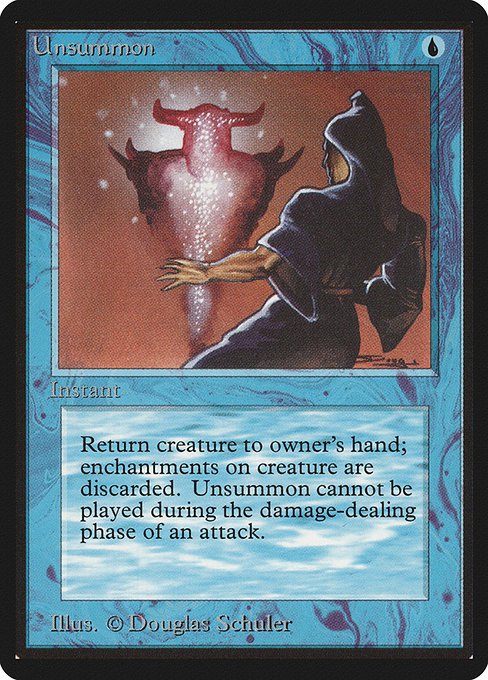
I know I briefly talked about Unsummon last week, but it continues to stand out. The stats are legitimately great, and that is probably understating how effective it is because this card is a much bigger skill tester than people realize.
I’ll use fellow Draft Lab member Dafore—who is currently ranked #1 as I’m writing this—as an example because he absolutely LOVES this card.
The other day, he had an opportunity to turn Unsummon into what looked like an easy two-for-one, and his chat collectively lost its mind when he chose not to do it. They seemed baffled that anyone would pass up a one-mana two-for-one.
A couple turns later, he used that same Unsummon in combination with another card to force through exact lethal.
That gets at what makes Unsummon so interesting in this format. On the surface, it’s a cheap tempo card, so you might expect it to be better in a fast format where bouncing something can create a huge swing.
Instead, it’s thriving in a slower format with a ton of card selection and card advantage.
Why?
Part of it is the versatility I mentioned above, but another big factor is just how mana-efficient it is. When your deck is constantly seeing extra cards and generating additional resources, having a one-mana spell that can protect a creature, disrupt combat, or clear a blocker fits perfectly into multispell turns.
You don’t necessarily need Unsummon to generate card advantage by itself when the rest of your deck is already doing that.
Sometimes you just need the cheapest possible way to create the exact opening you need.
I was actually worried I might have been a little high on this when I gave it a 2.0 during preview season.
We are a long way removed from the days when Concentrate was a busted Limited card. Three cards for four mana is still perfectly fine, but Protege's Awakening doesn’t even give you all three right away. You have to wait around for the last one like it’s coming in the mail.
Apparently, Reality Fracture is slow enough that nobody really minds waiting.
That’s the biggest reason this card has been performing so well. Games regularly go long enough that simply accumulating pieces of cardboard matters, and Awakening does exactly that without asking you to build around it or jump through any real hoops.
It also gets a nice boost from its draft position. This is generally a fairly late pick that you’re almost never going to have to fight anyone for, which makes it an easy way to add some late-game card advantage to your deck without spending meaningful draft capital.
The important part is not getting carried away.
This is a card I actively like having one copy of. Some decks are perfectly happy with two.
I almost never want the third.
There’s a big difference between “this format is slow enough for my four-mana card draw spell” and “my deck should contain an entire library of four-mana card draw spells.”
Not to sound like a broken record, but this is another card benefiting from Reality Fracture being slower than expected.
It also helps that this is a very princely format with a lot of busted rares that you’re more than happy to stretch your mana for. Murmuring Volume helps make those splashes possible while also giving you something useful to do with all the extra lands you inevitably draw later.
That combination matters a lot more here than I expected.
Early on, it helps fix your mana and lets you cast the ridiculous rare you probably had no business splashing in the first place.
Later on, once you’ve hit all your land drops, it gives you a repeatable way to turn those extra lands into actual cards.
That’s a pretty appealing package in a format where you regularly have enough time to take advantage of it.
In a faster environment, this kind of card can be painfully slow because you spend mana setting up while your opponent is busy killing you.
Reality Fracture actually gives you enough breathing room to use it.
And apparently “fix my mana so I can cast my busted rare, then make sure I don’t flood out afterward” is a pretty good plan.
It’s not like I thought this card was bad. I talked it up quite a bit during preview season and fully expected it to be one of the better signpost uncommons in the set.
My only real concern was the mana.
Seven mana is already a lot, and asking for multiple-colored pips on top of that looked like it could make Craftwork Crusher a little clunky outside of the perfect deck.
Turns out Reality Fracture looked at that concern and said, “That’s cute.”
The format is slow enough, the fixing is good enough, and decks are more than capable of getting to seven mana without completely falling apart along the way.
Once you actually cast Crusher, it does exactly what you want an expensive card to do: it completely takes over the game.
So while I expected this to be an excellent signpost uncommon, it’s playing much closer to a bomb rare.
That’s an important distinction.
There are plenty of gold uncommons that reward you for being in the right colors. Craftwork Crusher makes me want to be in those colors in the first place.
Apparently, the biggest mistake I made was worrying that seven mana would actually be a drawback in this format.
I talked about this little guy last week, but my love for him has only grown since then. Apparently I’m not alone either, because I’ve seen plenty of top players using this adorable little Homunculus as an actual win condition.
And honestly, it’s surprisingly easy to set up.
You don’t need some elaborate combo. Sometimes you just build up a board full of random dorks, drop Fblthp, and suddenly your alpha strike is lethal. Other times, all you need is one random flyer that can sneak through and finish the job.
That ability to turn an otherwise unimpressive board into a win out of nowhere is a lot more powerful than I initially gave it credit for.
Even when you aren’t killing your opponent, getting two cards for two mana is already a fantastic deal. That gives Fblthp a really nice floor while still having the ceiling of just ending the game.
The only time he really feels bad is when you’re already way behind and don’t have any realistic way to connect with your opponent. At that point, drawing a couple cards might not be enough to save you.
But if the game is anywhere close to parity?
This little weirdo can get very dangerous, very quickly.
Underperformers
Enough talking about the cards that make everyone feel smart. Let’s get to the ones disappointing people.
While it would be very tempting to just write “aggressive cards” here and move on with my life, I’ll at least pretend to put in a little more effort than that.
There are a few other interesting misses worth talking about.
This could be a really strong card in a lot of Limited formats.
Reality Fracture is not one of them.
In fact, Gallia is performing as one of the worst uncommons in the entire set, and the more I play the format, the easier it is to understand why.
You’re just not having a ton of success turning small creatures sideways here.
The ability to give your future creatures haste and permanently pump them sounds great in theory, but those extra two mana are a much bigger cost than they initially appear. Reality Fracture is already a pretty mana-intensive format, and asking you to continually tack two more mana onto your creatures can make your turns incredibly awkward.
There’s also the problem that the best red decks don’t really want what Galia is offering.
Gruul would rather spend its mana ramping into giant monsters.
Izzet wants to cast a bunch of spells and generate value that way.
Neither deck is particularly interested in curving out with small creatures and paying extra mana to make them slightly better attackers.
That leaves Gallia in the awkward position of being a perfectly reasonable aggressive card in a format that really doesn’t reward that style of play.
At least I was already suspicious of this one during preview season.
Unfortunately, Massacre Girl has somehow managed to underperform even those expectations.
The biggest problem is the setup cost.
Five mana is a lot, and at that price I want my card to do something immediately. Massacre Girl basically walks onto the battlefield and says, “Okay guys, now somebody else do something.”
You need another creature or planeswalker to die.
You need to deal noncombat damage.
You need the board to already be set up.
When everything comes together, sure, she can get huge while draining the opponent and completely take over the game.
The issue is getting to that point.
Cards that are powerful after you untap, trigger three other things, and correctly align the planets tend to look a lot better during preview season than they do when your opponent is actively trying to kill you.
That’s especially rough in a format where so many of the better cards generate value immediately. If I’m spending five mana on something, I’d much rather get a creature that impacts the board, generates cards, or leaves something behind instead of asking me to supply the rest of the engine myself.
My mistake with this card was assuming it would have a home in multiple decks.
I thought aggressive decks might not mind cycling it while making combat a little more awkward, and I figured the spells decks would be happy to pick up a cheap trigger that replaced itself.
Neither of those things has really worked out.
The aggressive decks just aren’t good enough in this format for a card like this to shine. If you’re already attacking with a bunch of creatures, giving the team first strike can make blocking miserable, but that requires you to already be ahead on board.
We’ve seen how well that plan is going.
The spells decks certainly don’t mind casting Artifist Acumen, but they have access to so many better spells that generate actual advantage. When your deck can be drawing cards, interacting with the opponent, empowering Jace, or setting up the graveyard, spending a slot on something that mostly just replaces itself starts to look a lot less exciting.
That’s really the problem.
Artifist Acumen isn’t unplayable. It technically does the things these decks want.
They just have no shortage of cards that do those things better.
Apparently “cheap and says draw a card” isn’t enough to make something good anymore.
Some people are probably going to consider this a perfectly respectable Limited card catching a stray.
And honestly, that’s fair.
The stats on Compel Brutality aren’t even offensive. It’s just not performing as well as you would normally expect from a two-mana bite spell.
That stands out because a lot of the other removal in Reality Fracture is landing right around, or even above, expectations. Compel Brutality is the one that seems to be lagging behind a little.
A big part of that is probably the decks that actually want it.
Gruul is much more interested in ramping into oversized creatures than curving out, which means you don’t always have a body large enough to reliably turn this into removal when you need it.
Golgari has the opposite problem.
It has access to black.
That means it also has access to much better removal that doesn’t require you to already have the right creature in play.
So Compel Brutality ends up caught in a weird middle ground. It’s efficient, it’s playable, and I still want it in most decks.
It just doesn’t feel nearly as premium as “two-mana green removal spell” normally sounds.
Considering this is the serialized headliner for the set, it sure is disappointing.
I actually started exceptionally low on this card, then let a few friends talk me up on it before the review went to print.
That one is on me.
I probably should have trusted my years—and I mean actual decades—of drafting experience instead of getting peer pressured into respecting a two-mana 2/2.
Here’s the thing: a 2/2 for two is just a garbage Limited card in this format.
Reality Fracture isn’t a format where you desperately need some janky curve filler because everyone is trying to run you over on turn five. People are taking their time, generating value, setting up engines, and casting cards that actually matter.
Bloodline Recollector doesn’t really do anything beyond being an embarrassing little bear unless you can get three other creatures to die in the same turn.
That is a pretty massive hoop.
Sure, when you actually pull it off, the card can look incredible.
You’re hoping the game eventually lines up in exactly the right way for it to become something more.
That gives the card a very high ceiling and an absolutely miserable floor.
And in Limited, I generally prefer my cards to be useful before the stars align, the creatures die, and the ritual sacrifice is complete.
Question of the Week
What is the most common mistake that you see in Limited? – Michelle R.
Michelle’s question is a little vague, which means I could give you some incredibly boring answer like “playing the wrong number of lands” or “not mulliganing enough.”
Instead, I’m choosing an answer that gives me an excuse to sneak even more Reality Fracture content into this week’s article.
The most common mistake I’ve been seeing lately is how quickly people cash in their Empower Jace token instead of treating it like an actual resource.
Let’s say it’s early in the game and you cast a spell with Empower Jace 1. Your opponent isn’t putting you under any pressure. Do you immediately use the surveil?
From what I’ve seen, the answer for a lot of players is apparently, “Of course. There’s a button, and I must press it.”
That’s leaving a lot of potential value on the table.
The first thing you should be looking at is your hand. Are you perfectly happy drawing either a land or a spell next turn? If so, that pushes you toward conserving the loyalty instead of immediately spending it for a relatively minor amount of card selection.
Then look at the rest of your deck.
Do you have multiple cards that Empower Jace 2? If you do, saving that first loyalty could eventually turn into an actual card instead of a surveil. That becomes an even bigger consideration if one of those Empower Jace 2 cards is already sitting in your hand.
The same calculation applies if you have a relevant Way of enchantment. Suddenly that lonely point of loyalty might be doing a lot more work for you than simply fixing your next draw.
Of course, the equation changes later in the game. If you’re flooding out and drawing another land is basically a blank, then go ahead and fire off the surveil. That’s exactly what it’s there for.
The point is that Empower Jace should create an actual decision every time you use it.
Too often, I see players treat the token like a coupon that expires at the end of the turn. Sometimes the correct play is to use it immediately.
Sometimes the correct play is to leave it sitting there.
And if you’re never even stopping to think about that decision, you’re probably giving away percentage points without realizing it.
Wrap Up
Thanks for reading!
I’ll be back in a couple of days with the next edition of Midweek Magic, followed by another Limited Weekend Update next weekend—as long as I don’t get canceled before then.
Until next time, stay classy, people.
Premium
Enjoy our content? Wish to support our work? Join our Premium community, get access to exclusive content, remove all advertisements, and more!
No ads: Browse the entire website ad-free, both display and video.
Exclusive Content: Instant access to all exclusive articles only for Premium members, at your fingertips.
Support: All your contributions get directly reinvested into the website to increase your viewing experience!
Discord: Join our Discord server, claim your Premium role and gain access to exclusive channels where you can learn in real time!
Special offer: For a limited time, use coupon code L95WR9JOWV to get 50% off the Annual plan!
Josh is a member of the elite limited team The Draft Lab as well as the host of The Draft Lab Podcast. He was qualifying for Pro Tours, Nationals, and Worlds literally before some of you were born. After a Magic hiatus to play poker and go to medical school, he has been dominating Arena with over an 80% win percentage in Bo3 as well as making #1 rank in Mythic.