Hey everyone! I guess it wasn’t just Jace messing with reality that dragged me back into writing these reviews, because here I am again, jamming a ridiculous pile of words onto the internet.
This time, we’re boldly going where no Limited review has gone before. Or, you know, where plenty of them have gone before, but with more Star Trek references, bad puns, and questionable jokes.
I’ll be reviewing every card in Star Trek from a Draft perspective, breaking down what’s worth picking, what’s worth avoiding, and what’s probably going to make you regret your life choices somewhere around turn six.
5.0: Disgustingly powerful and basically unbeatable. Either answer it the turn it comes down or start packing up your cards.
4.5: An incredible bomb that can completely take over a game, but still gives your opponent a slim chance to fight back.
4.0: Great rares, the absolute best uncommons, or extremely premium removal. Cards I’m very happy to first pick.
3.5: Excellent role-players or removal spells that basically never get cut.
3.0: Good playables that I’m almost never cutting from my deck.
2.5: Solid playables and roughly the bar I hope nearly every card in my deck can reach.
2.0: Mediocre filler. These are normally fighting for those last few spots in the 20th-23rd card range.
1.5: Replaceable and generally below-average filler. This can also include decent sideboard cards or cards that need a very specific deck.
1.0: Bad filler that gets cut most of the time. There may be a deck that wants it, but I’m not happy when mine does.
0.5: I’m very unhappy to main deck this, but there might be some fringe sideboard application. These are cards that could be useful in the perfect situation but are bad almost everywhere else.
0.0: Completely unplayable in basically every possible situation. Thankfully, they rarely print cards this bad anymore.
A Note on Ratings
These grades aren’t meant to exist in a vacuum. Limited cards can move considerably depending on the deck around them. A 2.0 role-player might become a 3.0 in the archetype that actually wants it, while a supposedly powerful card can drop quickly if your deck can’t support it.
I’ll try to grade cards based on their average performance while pointing out the ones that have especially high or low ceilings depending on synergy.
There are better mana fixing options in this set, but if your deck needs another way to fix its mana, Class-F Shuttlecraft can do the job. No one’s going to first-pick a glorified mana rock, but not every card in your forty has to be exciting.
Once you’ve put in the work to station it, a 2/4 flyer with vigilance is a decent payoff. You can get in for two and still use the Shuttlecraft to produce mana or help station another Spacecraft. That’s a nice little bit of multitasking.
The issue is how much effort you’re spending to end up with something that’s merely fine. Play it when the fixing or Spacecraft support matters; otherwise, there are better uses for the slot.
It’ll get you where you’re going, but nobody’s confusing this thing with the Enterprise.
Technically, this gives you two rectangles for the price of one. Unfortunately, they need to be equipped to two different creatures before either rectangle accomplishes anything. That’s an impressive amount of paperwork for a couple of badges.
Sure, some games will end with two unblockable creatures strolling past your opponent’s defenses. Somebody will screenshot that board and tell me I criminally underrated Combadge.
Far more often, I expect to spend three mana, fiddle around with Equipment, and watch both rectangles contribute absolutely nothing while my opponent plays actual Magic cards. The setup is fragile, the payoff isn’t guaranteed, and I’m betting on the disappointing version happening more frequently.
If I want to spend three mana on communication equipment, I’d at least like it to tell my creatures how to win.
The good: you can potentially wipe the battlefield, keep some of your own creatures, and walk away with a 7/7 flyer. That’s a pretty effective way to turn a losing game into a winning one.
The bad: EIGHT. FREAKING. MANA. And casting this against a Borg deck sounds like trusting a fart after Taco Bell. Maybe everything works out, but it’s far more likely that the results are catastrophic.
I’m much more interested in Crystalline Entity when I’m drafting Strange New Worlds. Those decks have the ramp to make eight mana realistic, rather than a dream you cling to while your opponent beats you senseless.
The power isn’t in question. A massive evasive threat attached to a potential sweeper is fantastic. The question is whether your deck can survive long enough to cash the check.
I would like this card considerably more if it had two toughness. With all the 1/1 tokens wandering around, trading your real card for somebody’s free bonus isn’t exactly an inspiring combat plan.
Of course, colorless creatures come with the ‘available to every deck’ tax. If every drafter can cast it, you generally shouldn’t expect a premium rate.
At least surveil one gives you a useful little nudge toward your third land drop. The other ability becomes more interesting if you can shuffle, since a card on the bottom of your library isn’t doing much for you unless you get another chance to see it.
There’s enough utility to play this when you need it, but the body is begging for a toughness upgrade. Apparently that modification wasn’t included in the base model.
I know Deep Space 9 can do some absurd things. I’ve even recommended eight-mana cards in this very review because a big enough effect can justify an enormous price tag. The problem is that nine mana feels about two or three turns further away than eight.
Then there’s the small matter of milling eight cards before your first attack. By the time you’ve spent nine mana and gotten the station running, your library may already be on life support. Imagine assembling your terrifying Spacecraft only to discover that you’ve built a better clock against yourself than your opponent has.
If you actually get to attack and give your creatures +3/+3, we’re probably shaking hands. I completely respect that ceiling.
I just don’t want to spend most of the game climbing toward it, only to lose because I ran out of cards before the ship left the dock.
To quote Icky, “You will most definitely lose to this card at some point. Then end up playing it, and then go 0-3.”
I was halfway through mentally comparing this card to Engineered Explosives when I finally bothered to read the name. Apparently, I’ve reached the stage of sleep deprivation where I’m comparing cards to themselves and calling it analysis. My next breakthrough will be discovering that Islands tap for blue mana.
In most decks, you’re realistically blowing this for two, and that’s fine. There are plenty of cheap creatures worth clearing away. You can also set it to zero and clean up the token infestation that several archetypes are perfectly happy to create.
Strange New Worlds decks get more flexibility thanks to its collection of colors, although I suspect you’ll still spend most games blowing up the same cheap stuff everybody else does.
A useful, somewhat situational sweeper. Now, if you’ll excuse me, I’m going to sleep before I write my next exposé on the shocking similarities between Lightning Bolt and Lightning Bolt.
First, yes, you still have to pay mana for the cards you play with this. If everything were free, the Commander Rules Committee would be having a collective conniption fit before the set even released.
The effect is powerful, but seven mana is a serious opening bid. You’re unlikely to cast another card the turn you play it, and even afterward you’re limited to one card per turn. The sideboard options are also less exciting when you don’t have the colors to cast most of them.
That makes replaying creatures from your graveyard the most realistic plan. There’s real value there, especially if your deck rewards you whenever cards leave the graveyard, but it’s still a slow engine that doesn’t immediately rescue you from a bad battlefield.
I like what The Holodeck can do. I’m considerably less enthusiastic about spending seven mana for the privilege of starting the simulation.
Man, I wish this were simply a mana rock without the artifact requirement. Instead, it’s a card having a full-blown identity crisis.
Strange New Worlds decks would appreciate filtering away extra ramp in the late game, but doesn’t necessarily have the artifacts to use the mana ability. Borg decks can use the mana, but would rather curve out than take a turn off fiddling with hardware. Spacecraft decks wouldn’t mind the acceleration, yet they already have plenty of late-game plays from stationing and can’t afford many dead draws.
Every deck seems interested in half the card and relatively indifferent to the other half. That’s a lousy pitch for something that’s supposed to be flexible.
It’s like somebody built a Swiss Army knife where every tool is useful, just never to the person holding it.
I’ll admit that Replicator needs support. Paying two mana every turn to copy a Food token is fine: a little life, some sacrifice fodder, and no particular reason for your opponent to panic.
Fortunately, this format has an obscene number of token makers. Getting another 3/3 from Adversary by Algorithm every turn is a completely realistic outcome. Even duplicating a 2/1 Klingon or 1/1 Officer starts adding up, especially in decks that can exploit disposable creatures.
Treasure is useful, Clues can turn into a serious card advantage engine, and those New Planet lands? They’re tokens too. Apparently, we’ve reached the point where Starfleet can manufacture entire planets. That seems worth mentioning at the next budget meeting.
The dream is pairing this with Mirror Universe Intrusion and making another copy of a ridiculous creature every turn. It’s a two-rare combination, so file that one under ‘funsies’ rather than ‘reliable draft plan.’
But the broader synergy isn’t some magical Christmasland fantasy. There are 59 cards that make tokens in this set. When nearly sixty cards supply the ingredients, I’m pretty confident I can find something worth putting on the menu.
This card can get absolutely sick. Unfortunately, the treatment isn’t cheap, and I’m not entirely sure my insurance is going to cover it.
I appreciate that you still get a counter even if you haven’t gained life. At least you’re getting something for the investment, rather than staring at an expensive artifact that needs several other cards to wake up.
The ridiculous life-gain engine is the dream, but we don’t need to get carried away. Play a couple of creatures, pile three +1/+1 counters onto a flyer or trampler, and you can end a game in a hurry.
The ceiling is impressive. The trouble is that you have to pay the bill before the treatment starts.
At least this replaces itself, so the floor is decent. I’m going to have to duck to avoid the ceiling, though.
I expect Tea, Earl Grey, Hot to show up mostly in Izzet spells. It’s a cheap cantrip that gives you a little extra utility while keeping the spells flowing. Those decks are generally more interested in taking the life and buying time than flinging scalding tea at somebody for two damage.
The damage mode does have its moments, particularly if it finishes off an opponent, but neither half is changing the world. This is a role-player you include because your deck wants another spell, not because the card itself is impressive.
Picard can keep his favorite drink. I’ll take a playable that doesn’t need a saucer.
Oh, no. I’m not falling for this one again. I remember S.H.I.E.L.D. Spy Kit looking like a low-end playable before it tore through an entire format.
To be fair, Spy Kit gave pseudo-vigilance, which was a huge part of its success. Tricorder isn’t doing that, but it always gives you the surveil, and being colorless means you can put it into whatever deck wants to attack.
Repeatedly smoothing your draws while applying pressure is easy to underestimate. Over several turns, those little surveils can be the difference between finding another threat and dying with your seventh land in hand.
I’m not declaring this the second coming of S.H.I.E.L.D. Spy Kit. I am, however, old enough to recognize the trap of dismissing repeatable value on Equipment twice.
I know at least five Magic boomers who saw this and immediately thought, ‘Standard Phaser.’ Most of you weren’t around in the olden days, but trust me, that joke absolutely crushed with a demographic of a certain age.
Unfortunately, the card is less impressive than my nostalgia. You’re investing five mana before the first equipped attack, and the Equipment doesn’t add toughness. Your shiny new attacker can still trade with something much cheaper, after which you get to pay another three mana to outfit the next unfortunate volunteer.
Put it on an evasive creature and the picture changes. Now you’re presenting a fast clock while shutting down their best attacker for a turn. That’s a real way to win a race.
Without evasion, though, this is an awful lot of mana for the privilege of sending another redshirt to an early grave.
This is entirely a question of how quickly your deck can station a Spacecraft. If you’ve built to get ships online ahead of schedule, a 4/4 flyer is a reward worth considering.
If the plan is to spend a bunch of mana, receive a couple of 1/1s, and someday turn this into a 4/4, you’ve probably paid too much for the trip. The tokens are a consolation prize, not a compelling reason to play an inefficient ship.
Know what your deck can support before you put it in the pile. As for the Cerritos, I won’t be following up with it very often.
A card advantage engine that eventually becomes a big flyer with vigilance for only three mana? Yeah, sign me up.
This is what separates the Enterprise-D from a lot of other Spacecraft. Many ships sit around doing their best impression of expensive paperweights until you’ve finished stationing them. The Enterprise is handing you cards while you work. You’re getting a return on your investment long before it ever attacks.
And once it finally becomes a creature, you’re rewarded with a huge evasive threat that doesn’t even have to tap to attack. Flying and vigilance let you pressure your opponent without abandoning your defenses.
That’s a straightforward 4.5. You aren’t gambling on eventually receiving a payoff; you’re playing a value engine that happens to turn into a win condition. Now that’s a flagship.
The floor is perfectly reasonable. Warp Core fixes your mana while replacing itself, which is a decent deal when your mana base looks like it was assembled by somebody who considers basic lands a personal insult.
Some decks will play it for that alone. But to get more than a serviceable fixer, you really want Spacecraft that can use the extra utility.
Without that support, it’s a card that helps you cast the exciting stuff rather than being exciting itself. Nothing wrong with that.
It’s the same lecture every single set: draft your fixing lands, and draft them higher than you probably are.
Every set, somebody complains about mana screw after passing a perfectly good dual land for a low end playable. I’m not saying every bad draw is your fault, but sometimes the call is coming from inside the draft pod.
Once you’ve established your colors, these Planets deserve real priority. A replaceable creature doesn’t do much good when you’re staring at four spells you can’t cast. And in this format, Strange New Worlds players are competing for the same lands, so you can’t assume they’ll wheel.
Good mana isn’t glamorous. Neither is losing because your deck refuses to function. Take your lands, people.
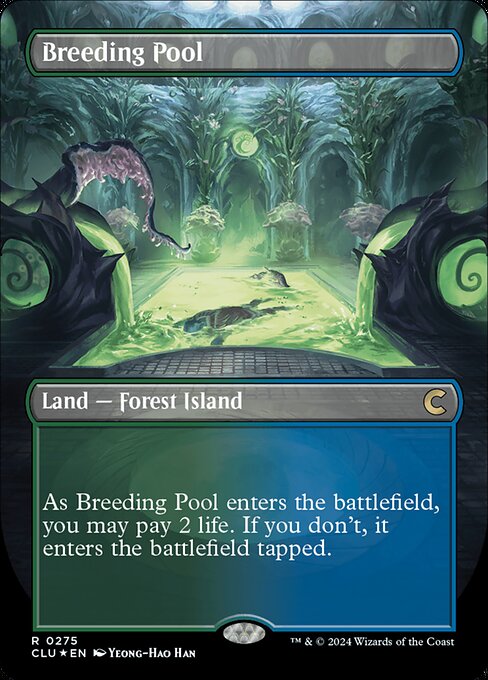
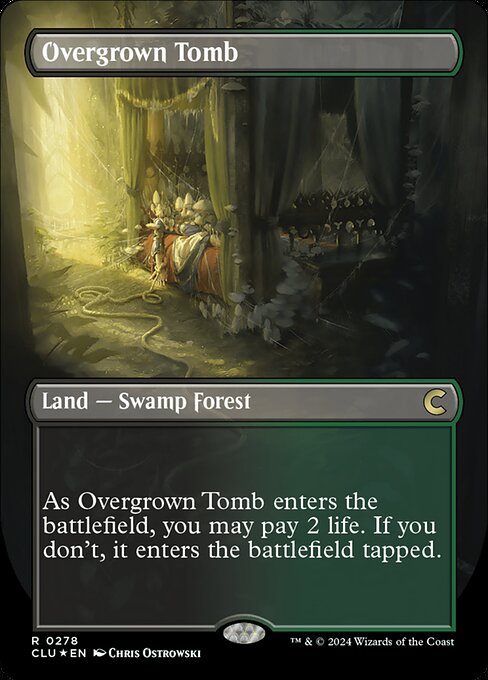
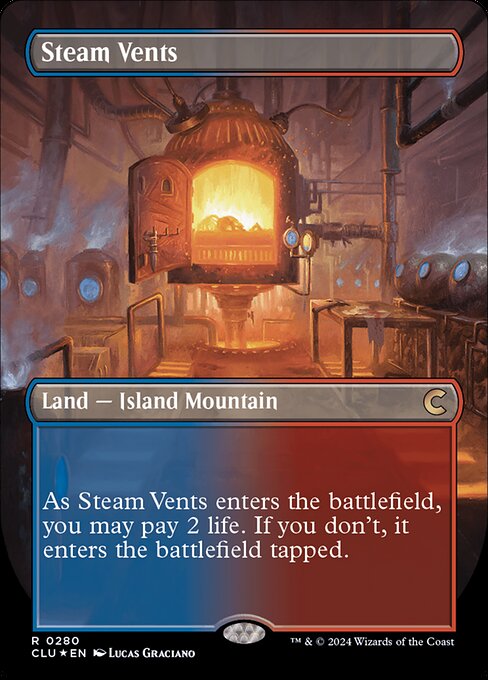
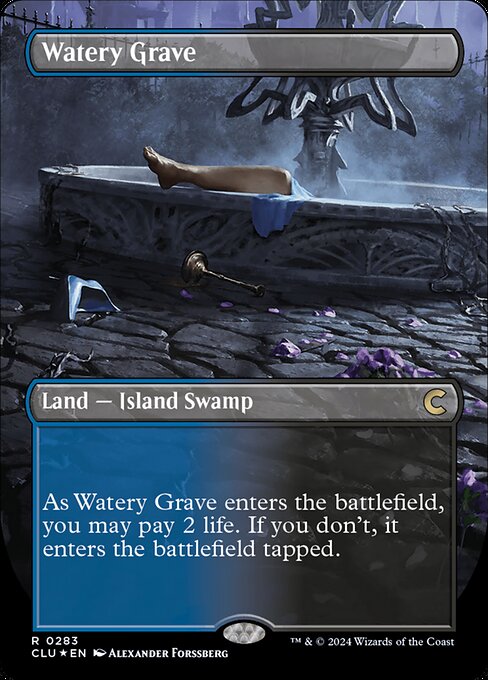
We all know these lands. They’ve been Constructed staples since the day they were printed, and the same flexibility that makes them great there matters in Limited.
Two life is a real price, especially against an aggressive deck, but being able to get both colors untapped when you need them can be the difference between casting your spell and watching the game slip away.
Everything from the Planets discussion still applies: prioritize fixing, especially when Strange New Worlds is also hunting for it. I’ll spare you the entire lecture again. If you ignored it the first time, I doubt another paragraph will help.
Losing two life to cast your spells beats losing twenty because you couldn’t.
In Limited, needing two other lands to get the untapped version is barely a restriction, it might as well say enters untapped. You generally aren’t doing much on turn one anyway, so even when you have to play one tapped it is a pretty painless trade.
It’s a little annoying that you have to satisfy the condition for the extra benefit these give, but these are effectively replacing a basic land while offering additional utility. That’s the kind of upgrade I’m happy to make without tearing apart my mana base.
They’re also another differently named land for Strange New Worlds, without asking you to compromise on the colored mana you need to cast your spells. Finally, a bonus that doesn’t come with a self-inflicted mana problem.
A colorless land is a genuine cost in Limited, so it had better earn its spot. Artificial Anomaly does not make a particularly persuasive case.
Once you’re at five mana, including black, you can eventually use the ability to drain two life. Thrilling. Meanwhile, the land has spent the whole game not helping you cast your colored spells, which might have made getting to that point a lot less pleasant.
Yes, it’s another differently named land for Strange New Worlds. That deck also wants to cast spells across several colors, so a colorless source is hardly a free bonus.
The real anomaly will be the draft where I’m putting this in my deck.
Now this is an Anomaly with a payoff worth talking about. Drawing two cards is a hell of a lot better than draining two life, and when you cash in the land you’re effectively getting a three-for-one out of the exchange since it replaces the land with an New Planet token.
The catch hasn’t changed: a colorless source can cost you games long before you reach the expensive activation. Every spell stuck in your hand because you’re missing a color is part of the price you’re paying for those future cards.
Still, I can imagine plenty of late games where turning a land into two extra cards swings things in your favor. If your colored sources are already secure, that’s a real reason to make room.
I’m slotting this directly between Artificial Anomaly and Gaseous Anomaly. Picking off a cheap creature is more valuable than draining two life, and less valuable than drawing two cards. Groundbreaking analysis, I know. Somebody get me a research grant.
Removal stapled to a land is useful when the target lines up. The trouble is that you’re playing a colorless source and paying a hefty activation cost for an effect that may not have a worthwhile target by the time it’s available.
Sometimes you’ll kill something important. Other times you’ll stare at a board full of creatures that don’t care and wish this had simply tapped for a color.
There is no universe in which I’m putting this in a Limited deck.
Even if you’re all-in on different creature types, you need seven of them on the battlefield just to come out one mana ahead. SEVEN. And assembling that cast probably means you need several colors, which is unfortunate when your brilliant plan starts with a colorless land.
I’m not wasting a pick on a mana source that needs the entire graduating class to show up before it does anything interesting.
Pretend you can’t afford the tuition and go elsewhere. Frankly, I’d rather enroll at a community college.
In retrospect, maybe I should have put all the Anomalies in one section. There’s only so many times I can explain that colorless lands have a cost before I start repeating myself.
Anyway, here we go again. Two 1/1 tokens are fine. They can chump block, become sacrifice fodder, or help station a Spacecraft. Some decks will absolutely squeeze a little extra utility out of them.
But that’s still a modest payoff for a late-game activation attached to a land that’s been making your colors worse all game. I don’t think the math works often enough to be enthusiastic.
Two bodies are nice. These aren’t free, and apparently neither is my ability to find something new to say about the damn Anomalies.
The final Anomaly has arrived. Thank God. I was beginning to think these things were reproducing faster than Tribbles.
It’s another colorless land offering a decent late-game effect that doesn’t quite justify the stress it puts on your mana base. If the rest of your lands are excellent, sure, you can afford the luxury. If you’re already struggling to cast your spells, this is just making your own life harder.
At least that’s the end of the cycle. The real Temporal Anomaly is how much time I’ve spent reviewing lands I probably won’t play.
I like that they used this version instead of Evolving Wilds, even though you can argue it’s the worse card. In this particular format, the difference actually matters.
Both can find the colored source you’re missing. But when your mana is already sorted, Unexplored Territory can stay on the battlefield and count as another differently named land for Strange New Worlds. That’s a nice little bonus for the deck that’s apparently trying to collect lands like they’re Pokémon.
Unlike the Anomalies I just spent an entire geological era complaining about, this isn’t asking you to choose between supporting your theme and casting your spells. Need a color? Go get it. Already fixed? Keep the unique land.
Sometimes the technically less powerful version of a card is exactly what the format wants.
And with that, we’ve finally reached the end of the Star Trek Limited set review. Five colors, multicolor, artifacts, lands, and more opinions about colorless mana sources than any reasonable person should have to read. If you’re still here, congratulations. You’ve boldly gone where most people have the good sense to stop scrolling.
The biggest takeaway for me is that this is a format with plenty of powerful synergy, but the best cards don’t force you to forget how to play normal Magic. Borg rewards you for curving out and putting pressure on the board. Klingons can turn disposable creatures into a genuine resource, especially with cards like Gowron and L’Rell. The Golgari graveyard decks have no shortage of ways to turn discarded or sacrificed cardboard into more cards. Izzet wants spells, while Selesnya has plenty of reasons to start spreading +1/+1 counters around. And Strange New Worlds is out here treating the land section of a booster pack like a shopping list.
That last deck is also a reminder that mana matters. Planets, shock lands, and the other fixing options aren’t glamorous picks, but your brilliant three-color pile isn’t worth much when you can’t cast anything in it. The colorless Anomalies, on the other hand, are mostly asking you to make your mana worse for a late-game bonus that might not even matter. Just because a land has a text box doesn’t mean it deserves one of your forty slots. Starfleet Academy, I’m looking directly at you.
The artifacts are a perfect example of the difference between upside and wishful thinking. Replicator gets a 4.5 because the set is absolutely crawling with tokens to copy. U.S.S. Enterprise-D, Galaxy-Class gets the same grade because it’s generating value while you’re still stationing it, before turning into a giant vigilant flyer. Crystalline Entity can be devastating when you have the ramp to cast it. Compare those to Deep Space 9, which asks for nine mana and a sizable chunk of your library before your victory lap can even begin. Big effects are wonderful. Actually getting to use them is considerably better.
That’s how I’m approaching the first drafts: start with cards that are good on their own, find the synergies that naturally fit, and don’t start jamming garbage into the deck just because the word you’re looking for appears somewhere in its rules text. A good signpost uncommon should reward your plan, not convince you to play five cards that would otherwise belong in the sideboard. And if something seems a little too clever, remember that sometimes the best play is still just casting a creature and attacking with it.
Of course, these grades aren’t carved into a stone tablet on Vulcan. The format will make a fool of some early evaluations, as it always does. That’s part of the fun. I’ll be watching which cards outperform expectations, which supposed bombs fail to deliver, and which decks turn out to be considerably better than they look on paper. There will be plenty to discuss in future Limited Weekend Updates.
Thanks for making it through the entire voyage with me. We’ve survived the Borg, all the different-colored mana, and a pile of terrible cards like Year of Hell. Now it’s time to stop reviewing and start drafting. After all, even the Enterprise eventually has to leave spacedock.
I’ll have my archetypes guide out later this week along with your usual Midweek Magic nonsense.
Until then, stay classy people.
If you have any questions, let me know in the comments below.
Josh is a member of the elite limited team The Draft Lab as well as the host of The Draft Lab Podcast. He was qualifying for Pro Tours, Nationals, and Worlds literally before some of you were born. After a Magic hiatus to play poker and go to medical school, he has been dominating Arena with over an 80% win percentage in Bo3 as well as making #1 rank in Mythic.