Hello, my fellow Planeswalkers! Last week, I talked about Mono-Green Landfall, an old Standard favorite that many players counted out after the banning of Badgermole Cub. However, the deck carved out a spot in the post-Cub metagame thanks to its strong matchups against 4-Color Control and Dimir Doomsday Combo, which rose up to challenge the Izzet Elementals deck.
This week, I’m sticking with Landfall, but I’m switching gears to discuss the more interactive and resilient Selesnya build.
With Standard RCQs upon us, I’ve been spending a lot of time thinking about what I actually want to register. While I still believe Izzet Elementals is probably the best deck in Standard, the metagame I’m expecting to face locally is a little different from the overall metagame.
There is a lot of Landfall, 4-Color Control, and Dimir Doomsday.
That changes how I approach deck selection. When I’m preparing for a tournament, I rarely ask, “What is the best deck?” Instead, I ask, “What is the best deck for the tournament I’m actually going to play?”
Right now, I think that deck is Selesnya Landfall.
Why Not Just Play Mono-Green?
I still really like Mono-Green Landfall and think the core of that deck is incredibly powerful. It has some absolutely ridiculous turns and can punish anyone who isn’t prepared for the sheer amount of pressure it can generate.
So why change it?
Because I’m expecting to play against other Landfall decks.
That changes things. The Mono-Green mirror can often come down to who combos the best and who gets there first. I don’t want to play that game.
This deck is honestly just Mono-Green with removal.
I think this is better than the “all-in” build that plays more like a combo deck because we have access to tools that let us solve problems Mono-Green has to simply ignore.
Erode is just the best catch-all removal spell in the format. However, we can also use it on our own creature in a pinch to get an extra Landfall trigger and close out the game.
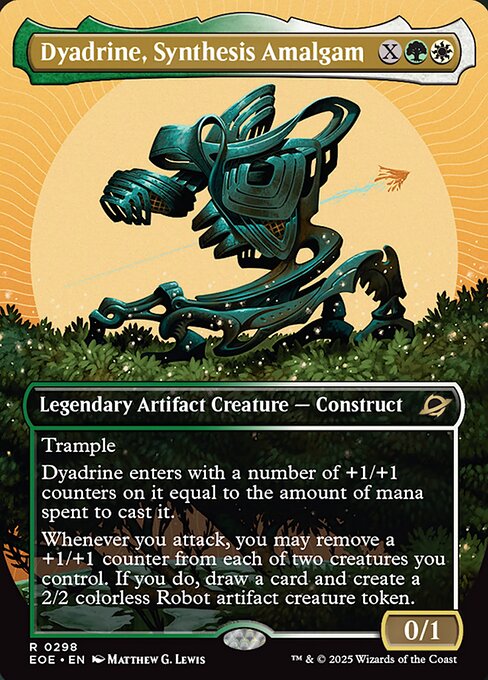
We also get to play Dyadrine, Synthesis Amalgam, which gives us a mana sink in the mid-to-late game and lets us draw some extra cards while building up a “go-wide” plan that abuses the +1/+1 counters we’ve accumulated as resources.
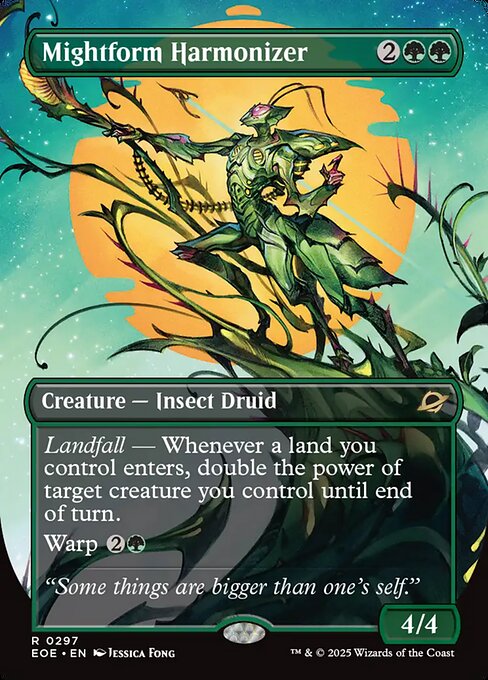
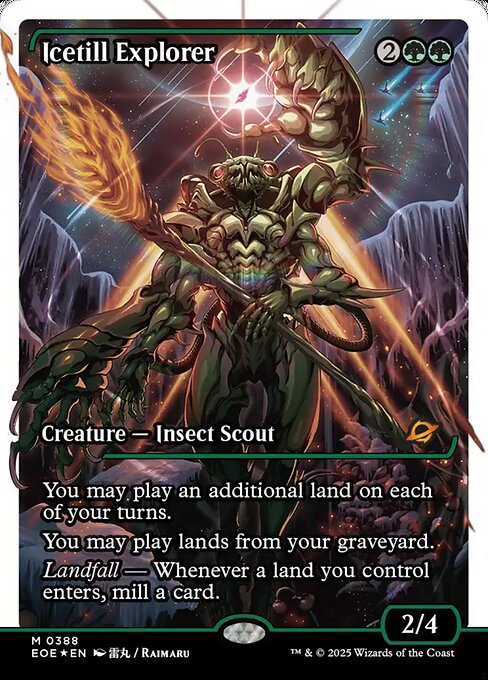
Like our Mono-Green counterpart, we are still essentially a combo deck. We want to resolve a Mightform Harmonizer, possibly alongside an Icetill Explorer, and take over the game by making one or two huge attacks.
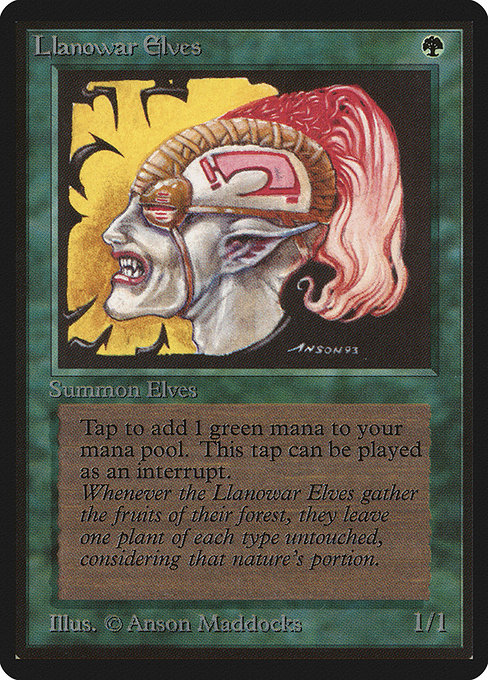
Once again, we start off with the MTG staple Llanowar Elves. This little guy sets up all of our early plays and allows us to get ahead of the opponent on mana.
If we don’t have the Elf, don’t worry too much. We can lead on Sazh's Chocobo for a more aggressive start. Against removal-light decks, it can get out of hand quickly and take over a game, especially if we get two in our opener alongside a fetch land or two.
Earthbender Ascension is still the heart of the deck. It allows us to break through creature-clogged boards by giving our creatures trample while providing a steady stream of counters for Dyadrine, Synthesis Amalgam.
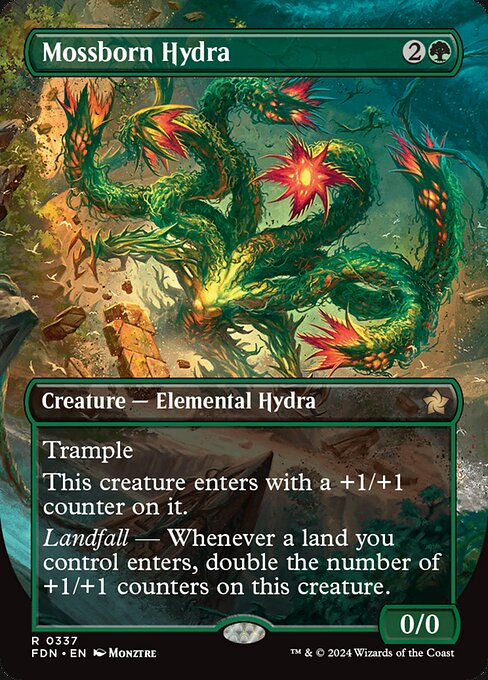
When playing Selesnya, I also choose to play Mossborn Hydra in the main deck. Not only does this front-load our deck against the mirror because of the light removal, but it’s also great against Elementals because it can’t be bounced by Sunderflock. On top of that, it presents a huge must-kill threat against control decks that can take over the game in just a turn or two.
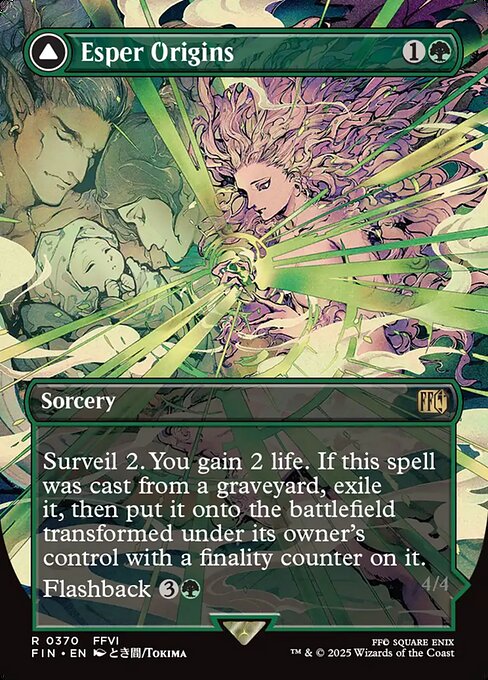
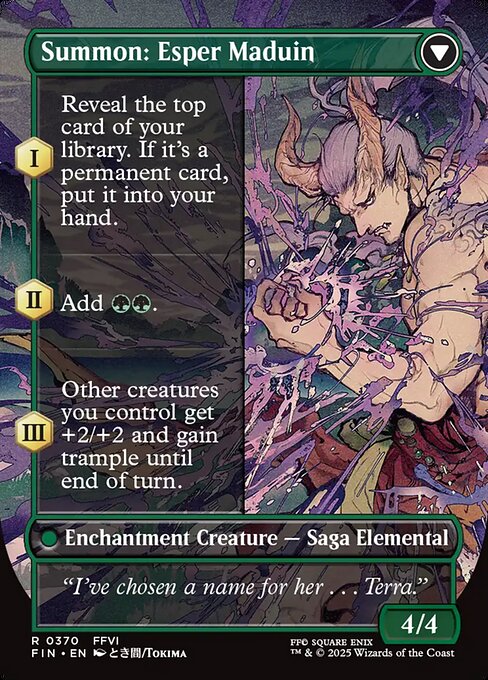
Esper Origins is a great way for this deck to generate value. The first time you cast it, it lets you stack some draws, but when you flash it back, you essentially draw a card and get a 4/4 body with some crazy effects that can let us simply win if it sticks around. and it almost feels like a planeswalker sometimes.
The Sideboard
The sideboard is where I get to really tune the deck for the tournament.
It’s important to remember that the more cards we take out of a deck like this, the more inconsistent it becomes. So, if something is maybe good enough, it isn’t good enough.
I want everything in the sideboard to be unquestionable.
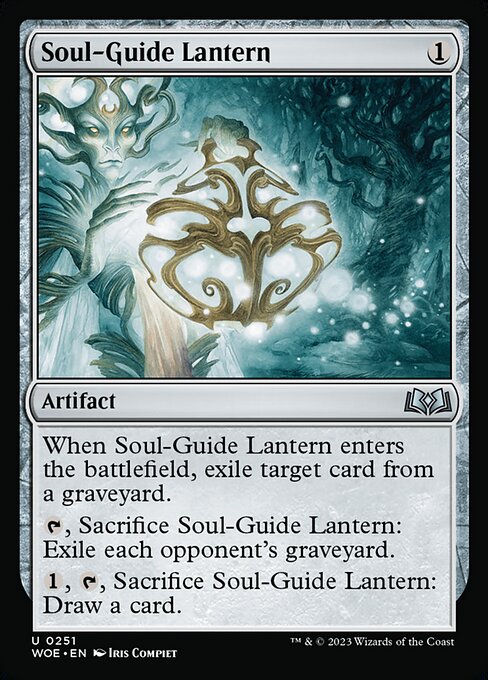
Soul-Guide Lantern remains the best graveyard hate in the format. I see some players playing Rest in Peace in this slot, but that turns off our own Icetill Explorer. I’d rather have Lantern and retain the option to draw a card in a pinch.
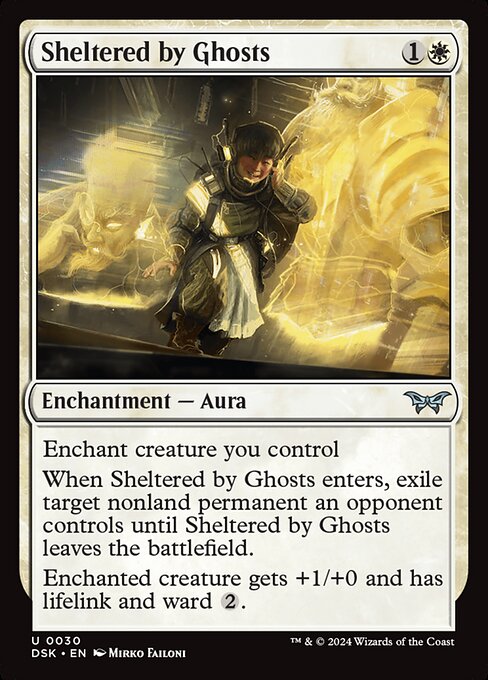
Sheltered by Ghosts gives me another way to answer problematic permanents while supporting our big-creature plan because it gives lifelink. This isn’t a card I want against control or midrange decks, but it is brutal in the mirror and against aggro.
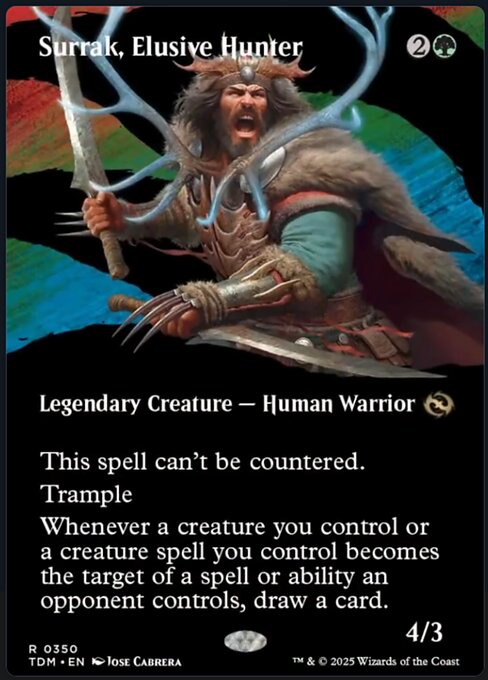
Surrak, Elusive Hunter gives me another powerful threat for grindy games where I expect the opponent to try to trade resources one-for-one. We come out ahead by generating additional card advantage.
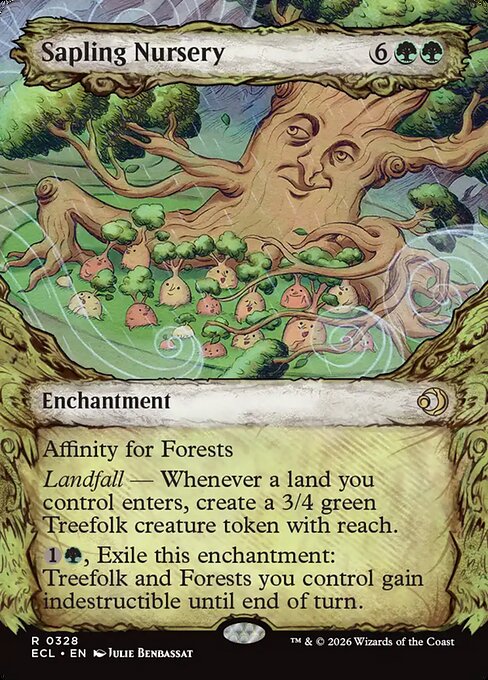
Sapling Nursery gives us another angle of attack in slower games by allowing us to turn land drops into threats. It also gives us a way to protect our own creatures by sacrificing itself.
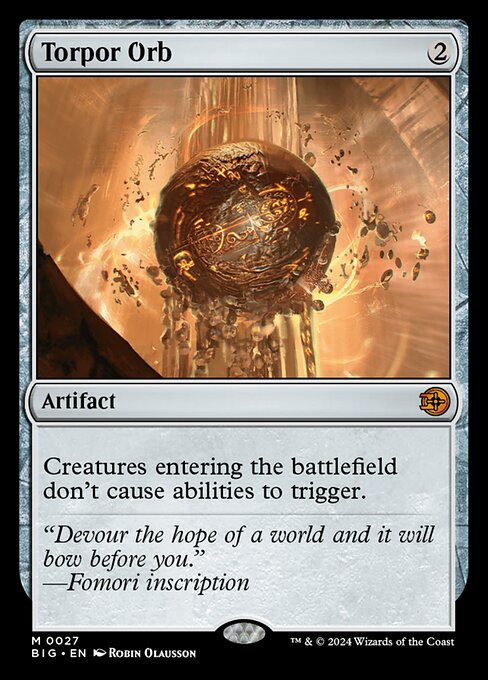
Torpor Orb is critical against Elementals since it shuts off Sunderflock and Eddymurk Crab. It’s also fantastic against Reanimator because it shuts off Bringer of the Last Gift and the evoke creatures. It’s also very good against lifegain aggro decks.
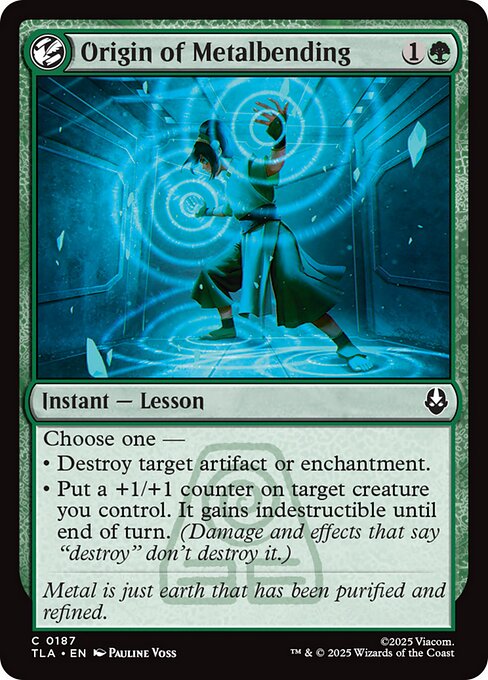
Origin of Metalbending is my go-to for artifact and enchantment removal. It can come in against 4-Color Control, where it can shut off some targeted removal or pop a Tablet of Discovery.
The sideboard isn’t trying to turn us into a different deck.
Sideboard light. Win big.
The RCQ Question
This is ultimately why I wanted to write about this deck this week.
In my last article, Mono-Green Landfall was the deck I was talking about because I think the archetype is extremely powerful.
This week, I’m showing you the version I’m actually interested in taking into the first round of RCs.
There is a difference between saying:
“This is a good deck.”
and saying:
“This is the deck I want to register.”
For me, that difference comes down to the metagame.
If I expect nothing but random decks, Izzet Elementals probably gets the nod.
But if I expect a room full of Landfall decks, Control, and some Elementals?
I’ll take Selesnya.
It gives me the explosive Landfall engine I already know and love, plus interaction. I can also relax a bit because I don’t have to play coin-flip mirrors.
I’m already favored!
Final Thoughts
Standard is in a really interesting place right now.
I still think Izzet Elementals is probably the best deck overall, but that doesn’t automatically mean it’s the deck you should play. The metagame matters, and your local metagame matters.
As we head into the first RC events, I think identifying what people around you are actually playing can be just as important as looking at the overall tier list.
But ultimately, you need to play a deck you enjoy and will have fun with.
If you aren’t having fun, there isn’t much of a point. There are infinitely better ways to gamble away your entry fee—and better ways to spend your time.
Until next time, my fellow Planeswalkers, Hero out!
My name is The MTG Hero. I have played Magic for over 15 years. I am a consistent high Mythic ranked player. Follow me on Twitch and subscribe on YouTube!