Hey everyone! Modern Horizons 3 has had an enormous impact on Timeless causing probably the biggest metagame shift since the format began, and while I feel like there are almost certainly decks still yet to be found, and archetypes still yet to be fully refined, we’ve started to see the dust settle and early contenders emerge.
I’ve just updated both the Best of 3 and Best of 1 Timeless tier lists to try and reflect this based on a combination of data, decklists from the community, and my personal experience having played the format a lot since MH3 dropped, and in this meta report I’ll be going over all of the new decks that have emerged, any changes to pre-existing archetypes and their movements up or down the tier list, and going over all of the previous archetypes I’ve removed from the previous tier list and why they struggle to compete in the new metagame.
I’m not going to provide a summary of each deck since I’ve done that within the tier lists (which you can check out here for Bo3 and here for Bo1), instead I’ll be discussing individual builds and going over some specific card choices within the sample lists I’ve provided in the tier list, new cards and how they change the archetypes, and how the decks are positioned in the current metagame. Let’s get into it!
This is definitely the breakthrough new archetype from MH3 which possesses a scary combination of being able to close games out very quickly whilst also being able to grind well into longer games.
On top of that, there are a lot of good cross synergies going on but the overall individual card quality is very high too which makes discard spells and counterspells fairly ineffective, and the deck runs a really high density of must-answer threats which makes spot removal less effective too.
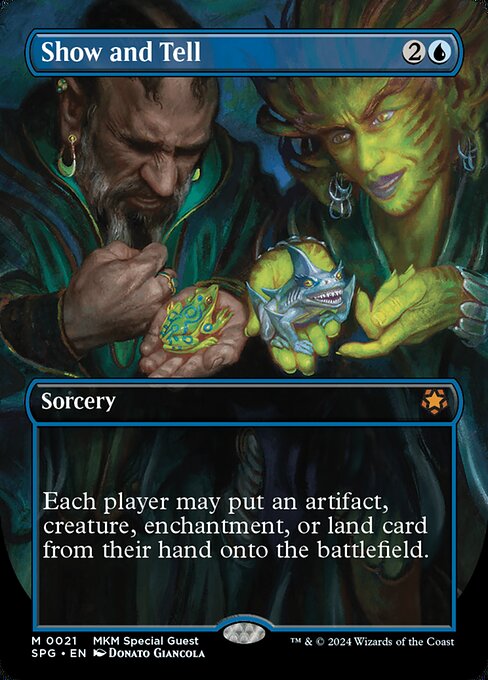
Its main weaknesses are to board sweepers, fast combo decks, and interactive heavy decks that go bigger than it such as 4 color Beans, but you also have solid sideboard options to improve these matchups such as Invasion of Gobakhan against control, Roiling Vortex against Show and Tell, and Blood Moon against 4 color midrange so I think the deck should be fairly adaptable even if its more difficult matchups become more popular.
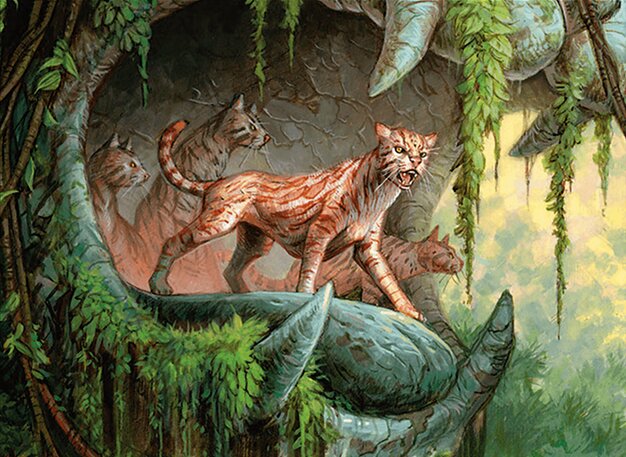
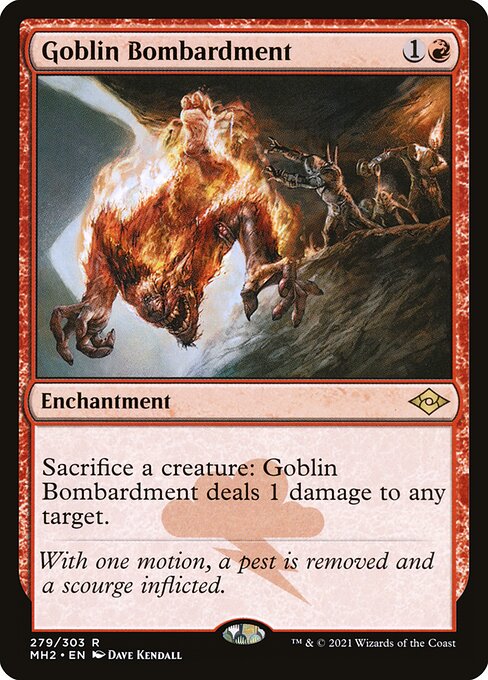
I’m a big fan of Goblin Bombardment in the archetype since it’s so good alongside Ajani, Nacatl Pariah as it lets you flip it at will, and it counts as a red permanent for the 0 ability which enables you to deal a huge amount of damage in a single turn, and also works very well with the tokens produced by Ocelot Pride.
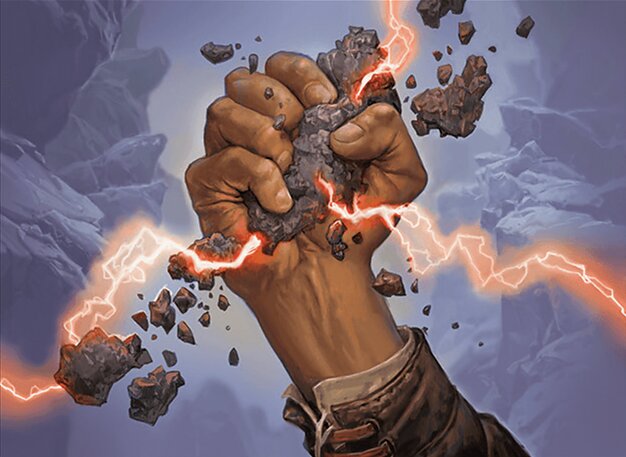
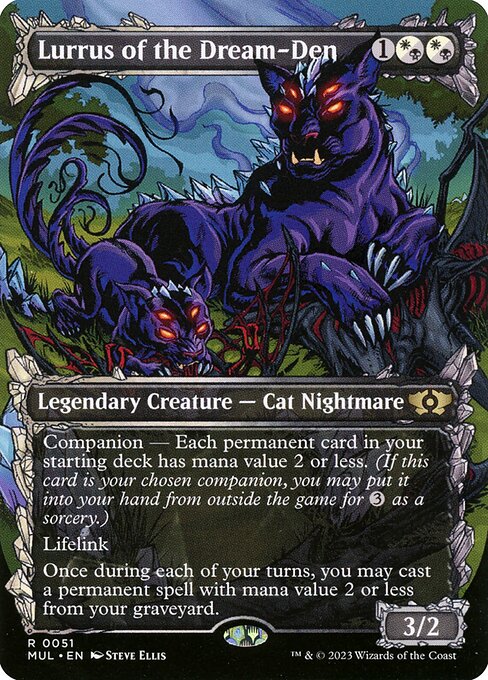
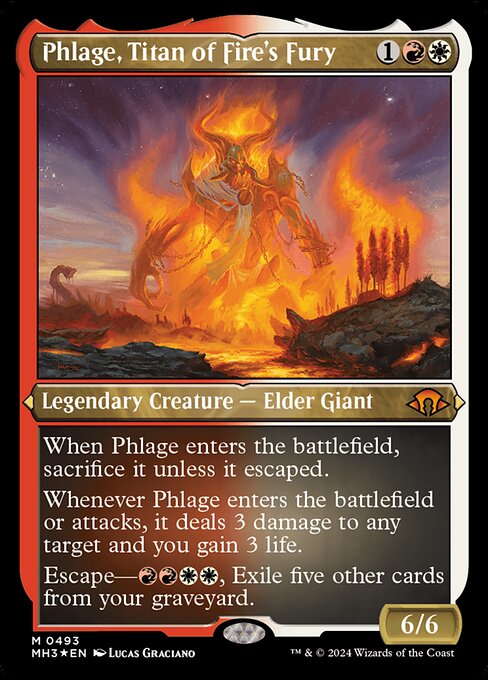
Phlage, Titan of Fire's Fury has also really impressed me in the archetype providing extra interaction, reach, and a very strong threat in longer games, and Blood Moon is one of your best cards in some of the trickier matchups such as 4 color Beans, Titan Field, and control so there are good reasons to forego Lurrus of the Dream-Den too.
There are also mardu variants of this deck splashing black for cards like Orcish Bowmasters, Chthonian Nightmare, and discard spells which have looked strong too and will arguably be better in certain metagames but you do lose out on cards like Blood Moon due to the less clean manabase, and will have to cut some high quality proactive boros cards to fit the black cards in which often slows down your ability to close out the game.
I’ve not included mardu in the tier list yet since it’s not clear yet if it’s better than Boros variants and the lists I’ve seen so far don’t look as refined but this is definitely a space to watch going forwards and I’ll be happy to add mardu once lists become more refined if it’s putting up good results.
This is an archetype that fills a very interesting spot in the metagame where it tends to beat any fair deck but struggles against non-creature based combo specifically which is a pretty good place to be right now since the majority of decks outside of Show and Tell and Belcher will have a tough time against 4 color Beans.
It is weak to Blood Moon which is one of the main ways decks like Boros Energy and Rakdos Scam have of attacking 4 color Beans, and control can be a tricky matchup if they manage to keep your key card advantage engines off the board, but you do have good answers to Blood Moon in the form of Boseiju, Who Endures as well as basics of each color to help you play around it, and you can often run control decks out of counterspells due to your high density of good quality standalone cards.
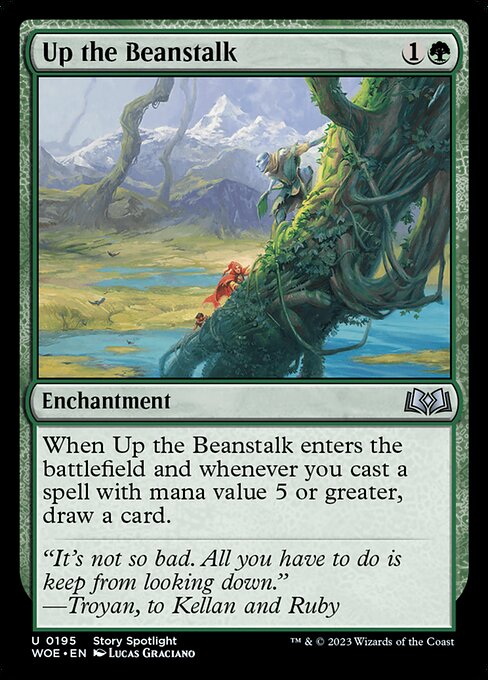
We knew how good the 5 mana elementals were going to be alongside Up the Beanstalk from Modern, where having Up the Beanstalk in play turns all of your pitch elementals into card neutral if you evoke them, or card advantage if you hardcast them or have multiple Up the Beanstalk in play (as well as turning all of your Leyline Binding into card advantage too).
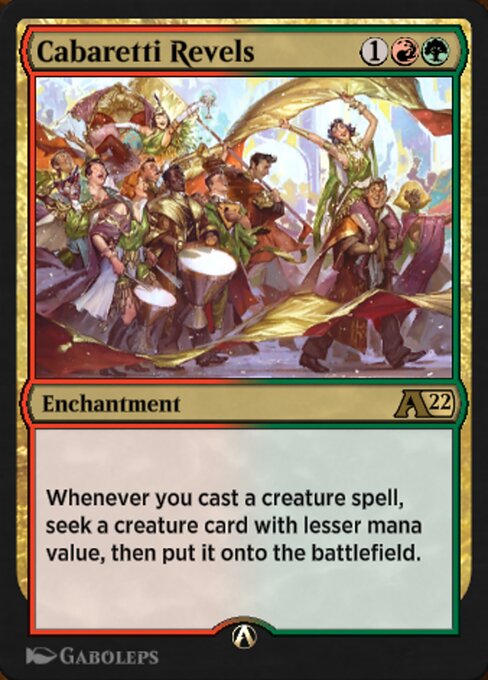
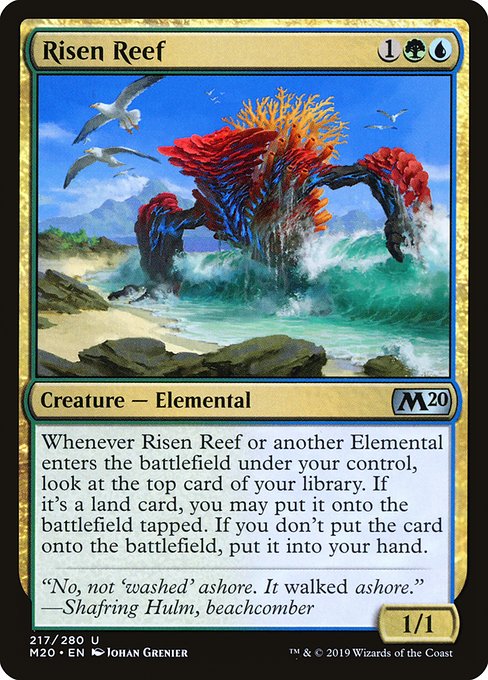
One Arena exclusive card that’s really impressed me in this shell though is Cabaretti Revels which is more expensive but is much more explosive, especially alongside Risen Reef.
Typically the big weakness of Cabaretti Revels is it does nothing the turn it comes down which is a big downside in a format as fast as Timeless, but since we got the pitch elementals we can cast Cabaretti Revels on turn 3, then evoke an elemental the same turn which triggers it, and if you hit a Risen Reef you get a card off the enter the battlefield ability, and then another card from the elemental entering which immediately turns your evoke elementals into card advantage.
Things get even crazier after that though since if you have a second evoke elemental available or you draw into one off the first Risen Reef triggers, you can evoke another one and then if you hit a second Risen Reef you get 4 cards meaning you can sometimes draw through your whole deck on turn 3 if you find multiple evoke elementals early on (Risen Reef putting lands into play is also huge for following turns and it puts cards into your hand rather than drawing which makes you less vulnerable to Orcish Bowmasters).
As mentioned previously combo is definitely your weakest matchup though – unlike Boros Energy you can board into counterspells since you’re running blue which does give you access to sideboard options like Dovin's Veto in addition to the permanent-based hate like High Noon and Disruptor Flute, but you’re also usually quite a lot slower at closing the game out which gives the combo decks more time to answer or play around your sideboard cards, so that’s the main sticking point for the archetype at the moment.
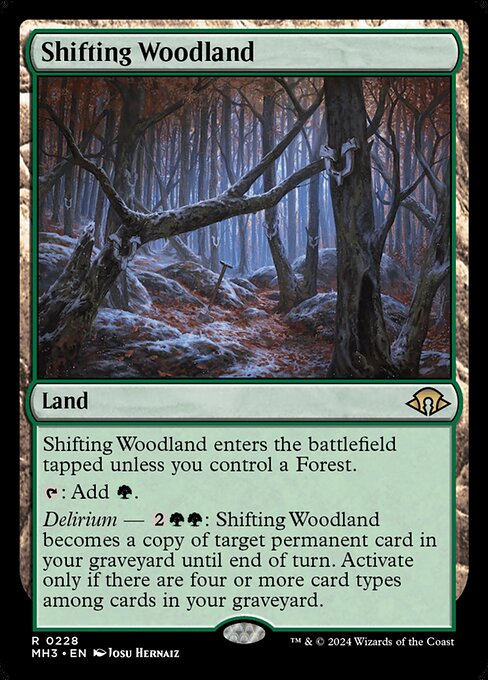
Before I go over the tweaks made to the list since the last tier list update I wanted to talk about Shifting Woodland since that’s a card I was really excited about from MH3 and felt like it could improve the archetype a lot, giving it a secondary angle of attack and more resilience.
I’ve tried a ton of different builds combining Show and Tell and Shifting Woodland, and while a lot of them did feel good, none of them really felt better than more conventional builds largely due to the lower card quality required to enable Shifting Woodland in the first place, and also because the conventional builds already have decent tools to fight against the interaction that Shifting Woodland was good against.
This mainly comes in the form of discard spells and counterspells which were the main points of interaction that Show and Tell struggled to play through outside of permanent-based hate cards, and Shifting Woodland not being stopped by either discard spells or counterspells, and also not giving the opponent the opportunity to cheat a permanent into play like Show and Tell would is very appealing.
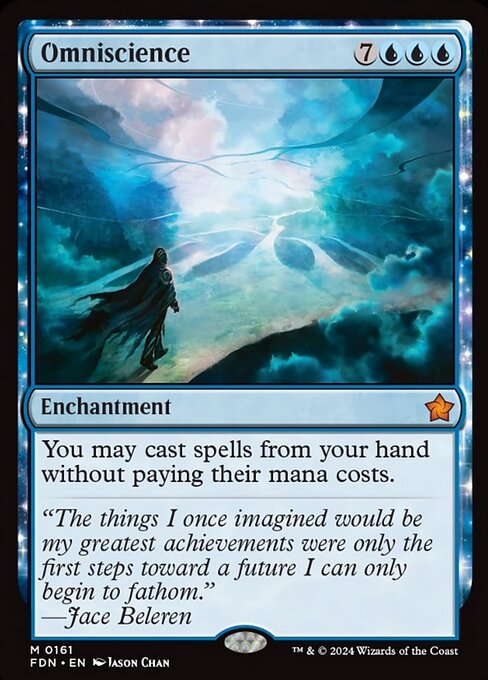
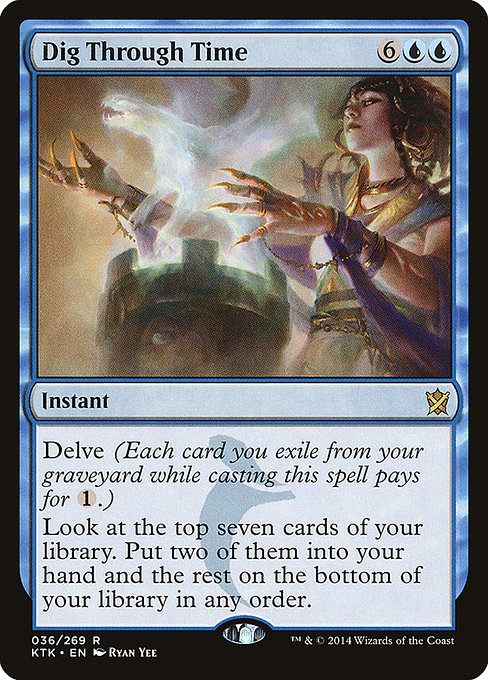
You don’t really have to change the deck too much to enable delirium since you won’t want to activate it until you already have Omniscience in the yard so you only need 3 other card types in addition, and you can fairly consistently get land, sorcery, and instant into the graveyard, however needing delirium does conflict fairly heavily with Dig Through Time which is one of the best cards in Show and Tell.
Not only does Dig Through Time usually guarantee that you don’t fizzle when going off with Omniscience as well as being great at finding Borne Upon a Wind to win through cards like Static Prison and Leyline Binding, but it’s also really great at finding the combo pieces beforehand, and is particularly good at recovering from early discard like Grief scam, and I felt like it was really difficult to run Dig Through Time and Shifting Woodland together since they’re both heavily reliant on the same graveyard resources.
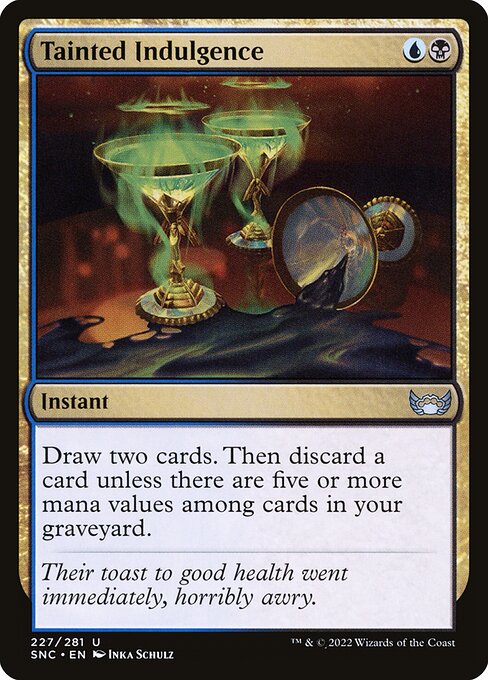
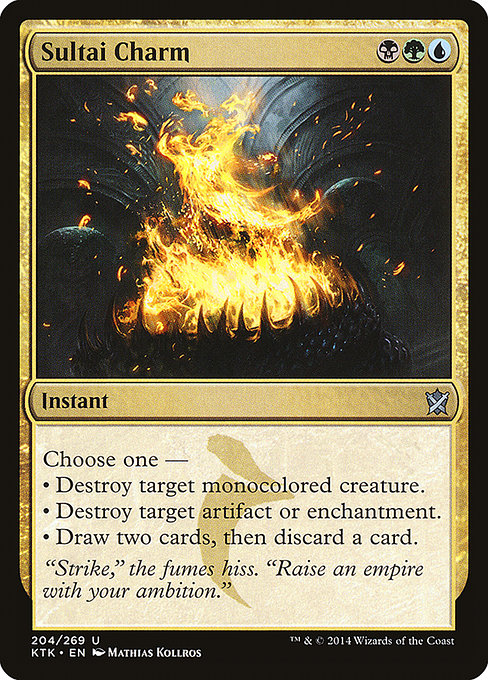
Additionally the other big issue with Shifting Woodland is that you need to pitch Omniscience into the graveyard which means cutting more efficient ways to dig through the deck such as Assemble the Team, Brainstorm, or Dig Through Time in order to run cards like Tainted Indulgence or Sultai Charm which hurts the speed at which you can assemble the Show and Tell side of the deck so it felt like you were making the primary gameplan worse in order to fit in a secondary one.
Additionally I feel like more focused conventional variants already have good tools to fight those points of interaction which I’ll be going over below, such as Leyline of Sanctity and Veil of Summer against discard spells, and Veil of Summer and Defense Grid against counterspells so I’m not sure the juice is worth the squeeze with Shifting Woodland currently.
Having said all of that I still think the card is very strong and there’s a chance I might be missing a build which runs better quality ways to enable Shifting Woodland without diluting your proactive gameplan (AliEldrazi’s recent builds with Ugin's Labyrinth and Goblin Charbelcher were both really nice innovations although I don’t think either of them are as strong as more conventional Sultai builds personally) so I’m hopeful there’s still a good build yet to be discovered.
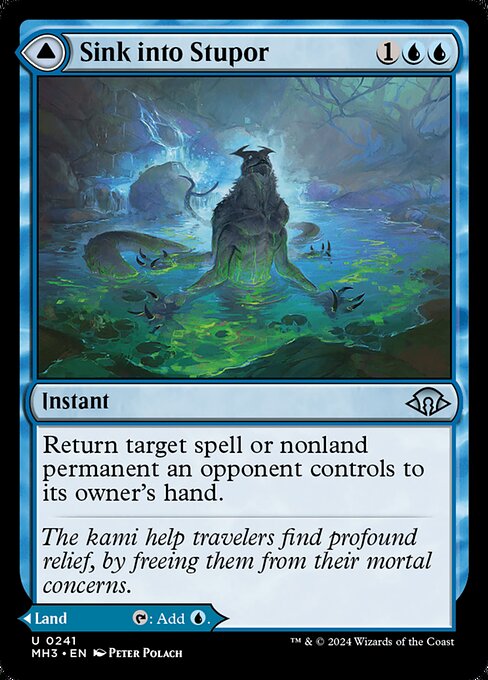
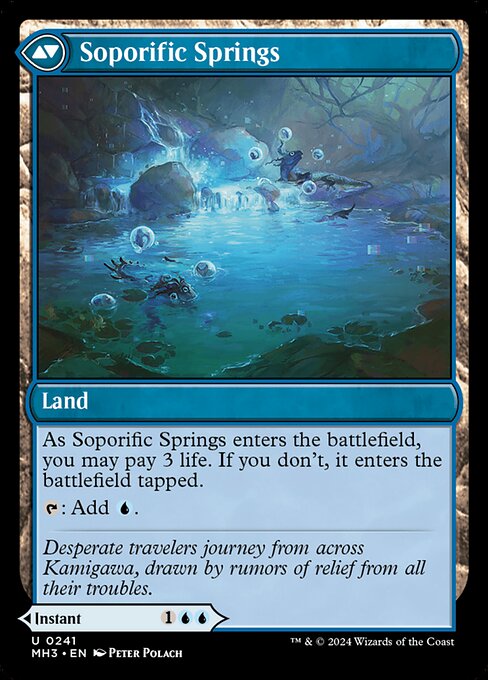
The other new card from MH3 which has been an excellent addition to the archetype is Sink into Stupor which can be played as an untapped blue land when needed but also acts as an instant speed answer to any problematic hate card (which is particularly useful against maindeck cards like Static Prison and Leyline Binding since you can use it to bounce either of those with the trigger on the stack once you have Omniscience in play), and gives you a way to fight on the stack too.
Outside of that I’ve cut Brainstorm since I think the list already has enough ways to assemble the combo without it, which leaves room for 3 flex slot playsets in the maindeck deck focused on protecting the combo.
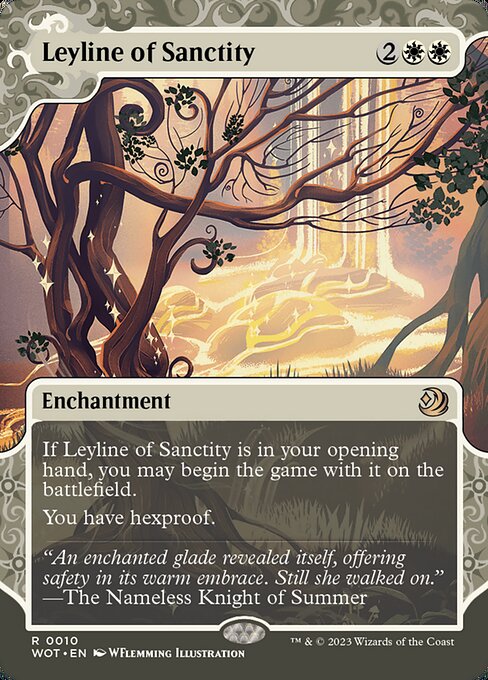
The first of these is Leyline of Sanctity which I think is really important as a way of fighting against discard heavy decks which is a big concern with the addition of Grief. You might be wondering why I’m opting for that over Veil of Summer which is much more flexible since it’s also great against counterspells, but it’s just too slow on the draw and so won’t work as effective defense against Grief scam 50% of the time.
Additionally I think Leyline of Sanctity is significantly better against Grief and Thoughtseize decks since discard is usually their only way of slowing you down and they really struggle to race outside of that so having Leyline of Sanctity in your opening hand will often single handedly win you the game against black discard decks.
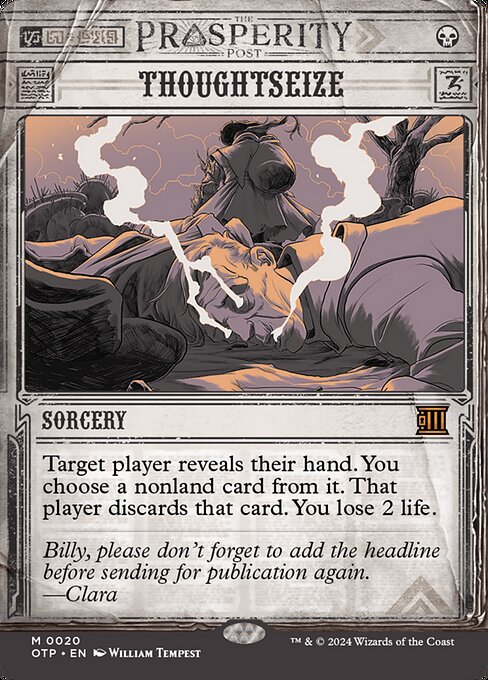
The second slot goes to Thoughtseize which is great at slowing down opposing combo decks, and is great at pre-emptively getting rid of counterspells, or problematic permanents the opponent could put into play off Show and Tell.
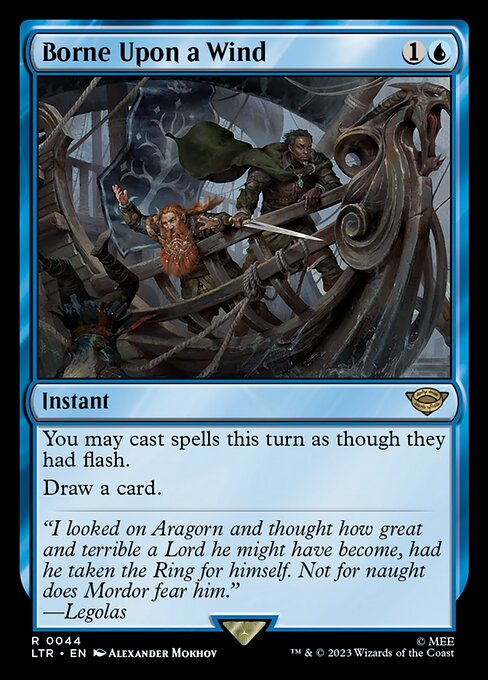
The final slot goes to Borne Upon a Wind which you’d want 4 copies of in the 75 to be able to combo off during the opponent’s turn in the mirror, as well as being able to win with an enter the battlefield trigger which will remove Omniscience on the stack. With both Static Prison and Leyline Binding seeing maindeck play in Boros Energy and 4 color Beans respectively I think it’s important to run a playset of Borne Upon a Wind in the maindeck in addition to Sink into Stupor to maximize your chances of finding an answer or you risk losing to what should be a good matchup.
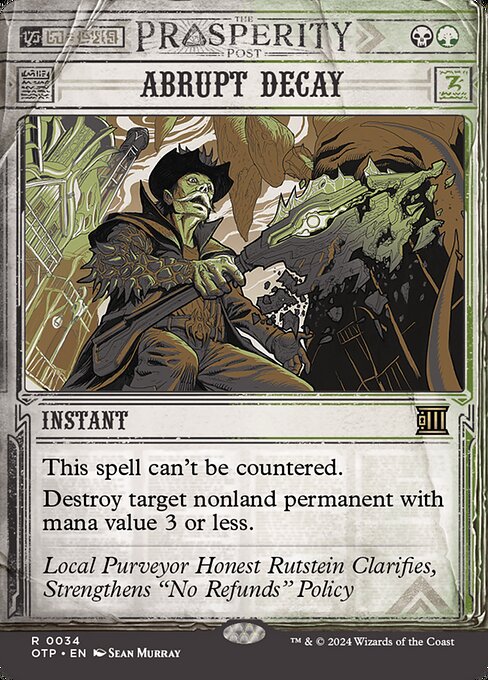
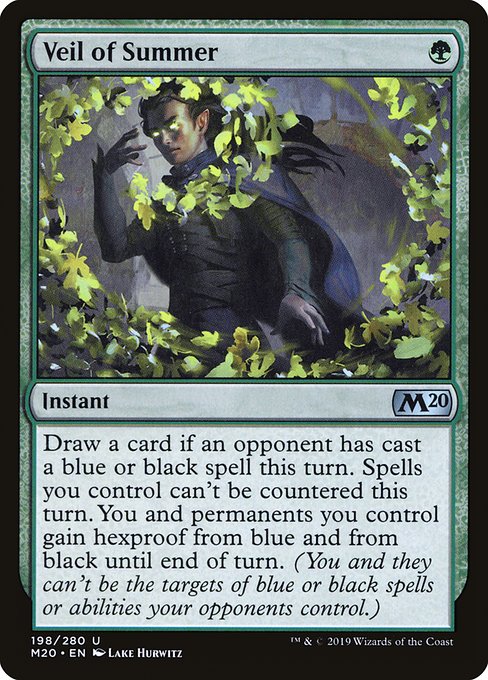
The first of these is Abrupt Decay which is really important as a catch-all answer for any hate card (including Vexing Bauble and Boromir, Warden of the Tower since it can’t be countered), as well as being able to answer creatures in a pinch of you just need to buy time. Veil of Summer is also a great sideboard card against both discard spells and counterspells which goes a long way to improve your difficult matchups.
Finally I wanted an additional card to bring in against counterspell heavy decks like control (since I usually want to cut Leyline of Sanctity and Borne Upon a Wind) and I’ve found Defense Grid to be the best option in this slot since you can sneak it under counterspells on the play, it baits out counterspells that would otherwise be used against Show and Tell, and basically forces your combo through if it resolves.
Overall the deck has felt really strong with these new changes since it naturally has a good matchup against the other two top tier decks, and has a lot of dedicated counterplay to the opponent’s best answers in the form of discard spells, counterspells, and permanent-based hate cards.
Rakdos Scam as an archetype was very popular during the first couple of weeks but slowly declined once decks with very good individual card quality like Boros Energy and 4 color Beans started to see more play, since Scam came out of the gates very strong but then tended to lose the topdeck war in these matchups, and it didn’t close the game out particularly quickly so gave these decks time to draw out of its early interaction.
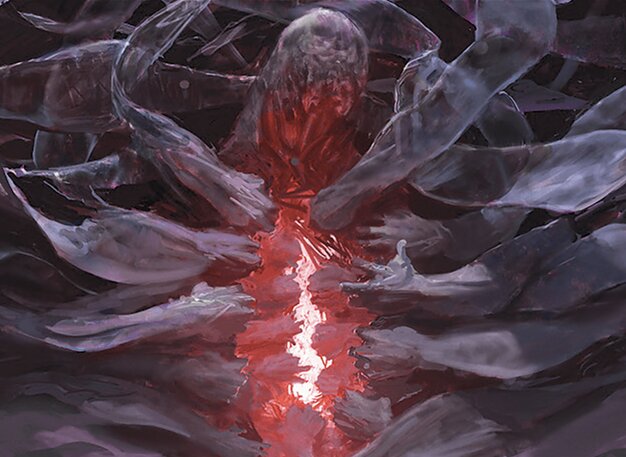
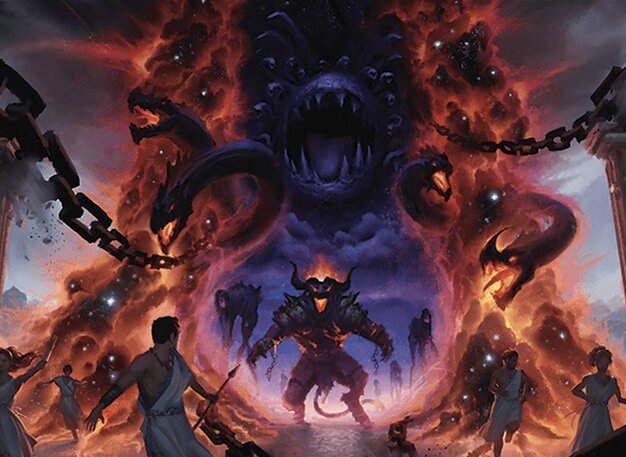
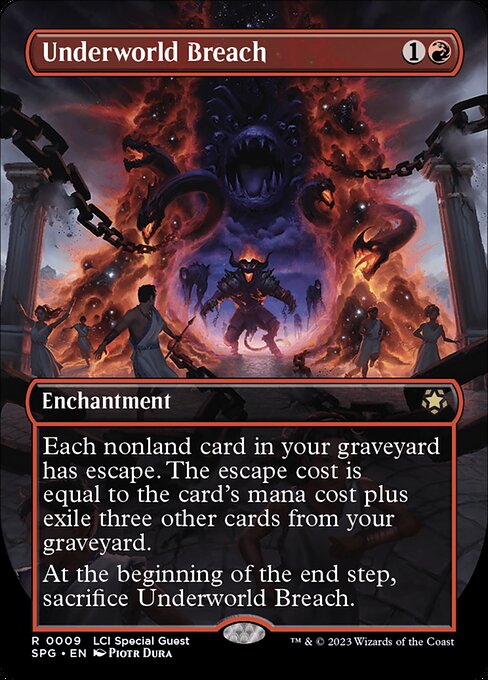
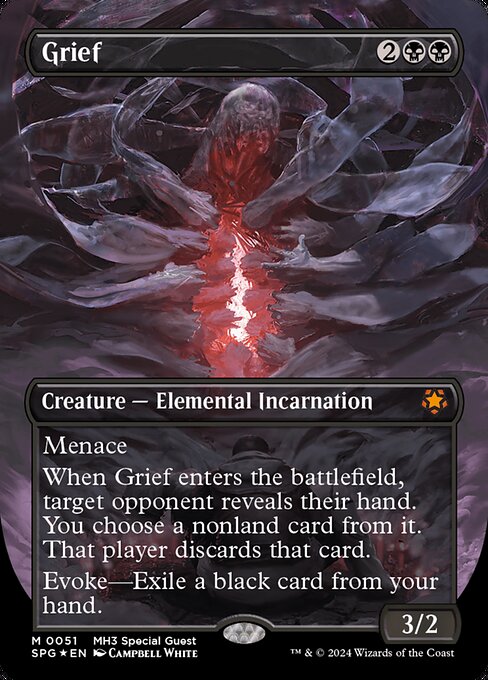
I still think purely midrange Rakdos Scam variants are reasonable and from the data and what I’ve seen so far I’d probably put it low tier 2 at the moment, but this Rakdos Scam variant combined with Breach combo made by Omri has looked a lot better because your proactive gameplan is a lot faster and stronger which enables you to more easily take advantage of the early Grief scam starts.
As a combo-midrange deck you’re still able to pivot relatively well compared to more high-synergy decks which gives you an edge post-sideboard in a lot of matchups, and it means the deck has two angles of attack which means that combo hate cards only slow you down, and don’t shut you out of the game entirely which makes the deck very resilient and difficult to shut off both angles of attack, since if the opponent is very focused on shutting off Underworld Breach, they leave themselves vulnerable to getting beaten down by Dragon's Rage Channeler and the evoke elementals instead.
Having said that the combo is weak to both graveyard hate (Surgical Extraction has been relatively popular as a way to answer cards like Phlage, Titan of Fire's Fury) and storm hate (Deafening Silence is seeing play in the sideboard of some decks like Boros Energy as an answer to Show and Tell), so if the opponent is able to get one of these down early, you’re either forced to beat them with your midrange gameplan (which sometimes won’t be enough), or dig for an answer to the hate cards which slows you down quite a lot. Having said that though I’ve been impressed with the deck overall and this has looked like one of the best ways to utilize Grief scam so far.
Jeskai Control
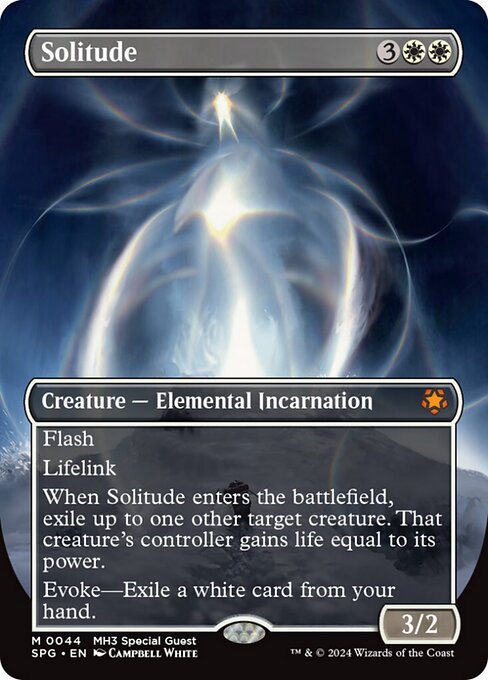
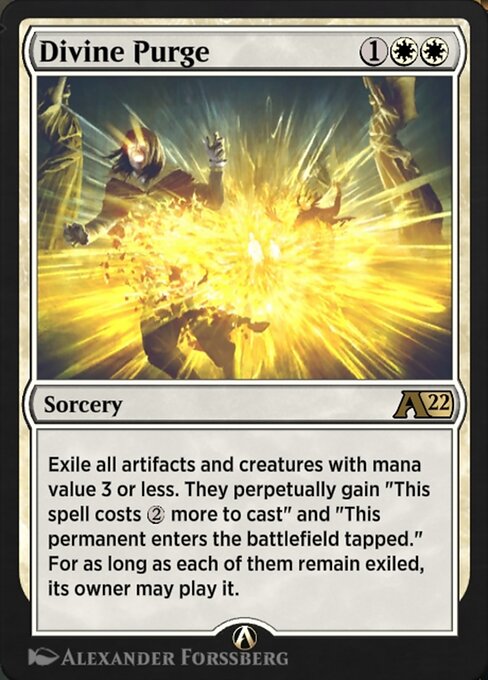
Dimir was the color of choice for control decks in Timeless for a while, but the addition of both Phlage, Titan of Fire's Fury and Solitude has made running Jeskai a lot more appealing recently. Additionally the emergence of Boros Energy has made decks that can utilize board wipes well a lot more appealing and whilst Dimir did recently get Toxic Deluge, white generally has better options such as Divine Purge and the new Wrath of the Skies.
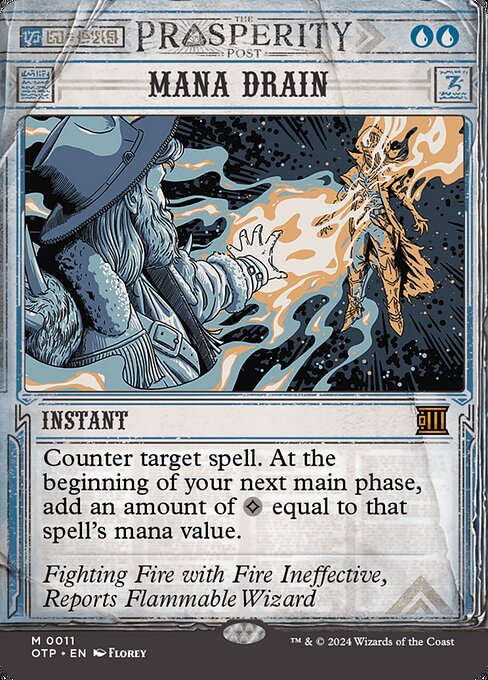
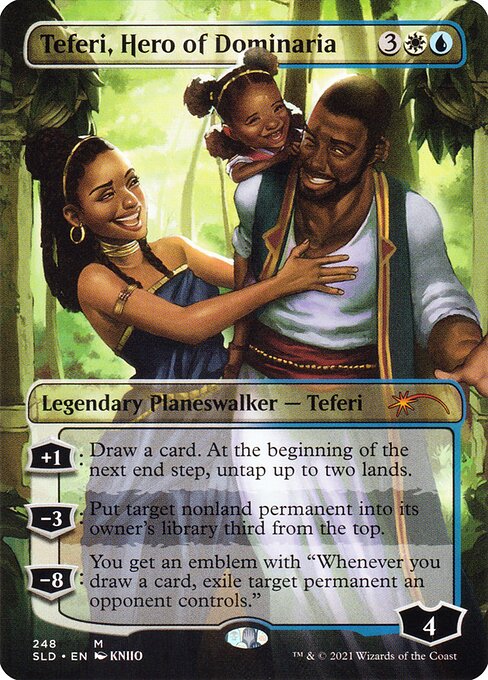
This is my current build of Jeskai Control which runs The One Ring and Teferi, Hero of Dominaria as late game card advantage engines that snowball the game, and give you great uses for the excess mana from Mana Drain, and casting either of these on turn 3 after Mana Drain puts you so far ahead.
Running the full playset of The One Ring and Teferi, Hero of Dominaria maximizes your chances of having an incredibly powerful use of the excess mana from Mana Drain going into turn 3 whilst still often having mana open to interact as well, and also provides you with a very high density of good draws against discard decks to help you recover from Grief scam starts.
Phlage, Titan of Fire's Fury and Solitude have both also been excellent additions providing early interaction to help slow the game down, and then acting as lategame win conditions which also provide incidental lifegain to help stabilize and offset the life loss from The One Ring.
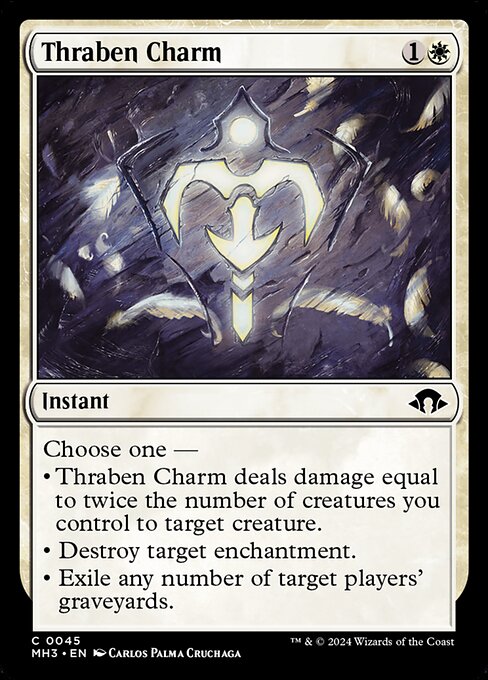
Having said that I do think Wrath of the Skies is still a viable card in the archetype, and could be the better option if bigger creatures or enchantments become more prominent. The last new card in the 75 is Thraben Charm in the sideboard which is a flexible sideboard card that doubles up as an answer for enchantments like Blood Moon and Goblin Bombardment, and working as instant speed graveyard hate as well, which is very useful since sideboard space has been pretty tight.
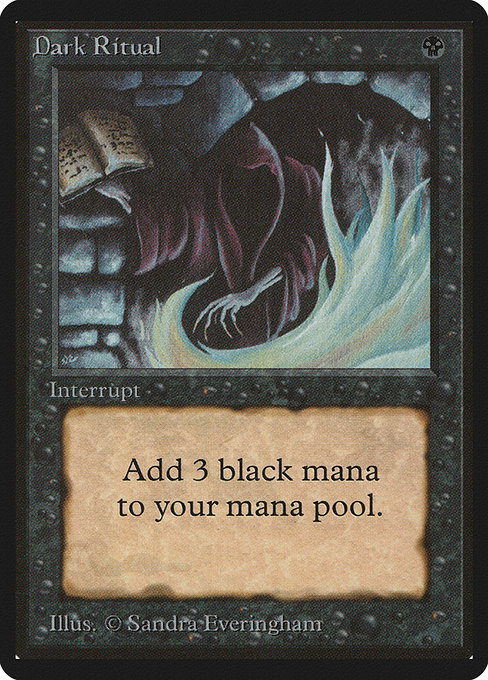
This is another scam variant that has looked impressive to me since it gets to utilize arguably the strongest card in the format in Dark Ritual to accelerate into its top end cards like The One Ring, Sheoldred, the Apocalypse, and hardcast Grief.
This really helps to mitigate the issues that Rakdos Scam was having whereby it wasn’t able to effectively take advantage of Grief scam since its follow up play often wasn’t strong enough, whereas here you can accelerate into your follow up play immediately, and having Deathrite Shaman in addition to Dark Ritual provides redundancy for this acceleration too.
You might be wondering why the list isn’t running Necropotence since that has previously been the centerpiece of these mono black Dark Ritual decks, and the main reason for that is running Reanimate alongside Necropotence is very awkward since you really want to avoid any effects that lose life if at all possible or you won’t be able utilize Necropotence well and can often get locked underneath it, or go too low on life and just die to the opponent.
This feels like the spiritual successor to the Grixis Shadow lists leveraging cheap threats that snowball the game and cheap interaction to defend those threats and ensure they can keep connecting. The majority of threats in this list are new MH3 cards such as Nethergoyf which fits in this shell very nicely since it fills the graveyard fairly quickly and has a variety of card types meaning this usually represents a very fast clock for a 1 mana creature.
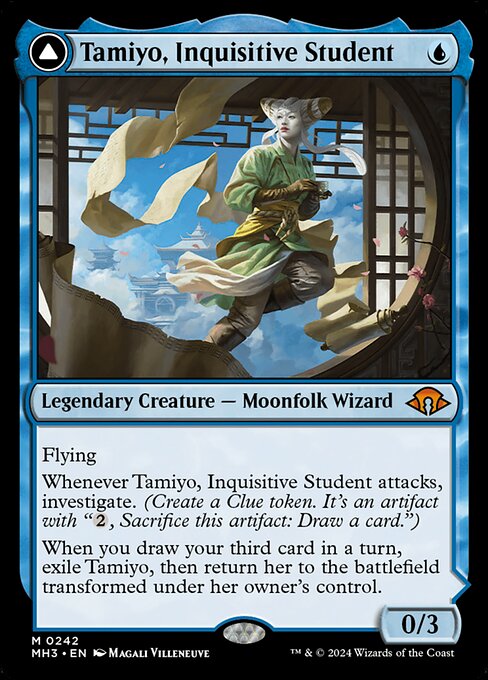
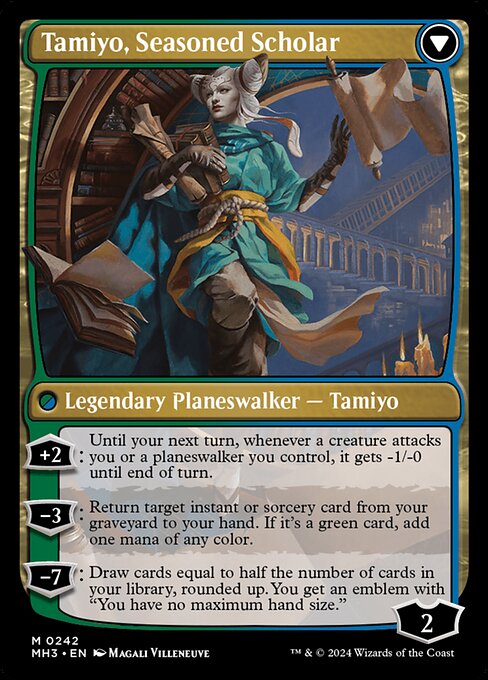
It’s also running Tamiyo, Inquisitive Student which has been one of the most impressive new threats snowballing card advantage via the clues on its frontside, and is relatively easy to flip thanks to Brainstorm at which point it doubles up as a threatening win condition thanks to the ultimate, and a way to rebuy your interaction to defend your board.
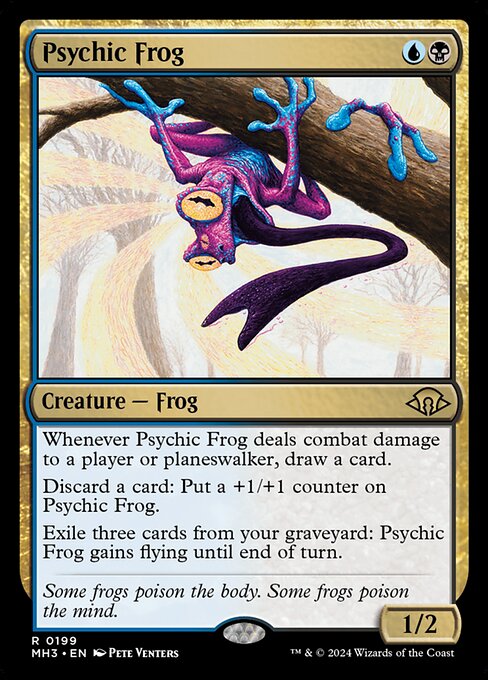
Additionally this list is running Psychic Frog which has been another standout threat from MH3 which can snowball advantage very quickly, can grow in the lategame to increase your clock when needed, and can give itself evasion fairly easily, so is another great threat in a tempo shell where you can defend it fairly easily.
Psychic Frog has also looked great in decks with more focused discard synergies to utilizes the buff ability more effectively like in reanimator shells for example – I haven’t included these yet since there isn’t much data on them and the lists look fairly unrefined at the moment but this is another archetype I’m keeping an eye on for future updates.
Overall this archetype has looked good and is relatively flexible if you can tune your removal suite depending on the expected metagame, and has looked like the best tempo variant since the release of MH3.
Titan Field
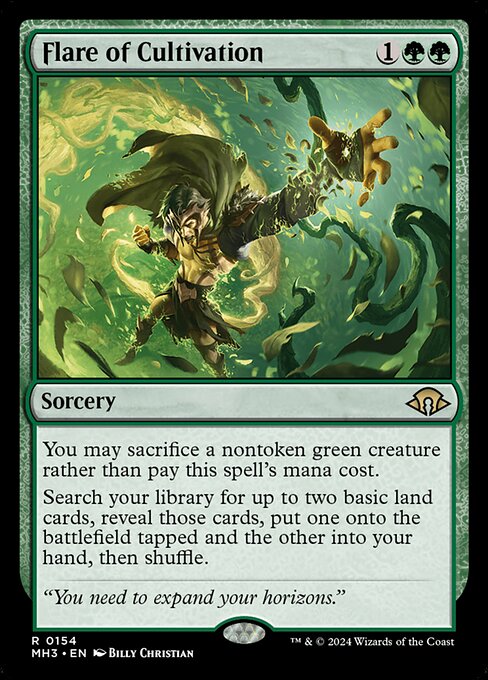
This is an archetype I’ve done a lot of work on in the past and was very excited to revisit it with the addition of Flare of Cultivation.
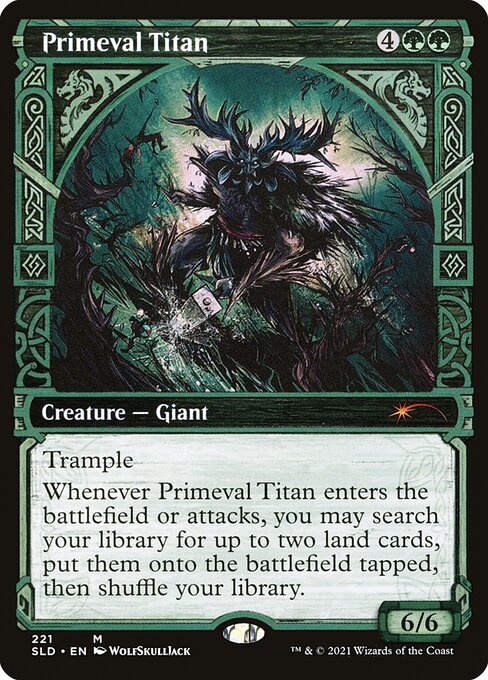
This is my current build of Titan Field running Flare of Cultivation and it has felt like a really nice addition so far that leads to some incredibly explosive starts. Outside of potentially enabling you to cast Primeval Titan on turn 2, the fact it puts a land into your hand is huge at ensuring you don’t miss land drops, and the fact it fetches basics is huge at playing around Blood Moon effects, especially when you bring in Get Lost post-sideboard since finding a basic plains wasn’t always that easy in previous builds.
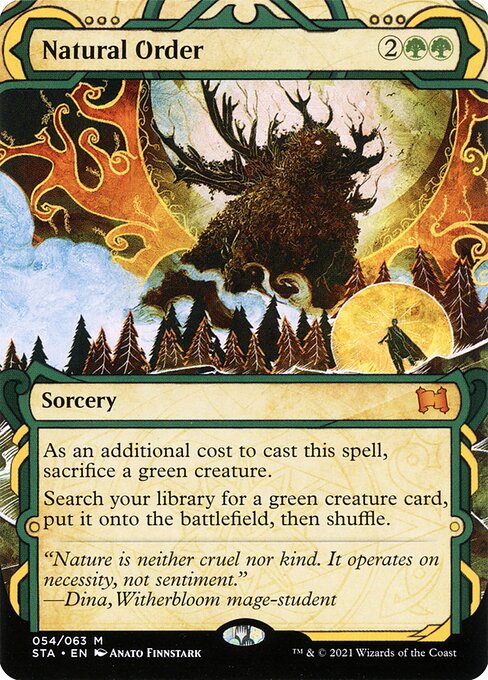
The fact it speeds up the deck is huge since I’ve always felt Titan Field is at its best when it’s just doing it’s proactive gameplan as fast as possible and not worrying too much about interacting with the opponent early on and Flare of Cultivation really helps that. I have made a number of changes since my previous build in order to enable it though, most notably cutting Natural Order so I want to briefly explain the changes here.
You also need to run more basics in the manabase to ensure you get value off it and I’ve liked running 4 (all of which have different names for Field of the Dead thanks to the snow-covered basics) since if you happen to draw one or two of your basics you can still get maximum value off the first copy, and if you open with two Flare of Cultivation you can get full value off both as long as you don’t draw or fetch for any basics.
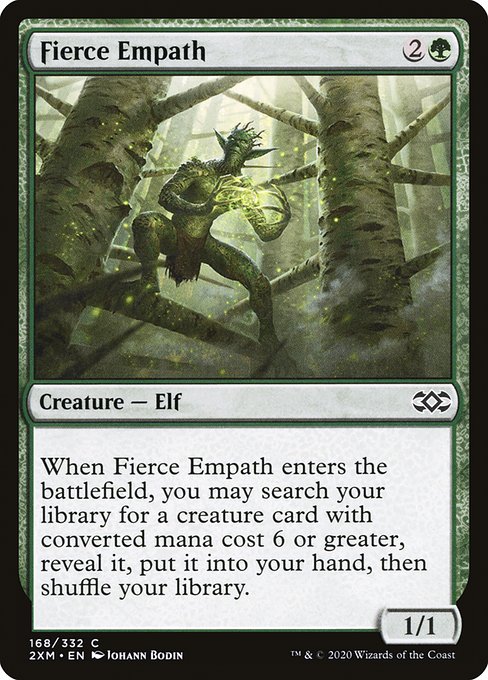
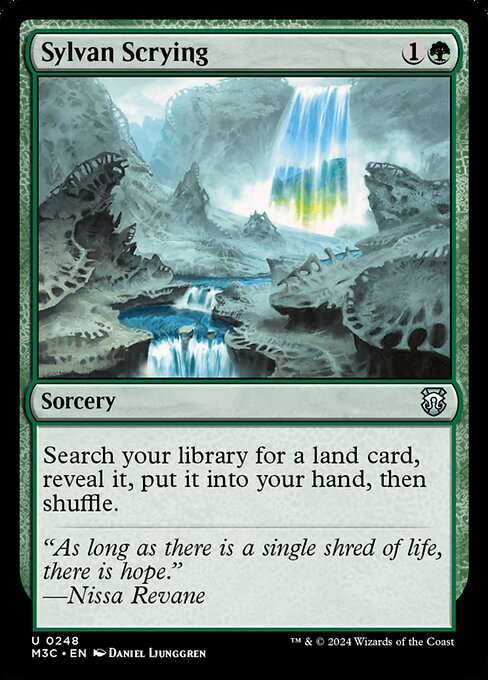
With this version cutting both Sylvan Scrying and Khalni Garden (since you can no longer search for it), you go down to 12 enablers, or 16 if you include Once Upon a Time which is a pretty significant drop to consistency.
On top of that Flare of Cultivation also wants to be sacrificing your creatures so they’re competing for sacrifice fodder which makes that issue even worse, and with the addition of Flare of Cultivation the opponent is more incentivized to kill your green creatures with the trigger on the stack to stop you casting Flare of Cultivation for free whilst also stopping that creature being used for Natural Order.
If they do do this then you can still cast Flare of Cultivation for 3 mana the following turn which isn’t the worst if the opponent has had to use their removal spell on a creature you’ve already gotten value off, but it’s a real problem for Natural Order since it will be stranded in your hand without a creature to sacrifice.
The only solution I can think for this is to run 4 Khalni Garden in the manabase but in order to do this without making Field of the Dead worse I think you’d have to trim on Sunken Citadel which then slows down your proactive gameplan which seems counterproductive to me.
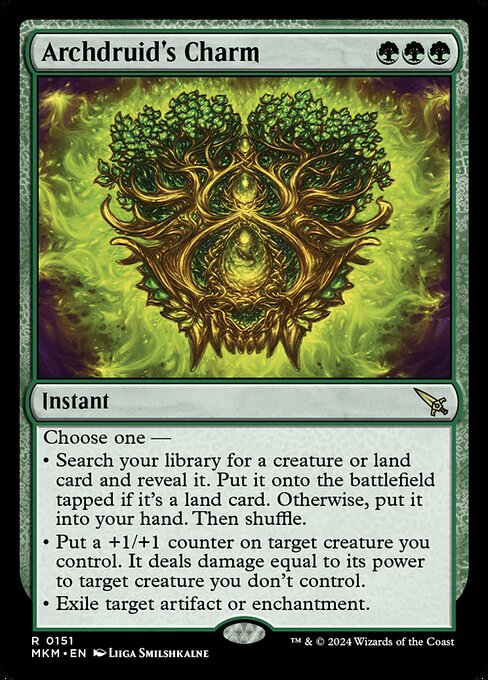
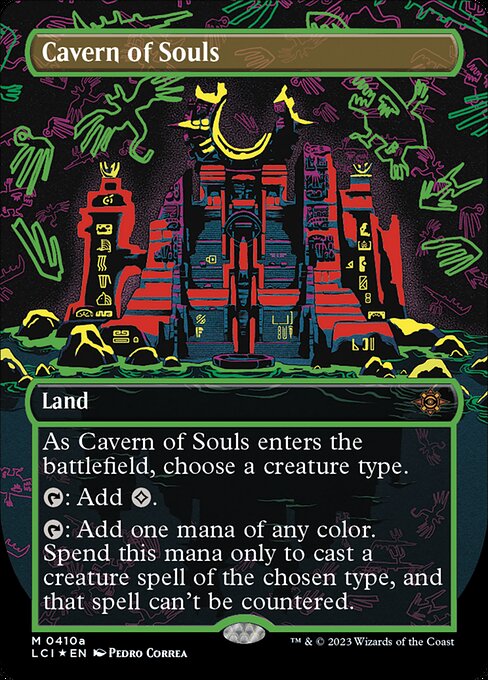
Instead I’m choosing to run Archdruid's Charm which really improves your matchup against control by tutoring for Cavern of Souls, whilst also being able to still find your Primeval Titan (albeit a little slower than Natural Order would), and being a flexible card outside of that.
Overall I think Titan Field is actually in a relatively good position right now with decent matchups against a lot of the top decks – having said that combo is still by far your biggest weakness, and with Show and Tell being the most popular combo deck I think it’s worth running a singleton Boromir, Warden of the Tower in the maindeck which you can search for with Archdruid's Charm in response to Show and Tell to cheat into play and shut off Omniscience which allows you to sometimes steal game 1.
The core of this deck hasn’t changed at all since the last update but we got two new full cycles of modal double-faced lands in each color from MH3 which vastly improves the deck’s mana and now essentially enables you to play entirely with untapped lands which is a really big deal and will often speed up your ability to kill by a whole turn.
Similar to Show and Tell I think Belcher is relatively well positioned right now since it’s great against fair decks like Boros Energy and 4 color Beans, but I feel like it’s more vulnerable to the other side of the format compared to Show and Tell (particularly discard heavy decks where the opponent can Grief scam two of your lands on turn 1 if you don’t open with Leyline of Sanctity), and is also vulnerable to more hate cards such as Disruptor Flute which is seeing quite a lot of play in sideboards at the moment.
The upgrade to the manabase is very significant and the deck has its good matchups but I’m only including it in tier 3 since there’s not that many good reasons to run it over Show and Tell, and it is generally more vulnerable against decks packing relevant interaction against you.
However the big issue with Domain Zoo and the reason I’ve moved it down the tier list is that it basically fills the same role in the format that Boros Energy does but Boros has a much cleaner manabase (meaning it gets to run Blood Moon instead of getting hosed by it), and can grind better into longer games, so Zoo is largely outclassed whilst also getting hurt by the same cards that people will be bringing to beat Boros.
Overall there aren’t too many reasons to run Domain Zoo over Boros Energy right now apart from it getting access to Thoughtseize and Juggernaut Peddler which could help to improve control and combo matchups, but the archetype still possesses a lot of raw power so I felt it was still worth including.
There haven’t been any new big additions to Yawgmoth from MH3 (although I think that Sorin of House Markov could be a decent Chord of Calling target) which is one of the main reasons it’s moved down the tier lists since most other archetypes have improved a lot whereas Yawgmoth has largely stagnated. Additionally the addition of Fury to the format is a big problem for Yawgmoth since it’s so good at wiping out all of your early creatures which makes it really hard to rebuild from, and decks running sweepers to hit Boros Energy also incidentally happen to hit Yawgmoth too.
I still think the deck has a powerful linear gameplan which is why I wanted to keep it on the tier list, but it’s definitely more poorly positioned than it used to be, and has a lower relative power level compared to the rest of the format.
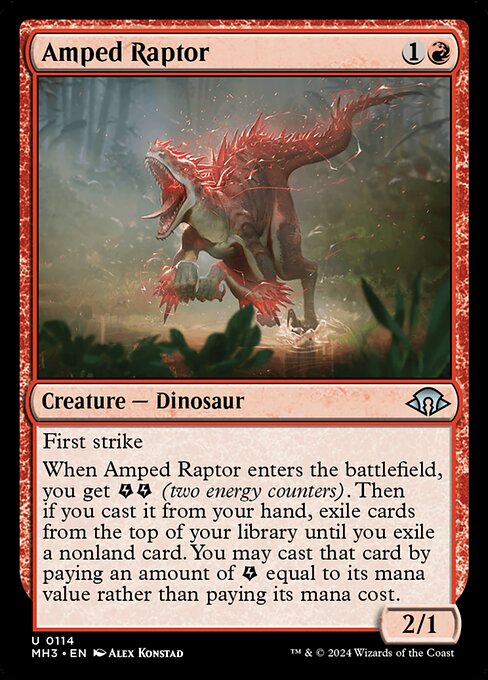
Similar to Yawgmoth this is another archetype that didn’t really gain any new tools from MH3 and thus has fallen down on relative power level. Amped Raptor is potentially a new card that you could run in burn but I’m not sure it’s that much better than alternatives like Slickshot Show-Off and Orcish Bowmasters, and it requires you to cut Skewer the Critics and Light Up the Stage so it does come at a real cost.
Additionally the emergence of Guide of Souls, Ocelot Pride, and Phlage, Titan of Fire's Fury to a number of top decks, and the re-emergence of Omnath, Locus of Creation as part of the 4 color midrange deck provides burn with a number of new difficult matchups, although there are still a number of other decks that struggle against burn and it has some counterplay to lifegain so it felt like it was still worth including even if it’s a fair bit worse than it used to be.
Removed decks
There are a number of archetypes I’ve removed since the last update since I think they’re not able to compete with the higher power level of the current format, or have become significantly worse positioned due to new cards from MH3 which I’ll be going over below.
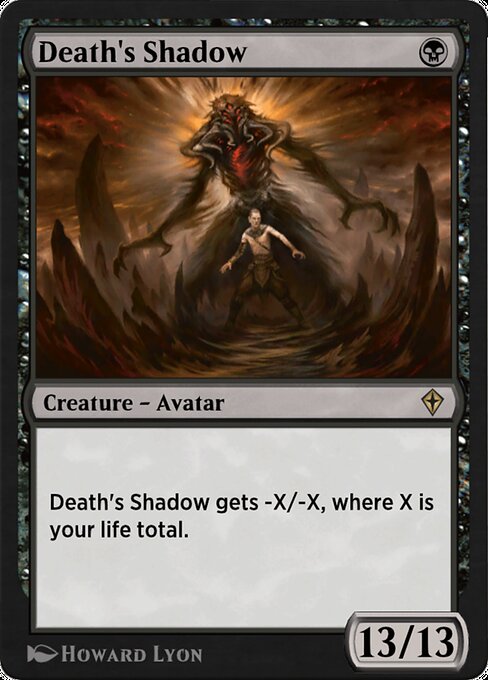
Grixis Shadow:Death's Shadow as a threat has become much more of a liability since the addition of Solitude (which in turn has led to more interactive decks running white and therefore Swords to Plowshares), since both Solitude and Swords to Plowshares can exile another creature and cause you to gain life which often also kills your Death's Shadow which is an absolute blowout.
We got a ton of great additions for threats in UBx tempo decks from MH3 so I think you’re generally much better off running cards like Nethergoyf, Tamiyo, Inquisitive Student, or Psychic Frog in tempo shells as highlighted in the list above.
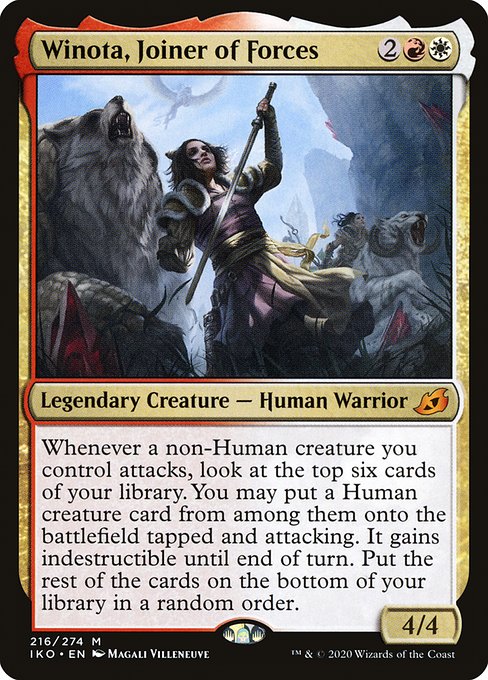
Naya Winota: I think Naya Winota will still be effective against Show and Tell specifically, but would really struggle against the interactive decks like 4 color Beans, Jeskai Control, Scam etc. so it’s really suffered from the increase in quality of interaction from MH3. I’m still hopeful that a Mardu Winota variant could be viable running a lot of the powerful cheap threats we got from MH3 but I’ve not had a chance to test it yet, and I’ve not seen anyone else have success with the archetype recently either.
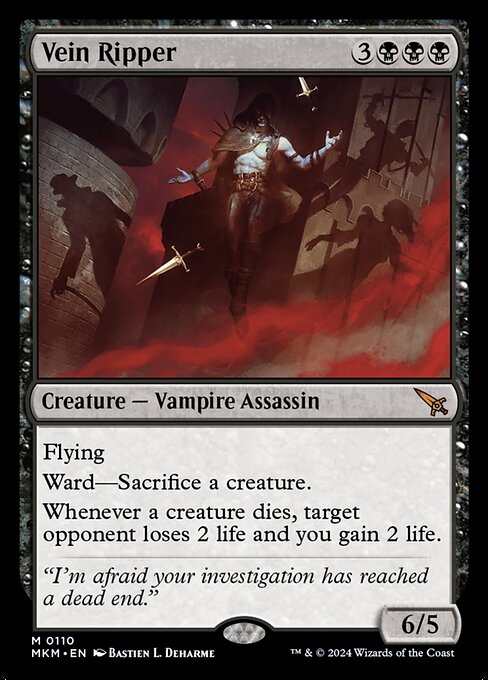
Mono Black Vampires: I don’t think it’s worth running the Sorin, Imperious Bloodlord + Vein Ripper package whilst Solitude is seeing play since they can evoke Solitude to exile the Vein Ripper and then sacrifice the Solitude to the ward trigger before it dies to its own evoke. This is an absolute blowout if you invest three cards to set it up on turn 1 especially since Sorin, Imperious Bloodlord usually doesn’t do that much afterwards so I think Dark Ritual is better used as a way to ramp into card advantage engines like Necropotence and The One Ring whilst Solitude is still seeing play.
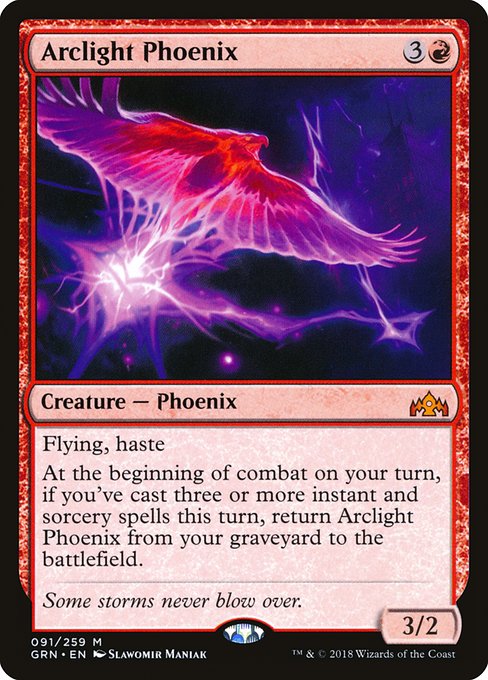
Izzet Phoenix: Whilst I have multiple Arclight Phoenix lists on the best of 1 tier list, I think it’s too vulnerable to both graveyard hate and Orcish Bowmasters in best of 3 which are both much more common there, especially Surgical Extraction which is so difficult for Phoenix decks to beat. The addition of Buried Alive from MH3 does give the archetype another angle of attack but I don’t think it’ll be effective in best of 3, especially while Surgical Extraction is still seeing play in sideboards.
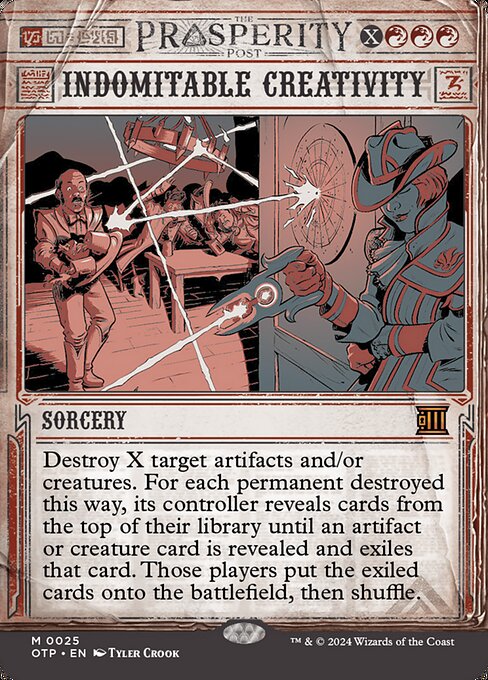
4 Color Creativity: This was an archetype that I already had down in tier 3 in the last tier list, and with Planar Genesis being the only new card that improved it, the rest of the format has definitely overtaken it in terms of consistency and power level. I think if we got Archon of Cruelty in MH3 there’s a chance that Creativity could have become more viable but as things stand this doesn’t feel like it’s able to compete with the new higher power level.
Dimir Control: I think Dimir Control is still a viable way to build the archetype but it’s felt a lot weaker than Jeskai to me since it can’t utilize the Mana Drain mana as well, and misses out on Phlage, Titan of Fire's Fury and Solitude too.
Toxic Deluge is a nice addition, and we did get some nice new tools in Dimir such as Tamiyo, Inquisitive Student and Psychic Frog, but I think they’re generally better in a tempo shell which seems like the better way to build Dimir currently, as well as the Grief Scam package but that incentivizes you to move more into a midrange deck. Overall I still think Dimir Control is viable but I think Jeskai does a much better job as a pure control deck and Dimir seems better suited to tempo or midrange at the moment.
Sultai Midrange: This is an archetype where I feel like the previous build I had on ther tier list wouldn’t be able to compete in the current metagame – however I think there could be a decent build of Sultai using the new tools that we got from MH3 but a refined list putting up good results hasn’t emerged yet.
I’m not massively optimistic that it’d be top tier since the advantage to splashing green would be that you generally go bigger than the other fair decks but would still probably be unfavored against 4 color Beans, and adding green doesn’t really give you any new tools to fight against other decks that go bigger like combo, control, and Titan Field, but this is another archetype I’ve got my eye on as one to potentially add in future if refined lists emerge that are putting up decent results.
Dimir Mill: The format has sped up so much that the majority of decks will be too quick for mill to ever be able to race. It definitely still has some good matchups like Show and Tell and control, but mill seems like it’d struggle against the majority of the rest of the format so I don’t think it’s worth running.
Jund Midrange: This is basically the same rationale as Sultai midrange – I don’t think previous builds of Jund will be able to compete in the current metagame, you could feasibly make a new Jund list utilizing the Grief scam package alongside cards like Once Upon a Time to maximize the consistency of the scam starts and Minsc & Boo, Timeless Heroes as another option for top end but I’m not sure it’d be better than current lists we have, and there haven’t been any refined lists putting up good results that I’ve seen so far. This is another archetype that I’ve got my eye on for future updates though.
Conclusion
So those are the main updates we’ve had to the format since the massive shakeup that Modern Horizons 3 has provided. As mentioned I still feel like there’s a lot of unexplored space since there were so many playable new cards added, and I doubt everyone has had a chance to fully test out all their ideas since the set is so mythic wildcard intensive so I wouldn’t be surprised if new archetypes emerge or some of these archetypes become refined even more over the next few weeks, in which case I’ll be updating the tier list to account for those changes.
Overall though the format has been so much fun and still feels relatively well balanced even with the crazy high power level right now. I’ve also been working on a bunch of archetypes including some of the lists included here so I’ll have more Timeless deck guides to come soon when I return to testing Timeless after the Historic Qualifier this weekend. Thanks a lot for reading!
Premium
Enjoy our content? Wish to support our work? Join our Premium community, get access to exclusive content, remove all advertisements, and more!
No ads: Browse the entire website ad-free, both display and video.
Exclusive Content: Instant access to all exclusive articles only for Premium members, at your fingertips.
Support: All your contributions get directly reinvested into the website to increase your viewing experience!
Discord: Join our Discord server, claim your Premium role and gain access to exclusive channels where you can learn in real time!
Special offer: For a limited time, use coupon code L95WR9JOWV to get 50% off the Annual plan!
Alth is an MTG Arena grinder who has been #1 on the ladder multiple times and is always looking to bring new ideas and archetypes to the format and push them to the top spots on the ladder. You can follow him on Twitter and YouTube.