Historic Mythic with Etali’s Favor Living End: Fun & Jank Episode 76
Plum made it to Mythic with an out-of-the-box take on Living End. And he's excited to explain all the fun deckbuilding challenges that came along with it!
With the release of Strixhaven last week, one of my main goals was to brew and test as many Living End shells as possible until we found one that could put up some decent results. And once I found a list that felt pretty good, I was able to take it to Mythic sporting a 68% winrate in Bo3.
Now, if you’re an avid Historic player, you’ve probably ran into some Living End decks already. Altheriax’s Marauder Build seems to be one of the more popular choices, but I’ve ran into a lot of people trying all sorts of things, many of which I mentioned in my last article. However, my build today is based around a card I haven’t seen anyone else try yet and I’m very excited that I was able to do so well with it.
So let’s get into what we learned during our first week of testing, and how it led to the list I’ll be talking about today.
Initial Testing
I basically played Living End for a week straight on stream, and here are my thoughts after trying 8+ different builds.
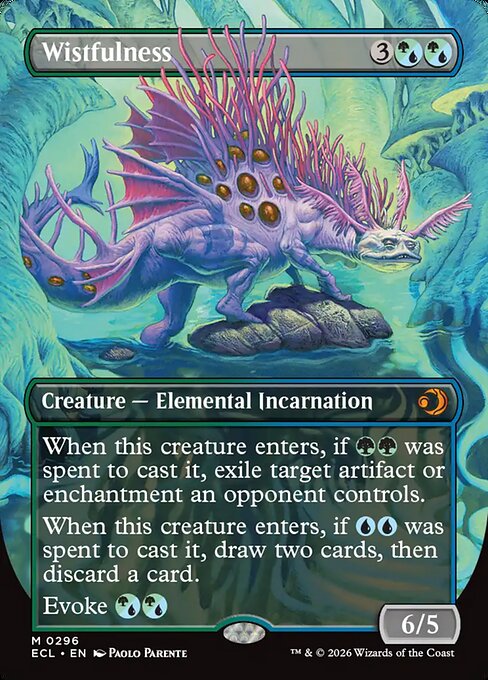
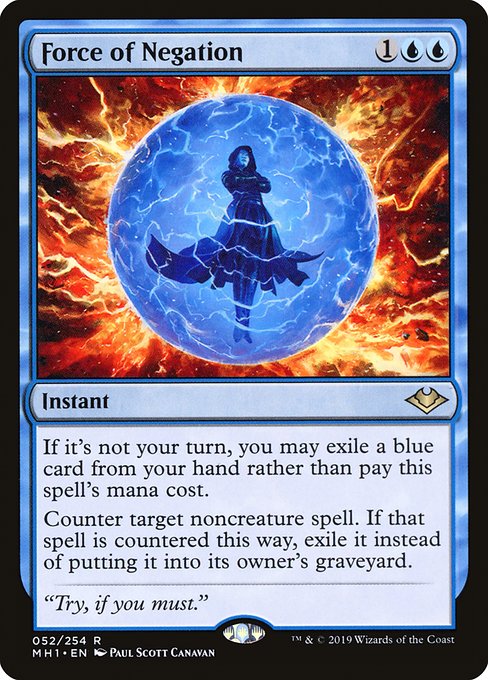
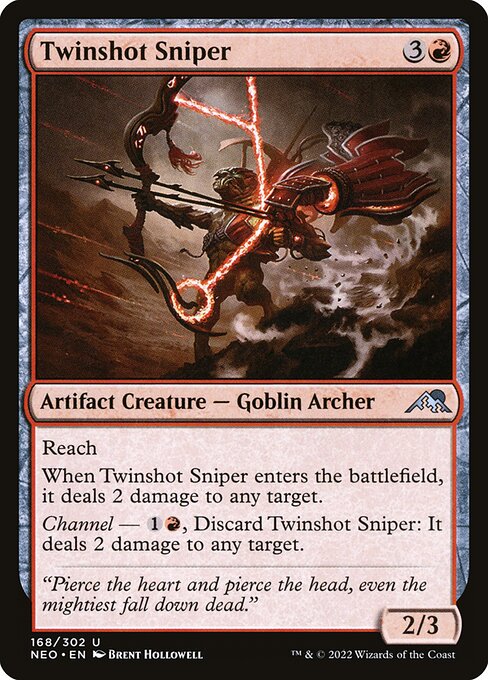
You absolutely cannot just sit there and cycle for three turns without touching the opponent’s board like the old lists did in Modern. Wistfulness, Force of Negation, and Endurance are the gold standard because they don’t cost mana, but I was surprised by how much I liked the budget interaction in other colors. Twinshot Sniper and Harvester of Misery do a ton of work early, and Vibrance gives you removal and land selection while filling the yard. You basically just need something you can play to stop you from dying or stop your opponent from winning.
Historic is fast. Trying to assemble a combo of Living End + an enabler like Electrodominance or As Foretold felt so freakin’ slow every time I tried it. You need the speed of a single card that just hits the combo. Even if you aren’t bringing back a lethal army, sometimes you just need to wipe the board on turn three to stay alive, and you can’t wait for a two-card setup to do that.
3. Land Cyclers
If it cycles for one mana, it’s probably fine in these decks, but the Land Cyclers (like Oliphaunt or Generous Ent) feel mandatory. They let you cheat on your land count, which thins the deck and makes more of your draws live. More importantly, they give you easy access to utility pieces like the Surveil lands, making sure your mana is perfect while you’re simultaneously filling the bin.
4. Don’t Over-Complicate Things
I had a blast trying to make Eelctrodominance work in a UR control shell, but the games don’t lie: you’re better off just committing to the plan. When you try to slot the package into another archetype, you end up with a deck that’s a mediocre version of both. My most successful lists were the ones that leaned entirely into being a Living End deck first and foremost.
5. Lower cost = Better deck
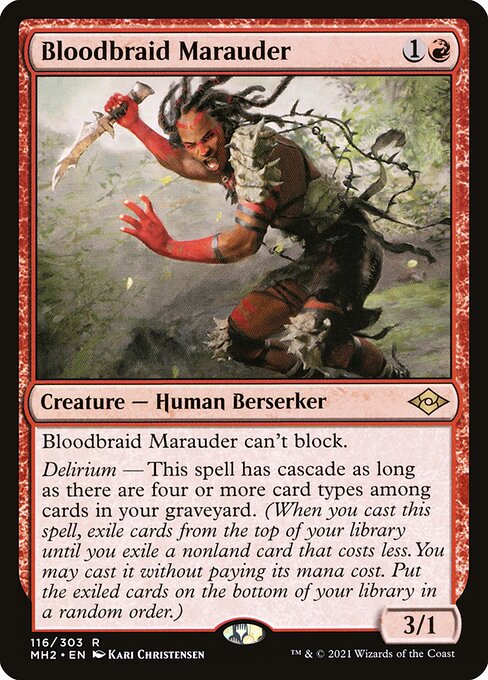
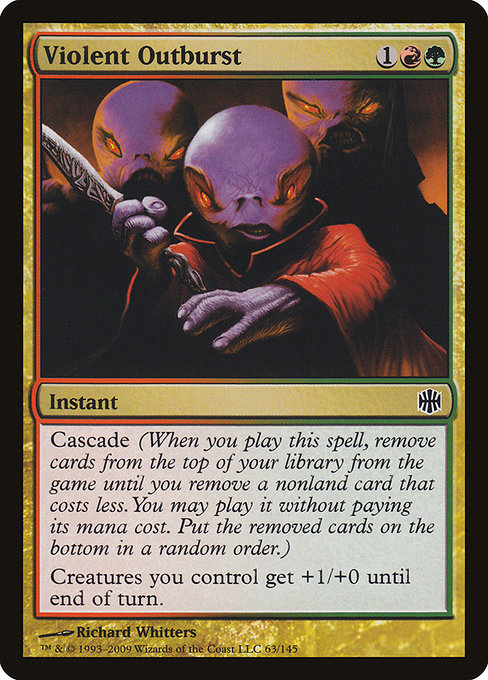
It sounds obvious, but you need to be efficient with these decks. The lower-cost enablers like Bloodbraid Marauder and Violent Outburst are miles ahead of everything else we tested. Being able to threaten the combo with only 2 or 3 mana open keeps the opponent on their toes and lets you double-spell or hold up protection much earlier in the game.
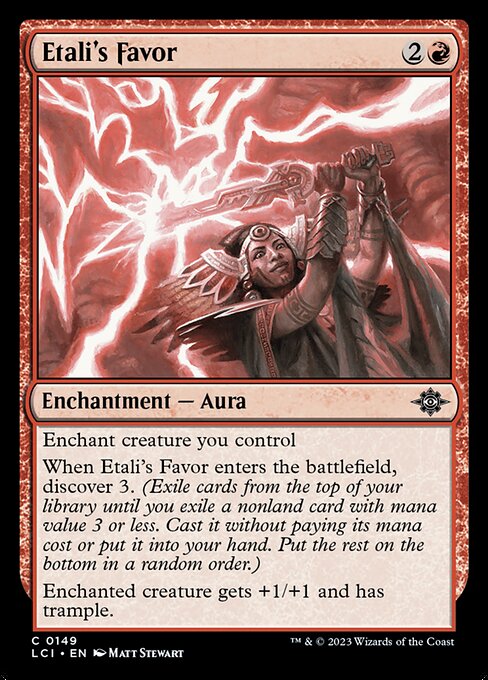
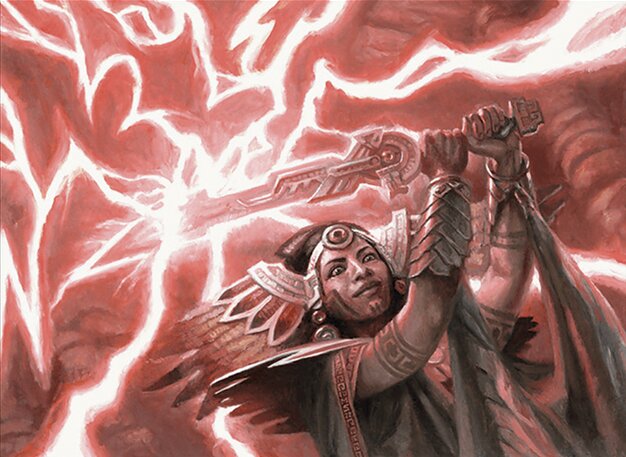
This is the namesake of the version we played to Mythic. Favor is the only other card outside of Violent Outburst and Marauder that lets you hit the combo for three mana or less without needing a second piece in your hand. But that comes with 2 caveats.
1.) The Discover ability can hit 3 mana spells (meaning no Endurance or Force of Negation).
2.) You need a creature to enchant in order to cast it.
Even with those restrictions, the consistency it adds to the deck is unreal. Having 8+ ways to win with 3 mana was awesome during testing.
Now, getting around the 3 mana value problem is easy. We can still play interaction like Twinshot Sniper or Vibrance to have some early plays while dumping creatures in the yard. With outburst being three mana, Etali’s Favor will always end up chaining into a Living End eventually.
The second problem is one that I really had to use my Big Brewer Brain™ to solve. Since we were already planning on playing Vibrance (and other Land Cyclers) why don’t I just use lands to make bodies for Etali’s Favor.
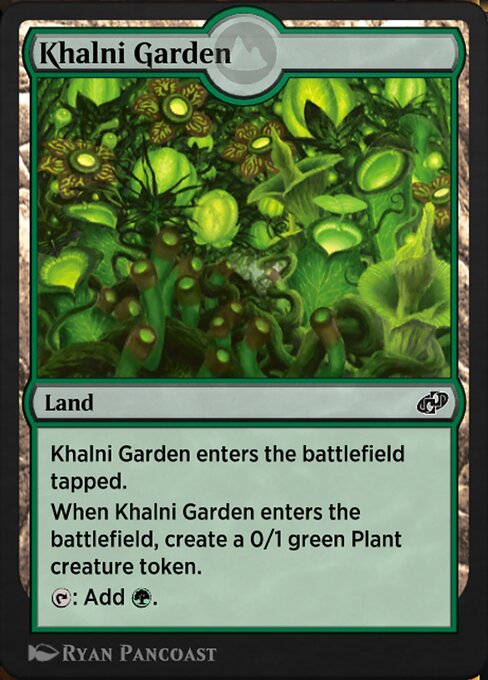
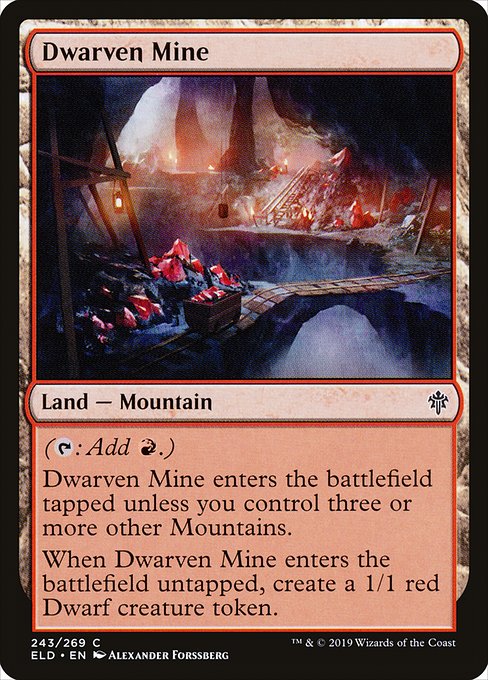
I initially started with Khalni Garden and Dwarven Mine:
Both of these can be found off of Vibrance, and Dwarven Mine can be found via Oliphaunt because its also a Mountain, which makes them rather consistent to get online. However, after our initial round of testing, I found it a bit slow to get 3 Mountains before dropping Dwarven Mine, so I opted to go all-in on Garden instead.
Between Oliphaunt, Ent, and Vibrance, I was guaranteed to hit 3 lands every game, meaning I could also slim down on those too, and ended up with only 16 lands in my final version, which you can see below.
So just as a recap, here’s how the deck works. Because Etali’s Favor Discovers 3, every single non-land card in this mainboard (besides Living End itself) has a mana value of 3 or higher. This ensures that when you cast Favor, you are 100% guaranteed to hit either a Violent Outburst (which then cascades into Living End), Etali’s Favor again, or the Living End itself.
Since Etali’s Favor is an Aura, you need a creature on board to cast it. We don’t want to spend mana or cards playing creatures before the combo, so we use Khalni Garden. It’s a land that provides a 0/1 Plant token for free. You drop the Garden on turn 1 or 2, and on turn 3, that Plant enables you to cast Etali’s Favor (or Outburst) if necessary. The nice thing about a 0/1 plant is that nobody cares about it. It’s not worth removal, and since nobody expects Khalni Garden to be in a Living End shell, its usually already too late for them to remove it in time.
You’ll notice we play all the interactive spells I mentioned earlier, like Sniper and Vibrance, along with some additional Cyclers to compliment them.. Vantasaur isn’t the strongest option, but it’s here for speed. One colorless is much easier to cycle than most of our other options. Although, I do want to bring attention to the addition of Titanoth Rex. He’s a two mana cycler, but giving something a trample counter came in handy many times during combat, and a couple 11/11 tramplers is usually enough to end the game if we end up reanimating ’em.
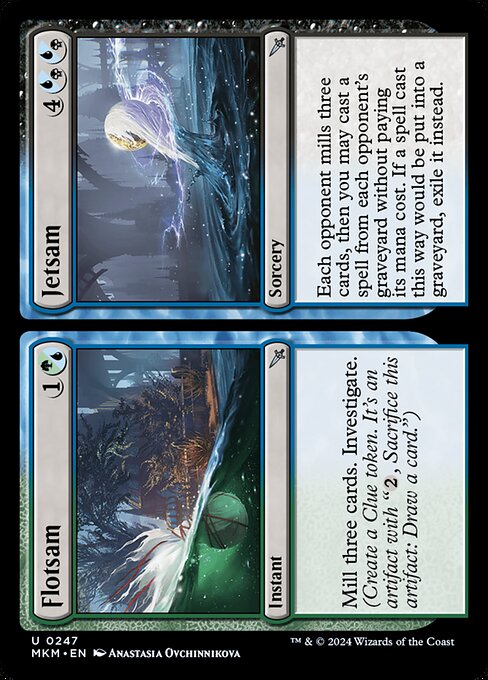
This cards is probably our weakest link. So let’s be real. In a vacuum, it’s not a Mythic-tier card. But when you’re building around Etali’s Favor, your options for cheap spells are basically non-existent because of that Discover 3 restriction. In this case, it felt good enough, but its going to be the first thing I’ll cut in future iterations. Gruul colors don’t have a lot of other options here, and milling 3 cards and snagging ourselves a clue token isn’t the worst thing we could be doing at instant speed. Flotsam is basically the only card that lets us interact with our own deck velocity at that mana point without ruining the combo’s consistency.
You’ll also notice I’m playing the full set of Surveil Lands here too. During testing I felt a bit slow spending the initial turns fetching lands with Ent or Vibrance and Commercial District was my way to speed things up. District just gives a us a little boost to make sure we can get more bodies into the yard and filter our draws at the same time. In many games the initial turns look something like this:
Turn 1 – Play Khalni Garden tapped, make a 0/1 plant.
Turn 2 – Cycle a Land Cycler to fetch a Commercial District, play it, and dump a creature in the yard.
Turn 3 – Cast Outburst/Favor if needed, or cycle/channel/fetch another surveil land and hold up some interaction to try and make sure Living End will seal the deal once we cast it.
It may not be the craziest board state if we cast it on turn 3, but getting back two big beaters and setting your opponent back is still good enough most games.
Gameplay
(this is gameplay of my first draft before transitioning to Gruul shell)
The other big thing I want to talk about is the sideboard for this build. How I built the sideboard was probably the biggest pivot in my strategy. Early on, I was trying to be reactive, brining in cards to protect my own combo, but I found that in the current meta, being the aggressor is almost always better.
The strategy shifted from “How do I protect my Living End?” to “How do I shutdown their gameplan?” At the end of the day, we’re still winning with big creatures, and even if we can’t cheat them into play through hate, I can still resort to just hard-casting them and swinging.
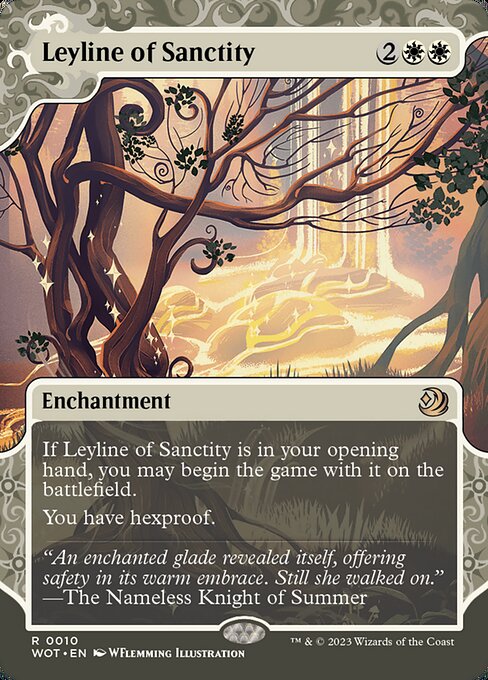
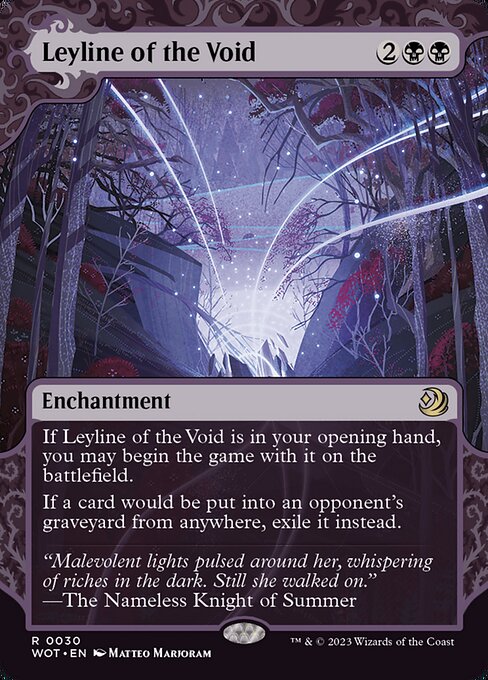
The best example of this philosophy were the leylines.
I faced Jund Goys a lot on my way up the ladder. As it turns out, if they can’t hit you with discard and they have nothing in their graveyard, they just lose. I ended up sporting an 8-2 record against them and that matchup now feels heavily favored because I literally board in 8 Leylines in games 2 and 3. Firing off one Living End usually results in an immediate concession.
The most satisfying games were the ones where the opponent spent all their resources shutting down my ability to resolve a Living End. They’d have the Rest in Peace or the Leyline of the Void out and feel safe. But because we’re playing 4 Generous Ent, 4 Oliphaunt, and 4 Titanoth Rex, we have a massive top-end. If I’ve used my sideboard to stall their game, I can just hit my land drops and start hard-casting 5/7s and 11/11s. It turns out a lot of decks in Historic can’t actually deal with a 6/5 Trampler being cast fairly on turn five or six when their own plan is being smothered by a Leyline.
We still kept the essential utility pieces for when we absolutely had to clear a path:
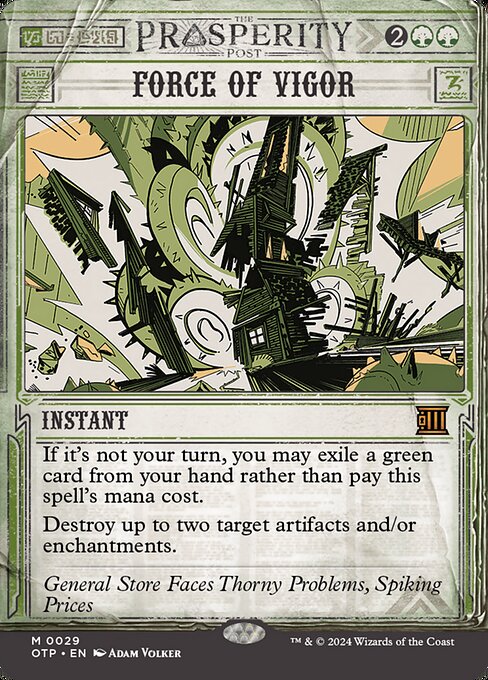
Force of Vigor: Still the best way to blow up two hate pieces for the price of one.
Wistfulness: Great for picking off a specific permanent for cheap.
By focusing the sideboard on shutting down the opponent, we essentially gave the deck a second life in games two and three.
But overall we did quite well, going 19-9 between the versions of this deck I tested. Creature decks are rather easy for the archetype as a whole, Jund Goyfs is heavily favored and other matchups like Frog, Auras, Devotion, etc. feel pretty good. Reanimator and Hard Control are the worst matchups for us.
Closing Thoughts
Looking back at the week, it’s clear that Living End has found some footing in Historic. While we might not have the raw, refined power of the Modern version just yet, the archetype is a contender. We’re currently in that sweet spot where the deck is strong enough to punish a greedy meta, but flexible enough that we haven’t come close to seeing a final list.
My specific Etali’s Favor shell is definitely a bit out there, and I’ll be the first to admit it probably isn’t the optimal 75. But that’s almost the point. Reaching Mythic with a 68% winrate using a draft common as a primary enabler proves that there is so much unexplored space in this format. Feels like Living End can be viable anywhere you put it. As for the Gruul list, I’m going to keep tweaking it. Flotsam is on the chopping block as I continue looking for other options, but we’re most likely going to have to wait for new tech from upcoming sets to make it better.
Deck was a blast to pilot and led to a lot of fun grindy games!
That’s it for me!
Thanks for reading!
As always, feel free to comment and leave any questions you have below. And make sure to come back next week for even more Fun & Jank!
If you want to help me brew, come hang out with me on stream where we test, refine, and have a ton of fun together.
Happy Brewin’!
Premium
Enjoy our content? Wish to support our work? Join our Premium community, get access to exclusive content, remove all advertisements, and more!
No ads: Browse the entire website ad-free, both display and video.
Exclusive Content: Instant access to all exclusive articles only for Premium members, at your fingertips.
Support: All your contributions get directly reinvested into the website to increase your viewing experience!
Discord: Join our Discord server, claim your Premium role and gain access to exclusive channels where you can learn in real time!
Special offer: For a limited time, use coupon code L95WR9JOWV to get 50% off the Annual plan!
Plum is the creator of the Jank Tank.
He started playing at the ripe old age of 12 and immediately fell in love with the infinite possibilities that deck building could lead to.
He truly understands that jank is a mindset, and spends most of his free time brewing and concocting new and exciting deck lists to help inspire and promote creativity within the MTG community.