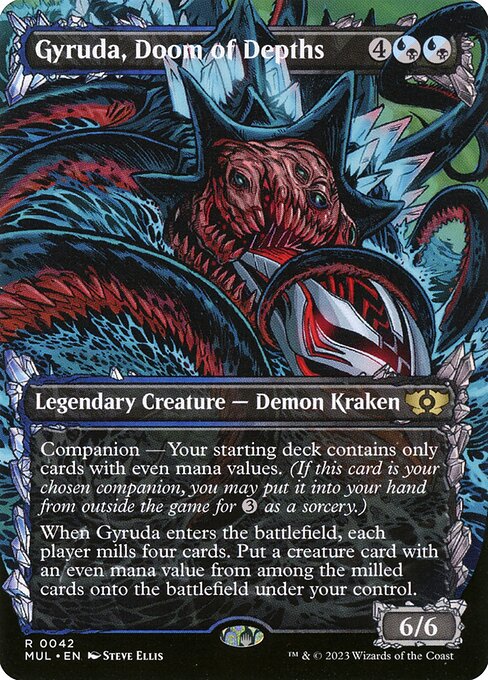
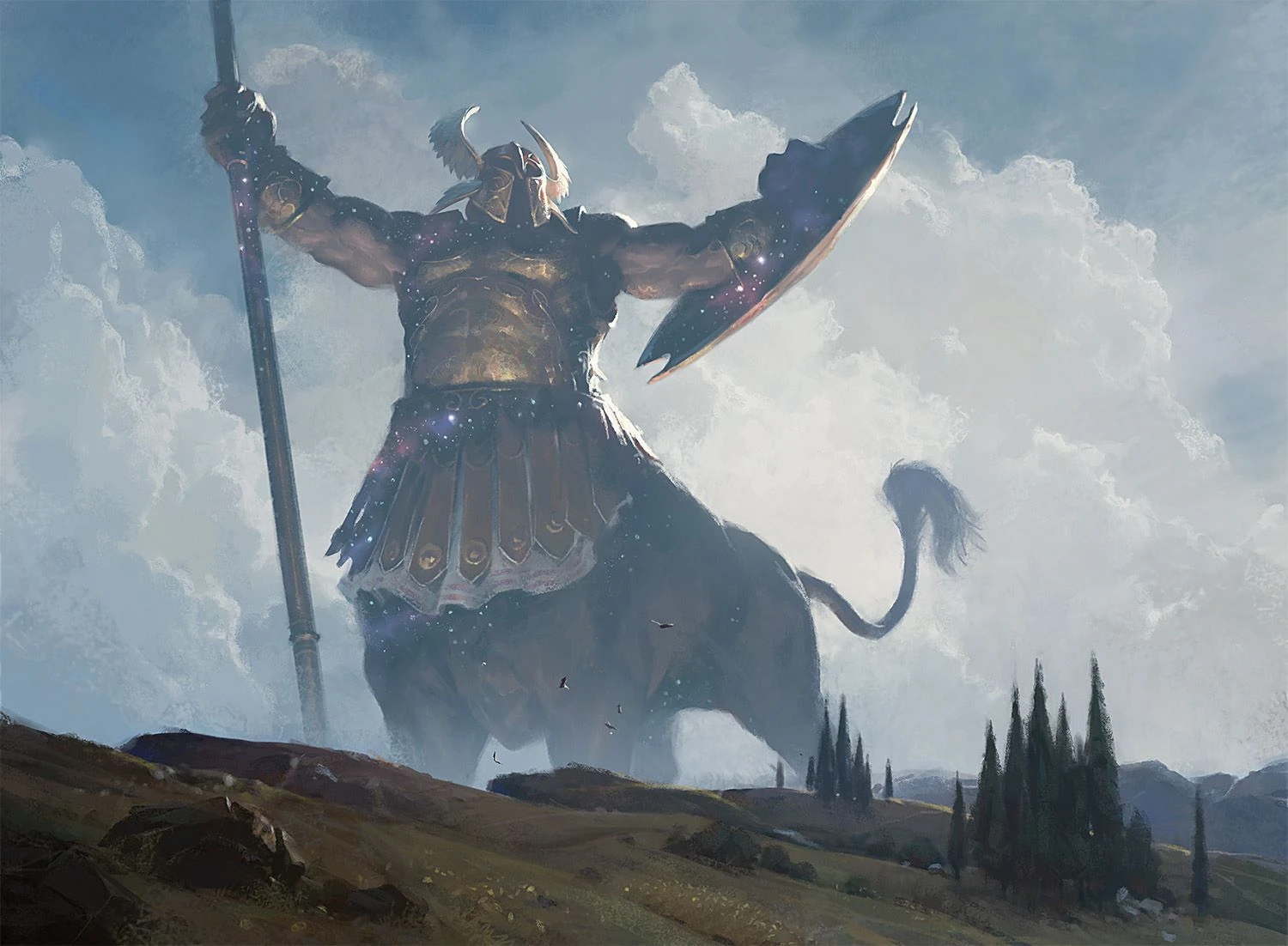
Welcome back to another episode of Fun & Jank! You’re hanging out with Plum for Episode 68, and today, we are doing the unthinkable. We are playing Gyruda, Doom of Depths… again. And this time it’s actually pretty good!
We played a similar list a couple years ago when Timeless was a new format and you could get away with more shenanigans. That version was fueled by Show and Tell and pure willpower. However, as the format evolved my favorite Demonic Kraken fell to the wayside and I mostly forgot about him. That is until I tried brewing a Mono Black value list featuring Gyruda and some recent tech in the form of Demonic Counsel.
I genuinely thought I was onto something cool here. Counsel was basically a Demonic Tutor for our Demon-friend, which would really increase the consistency. But the more we played with it, the more I realized how much it sucked to not have a way to ramp or cheat out Gyruda early like we did with Show and Tell.
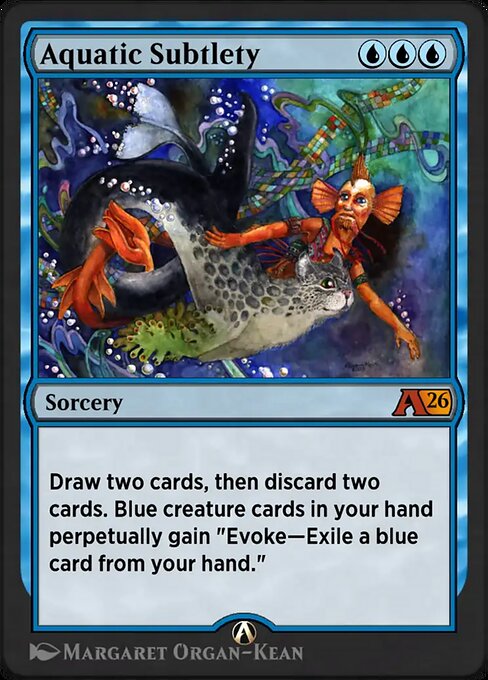
And then a lightbulb went off while discussing the recent Aquatic Subtlety lists being worked on in the MTG: Eternal Discord.
My brain instantly exploded and I stopped everything I was doing on stream and clicked the “new deck” button. It may not be able to compete in Timeless anymore, but with the recent bannings, Historic is probably the perfect power level and diversity for Gyruda combo to make a come back.
Giving all blue creatures in your hand Evoke means we can cast Gyruda for zero mana by exiling another blue card. This works out well because Gyruda’s ETB trigger doesn’t care if it’s being sacrificed to the Evoke cost. The trigger goes on the stack, we find a clone, and the chain begins before the original even hits the graveyard.
So I went back and referenced Episode #2 of Fun & Jank, and used that as my jumping off point for our first iteration.
This original behemoth of the deck was also the most janky. Firstly, if you’re not familiar with Gyruda combo, it’s rather straight forward:
“When Gyruda enters, each player mills four cards. Put a creature card with an even mana value from among the milled cards onto the battlefield under your control.”
This ability, combined with numerous clone and blink effects such as Phantasmal Image or Restoration Angel allows you to chain together Gyruda triggers. With our build, I started by keeping it mono-blue, so we wanted to stick with clones only. This achieves our primary goal of making an army of Gyruda clones, but it also has the secondary effect of milling both you and your opponent 4 cards for every trigger.
Once you have enough of these triggers you can win one of 2 ways.
1.) You create enough Gyruda Clones and finally mill into a Dragonlord Kolaghan to give them all haste and swing out. 2.) You mill both yourself and your opponent all the way down to 0 cards in library, and then pass the turn so they draw from an empty deck and lose.
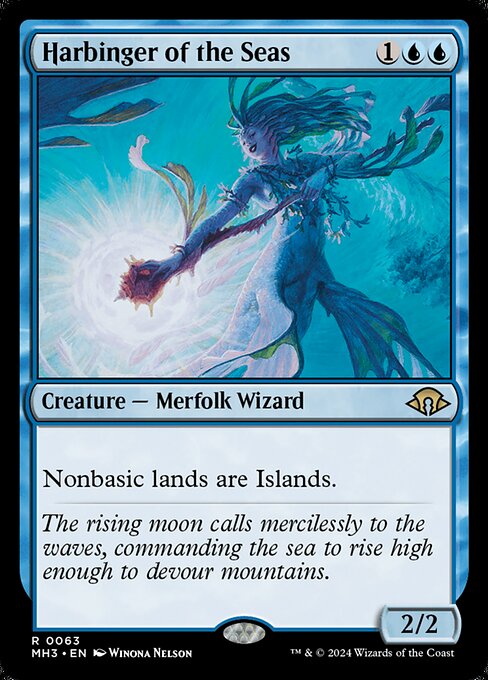
This version was packed with utility. We had Harbinger of the Seas to lock out greedy mana bases, Force of Negation to stop early combos, and a suite of Blue MDFC lands like Sea Gate Restoration and Silundi Vision to ensure we never missed a land drop while maintaining a high blue-card count for Aquatic Subtlety.
You’ll notice that the combo package itself takes up quite a lot of space. 16x Clone effects 2x Kolaghan 4x Aquatic Subtlety 4x Gyruda
That’s a total of 26 slots, which doesn’t give us a whole lot of room to work with for supporting cards. In this case, we filled those remaining slots with the little bit of interaction I mentioned above in the form of Harbinger and Force of Negation.
The “Fun & Jank” really comes into play when I realized that I could still play a transformational sideboard like our original Timeless version. Meaning we could side into either Goblin Charbelcher or Grindstone Combo (winning with 4x Laboratory Maniac in the sideboard). However, after playing a few games I realized the main combo itself was strong enough to hold the deck up on its own. While this version won some hilarious games, it had a massive identity crisis. The ability to pull a fast-one on your opponent by playing a whole different combo after game one was funny, but it also diluted all 3 plans so that none of them were doing what they needed to at full power. We had to mulligan aggressively every game and it often didn’t even pay off.
I went back to the drawing board and discussed a better direction with my chat on stream.
At this point I actually started going back through some tournament results from Modern’s past for “all-in” style combo decks. The old Ad Nauseum combo lists caught my eye and I took a lot of inspiration from them. They’re designed to do one thing every game, and do it as fast as possible, which is exactly what I wanted our deck to do.
For the second version, I took a hatchet to the list. We threw the Belcher/Grindstone idea in the bin. I decided that if the opponent had the Grafdigger’s Cage, we would just lose and move on to the next game. This mindset shift is crucial for combo brewing: Focus on your “A-Game” before you ever worry about your “B-Game.”
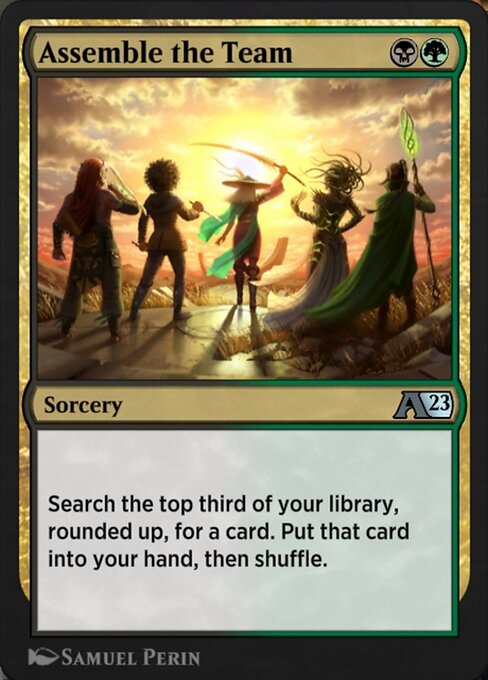
This is where Assemble the Team entered the fray. Demonic Counsel was cool, but only found Gyruda, meaning most of our games were spent mulliganing or churning through our deck just to find Aquatic Subtlety. Assemble solves that problem because it can find either half of the combo for just two mana. This also led to a shift in the mana base because now we had to support Sultai instead of Mono-U.
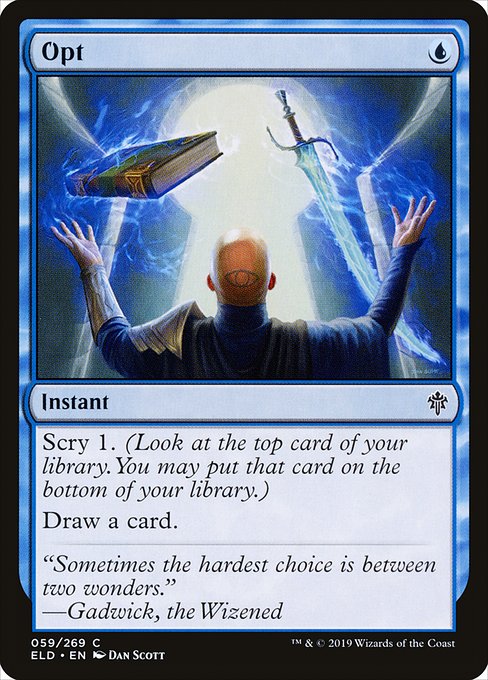
I also loaded up this version with Opt and Ponder so I had something to do in the early game. However, I realized that they just weren’t as impactful as I wanted. Assemble the Team was just so much better that cantrips felt useless in comparison. I found that I was often scrying my way right into a loss. The deck felt smooth, but it lacked velocity.
You may have also noticed we’re jamming two copies of Kavaero in this second version. There’s many games where you start the Clone chain only to immediately mill a Kolaghan, which is why we play 2 of those instead of one. But even then, it felt reaaaally bad to find the second one after only a couple spins of Gyruda.
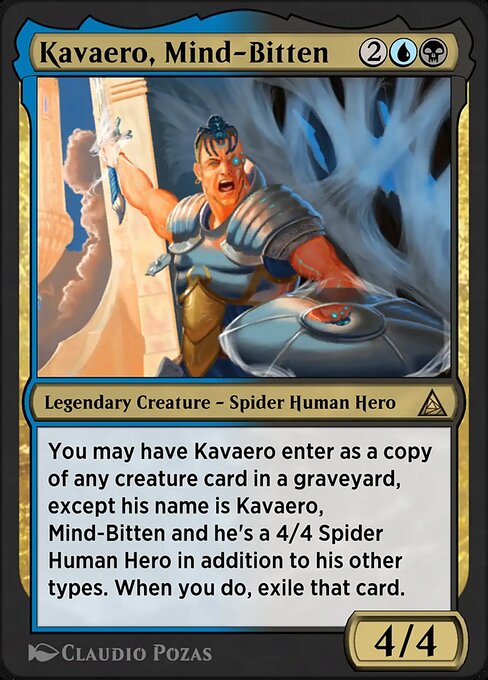
Kavaero fixes that problem because it enters as any creature in our yard. That means we essentially have two more copies of Kolaghan in the deck if we mill it early, but can also use him to just copy other clones we milled to keep the chain going if needed. A perfect addition to the deck.
So I continued tested more on stream and actually did pretty well! But I kept feeling like we could streamline it even further, so I went back to the deck builder once more for another iteration.
This is our most recent version of the deck, and the one that is starting to feel competitive. The one thing that did feel incredible in Version 2 was the inclusion of Assemble the Team. This was our first real departure from “looking” for cards to “finding” them and I wanted to find another card that could do the same. This is why we cut the cantrips and moved toward Scheming Symmetry and Seek New Knowledge.
Seek New Knowledge is still being tested, but performing well so far. Each time you cast it you’re generally increasing the density of combo pieces in your hand. It’s not perfect, but it does a good job of giving us extra cards to fuel the Evoke costs or extra tutors for redundancy. It also lets you put a card from your hand on the bottom of your library, which is perfect for shipping away those extra lands or high-CMC clones that you’d rather hit off a Gyruda trigger later.
Scheming Symmetry??? In this economy??? Usually the dual-tutor effect would be quite a downside in Historic, but in our case our opponents usually don’t have time to take advantage of the card they find anyways. We use Symmetry as the final bridge to grab Aquatic Subtlety or Gyruda, Doom of Depths. Between this and Assemble the Team, you’re highly likely to have your combo pieces on turn 3 in a majority of games. This really mirrors the philosophy of being an “all-in” combo like I mentioned earlier. Every card that isn’t a part of the combo is used to find the combo.
The real breakthrough in Version 3 wasn’t just the tutors; it was realizing we had better options for our creatures as well.
As you combo off, your copies of Gyruda generally get sacrificed to the Legend Rule, meaning finding Spark Double is a priority because your additional copies can copy the Spark Double Clone, so they’re no longer legendary. Sakashima gives you more ways to get around that, negating the Legend Rule and helping to keep more bodies on the board.
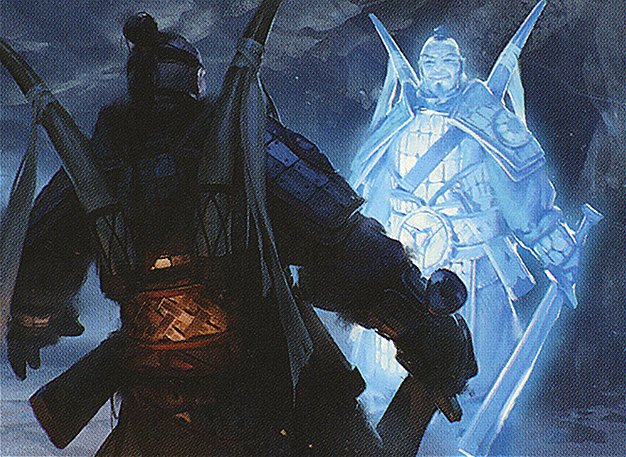
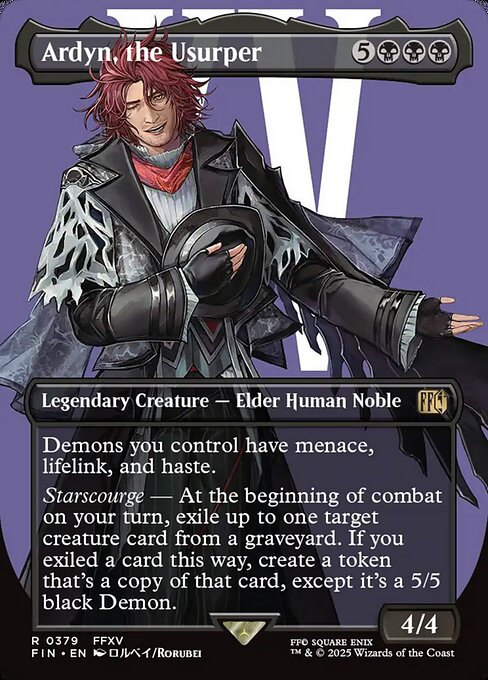
The other biggest upgrade here is Ardyn over Kolaghan. I hope I’m not alone when I tell you that I usually just glazed over his text box whenever my opponent reanimated him on turn 2. But BOOOOY is he insane for us. Not only does he gives DEMONS Lifelink, Menace, and Haste. He also reanimates something pre-combat. So if we fizzled, we can establish him on board and start the chain again by reanimating Gyruda or another Clone. I can’t believe I missed how perfect he was for the deck the first time around.
Testing
Across the first three iterations we played on stream, I went 22-7. Which ain’t too shabby in my book.
But I’d be lying to you if I said this deck was a 100% guaranteed win every time you Evoke Gyruda. If you’re going to pilot the Kraken, you need to develop a thick skin forwhiffing. There will be games—frustrating, soul-crushing games—where you cast your Aquatic Subtlety on Turn 3, exile your blue card to Evoke Gyruda, mill four cards… and see four lands. Or worse, four spells that aren’t even-CMC creatures. Because we are an “all-in” combo deck, a whiff on the first trigger can often mean game over.
This is exactly why Kavaero, Mind-Bitten is in the deck. In earlier versions, a whiff meant your Gyruda went to the graveyard and you were left with nothing. Now, you can follow up with an Evoked Kav to try again, or just hard-cast him on the following turn if you hit your land drops. It’s not the perfect fix, but it gives the deck a layer of re-roll potential that we didn’t have before.
Racing
In the current Historic meta (which is still settling), Turn 3 is still a bit of a Golden Hour. If you can’t do something meaningful by then, you’re usually staring down a lethal board of Wizards or a massive Light-Paws, Emperor’s Voice.
The Good News: We are consistently ready to go off on Turn 3 thanks to the redundancy of Assemble the Team and Scheming Symmetry.
The Bad News: We have almost zero interaction. We aren’t playing Fatal Push or Spell Pierce. Our “interaction” is simply winning the game before they do. If a Wizards player has the nuts on the draw, or an Auras player builds an untargetable god-creature by Turn 2, we just have to hope our Kraken chain is faster.
I’m still developing the sideboard for this deck, because we’re going to have to be very precise about what we play and swap out for games two and three. If you have any ideas, feel free to leave a comment below.
One of the most common misconceptions about Gyruda, and something I want to make very clear for anyone taking this to the ladder, is how it interacts with graveyard hate. You’re actually snagging a creature from your library, not the graveyard. Which means you can still combo off with Rest in Peace or Leyline of the Void on the field. Our real Enemy is Grafdigger’s Cage. Cage shuts us down completely and its important to take that into account when building the sideboard.
Finally, let’s talk about the games where the combo just isn’t happening. Maybe you drew all your Clones and none of your Tutors. There is a surprising amount of play in this deck as a “Fair” midrange pile. I’ve survived plenty of games by simply hard-casting a Phyrexian Metamorph to copy an opponent’s Sheoldred, the Apocalypse or using Phantasmal Image to make a blocker.
We play enough mana fixing with Reflecting Pool and Mana Confluence that we can eventually reach that 6-mana milestone. Hard-casting Gyruda feels slow, but even when it’s late to the game, it can still usually win. If the game goes long, our deck is full of the most powerful creatures on the board because they are literally copies of our opponents’ most powerful creatures, but with the added synergy of Ardyn, the Usurper giving them Haste and Lifelink.
Closing Thoughts
Aquatic Gyruda Combo is a brew I’m quite proud of, but I think there’s still a lot of work to be done on it. Hopefully it was helpful seeing a bit of my brewing process as I went through versions 1, 2, and 3 of this deck.
It’s rather fragile and prone to the occasional whiff, but It also feels like one of the most explosive things we can do in post-ban Historic. There’s a good chance this deck may just be another Persist Combo style list that you can use to climb the Bo1 ladder, but I’ll be trying my best to make it a force to be reckoned with in Bo3 as well.
That’s it for me!
Thanks for reading!
As always, feel free to comment and leave any questions you have below. And make sure to come back next week for even more Fun & Jank!
If you want to see these decks in action, come hang out with me on stream where we test, refine, and have a ton of fun together.
Happy Brewin’!
Premium
Enjoy our content? Wish to support our work? Join our Premium community, get access to exclusive content, remove all advertisements, and more!
No ads: Browse the entire website ad-free, both display and video.
Exclusive Content: Instant access to all exclusive articles only for Premium members, at your fingertips.
Support: All your contributions get directly reinvested into the website to increase your viewing experience!
Discord: Join our Discord server, claim your Premium role and gain access to exclusive channels where you can learn in real time!
Special offer: For a limited time, use coupon code L95WR9JOWV to get 50% off the Annual plan!
Plum is the creator of the Jank Tank.
He started playing at the ripe old age of 12 and immediately fell in love with the infinite possibilities that deck building could lead to.
He truly understands that jank is a mindset, and spends most of his free time brewing and concocting new and exciting deck lists to help inspire and promote creativity within the MTG community.