The Nightmare Standard Wasn’t Ready For – Golgari Midrange is Back!
The MTG Hero loves a good midrange deck! Does the new Secrets of Strixhaven Witherbloom cards have enough power to bring the archetype back? He thinks so!
Hello my fellow Planeswalkers! I am The MTG Hero, and today we’re diving into one of the grindiest, nastiest, and most underrated decks to come out of standard since Secrets of Strixhaven’s release.
Many long time readers know I love stripping apart my opponent’s hand, controlling the board, and burying people in value while swinging with efficient threats and this Golgari shell is exactly what I have been looking for.
This is the classic Golgari Midrange. Every card is weaponized for attrition and does it better than almost anything else in the format. Every card either disrupts, replaces itself, pressures the opponent, or creates long-term inevitability.
And honestly?
It feels amazing to play, and absolutely brutal to play against.
Midrange combines efficient creatures, discard, premium removal, and some incredibly powerful synergies to attacks from multiple angles at once.
The biggest strength of Golgari midrange has always been is flexibility. You can build your deck to take on basically anything and any meta. Against aggressive decks you become a removal-heavy machine. Against slower decks you pivot into a relentless discard and value engine that slowly suffocates the opponent out of the game.
The decklist is packed with cards that overperform in practice, and the synergy between them is what pushes this archetype over the top.
Early Game
The deck ideally starts with either Llanowar Elves or an early disruption spell to immediately dictate the pace of the game.
As always, mana acceleration in Standard becomes incredibly dangerous when it’s backed up by powerful three- and four-mana plays. Curving from Llanowar Elves into your midgame threats allows you to get on board ahead of schedule and start pressuring opponents before they have time to properly stabilize.
Badgermole Cub has also become one of the defining cards of the current Standard format. The acceleration it provides is absurd if left unanswered, and the card can snowball games incredibly quickly all on its own.
What makes the Cub especially powerful in this shell is that it gives the deck the ability to pivot between multiple game plans seamlessly. Against slower decks, it enables explosive starts that let us flood the board with threats ahead of curve. Against aggressive decks, it ramps us into our stabilizing midgame plays faster while still applying pressure.
If opponents fail to answer Badgermole Cub immediately, the game can spiral out of control very quickly as we transition from simple ramp into overwhelming board presence and value generation.
Removal and Disruption
Duress remains one of the best tools available for attacking control, combo, and slower midrange decks. Information is incredibly valuable, and stripping away sweepers or removal before committing your threats can completely change a game.
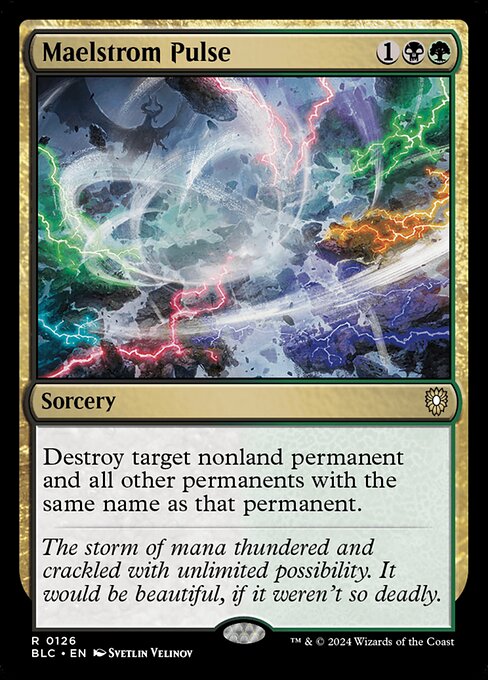
Maelstrom Pulse is out “catch-all” it removes anything we need to remove and in some situations against aggressive decks can serve as a one-sided sweeper.
Witherbloom Charm might be one of the most flexible cards in the entire deck. The versatility here is incredible. Having access to card draw, removal, and life gain all on one card gives this deck an absurd amount of game against nearly every archetype.
It combos well with Badgermole by allowing us to sacrifice a earthbended land to get two new cards and the land returns as a regular land and we aren’t out any thing major.
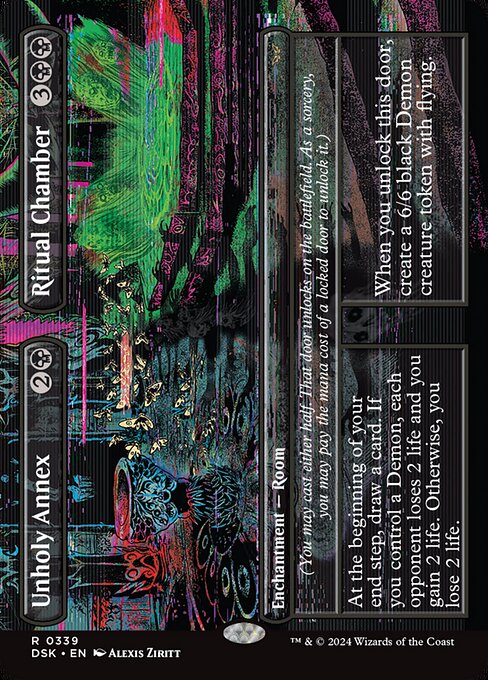
It provides inevitability, generates long-term value, and becomes a nightmare if left unanswered and makes this deck possible. When we have it, we can freely trade one-for-one and come out a head because we draw extra cards.
The life drain is also huge. It keeps us alive against aggro and pressures slower decks with an inevitable clock.
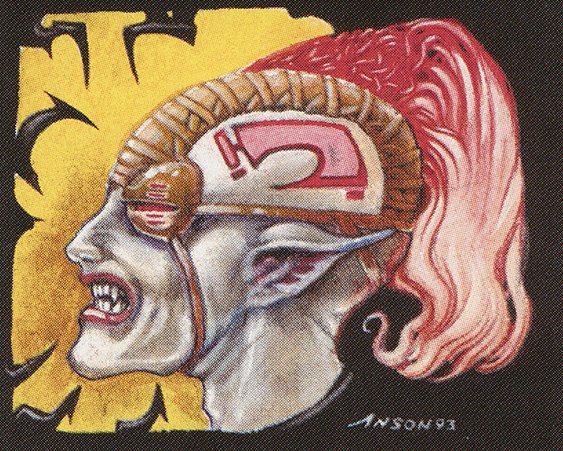
Annex also pairs beautifully with one of the newest additions to the deck, Tragedy Feaster.
This card completely overperformed during testing. In a deck built around constant trades, removal, and attrition battles, Tragedy Feaster quickly becomes an absolute nightmare for opponents to deal with.
The Ward ability is a huge part of what makes the card so threatening. Outside of sweepers or sacrifice effects, opponents are almost always forced into a losing exchange just to remove it, turning every answer into a two-for-one in our favor. Add Trample into the mix and suddenly chump blocking isn’t a realistic plan either. Once this creature hits the board, the pressure ramps up immediately.
This is exactly the kind of oversized threat midrange decks dream about, and thanks to our acceleration we can deploy it as early as turn three while still protecting it with a Duress to clear the way.
There’s also an important gameplay interaction to keep in mind with Annex triggers. If you have auto-stack enabled on Arena, you may want to disable it so you can manually order your triggers correctly. By putting the Annex life gain trigger on the stack first, you can gain life before Tragedy Feaster checks its sacrifice condition, allowing you to keep your board intact.
And even in games where you don’t gain life, the downside is minimal. Sacrificing an Earthbended land is usually a negligible cost for the amount of pressure and value Tragedy Feaster provides.
Utility Cards
Like I said earlier, one of the biggest strengths of Golgari is how easily the deck can adapt to any metagame. Because of that, there are several cards I strongly recommend in the maindeck right now to improve our matchups against the decks you’re most likely to face on the ladder.
Keen-Eyed Curator is one of the best examples. A 3/3 for two mana is already an efficient rate, but our little raccoon brings far more to the table than just raw stats.
Its graveyard hate ability is incredibly relevant in the current format, shutting down strategies like Sultai Reanimator while also putting serious pressure on Izzet Lessons by exiling key instants and sorceries before they can be reused. Having that kind of disruption attached to an aggressively costed creature is exactly the kind of efficiency midrange decks thrive on.
And if the game goes long? Keen-Eyed Curator can quickly become an enormous threat. Once enough card types are exiled, it turns into a massive attacker capable of ending the game almost single-handedly, forcing opponents to answer it immediately or risk getting buried under the pressure.
Being able to repeatedly buy back any card from the graveyard gives this deck an absurd amount of inevitability in longer games. Whether it’s returning a destroyed Annex, rebuying Tragedy Feaster, getting back a key disruption spell, or recurring one of our grindy value engines, Emeritus of Abundance ensures we always have access to the card that matters most.
In many matchups, it effectively feels like drawing the perfect card every single turn, and that kind of recursive value is exactly what pushes a midrange deck from good to oppressive.
No midrange deck would be complete without a powerful planeswalker, and thanks to Secrets of Strixhaven we have a new one that does everything we could ask for and more in Professor Dellian Fel.
This planeswalker is the complete package for Golgari Midrange. He gains life to stabilize against aggressive decks, removes opposing threats, and keeps the cards flowing so we never run out of gas. Every mode on this card feels impactful, which is exactly what you want from a top-end threat in a grindy strategy.
And then there’s the ultimate.
If unchecked, Professor Dellian Fel can take over the game almost immediately. Turning our Requiting Hex triggers and Annex effects into massive chunks of damage closes games incredibly fast and gives the deck a terrifying inevitability engine. Opponents are forced to answer him immediately, and if they can’t, the game tends to spiral out of control in our favor very quickly.
The Mana Base
One of the most underrated aspects of this list is just how smooth the mana base feels now, especially with the addition of the check lands, most notably Deathcap Glade.
Between Blooming Marsh, Overgrown Tomb, and Wastewood Verge, the deck has incredibly reliable access to both colors in the early turns while still minimizing the number of tapped lands we have to play. That consistency matters a lot in a midrange deck where curving out cleanly is often the difference between stabilizing and falling behind.
The utility lands also do a tremendous amount of work in grindy matchups. Restless Cottage and Soulstone Sanctuary both give the deck additional threats without costing us spell slots, helping maintain pressure deep into the game when both players are trading resources.
Restless Cottage in particular is phenomenal here because of its interaction with Earthbend effects. Once it becomes a creature, attacking with it still triggers the exile-and-Food ability thanks to the way the card is worded. You don’t actually have to activate the Cottage itself to gain the trigger — it simply needs to attack. That little rules interaction comes up more often than you’d think and adds a surprising amount of incremental value over the course of a game.
Even Ba Sing Se earns its slot by providing additional utility without heavily compromising the consistency of the mana base. The card synergizes extremely well with Badgermole Cub and Restless Cottage, allowing the deck to keep applying pressure while continuing to generate value turn after turn.
Sideboard Breakdown
The sideboard gives the deck tools to adapt to basically everything.
Decorum Dissertation is a new card that if resolved, breaks any control matchup and midrange mirrors. Being able to draw two extra cards at the start of your main phase so you can use them every turn is insane. It is also a “may” effect, so if you are low life you won’t die to your own card, but that is a rare situation.
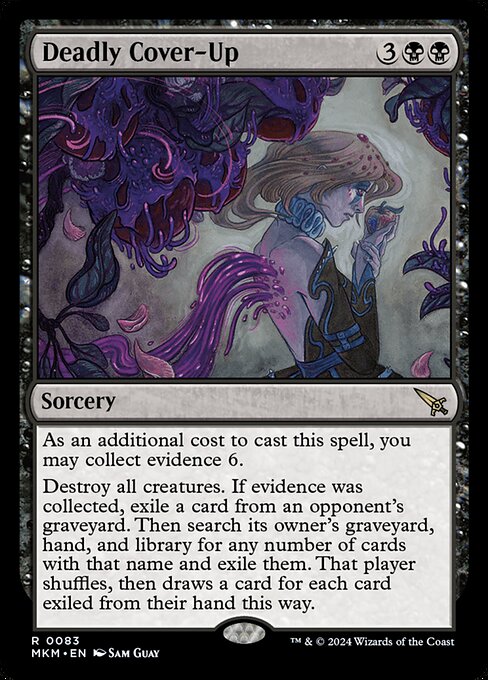
Deadly Cover-Up gives you another powerful sweeper option for grindier matchups where games go long. It also can be used against Sultai Reanimator to remove all copies of Bringer.
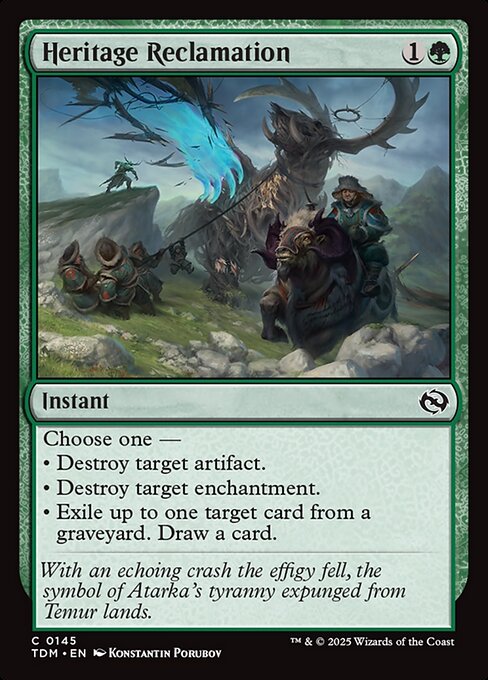
I also really like Heritage Reclamation as additional interaction against problematic artifacts and enchantments and another way to remove something from the grave and at worst, we can use it to draw a card.
The sideboard feels flexible without becoming overly narrow, which is exactly where you want to be in an open ladder environment.
TIps and Tricks
Turn off the auto stacker! This is huge because sometimes the game will order Feaster’s sacrifice ability to go off before Annex’s life gain ability.
You can use Badgermole Cub to turn Restless Cottage into a body to attack and still get the ability to exile something and make a food token.
You can sacrifice the food token to Feaster when you don’t have a way to gain life, or sacrifice a earthbended land to not be out a resource. You can also do with is Witherbloom Charm to draw more cards.
Soulstone Sanctuary becomes a demon when it is activated so it pairs great with Annex when you need it.
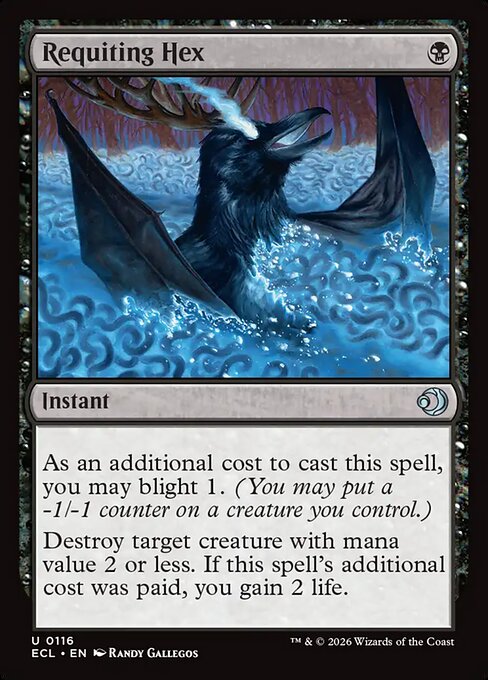
Don’t forget that Requiting Hex can be used to gain some life. I see a lot of players forget this is an option.
Keen-Eyed Curator‘s effect only counts for itself. If you play the second, it won’t count the exiled cards for itself and will just be a 3/3. This is also true if you exile four types and it gets bounced and you replay it.
You can also use Witherbloom Charm to sacrifice a land to put in the yard to help give Keen-Eyed Curator its bonus. This came up a shockingly high amount when testing the deck.
If you remove something with Maelstrom Pulse and you control a permanent of the same name, yours will also be removed. So keep that in mind in the mirror if you try to remove an opponent’s Annex.
Final Thoughts
This deck feels like a perfect example of why Golgari Midrange never truly dies.
The threats are efficient. The disruption is relentless. The removal is flexible. And the value engines completely overwhelm opponents if unanswered.
Most importantly though, the deck rewards tight play.
Sequencing matters. Resource management matters. Knowing when to pivot from control to aggression, it all matters.
But to dedicated players, that kind of gameplay is exactly what makes midrange decks so satisfying to play.
This archetype may not be the most flashy deck in Standard right now, but after spending time with it, I genuinely think it has the tools to compete with almost anything on the ladder.
If you enjoy making your opponents miserable one removal spell at a time, this deck is absolutely worth trying.
Until next time Planeswalkers, Hero out!
Links
Youtube.com/themtghero
Twitch.tv/themtghero
Patreon.com/themtghero
X.com/themtghero
Premium
Enjoy our content? Wish to support our work? Join our Premium community, get access to exclusive content, remove all advertisements, and more!
No ads: Browse the entire website ad-free, both display and video.
Exclusive Content: Instant access to all exclusive articles only for Premium members, at your fingertips.
Support: All your contributions get directly reinvested into the website to increase your viewing experience!
Discord: Join our Discord server, claim your Premium role and gain access to exclusive channels where you can learn in real time!
Special offer: For a limited time, use coupon code L95WR9JOWV to get 50% off the Annual plan!
My name is The MTG Hero. I have played Magic for over 15 years. I am a consistent high Mythic ranked player. Follow me on Twitch and subscribe on YouTube!