Standard is ruled by the Izzet/Prismari decks, but which version is the best? The MTG Hero shares his thoughts and opinions on the best deck in Standard!
Hello my fellow Planeswalkers! I am The MTG Hero, and today we’re talking about the deck that has completely taken over Standard: Izzet.
At this point, Standard is basically ruled by blue-red decks. Whether it’s Prowess, Elementals, or Lessons, there are countless different builds floating around the ladder, and each archetype seems to branch into even more variations. It can honestly feel impossible for both new and veteran players to properly test every version to figure out which build is actually the best.
That’s where I come in.
Today, we’re diving into what I believe is the strongest Izzet deck in Standard right now, along with the best configuration for the archetype.
Why Is Izzet So Dominant?
Izzet has always been one of the most beloved guilds from Ravnica, and for good reason.
Players love casting cheap spells, drawing cards, and turning efficient sequencing into overwhelming tempo advantages. Tempo strategies feel incredibly rewarding because every spell generates value while keeping opponents permanently on the back foot.
Countering a key spell, removing a threat efficiently, or generating a two-for-one creates the feeling of “outplaying” your opponent without necessarily needing to navigate an exhausting late-game board stall. Your cards simply do more for less mana.
And honestly?
It feels like Izzet has dominated Standard forever at this point.
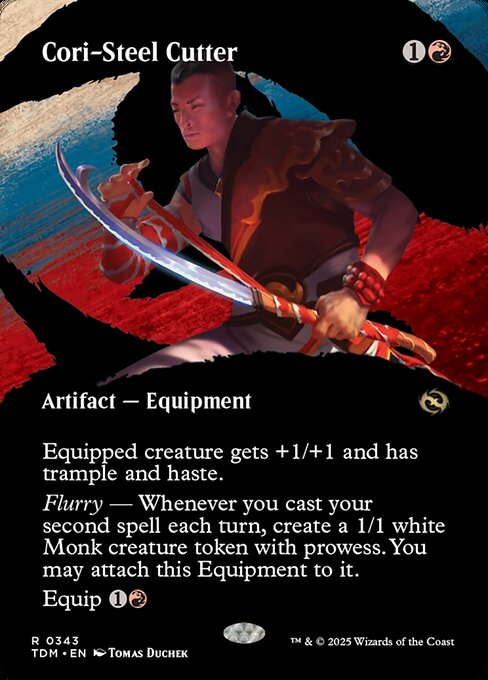
Ever since Tarkir Dragonstorm introduced Cori-Steel Cutter, Izzet has been the defining force of the format. Even after Cutter was eventually banned, players hoped we had finally seen the end of blue-red supremacy.
We were wrong.
Then came Avatar: The Last Airbender, which reintroduced Lessons into Standard. This time, however, the mechanic was pushed aggressively enough to become truly competitive. Suddenly, Izzet was back to drawing absurd amounts of cards with combinations involving Gran-Gran, Artist’s Talent, and Accumulate Wisdom, or flooding the battlefield with prowess threats backed by Stormchaser’s Talent and Boomerang Basics.
It honestly felt like Cutter never left.
The engine proved far too efficient for most decks to keep up with, and Izzet once again rose to the top of the metagame.
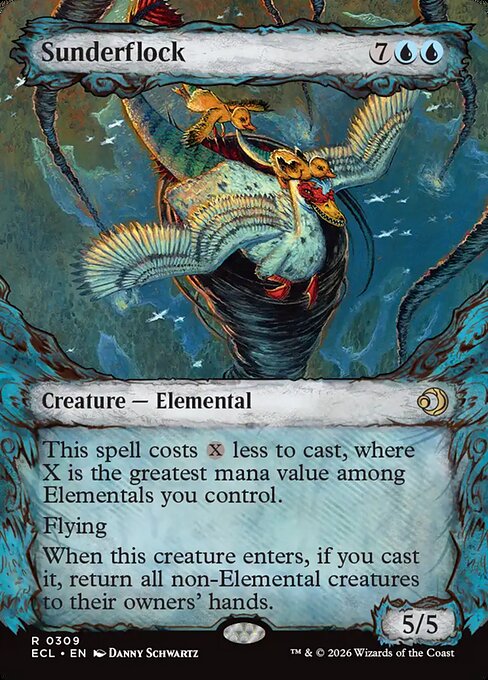
Players hoped future sets would finally give us tools to fight back against the red-and-blue menace, but Lorwyn only made things worse by introducing Sunderflock.
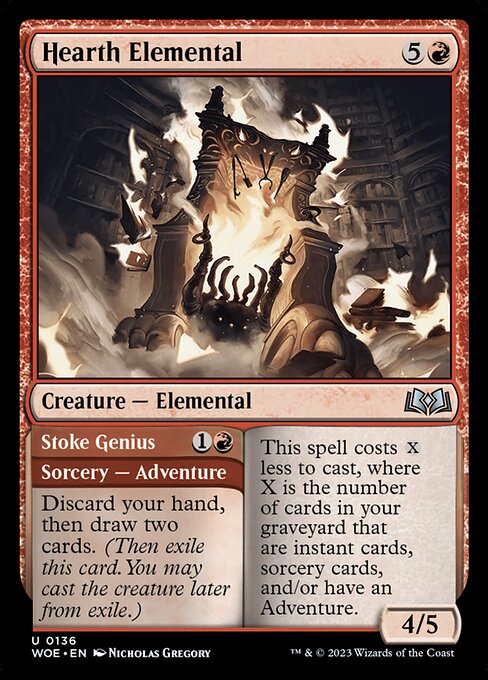
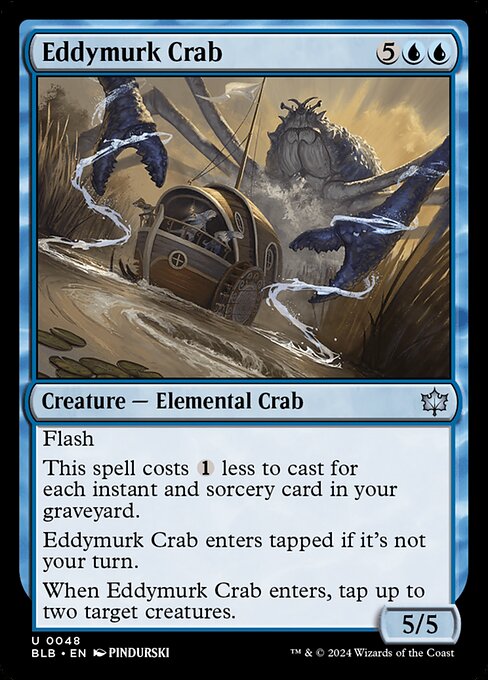
This one-sided sweeper immediately created an entirely new archetype when paired with Eddymurk Crab and Hearth Elemental. Suddenly, Izzet Elementals became the newest terror of Standard.
TMNT failed to shake up the format the way many players hoped, and finally, Secrets of Strixhaven sealed Standard’s fate by introducing another powerful batch of Prismari cards that pushed the archetype even further over the top.
In my opinion, Izzet Elementals is the best possible Izzet shell you can register right now.
[Sunderflock] absolutely demolishes nearly every creature strategy in Standard unless you’re facing another Elementals deck or hard control. When backed up by the rest of the Elemental package, the deck can race almost anything while closing games before opponents ever get a chance to recover.
Honestly, it feels like you either play this deck or lose to it.
If I could ban a single card from Standard today, Sunderflock would easily be at the top of my list. The card is simply too oppressive against creature decks and creates some of the most frustrating gameplay patterns in the format.
Playing the Deck: Early Game
Everything begins with your cheap cantrips and removal suite.
One of the most beautiful aspects of the Elementals build is that almost every card naturally fuels your late game plan. Every spell contributes toward enabling your powerful threats later in the game, meaning your deck constantly snowballs value over time.
As long as you sequence efficiently and maximize every spell, it’s honestly difficult to go wrong.
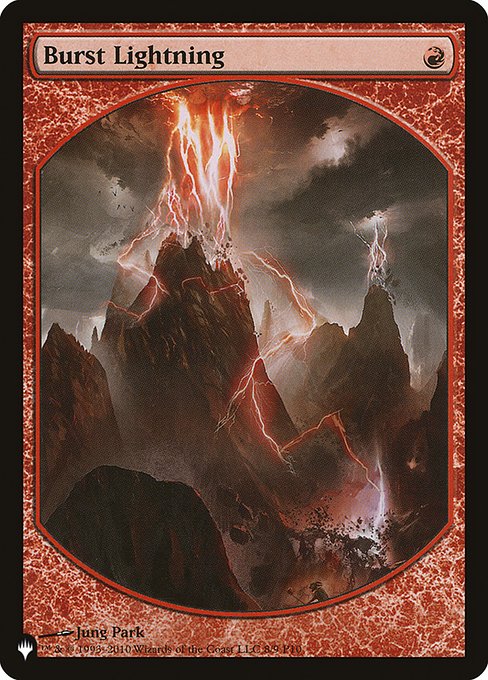
Early interaction comes from Burst Lightning and Vibrant Outburst, which help clean up mana creatures and aggressive early threats.
Vibrant Outburst in particular has been an incredible addition from Secrets of Strixhaven because it can remove one threat while simultaneously tapping down another. In many board states, that effectively invalidates your opponent’s entire turn and can function like a virtual Time Walk.
At its floor, we can cast it for two mana with X equal to zero simply to draw two cards and discard one, while placing two instants or sorceries into the graveyard for our Elemental payoffs.
From there, the card only scales upward.
Being able to remove creatures while drawing cards and filling the graveyard is already incredible value, but in grindy matchups the card eventually transforms into a massive finisher that can essentially Fireball the opponent out of nowhere.
Early in the game, the Adventure half keeps the cards flowing while naturally filling the graveyard. Then, later on, you suddenly deploy an incredibly undercosted threat capable of ending the game in only a few attacks while also dominating creature combat with its massive body.
Wide creature strategies can occasionally create problems, which is where Eddymurk Crab enters the picture.
The Crab completely stabilizes aggressive boards by presenting a massive blocker while allowing you to untap with all your mana available. Against many aggressive decks, resolving Crab is often enough to completely halt combat.
But the true “boss” card of the deck is unquestionably Sunderflock.
This card makes aggressive decks look absolutely laughable. Honestly, I would probably play the full four copies if the mirror match weren’t so common.
What makes the card especially brutal is how it punishes even green ramp and Landfall strategies trying to abuse Earthbended lands. Those lands don’t return to the land zone, they bounce directly back to their owner’s hand, completely destroying their tempo.
Previously, players tried fighting Sunderflock with Torpor Orb, but now that Prismari Charm exists, the deck has flexible main-deck answers that cleanly answer Orb while remaining useful in almost every matchup.
Most of the time, once Sunderflock resolves, the game effectively ends. Very few decks can recover quickly enough to survive a two-turn clock backed by an endless stream of cheap spells and interaction.
You can still cast the Adventure side of Hearth Elemental even when you have no cards in hand. Drawing two fresh cards for a single mana is one of the most explosive things this deck can do, and it often gives you the fuel needed to immediately turn the corner.
Eddymurk Crab also creates some surprisingly powerful tempo sequences. You can cast it, bounce it back with Get Out or Prismari Command, then replay it to repeatedly tap down blockers or opposing threats. Those lines buy a huge amount of time against aggressive decks while pushing damage through stalled boards.
Don’t be afraid to cast Traumatic Critique for X=0 just to loot. Filling your graveyard is incredibly important in this deck, and Critique is an easy way to dump multiple spells into the yard while digging deeper into your deck for action.
In the Excruciator matchup, I usually leave in Burst Lightning as an answer to Restless Reef. The manland can become a real problem in longer games, and having cheap interaction that cleanly answers it gives you some valuable insurance.
Final Thoughts
This deck is undeniably the defining force of Standard right now, and honestly, I don’t see that changing anytime soon unless Wizards of the Coast eventually decides to step in with bans or major format adjustments.
Even if Sunderflock were removed tomorrow, Izzet would still remain one of the strongest strategies in the format thanks to the absurd efficiency of the Lessons engine. Cards like Gran-Gran, Artist’s Talent, and Accumulate Wisdom are more than capable of carrying the archetype back to the top on their own. That is what makes the current state of Izzet so concerning: the deck isn’t relying on a single broken card. The entire shell is packed with redundancy, efficiency, and flexibility.
That being said, I don’t necessarily think Standard is in a terrible spot.
The format still has variety, and there are absolutely decks capable of competing. The issue is that most archetypes have to work significantly harder to accomplish what Izzet does naturally.
Because of that, deckbuilding in Standard has started revolving around the matchup. You cannot realistically enter a tournament without having a clear plan for Izzet. Sideboards need dedicated hate cards, maindecks need efficient interaction.
The good news is that the archetype is not unbeatable. Decks like Jeskai Control and Dimir Excruciator can still give Elementals real problems.
If you are the type of competitive player who always wants to register the best deck, or if your goal is simply to maximize your chances of winning then this is the deck you should be running.
Until next time Planeswalkers, Hero out!
Links
Youtube.com/themtghero
Twitch.tv/themtghero
Patreon.com/themtghero
X.com/themtghero
Premium
Enjoy our content? Wish to support our work? Join our Premium community, get access to exclusive content, remove all advertisements, and more!
No ads: Browse the entire website ad-free, both display and video.
Exclusive Content: Instant access to all exclusive articles only for Premium members, at your fingertips.
Support: All your contributions get directly reinvested into the website to increase your viewing experience!
Discord: Join our Discord server, claim your Premium role and gain access to exclusive channels where you can learn in real time!
Special offer: For a limited time, use coupon code L95WR9JOWV to get 50% off the Annual plan!
My name is The MTG Hero. I have played Magic for over 15 years. I am a consistent high Mythic ranked player. Follow me on Twitch and subscribe on YouTube!