Welcome back, everyone, to Fun & Jank! I’m your host, Plum, and today we’re doing something a little bit different. Today, I want to get a little serious. Don’t worry, we’ll be back to the usual giggles and against-the-odds gameplay soon, but there’s a conversation I want to have with you.
We need to talk about Historic.
Right now, our favorite “anything goes” Arena format is having a massive identity crisis. Depending on who you ask, Historic is either a dumping ground for powerful cards, a Standard-plus graveyard, or a watered-down version of Timeless. If you look at the data, the format looks diverse on paper, but if you’ve actually queued up lately and love to brew like me, you know the feeling: Brewing is damn near impossible right now
I believe Historic is in a unique position—a potential “Goldilocks Zone” that is currently being squandered. It’s sitting in that sweet spot where cards are too powerful for Pioneer but can’t quite survive the Turn 1 insanity of Timeless. It’s the only place on Arena where high-level brewing should be the premier way to play.
But to get there, we need to decide what Historic actually wants to be when it grows up.
The Metagame
If you head over to any data aggregator right now, the spreadsheets will tell you Historic is in great shape. You’ll see a Rogue category sitting at a healthy 15%, with the top-tier decks like Izzet Wizards, Boros Energy, and Eldrazi Ramp only carving out about 5–8% of the meta each. But there’s a difference between a format being diverse and a format being healthy.
The current reality of the Historic queue is that it often feels like a lottery. We are increasingly living in a world of solitaire-like decks. You queue up with your latest brew, and instead of a back-and-forth game of Magic, you’re met with a Turn 3 “I win” button. Whether it’s an Energy start that puts you under an insurmountable clock or an Eldrazi deck that ramps into a game-ending threat before you’ve played your third land, the result is the same: Player agency is disappearing.
The Power Gap
This leads us to the massive power gap that has left Historic feeling like the neglected middle child of Arena.
Think about the ecosystem right now:
Standard & Pioneer: This is Fair Magic. The power ceiling is capped, the games are grindy, and the mana is (mostly) honest.
Timeless: This is The Wild West. It’s Arena’s Legacy. If you aren’t playing Dark Ritual, Mana Drain, or 0 mana interaction, you’re playing a different game. It’s fast, it’s brutal, and it’s meant to be.
Looking at that, Historic should be the “Modern” of Arena. It should be the place where we play with the most powerful cards on the client without the games ending on Turn 1 or 2.
The problem is that the power gap is shrinking from the top down. As hyper-efficient sets like Modern Horizons and specialized Anthologies get dumped into the format, Historic is being pushed closer and closer to Timeless speed without actually crossing the boundary. But because we don’t have the same safety valve of interaction (like Force of Negation or Wasteland), the proactive, aggressive decks are running away with the format.
That leaves the format in a weird limbo. We have decks like Eldrazi and Boros or UR lotus with near-Timeless level threats and speed, but we’re stuck with Pioneer-level answers. I’ve talked about it a bunch on stream lately, but a lot of the decks we brew are doing powerful things—they just can’t keep up with the ‘Top Dogs’ who are playing a fundamentally different game.
If you want to play a synergy-based deck that just so happens to be a turn slower than usual, you currently don’t have a home. You’re a punching bag for the top-tier Historic meta.
Learning from “Golden Era” Modern
To understand how I think we should fix Historic, we have to look back at what many consider the Golden Age of Modern: the era from roughly 2014 to 2018.
For those who weren’t there, Modern during those years was the ultimate brewers’ paradise. It was a format defined by the Turn 4 Rule. The unofficial social contract was simple: You could do something powerful, and you could do something fast, but if you were going to win the game, it usually wasn’t happening before Turn 4 unless your opponent completely stumbled or your deck had the nuts.
This created a beautiful ecosystem for modern. Why? Because a Turn 4 clock gives you just enough breathing room to set up a synergy. It meant that even if you weren’t playing the Tier 1 deck of the week, you could take a well-constructed Tribal deck, a unique Midrange pile, or a quirky engine to an FNM and actually compete. You won games through tight play and resource management, not just by being the first person to resolve a must-answer threat on Turn 2.
In that era of Modern, Magic was a game of trading. You’d trade a Lightning Bolt for their creature, a Thoughtseize for their combo piece, and a Remand for their tempo. Eventually, the person who managed their resources better, or brewed a more resilient engine, would pull ahead.
Contrast that with Historic today. Right now, we’ve moved away from trading resources and toward ignoring the opponent. When a Boros Energy deck generates ten permanents and a lethal board state by Turn 3, or an Eldrazi deck ramps into a “game over” threat before you’ve even found your second color of mana, the game stops being about decisions.
I’ll be the first to admit it: I’m unapologetically biased. I loved this era of Magic, but that doesn’t mean it was a perfect utopia where every 60-card pile could win a GP. There were always “Boogeymen”—decks like Splinter Twin, Birthing Pod, or Affinity—that demanded you respect the meta or get crushed. The difference was that the power gap between Tier 1 and Tier 3 was a climbable hill, and not a vertical cliff.
In that era, a well-built rogue deck could capitalize on a pilot’s deep format knowledge to outmaneuver a top-tier opponent who wasn’t prepared for a weird angle of attack. You didn’t have to play the best deck to win; you just had to play a good deck exceptionally well.
We also have to address the “Two Ships” argument. Critics will tell you that without the free interaction we have today (like the Modern Horizons elementals), games back then could feel like two players goldfishing until someone hit a “win” button. But I’d happily take the occasional non-game over the total homogenization in Historic we see now. I’d rather have a format where you occasionally get “Turn 3-ed” but have the freedom to play a unique, 75-card expression of your playstyle, rather than a format where every deck is forced to play the same “must-run” package of hyper-efficient staples just to stay competitive. Here at The Jank Tank, we’d rather lose on our own terms than win by playing the same 60 cards as everyone else.
My Vision
So, why are we talking about 2014 paper Modern in a 2026 article about a digital format? Because Historic is the only place on Arena where that feeling can still exist. There’s different strokes for different folks. If Timeless is going to be largely unregulated, and Pioneer is sticking true to paper, we need something in between that allows for continued creativity.
In my ideal Historic, you should be able to take a synergy-heavy deck, maybe a tribal shell like Merfolk, or a graveyard engine like Arclight Phoenix, and feel like you have a fighting chance if its built and piloted well.
I want a format where:
The Turn 4 Rule is Respected: If a deck can reliably win on Turn 3 (without interaction), it should be a candidate for a nerf or a ban. We want a game that lasts long enough for both players to actually play.
Brewing is Viable, Not Impossible: I recognize that Tier 1 decks will always exist. There will always be a the pillars of a format, like Boros Energy or Izzet Wizards. But in an ideal Historic, the gap between them and the rogue or untiered decks is manageable enough that pilot skill and clever sideboarding can still carry the day.
Interaction is Rewarded: We want a format where the most common way a game ends is through a trade of resources—creatures, spells, and counters, etc—rather than one player simply going off while the other watches.
The goal isn’t to make Historic “weak.” I want it to be powerful! I want the explosive plays and the high-stakes turns. But I want that power to be fair. I want a format where you have the freedom to experiment without being punished simply for not playing the newest decks or flavor of the week.
Rules of Engagement
What Historic currently lacks, is a clear definition of the boundaries it has. Although Wizards plans on redefining and making changes to the format in the coming months, I want to mentioned what we can see in its current state.
If everything is legal, nothing is special. To reach that Golden Age”feel, our ideal Historic needs a clear set of guidelines on the feel-bad mechanics that currently plague the queue.
1.) Interaction
One of the biggest contributors to the homogenization of modern-day Magic is the prevalence of Free Spells. While cards like Force of Will are often called “safety valves,” they often end up being used by the strongest decks to protect their own win-cons.
In my ideal Historic, we lean toward a “Pay for your Spells” philosophy. We want the mana curve to matter. When you have to actually tap lands to interact, it creates windows of opportunity for a brewer to resolve their key piece. However, there can be a balance to this. I think free spells that come with a significant alternative cost can be manageable. Snuff Out and Pact of Negation being easy examples. They’re strong, and help support unique archetypes without being over-powered.
2.) Fast Mana
We’ve all been there: you’re on the draw, you play your first land, and your opponent already has four mana worth of threats on the board thanks to Sol Lands like Eldrazi Temple or Ugin’s Labyrinth.
While I believe mana acceleration (like Llanowar Elves) and Moxes (within reason) are part of the fun of a high-power format, they need a natural predator. Right now, Historic has all the gas of fast mana but none of the brakes. In an ideal format, if you’re going to play a greedy mana strategy, you should have to fear Land Interaction. Whether it’s Blood Moon effects or viable Ponza style land-destruction, the format needs a way to punish players who try to skip the early game entirely. This is why we’re currently seeing Eldrazi as the go-to ramp/midrange style deck on the ladder.
3.) Power Benchmarks
We need to talk about the ceiling of the format. I personally believe a card like Ajani, Nacatl Pariah represents the perfect power benchmark for Historic. Is he incredibly strong? Yes. Can he take over a game? Absolutely. But, and this is the key, he can be answered by a one-mana removal spell.
When the threats in a format require highly specific or free answers just to survive past Turn 2, the brewing becomes incredibly lopsided. If we can get Historic to a sweet spot where cards like Ajani are powerful but can still be beaten, it opens up the door for Tier 2 and Tier 3 decks to actually compete.
4.) The Role of Combo
Finally, let’s address the elephant in the room: Combo. Some players hate it, but I believe an interactive Turn 4 combo (think Splinter Twin or Yawgmoth) is actually healthy. Why? Because it acts as the format’s policeman. It forces the greedy decks and the goldfish decks to hold up interaction and respect the opponent. As long as the combo isn’t happening on Turn 2, it adds a layer of depth that rewards format knowledge and tight play.
Options
So how do I think we save the format? Well, let me be clear. I don’t necessarily think Historic is dying. I play it every single day and have a blast. But it definitely has problems that need to be addressed and some tweaks that need to be made.
I see three distinct directions Wizards could take to turn Historic into the premier “Modern” experience of Arena. Each has its pros and cons, but all of them prioritize the health of the format first. Along with all of these, I wish we had more communication from WOTC. Wizards already has the data—ladder win rates, queue populations, match length distributions, player feedback surveys, etc. I’d make banning/unbanning/nerfs/buffs transparent and frequent (quarterly announcements, with emergency patches if needed).
Route 1
The Philosophy: Strip away the digital noise and return Historic to its roots as a curated, non-rotating home for paper-printed cards.
In this version of Historic, Alchemy cards are gone. No Seek, no Conjure, and no digital-only mechanics that can feel like they belong in a different game. Instead, the format is curated through surgical Anthologies and Special Guests aimed at two goals:
Providing Safety Valves: Bringing in the “Hate” pieces needed to keep the meta honest (think Blood Moon for the greedy mana bases or Leonin Arbiter for tutor nonsense)
Supporting Archetypes: Instead of dumping raw power, Anthologies would provide the missing pieces for Tier 2 strategies like Merfolk, Elves, or Enchantress to help them bridge the gap.
Route 2
The Philosophy: Lean into the digital nature of the client to create a perfectly balanced version of Modern that paper Magic simply can’t achieve.
This is where the “Ajani Benchmark” becomes the law of the land. Instead of banning a card like Eldrazi Temple or a hyper-efficient Energy engine and killing the deck entirely, Wizards uses digital alterations to bring them in line.
Is a card too fast? Make it cost one more mana.
Is a threat too sticky? Lower its toughness.
The goal here is to keep the Top Tier decks around but at a power level where your brewed-up Jank actually has a chance to fight back. Basically trying to shave some dirt off the mountains to help fill up the valleys.
Route 3
The Philosophy: Don’t just nerf the top; elevate the bottom.
This is perhaps the most exciting route for a brewer. In this case, Wizards looks at the thousands of cards already on Arena that have been power-crept out of existence. Imagine a monthly Balance Patch where older, beloved cards—think Siege Rhino, Delver of Secrets, or Knight of the Reliquary—get slight digital buffs to help them compete in 2026.
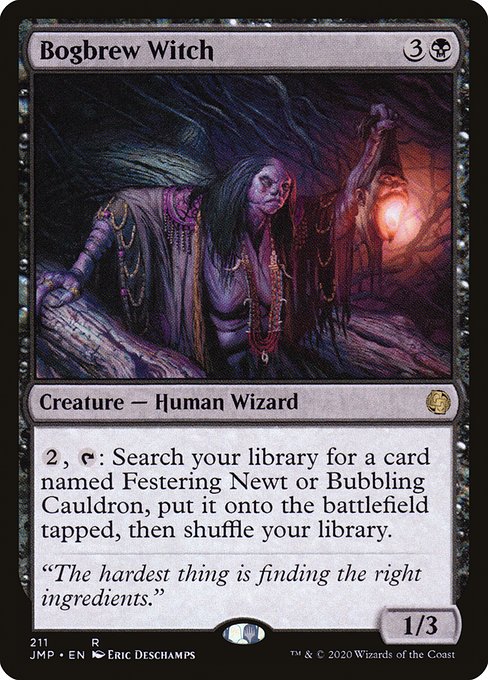
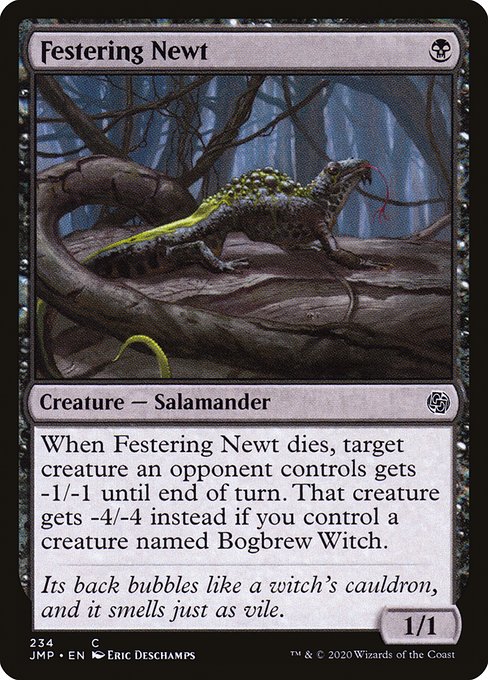
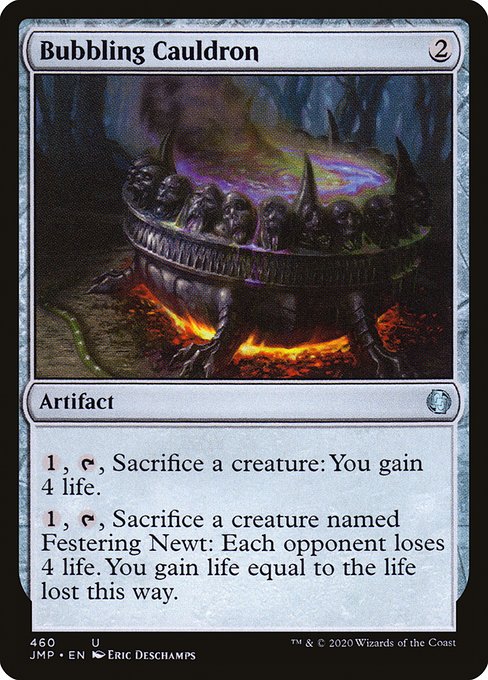
On a recent stream of mine, we tried playing the Bogbrew Witch package (which did not go well, obviously):
To be frank, the deck was bad, but after each game I kept thinking, “This could work if Witch was only 2 mana.” Which is how I arrived at this route. There’s hundreds if not thousands of cards that could create entirely new decks and archetypes on arena if they just had a few small stat changes. Meaning that older staples that lost their sheen, or people coming from standard with their pet cards, could get some new life breathed into them.
The problem with this line specifically is two fold. Firstly, WOTC is still a business. Buffing old cards doesn’t sell new packs. Second, regulating a format with this level of card curation would require a lot of man power (Wizards hire me plz). You can’t just “set it and forget it” like a paper format; you need a dedicated team of designers acting as digital gardeners, pulling weeds and watering the flowers every single month. It’s a high-maintenance strategy that requires Wizards to value the long-term health and sentiment of the player base over the short-term quarterly pack sales.
With all of these, the main goal should be healthier play patterns with diversity. Player experience and accessibility is important.
Proof of Concept
Continuing with Route 3, I’d like to take a chance to mention another format where such curation is possible.
Magic Set Editor Modern: a free-to-play, non-rotating constructed format built from over 50 community-designed custom sets, totaling more than 10,000 cards. It’s played on Cockatrice, has regular leagues, Grand Prix-style tournaments, drafts, and even Commander variants. Power level sits in that sweet high-but-interactive spot—think Modern with wild new archetypes and no rotation—and it’s an absolute brewer’s dream because the format stays healthy through constant, transparent tuning.
I highly recommend you check it out, but we’ll most likely be talking about it in the future, so I want go too in depth today.
But what I want to focus on here, is how they curate and moderate the format.
The MSEM Council—a group of dedicated community members—oversees everything. They review set submissions from designers, vote on inclusions every few months, and most importantly, issue regular patches with direct card changes. We’re talking errata, cost adjustments, stat tweaks, functionality rewrites, and even bans when needed. These updates drop frequently (often monthly or as issues arise), with detailed patch notes explaining every change. A card too strong? Bump its cost or add a restriction. An archetype lagging? Give a key piece a small glow-up. Nothing is set in stone; the council reacts to metagame data, player feedback, and tournament results to keep things balanced and fresh.
Here’s an example, from their February update:
This is exactly the kind of hands-on stewardship Historic could benefit from in a digital client. Wizards has the tools: they already do rebalances and suspensions. Imagine if they embraced the MSEM philosophy—quarterly (or even monthly) balance patches where underused classics get small digital buffs, runaway staples get shaved down, and the format evolves without killing archetypes entirely. They could even release Anthologies containing older, buffed cards as a package, no pack-sales conflict needed; it’s about long-term player happiness in a digital format.
MSEM proves dedicated curation works. It’s a format that rewards creativity, keeps games interactive, and never lets power creep turn everything into solitaire. Wizards, take notes.
Closing Thoughts
Current Historic has objective diversity but subjective misery—games feel decided by who draws the nuttiest opener rather than skillful play.
At the end of the day, I’m not writing this because I want to complain; I’m writing this because I love Historic. It’s the format I play more than any other. But I have to be honest with you guys: I’ve been frustrated for quite some time. It feels like Wizards forgot about us.
Historic needs a change. Whether Wizards decides to go the “Purist” route, leans into digital rebalancing, or starts aggressively buffing the underdogs, the most important thing is that they give the format a clear identity. We need to know what the Rules of Engagement are. We need to know that the community’s feelings are something the developers actually value.
I want to see a Historic where my decision-making matters as much as my decklist. I want a format that rewards creativity and respects the Turn 4 Rule. Most of all, I want to queue up with a deck like I put time into and not feel like I’m playing Russian Roulette every match.
Thanks for sticking with me through the serious talk. We’ll be back to our regularly scheduled jank next time. Until then, I’ll be here, playing bad cards and pretending they’re good.
That’s it for me!
Thanks for reading!
As always, feel free to comment and leave any questions you have below. And make sure to come back next week for even more Fun & Jank!
Happy Brewin’!
Premium
Enjoy our content? Wish to support our work? Join our Premium community, get access to exclusive content, remove all advertisements, and more!
No ads: Browse the entire website ad-free, both display and video.
Exclusive Content: Instant access to all exclusive articles only for Premium members, at your fingertips.
Support: All your contributions get directly reinvested into the website to increase your viewing experience!
Discord: Join our Discord server, claim your Premium role and gain access to exclusive channels where you can learn in real time!
Special offer: For a limited time, use coupon code L95WR9JOWV to get 50% off the Annual plan!
Plum is the creator of the Jank Tank.
He started playing at the ripe old age of 12 and immediately fell in love with the infinite possibilities that deck building could lead to.
He truly understands that jank is a mindset, and spends most of his free time brewing and concocting new and exciting deck lists to help inspire and promote creativity within the MTG community.