Hey all. Strickles here with something a bit different. I’ve gotten a couple of comments from people asking about the ins and outs of sideboarding. While there are plenty of resources out there about sideboarding, we have entered a new space with Magic Arena where a lot of players’ first exposure to Magic is online and played in Best of One. A lot of players then may want to play at an in person event, or a competitive event on Magic Arena, that are frequently Best of Three.
The goal of this article is to explain the goals of sideboarding, review what kinds of cards frequently end up in sideboards and why they end up there opposed to the main deck, and give general tips to sideboarding. Sideboarding can be fairly complicated, with each deck having different strategies for every match up, but we can apply some general rules of thumb.
With that said let’s dive in.
Goals of Sideboarding
Simply put, the goals of sideboarding are to make your deck better against your opponent’s deck. There are two parts to this: adding in cards that are better against your opponent and taking out cards that are worse.
While a sideboard is separate from your main deck, when sideboarding you can think of them as one 75 card deck, and you are trying to create the best 60 card deck from among those to face against your opponent. Different deck archetypes will have different goals in each match up, which we will get into, but the core principle is the same.
Common Sideboard Cards
While almost any card can end up in a sideboard, there are common types of cards that you can consider when building your own sideboard. Let’s go over some examples and then go over some decklists to show these principles in action.
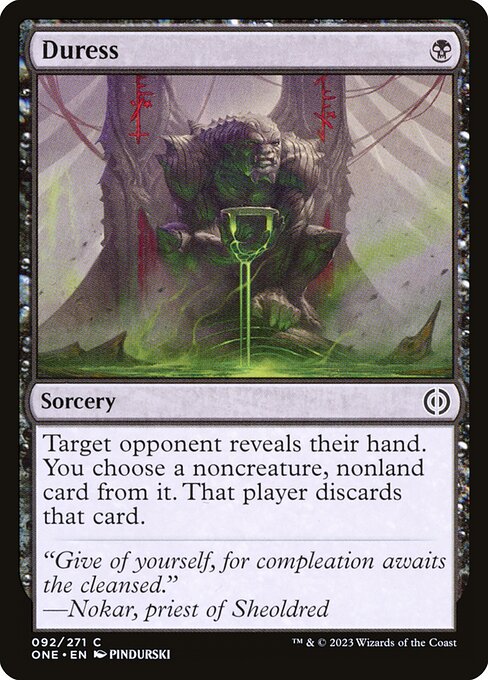
A very common sideboard card is Duress. Duress is a very balanced discard spell, only taking non-creature spells, making it awkward to put in your main deck because if you play against an aggressive creature deck you may cast it and hit nothing.
Duress is a good sideboard card because it is a very cheap way to disrupt opponents who are trying to use counterspells or sweepers against you. An aggressive deck can use it to clear out a sweeper or removal spell that would otherwise slow them down, while a midrange or control deck can use it to take out a counterspell that would otherwise counter a powerful threat or spell.
A good way to use Duress against an opponent with counterspells is to wait until you have a spell you would like to resolve, cast Duress to take out a counterspell, and then immediately cast that spell.
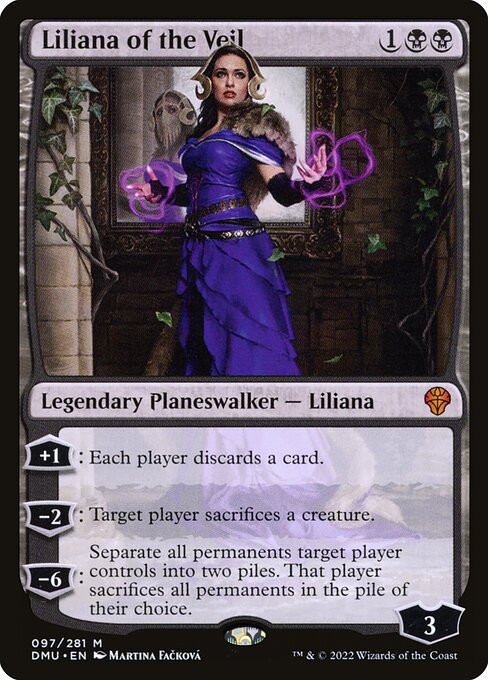
Other common discard spells that see play is a card like Liliana of the Veil, which is obviously much more than just a discard spell, but when you see it in a sideboard its role is usually going to be to come in against control decks to take a card out of their hand each turn, keep them low on resources to answer your threats.
While some decks decide to play Liliana of the Veil in the main deck, she can be a bit awkward against aggressive decks that put several creatures into play early, making her much better against slower decks.
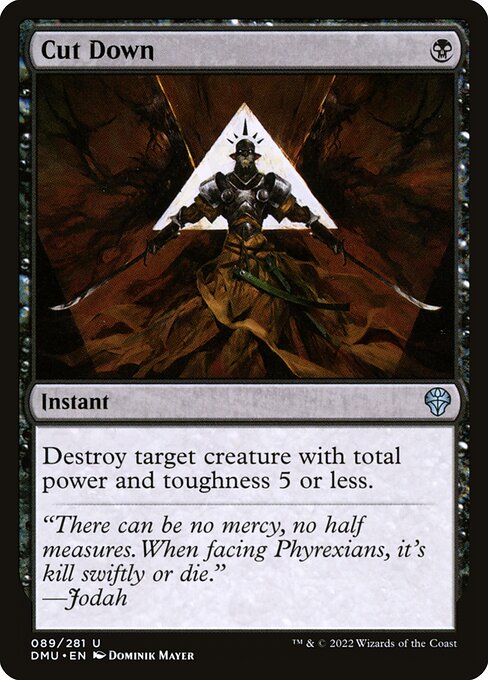
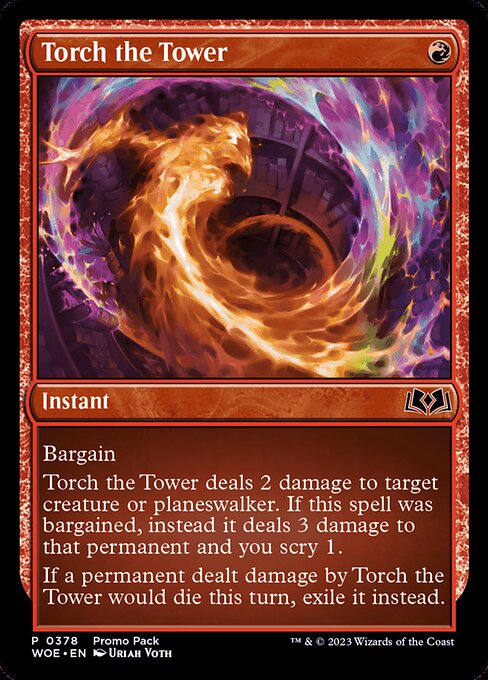
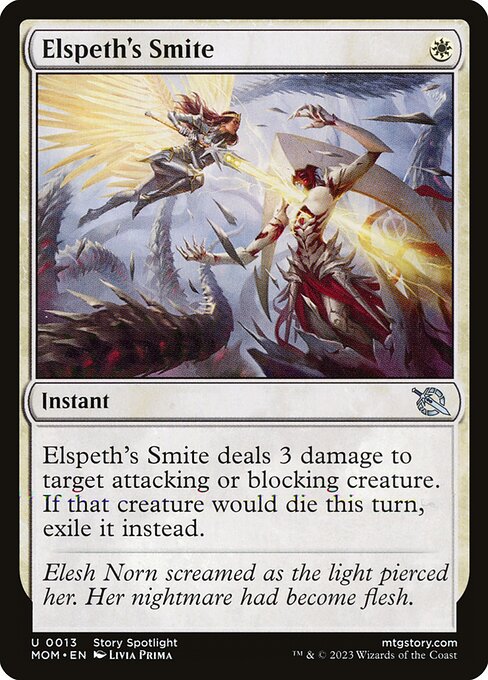
Another common sideboard card is cheap removal like Cut Down, Torch the Tower, Elspeth’s Smite, and Hard-Hitting Question. You will usually see these in aggressive decks that don’t play much or any removal in their main deck as a way to slow down other aggro decks in games 2 and 3, or in midrange and control decks as cheap ways to answer aggressive creatures on turn one and two or to be able to use it and still cast another spell on turn three or four.
The reason these cards are usually played in the sideboard is that usually there just isn’t space for them in the main deck. In game 1 your goal should be to execute your own strategy. An aggressive deck should be focused on killing the opponent as fast as possible, and a card like Torch the Tower may be irrelevant against a control deck, making it a bad top deck. However against another aggressive deck, it can slow them down or clear away a blocker.
In midrange and control decks, you have to pick and choose your main deck threats and main deck answers. You may decide that you need some amount of cheap removal, but don’t want to play too much in case you match up against other slow decks. So this extra removal is just to help you slow down aggro decks so you have time to breath and execute your own game plan.
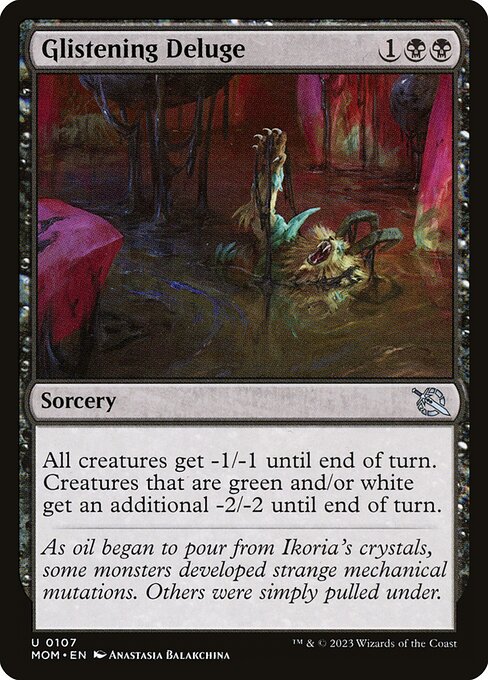
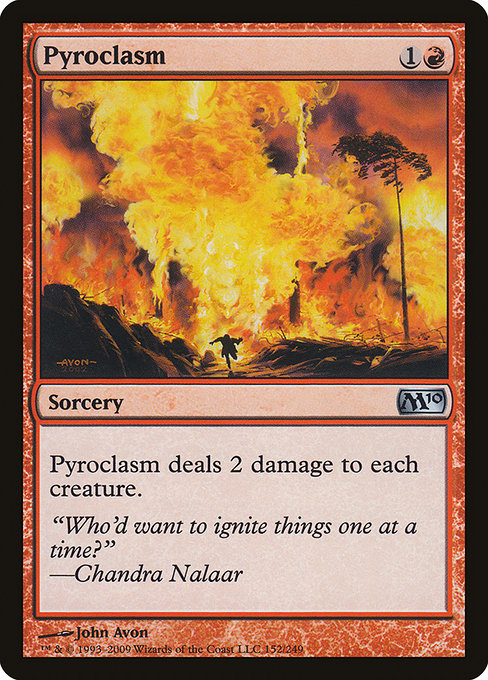
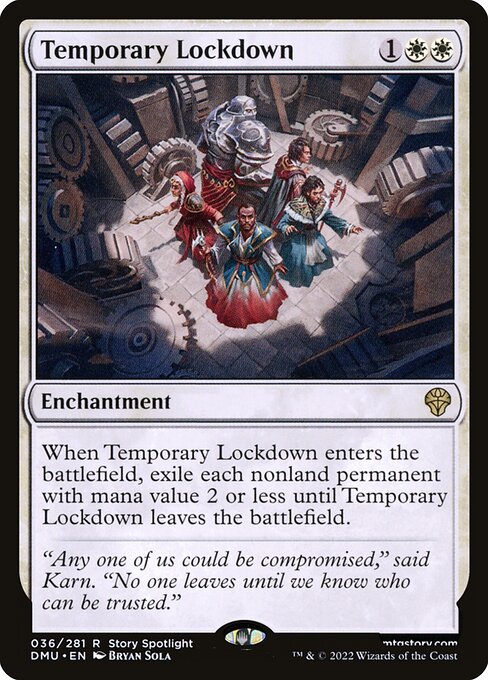
Sweepers like Glistening Deluge, Pyroclasm, and Temporary Lockdown are common in sideboards of slower decks as ways to stop aggressive decks from taking them down before they can establish their own gameplan.
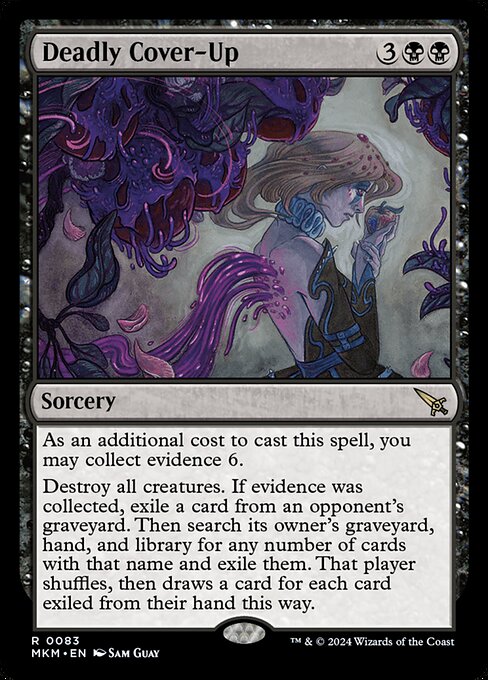
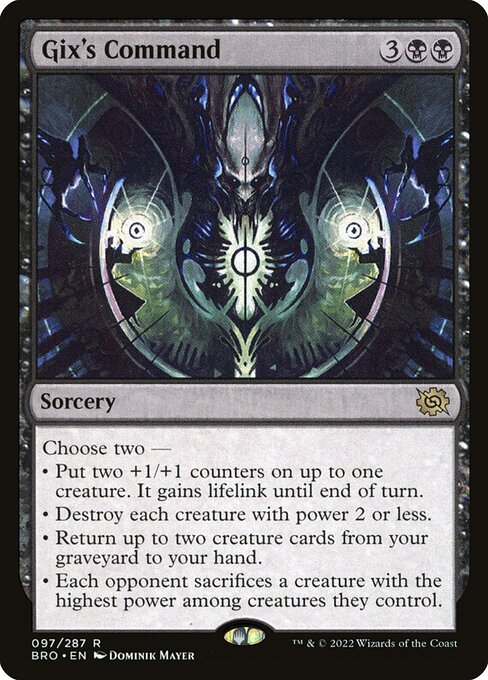
While these cheap sweepers are reserved for aggressive decks, some midrange decks may also play more expensive sweepers like Deadly Cover-Up or Gix’s Command to bring in against other midrange opponent’s, to help manage the board if they fall behind.
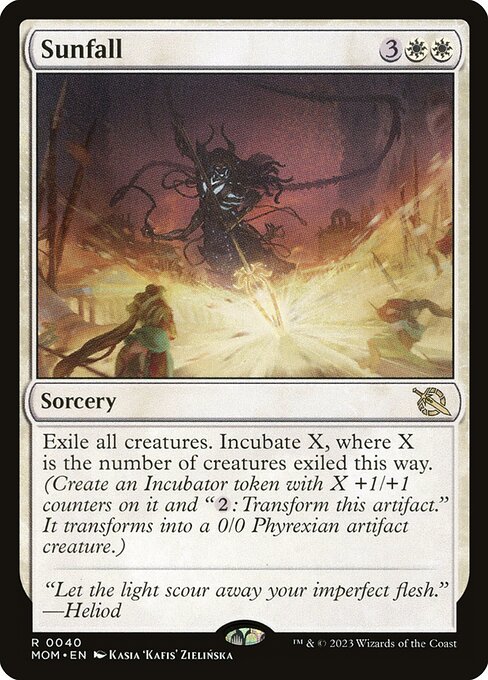
Most control decks run sweepers like Sunfall in their main deck because it is good against aggressive decks and midrange decks, both of which are likely to play a high number of creatures. While we do see some control decks run Temporary Lockdown in the main these days, there are a lot of opponents that play very few cards that Temporary Lockdown is good against, making it awkward at times. This is why many decks would prefer to have it in the sideboard.
Counterspells
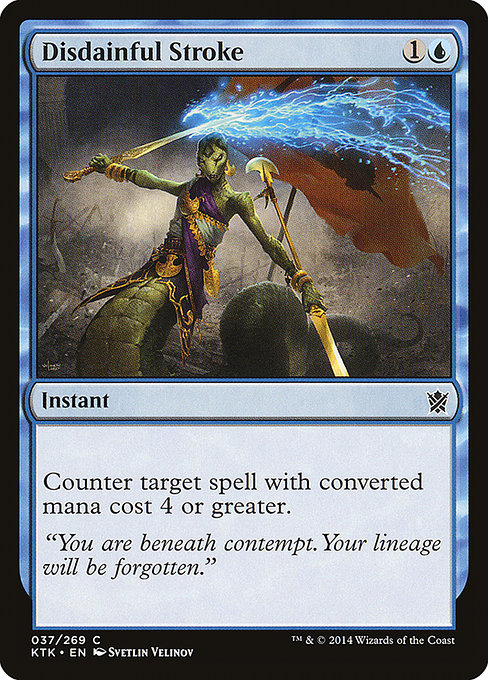
The most common counterspells that end up in sideboards are counterspells that only counter specific types of spells. Disdainful Stroke is a great example of this. While great against midrange and control opponents, there are several aggressive decks in standard that do not play any spells that cost four or more.
In the matchups that Disdainful Stroke is good in, it is great because it just costs two mana, only one of which is blue, making it easy to cast a two or three mana spell and then hold it up on turn four or five respectively, to counter your opponent’s Sheoldred, the Apocalypse or Sunfall, for example.
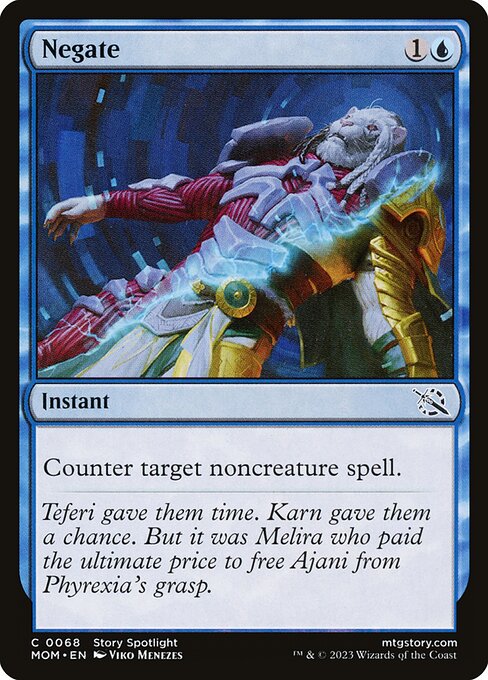
Negate is another common sideboard counterspell. Similar to Duress, Negate can be very awkward in the main deck, as most aggressive and midrange decks will be deploying creatures early on, meaning you would be better off with a removal spell or generic counter like Phantom Interference early on.
But, like Disdainful Stroke, Negate is great in matchups where you expect your opponent to cast expensive planeswalkers, sweepers, card draw spells, etc. or as a cheap way to counter a counterspell or removal spell. On turn five you cast your Preacher of the Schism, and then use your Negate to deal with their Three Steps Ahead or Go for the Throat.
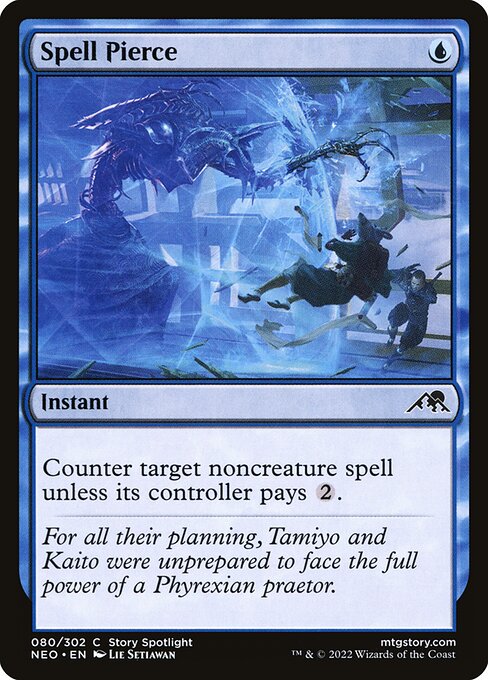
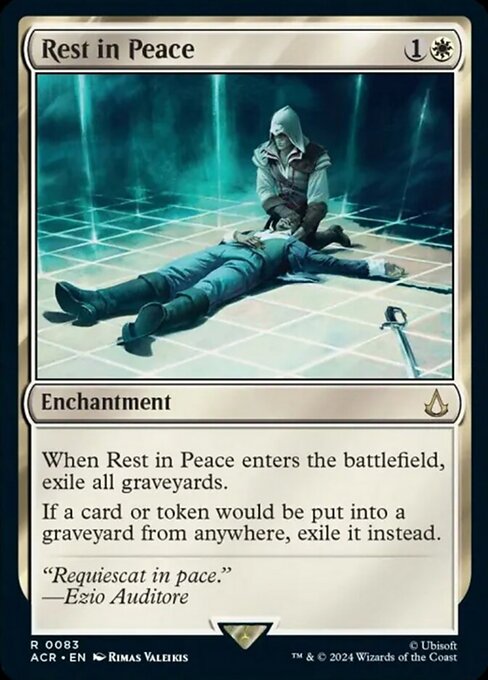
Lastly, we have Spell Pierce, which is not currently legal in Standard but was common in sideboards when it was legal. Spell Pierce is most commonly used by combo decks or tempo decks. These are decks that want to be able to counter an opponent’s counterspell or hate piece, like Rest in Peace, for just one mana, allowing them to use the rest of their mana to combo off or advance their board.
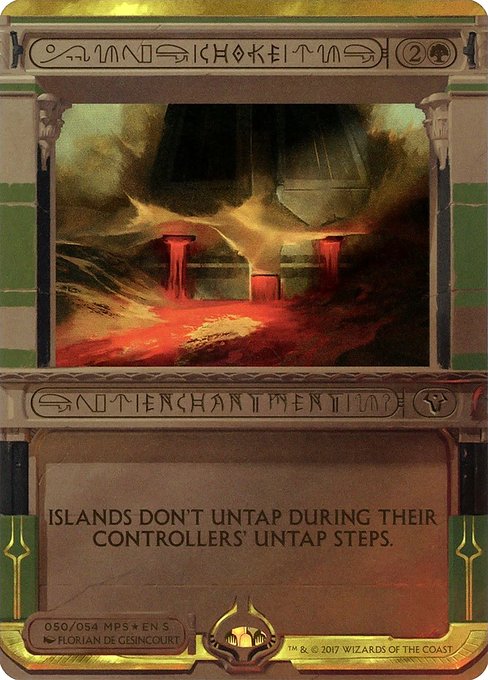
Hate Pieces is Magic jargon for a card that is very good at stopping a certain strategy, or “hating” on that strategy. Classic examples of this are a card like Choke, which would make your opponent playing islands think that you hated them, their deck, or islands in general.
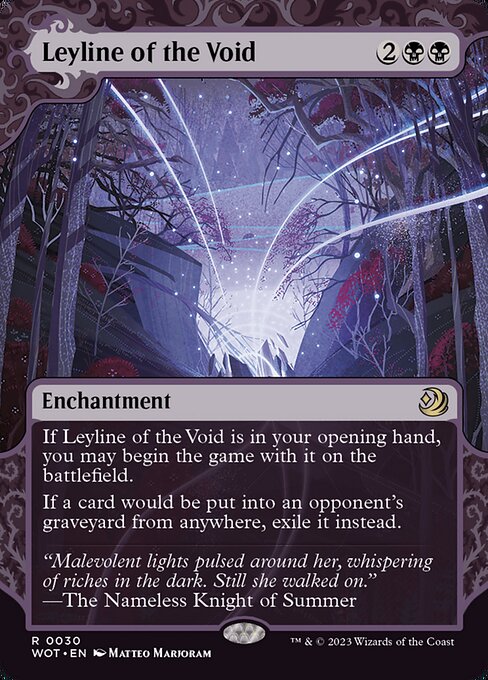
In the modern era, this looks more like Rest in Peace and Leyline of the Void, which are only good against decks that are trying to abuse their graveyard. You would never want to main deck these cards because most opponents aren’t using their graveyard in a problematic way.
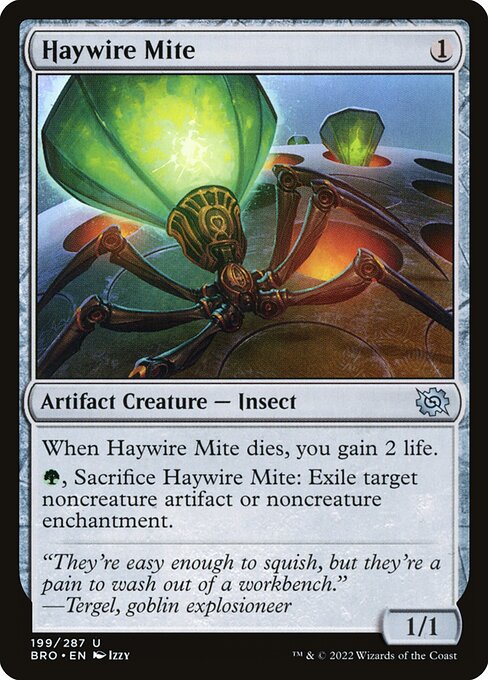
Other common hate pieces are artifact and enchantment removal. A card like Haywire Mite is great against players trying to make the most of artifacts or enchantments, but isn’t so good against most opponents who have very few or no artifacts or enchantments in their deck.
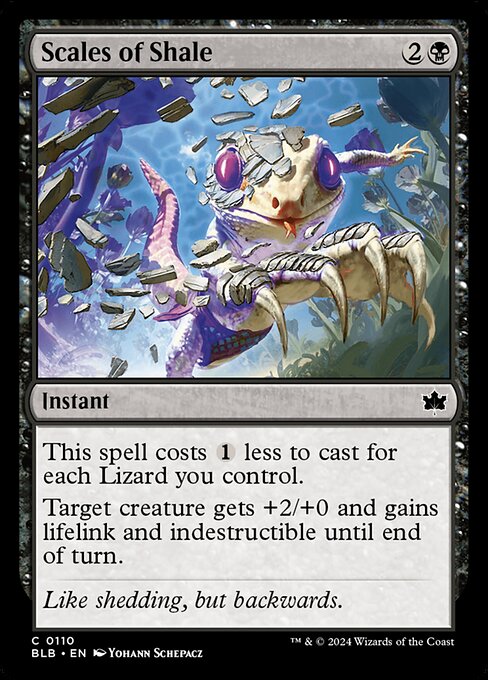
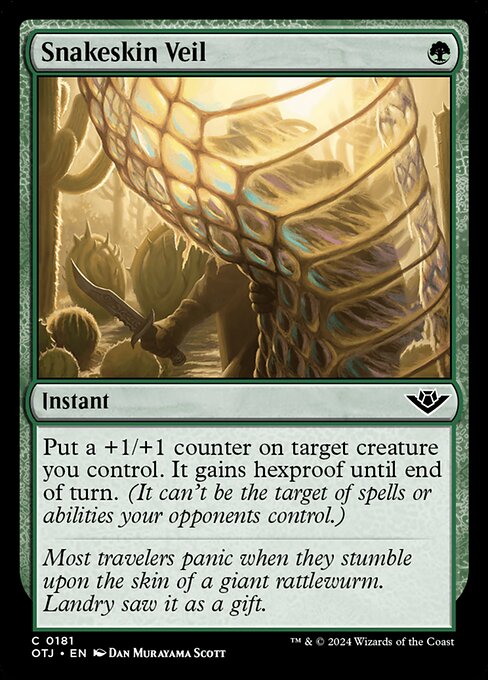
I’ll also include protection spells in this category. Cards like Scales of Shale or Snakeskin Veil can see main deck play if you expect to face against decks playing a lot of removal spells, but are also good sideboard options to bring in against those decks, giving you ways to protect your creatures from those removal spells.
Threats
The last category of common sideboard cards is threats. The most common types of threats that end up in sideboards are either powerful planeswalker that can take over the late game, or a creature that can’t be countered or is otherwise difficult to remove. These cards are most commonly used against control and midrange decks, as a way to have a more powerful threat in the late game, or to have a threat you can deploy early that is difficult for them to remove.
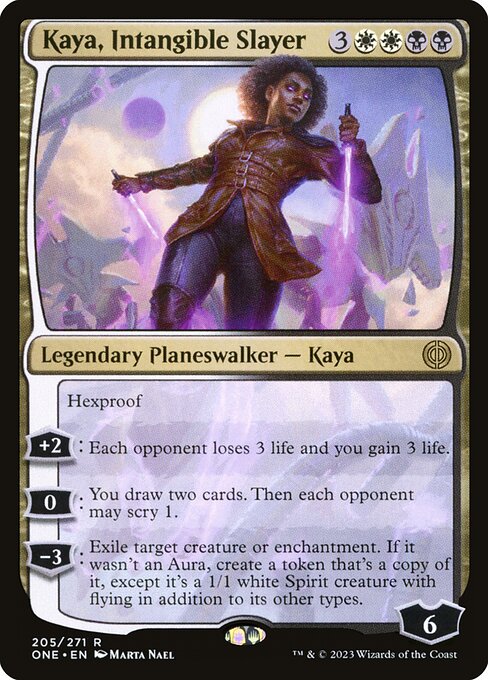
An example of this is Kaya, Intangible Slayer. It is risky to include her in the main deck because against most aggressive decks you are never going to get to seven mana. However, against midrange and control decks when you can get to that much mana, she is going to take over the game thanks to hexproof making it difficult to answer her.
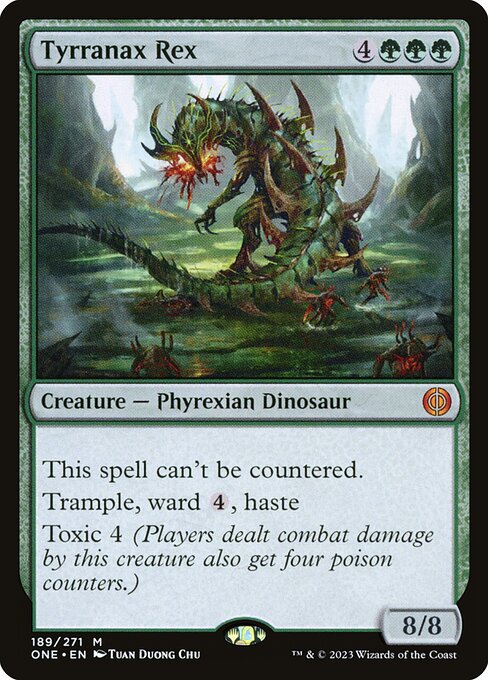
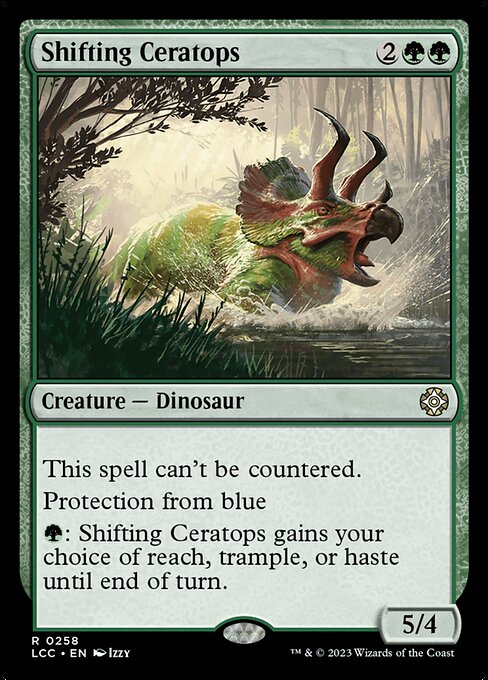
A card like Tyrranax Rex could see sideboard play because on top of being uncounterable, it has ward 4, making it a great choice against a control deck that may not be able to answer it very easily. Although not Standard legal anymore, when Shifting Ceratops was standard legal it saw sideboard play during its time thanks to its can’t be countered text and protection from blue.
Cards that get Sideboarded Out
Sideboarding isn’t just bringing in good cards, it is also about taking out cards that are less good in that matchup or just bad in that matchup. I’ll go into this more in the deck by deck examples below, but there are few general rules of thumb.
Removal spells are likely to get cut against control decks, as they have very few targets for those spells.
Expensive spells are likely to get cut against aggressive decks, as you usually won’t have time to cast them.
Creatures that require a lot of synergistic pieces to be good are likely to get cut against a deck with a lot of removal.
Low impact creatures or spells are likely to get cut in grindy matchups against midrange and control decks.
All in all, it will depend on what options you have in your sideboard and what you have in your main deck. This is why it can be helpful to think of your deck as a full 75 card package, and every game you are just trying to ensure you have the best 60 cards you can have against any given opponent.
Specific Deck Examples
Now that we’ve covered the types of cards that end up in sideboards, let’s put this into the context of existing standard decks, and discuss how sideboarding works for those decks.
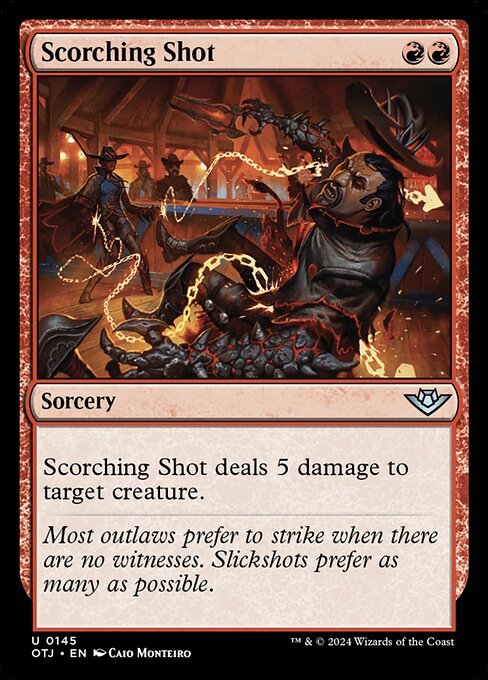
Let’s look into the sideboard of Gruul Prowess to see what their sideboarding goals are. As we can see here, this Gruul player has chosen to play a lot of removal, a hate piece, and a threat.
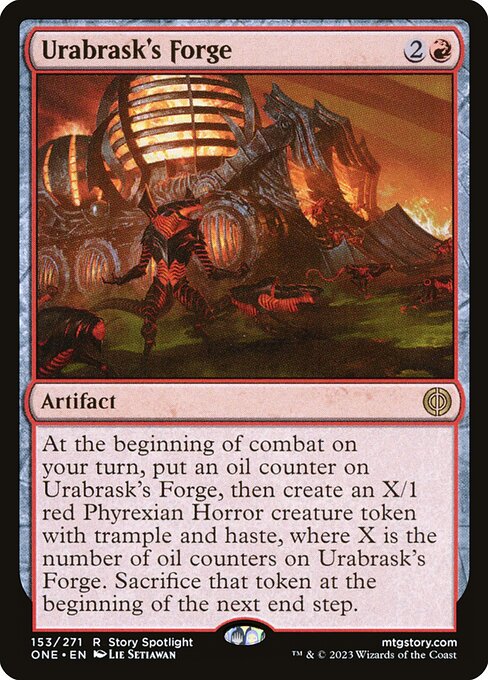
Lastly we have Urabrask’s Forge, which is a powerful threat against decks like Dimir Midrange that have no way to remove an artifact once it is in play but do have a lot of removal to answer your creatures. Urabrask’s Forge is going to be very problematic for them, eventually overwhelming their removal and creatures.
So, those are the cards they bring in, but what do they cut?
Against an aggressive deck, a card like Innkeeper’s Talent might be too slow, or you may deem Snakeskin Veil to be unnecessary as your opponent is going to be focused on their own game plan and not your creatures. So you could reasonably decide that Torch the Tower is a better choice than Snakeskin Veil.
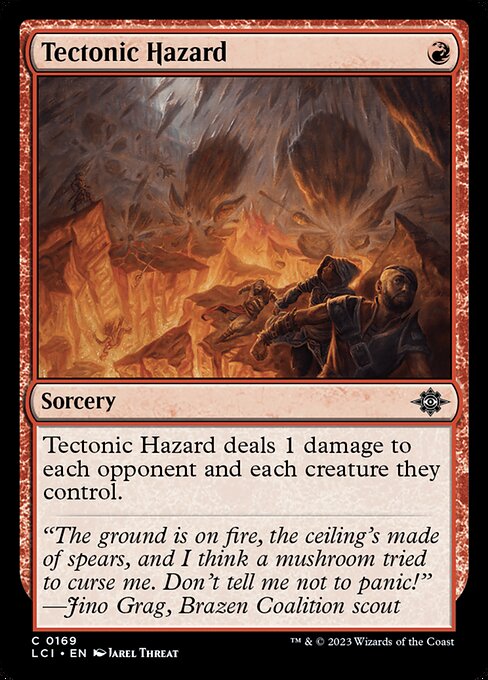
Against Convoke, you might think that Shock isn’t worth using to just take out one small creature, and so you cut your copies of Shock to play Tectonic Hazard instead, as Tectonic Hazard is going to do a much better job of getting your creatures through.
With sideboarding you do not have to go all or nothing, again it is about having the best 60 possible, so that could involve what we call “trimming” where you cut one or two copies of a card as it isn’t the best card in the matchup but you do want access to some number.
I think in this case I might trim three copies of Shock and a copy of Witchstalker Frenzy, so we still have access to these removal spells but acknowledge that the game is going to be more about advancing our own board rather than disrupting the opponent.
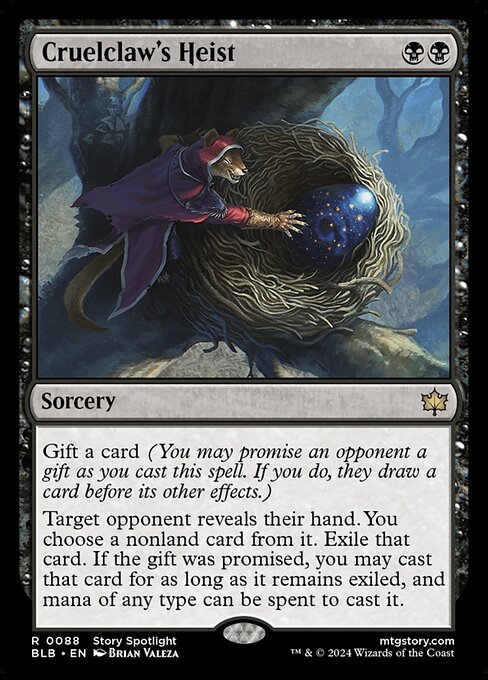
Duress helps our spells resolve against control decks, Cruelclaw’s Heist disrupts our midrange or control opponent while giving us the option of gifting them a card to get their card for ourself, and Liliana of the Veil is great against a deck like Domain, where you want to deny their resources so they either don’t have top end threats, or don’t have the mana to cast their threats.
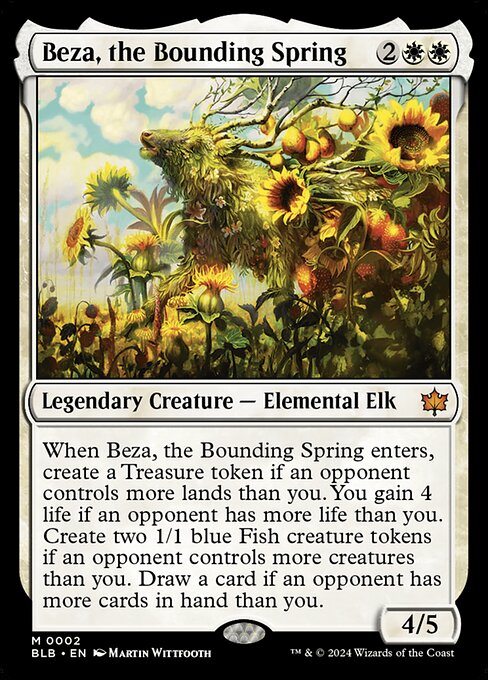
Elspeth’s Smite helps us survive the early game, or lets us double spell easily on turn three or four. Beza, the Bounding Spring is a mix of a threat and a hate piece. It is best against aggressive decks when you can gain four life and make two 1/1 tokens.
Last is Kaya, Intangible Slayer, which is pretty tough for other midrange or control decks to beat. It is brought in to ensure that the late game is on our side.
So, what are we cutting to fit in these cards?
Against Domain, we want our discard package. We can quickly cut Temporary Lockdown and Cut Down, as they will likely be dead cards for most of the game. Next, we can consider cutting Beza, the Bounding Spring, as while it could draw us a card or make us a treasure, it is unlikely to be worth taking our entire turn to deploy it.
Against Gruul Prowess we know we want Elspeth’s Smite, Beza, the Bounding Spring, and maybe even Duress as a cheap way to take a pump spell from their hand. We could cut Liliana of the Veil, as she is likely to come down on a board where they have two or three creatures, making it hard to remove the creature we want with her minus two ability. Next, we could look at cutting a card like Seasons of the Burrow, as it is just expensive and we are unlikely going to be in a position to use it well on turn five.
While it is tempting to cut Loran of the Third Path, we know from looking at the Gruul Prowess sideboard that they will likely bring in Urabrask’s Forge, so we want to keep Loran as an answer to that. In some games it can even be used to destroy a monster role token or a Caretakers’s Talent.
Putting it all Together
Sideboarding is complicated, there are no real set of hard and fast rules, but what I’ve laid out here should give you an idea of how sideboarding works. Sideboarding is in many ways a muscle, the more you use it the better and faster you get at it. Just remember that no matter what deck you are playing, focus on your deck’s game plan and goal and bring the best 60 cards for the matchup to best execute that goal.
Once you have a few games of Best of Three under your belt, you will easily fall into a rhythm of best understanding how to sideboard. You’ll get used to cutting your copies of Cut Down in favor of copies of Duress against control decks, for example.
Building your own Sideboard
Understanding sideboarding is enough if you are copying a deck from online that already includes a sideboard, but sometimes you’ll be building a deck and need to build your own sideboard. When building a sideboard you should ask yourself what is your game plan, and when does your deck struggle to execute that game plan?
If you struggle against aggressive decks, think about adding cheap removal spells and sweepers. If you are losing the late game to control decks and domain, consider adding discard spells or counterspells. If you are failing to close out games in midrange mirrors, think about adding threats. If you are worried about a graveyard deck or combo deck, add hate pieces.
Overall, you need to decide what are your weakest matchups and how can I shore those up with sideboard cards, and what are your strongest matchups, and not worry too much about having sideboard cards for those.
If you want to be well rounded in a format like Standard, a midrange deck should include a bit of discard/counterspells, a bit of removal, a few sweepers, a little bit of graveyard hate, and a threat or two. An aggro deck should include some cheap removal, resilient or hard to answer threats, and possibly hate pieces. A control deck should have good removal and sweepers, a threat or two, ways to answer problematic permanents like artifacts and enchantments, and other hate pieces.
Wrapping Up
Sideboarding is intimidating because it requires a lot of extra thinking and extra planning. Remember that your goal every game is to have the best 60 cards you can to advance your own game plan. Focus on how to make your deck the best version it can be against each opponent.
Sometimes that involves specifically trying to counteract them and slow them down, sometimes that involves protecting your own strategy. Either way, don’t overthink it. Start with some unranked games if you want to get a feel for it, or review tournament results and practice what we did above with any deck you are interested in, asking yourself what matchup each card is for, and what cards you would cut to bring those cards in.
I hope this article was helpful. I’ve never written this type of article before so I hope it was easy to follow and got you thinking. I’m always open to feedback, so feel free to join our Discord server and ask me questions or give me feedback!
Premium
Enjoy our content? Wish to support our work? Join our Premium community, get access to exclusive content, remove all advertisements, and more!
No ads: Browse the entire website ad-free, both display and video.
Exclusive Content: Instant access to all exclusive articles only for Premium members, at your fingertips.
Support: All your contributions get directly reinvested into the website to increase your viewing experience!
Discord: Join our Discord server, claim your Premium role and gain access to exclusive channels where you can learn in real time!
Special offer: For a limited time, use coupon code L95WR9JOWV to get 50% off the Annual plan!