Hi, it’s Plum again! — welcome back to Honorable Mentions #4. If you haven’t joined me for one of these, I use these articles to highlight decks and ideas that looked solid on paper but didn’t quite pan out in testing. I won’t go too in depth with gameplay analysis and the like, but failed brews still have value, and I believe you can learn just as much from what doesn’t work as you can from what does.
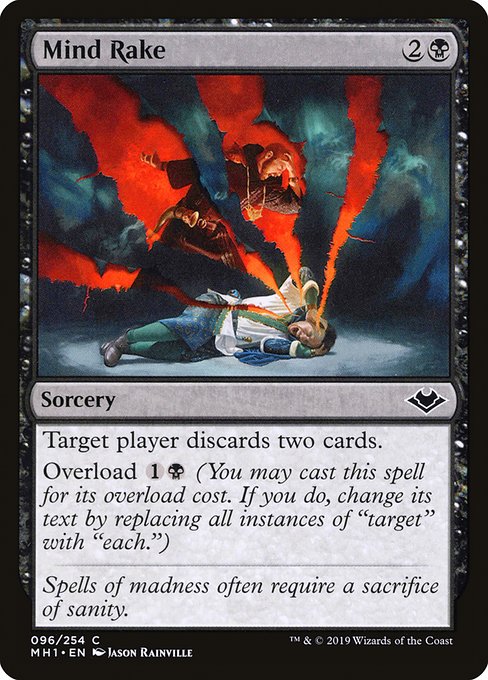
This is a card that I’ve been experimenting a lot with recently, comparing it to Hymn to Tourach in terms of how efficient it is at discarding. We tested in on stream a few times in a Madness shell, and even an Arclight Phoenix build, but today we’re talking about the most straight forward and obvious home for the card: Mono-B Discard.
The starting point was Mind Rake, which acts like a budget Hymn to Tourach. It’s symmetrical, sure, but if we’re trying to empty our opponent’s hand as fast as possible, we don’t really care about pitching a card or two ourselves. Similar reasoning can be found in other decks, like how burn would play . Doesn’t matter if you hurt yourself if you hurt the opponent faster.
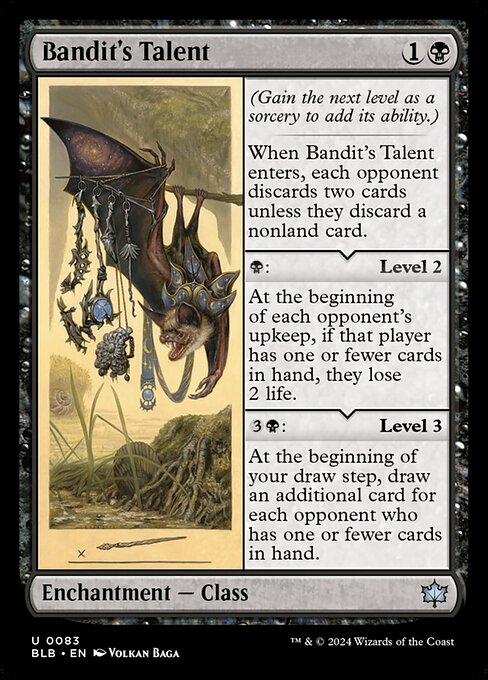
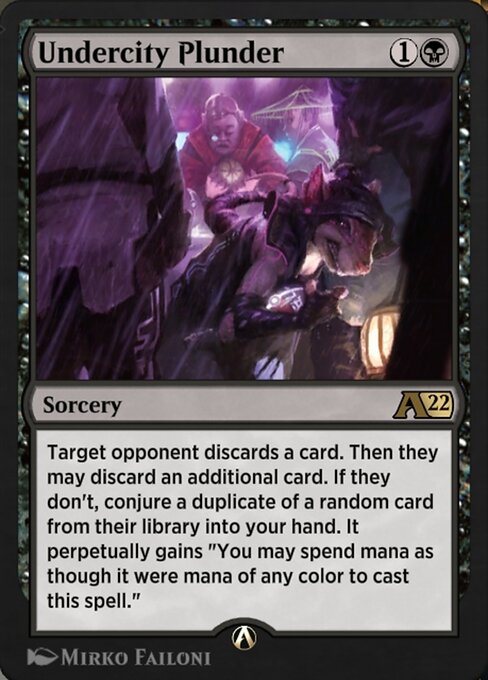
It just so happens that we have a win-con that is also a potential 2-for-1 in Bandit's Talent With a little more digging through the Historic card pool I also came across Undercity Plunder, which is another pseudo-Hymn to Tourach, potentially getting two cards out of our opponent’s hand. Between these three I realized we had twelve cards that could effectively make our opponent discard two for just two mana. I felt that was a critical mass worth building around in an 8-Rack style deck like the following.
Unfortunately for us, Historic’s discard-based win conditions are appalling. We don’t have Shrieking Affliction or The Rack itself, so we have to change our build a bit.
The deck has one goal just like its Modern or Legacy counterparts: get the opponent to zero cards in hand.
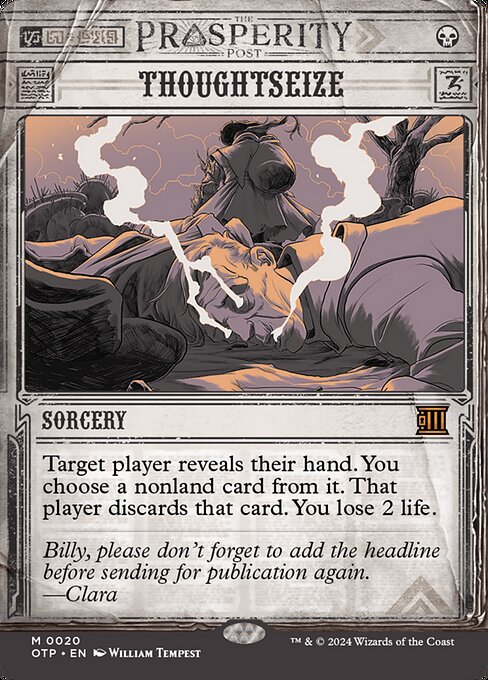
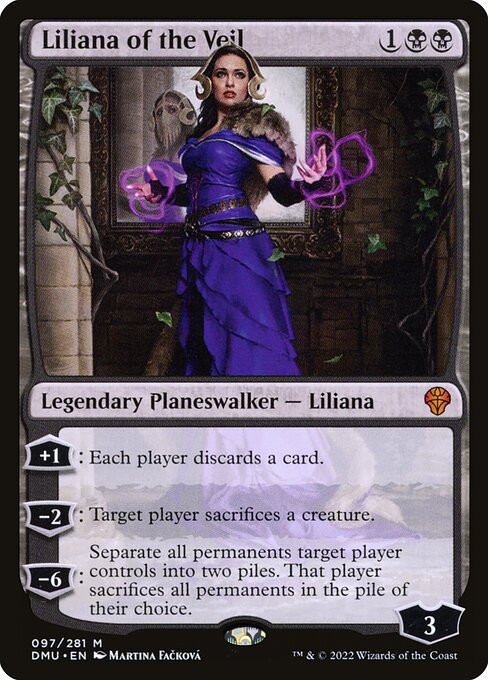
We’re playing the usual discard suite of one-mana spells, Thoughseize and Inquisition. Backed up by the 12 two-mana discard spells that can strip two cards at a time to clean up what’s left. Liliana of the Veil does her usual thing, acting as both removal and consistent discard as the game goes on. This is what I consider to be a very straight forward deck. It has one plan and it’s looking to pull it off as quick as possible.
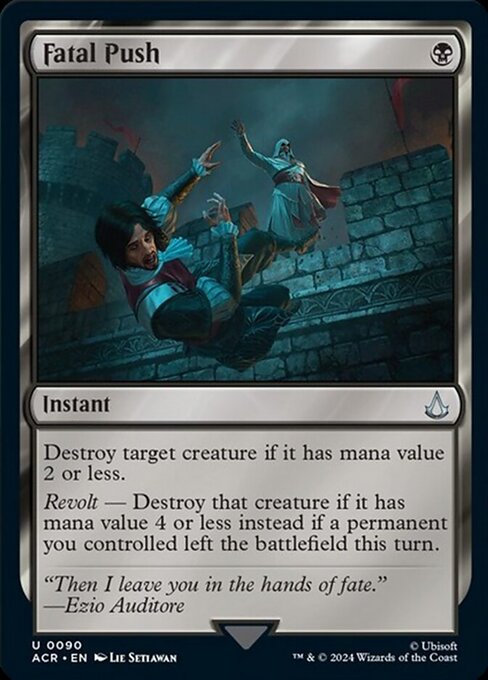
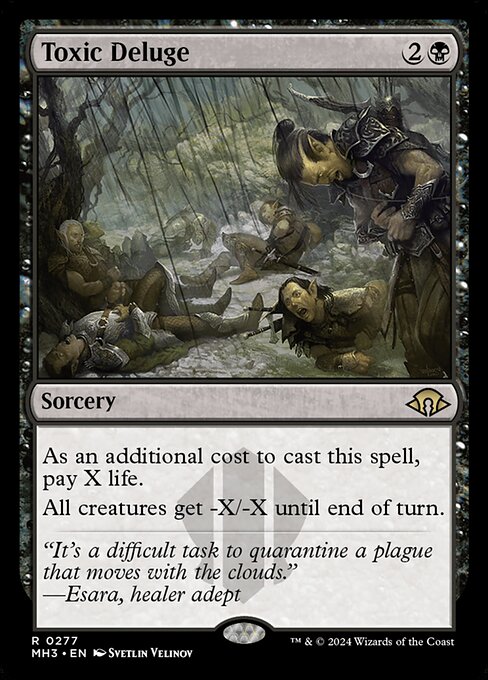
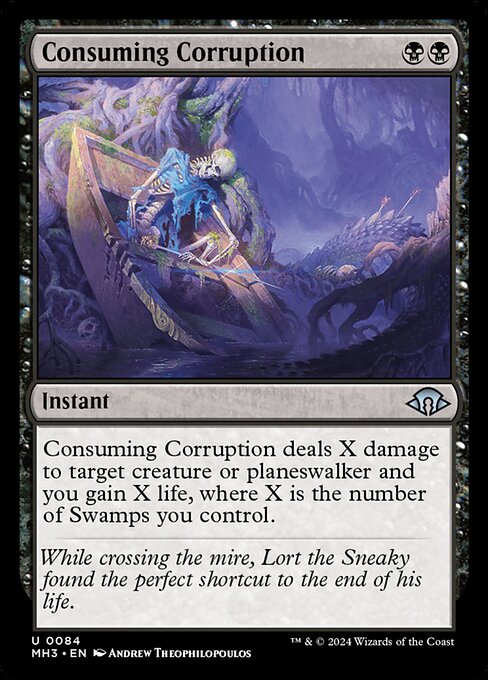
To support the discard plan, we’re running a clean suite of removal. Fatal Push keeps early threats off the board so we don’t get run over while emptying their hand. Toxic Deluge gives us a scalable board wipe that doesn’t care about indestructible or wide boards, which is critical when we’re not playing blockers of our own. And Consuming Corruption is more niche — it doesn’t go face, but it can take down bigger threats while padding our life total in grindy matchups. It’s mostly here because we’re already running a full playset of Urborg, Tomb of Yawgmoth and a pile of basic Swamps. Its especially important because we chip away at ourselves quite a bit with Prismatic Vista andlarge Toxic Deluges.
I mentioned above that our win-cons are not great in Historic are not so great.
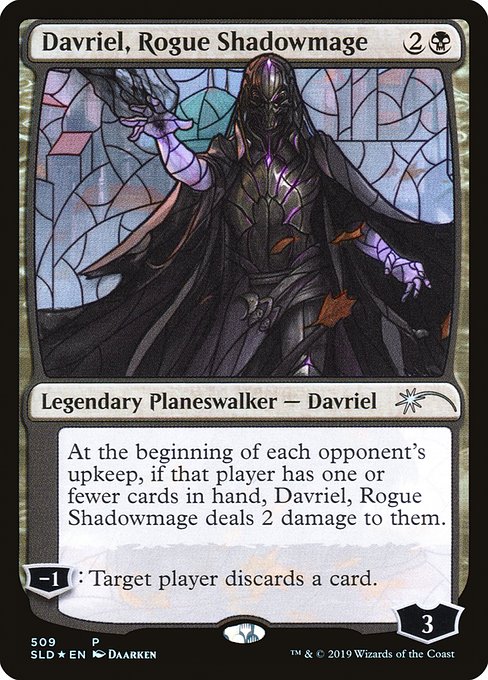
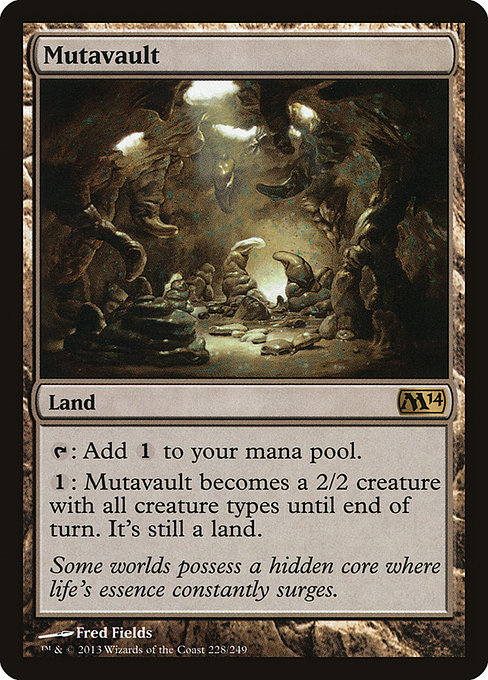
Unlike traditional Rack decks, we don’t have the namesake The Rack or Shrieking Affliction, so we have to rely on Davriel, Rogue Shadowmage, Bandit's Talent, and Mutavault as our main win conditions. And while these can get the job done eventually, they’re just so slow. Both Talent and Davriel are slower, ticking for only two points of life once the opponent’s hand is empty. Multiple copies can accelerate things, but they’re also hindered by mana cost. Both are essentially a 3 mana investment before they can do anything. That’s much slower that then one-mana wincons that Modern and Legacy get. Mutavault helps chip in, but it’s not enough on its own.
This isn’t the only reason the deck struggles, but it’s a big one — you can win the resource war and still lose the game if you can’t close fast enough.
Guys. We’ve talked about this on stream a whole bunch lately. Waste Not is not good in discard decks, and I’ll happily die on this hill.
1. It Doesn’t Help You Discard
Discard decks are all about stripping your opponent’s hand as efficiently as possible. But Waste Not doesn’t do anything on its own, and it doesn’t make up for that in mana cost or efficiency like The Rackdoes. It’s 100% reliant on your other cards doing the work first. If you don’t already have discard in hand, Waste Not is a blank topdeck. Compare that to a card like Davriel, Rogue Shadowmage, which is the discard and the payoff all in one.
2. It’s Inconsistent and Opponent-Dependent
Waste Not gives different rewards based on what your opponent chooses to discard. That means the value it generates is unpredictable — sometimes it’s a land and you get mana you can’t use, sometimes it’s a creature and you get a 2/2 that dies to anything, and sometimes you get nothing relevant at all. You don’t control the outputs, which makes it unreliable as a game plan or wincon. Your opponent will always give you the worst option if they can.
3. It Actively Conflicts with the Deck’s Goal
At the end of the day, the goal of a true discard list is to get the opponent to zero cards in hand and keep them there. That’s the whole point. Lock them out of options, then win at your own pace. But Waste Not doesn’t do anything when your opponent is empty-handed. It’s at its best while they’re discarding, not after, which means it’s encouraging you to keep your opponent’s hand full enough to trigger it, rather than slam the door shut. That’s directly at odds with what this kind of deck wants to do. It looks like synergy, but in practice, it’s just friction.
Now does this mean you should never play it?
Of course not.
It can be a powerful engine against decks that can draw cards as fast as you’re making them discard them. But I’d only run a few copies in the sideboard if the meta demands it. Along with this, Waste Not can actually be strong in a combo oriented shell. Cards like Juggle the Performance or Dark Deal allow you to force discard and keep your opponent’s hand full of enough cards to get continuous value from it. But that’s a completely different brew.
Gameplay
Why it Doesn’t Work
The core of this deck felt solid, but I encountered two major hindering factors to its success during my matches on and off stream.
First, the deck doesn’t close game out quick enough. You can get your opponent to zero cards in hand by turn three or four, but from there you’re asking Bandit's Talent to tick them down over several turns while a Mutavault pokes for two. If they draw anything impactful, your window starts closing fast.
Which leads me to my second point.
Second, topdecks in Historic are powerful. If you don’t seal the deal immediately, cards like Atraxa, Grand Unifier or Ajani, Nacatl Pariah can flip the game on their own. It only takes one haymaker or one planeswalker to undo all that hand disruption. We hope that some built in card-advantage like Level 3 on Talent or Castle Locthwain can give us enough interaction to deal with these, but it’s not always the case.
What Does it Need?
One of the subtler issues is the lack of instant-speed discard. In formats like Modern, you can run cards like Funeral Charm to snipe their draw step and lock them out completely. Historic just doesn’t have that — and without a way to respond to topdecks in real time, this strategy loses a lot of its bite. Paired with our lethargic win-conditions, the my version of the deck was just too slow to hold its own on the Historic Ranked Ladder.
Closing Thoughts
This one didn’t make the cut, but I still think there’s something here. If Historic ever gets better discard payoffs or instant-speed disruption, I’ll be the first to dust this off and give it another shot. Until then, back to the brewing board.
Thanks for reading.
As always feel free to comment and leave any questions you have below! Make sure to come back next week for even more Fun & Jank!
If you want to see these decks in action, come hang out with me on stream where we test, refine, and have a ton of fun together!
Happy Brewing!
Premium
Enjoy our content? Wish to support our work? Join our Premium community, get access to exclusive content, remove all advertisements, and more!
No ads: Browse the entire website ad-free, both display and video.
Exclusive Content: Instant access to all exclusive articles only for Premium members, at your fingertips.
Support: All your contributions get directly reinvested into the website to increase your viewing experience!
Discord: Join our Discord server, claim your Premium role and gain access to exclusive channels where you can learn in real time!
Special offer: For a limited time, use coupon code L95WR9JOWV to get 50% off the Annual plan!
Plum is the creator of the Jank Tank.
He started playing at the ripe old age of 12 and immediately fell in love with the infinite possibilities that deck building could lead to.
He truly understands that jank is a mindset, and spends most of his free time brewing and concocting new and exciting deck lists to help inspire and promote creativity within the MTG community.