Looking back at Foundations – Most Impactful Standard Cards
Aetherdrift is right around the corner, which means its time to look back on Foundations and reflect on the most impactful Standard cards from the set!
Hey all. Aetherdrift is almost here, releasing next Tuesday the 11th on Magic Arena and Friday the 14th in paper, and with it, Standard and Alchemy will be getting a new set of impactful cards, with some even likely to see play in Pioneer and Modern.
As we end the Foundations era of Standard, and by that I mean the era where Foundations is the most recent set as we still have four to five years of Foundations legality in Standard, I want to take a look at the stand out cards of the set, the ones that have made the most impact on Standard thus far, and could be seen as the must crafts or safe crafts of the set.
Now because of how long Foundations will be legal for, I would only call these safe crafts for current Standard, as rotation in the Fall could totally change which Foundations cards are seeing play.
So let’s jump in and look back at the bangers from Foundations.
New to Standard Reprints
Most of the cards that are playable in Foundations are reprints from older sets, but I’m sure that over time some of the new Foundations cards will make their way into the spotlight. For now let’s start by looking at those reprints that have made an impact.
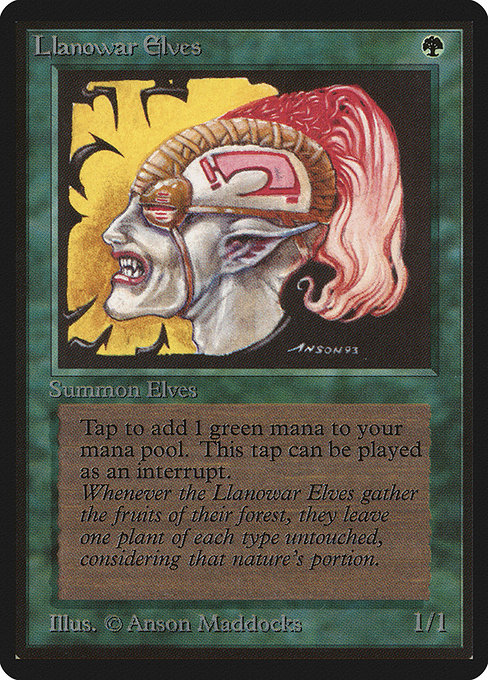
Not much can be said about Llanowar Elves that hasn’t already been said, but I don’t think we have even begun to see the power of Llanowar Elves in Standard.
While right now its main home is Golgari Midrange, as time goes on any green aggro or midrange deck has to consider the inclusion of Llanowar Elves for the next four to five years. The ability to pump out three and four drops ahead of schedule can win you games in a format like Standard.
Llanowar Elves is a very safe craft mostly because it is a common, but honestly I wouldn’t be surprised if it was banned at some point in its five years just because of how format warping it can be.
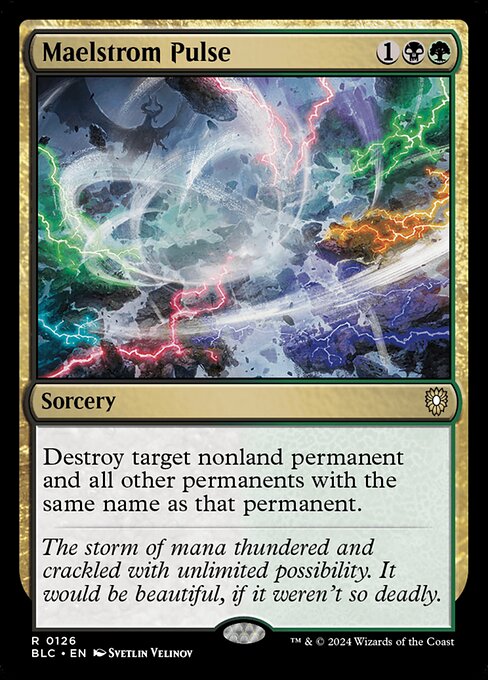
Let’s stick with Golgari Midrange and talk about Maelstrom Pulse, a powerful catch-all removal spell. While Golgari Midrange has plenty of tools to answer a variety of permanents thanks to cards like Tear AsunderMaelstrom Pulse does it for one mana cheaper and can take out multiple copies of a permanent.
This is huge at keeping up with card advantage engines like Caretaker’s Talent, because normally answering two copies of a card like that is very difficult to do, but with Maelstrom Pulse it’s no problem.
I don’t think that Maelstrom Pulse is the type of card that makes you build a deck around it, but as long as Golgari Midrange is a popular deck, Maelstrom Pulse is a safe craft.
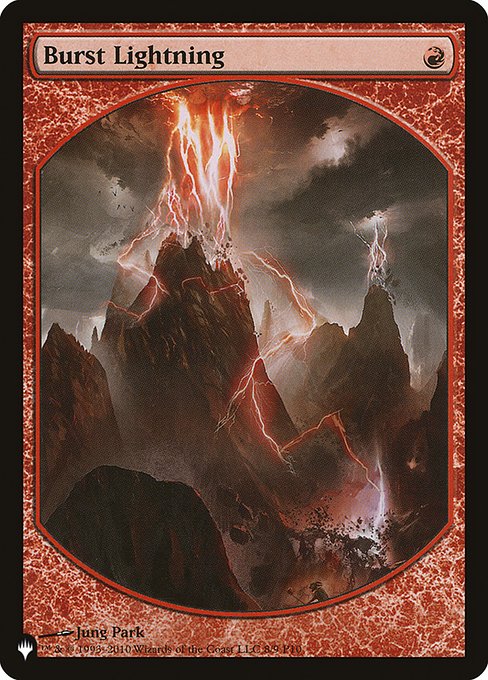
Burst Lighting has found a home in Mono-Red and Gruul Aggro decks, and it likely will continue to do so for as long as it is legal.
Burst Lightning is about as close to being “strictly better” than Shock as you can get. I’m sure someone could find some scenario where kicking it interacts with some card in a negative way, but in those cases you could always not kick it and just have it be Shock.
It was kind of funny because we got Shock early last year in Murder at Karlov Manor and then it was quickly replaced by Burst Lightning just a short 10 months after release.
Burst Lightning, like many of the cards on this list, is just a common, so craft away. Your red aggro decks are going to consider it for the next four to five years.
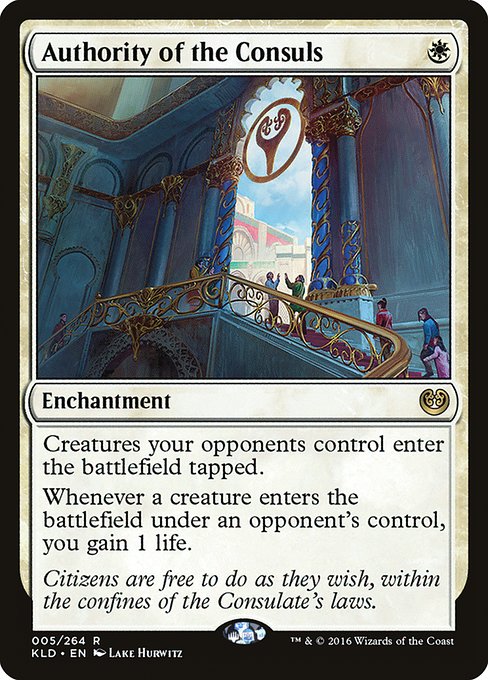
Authority of the Consulsis the go to tool of every gamer that wants to stick it to aggro decks. Forcing the opponent’s creatures to enter tapped removes haste as a threatening ability, and the extra life gain can help you live long enough to cast sweepers or a card like Beza, the Bounding Spring to stabilize the board.
I expect Authority of the Consulsto be a popular sideboard card in Bo3 and even main deck card in Bo1 for the duration of its time in Standard, so if you are playing a slower white deck and looking for some help against aggro, feel free to craft away.
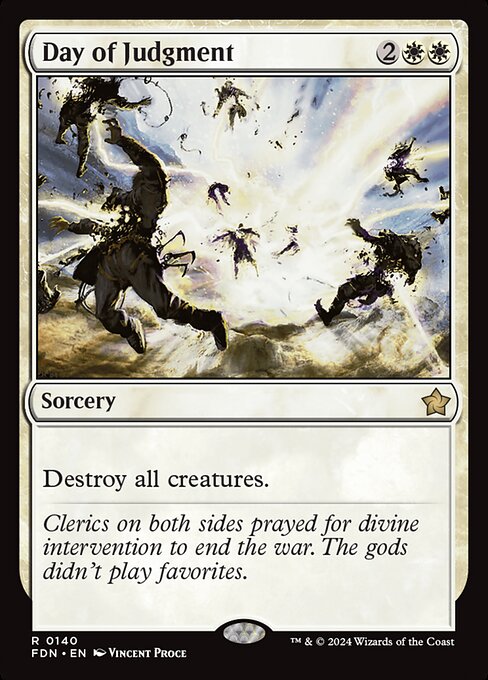
Foundations really did give white based control a lot of good tools, first with Authority of the Consulsand then with Day of Judgment, bringing the return of four mana sweepers with no drawback.
While most control decks are going to favor Sunfall until it rotates, because exiling is very powerful, the token can be a win-con, and it triggers Up the Beanstalk. After it does rotate I expect Day of Judgment to have a chance to shine.
If you are on the fence about using some rare wild cards on Day of Judgment, I would say wait until rotation, and see if we get a powerful new sweeper either before that or in the set that triggers rotation itself. Don’t forget that we are getting six Standard legal sets a year now, so one of them may have a better option than Day of Judgment.
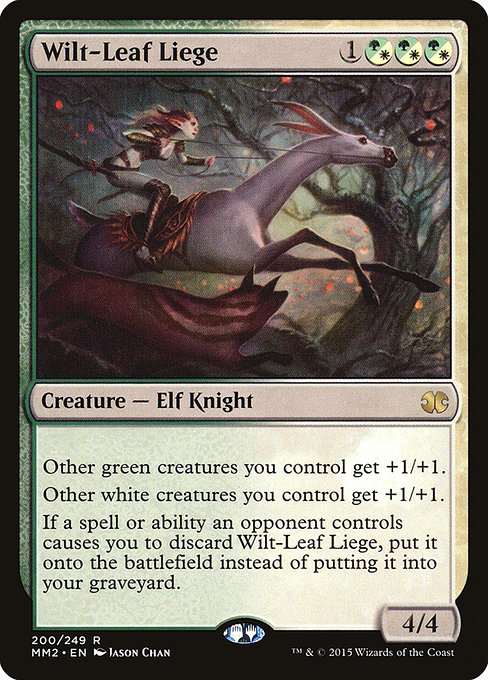
Wilt-Leaf Liege hasn’t seen a ton of play, but some Selesnya decks have begun to pop up and it is worth talking about.
One of the main reasons to play Wilt-Leaf Liege is how it interacts against discard spells like Hopeless Nightmare, letting you put a big creature into play way ahead of schedule. Another card that does this is Obstinate Baloth, but Obstinate Baloth will rotate in the Fall, making Wilt-Leaf Liege the only card with that effect.
As long as the self-bounce decks are popular, answers to discard are going to serve you well. If you are thinking of building any green or white based aggro deck, Wilt-Leaf Liege is a good option for the sideboard, making it a good craft.
In Standard Reprints
This next section is a group of cards that were already in Standard but their reprint in Foundations means that we are going to have them for another four to five years at least. I think they are worth shouting out because they really are the core of Foundations.
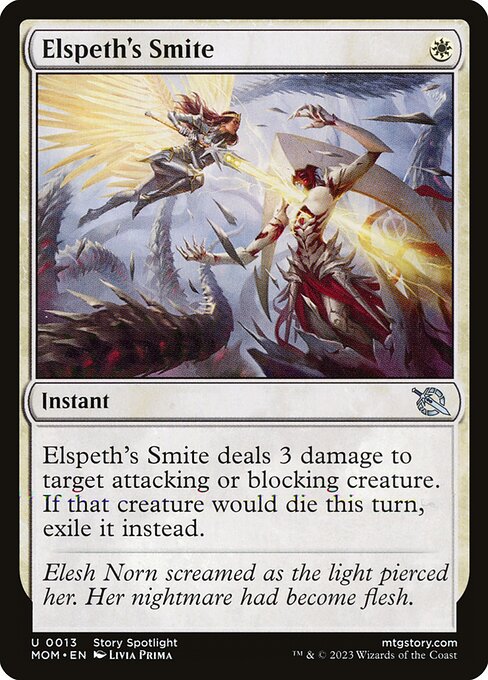
Elspeth’s Smite is a great removal spell for white decks of all stripes, control, midrange, aggro, who are looking to have a nice cheap answer to aggressive decks.
It is having a moment right now because of how popular cards like Heartfire Hero and Enduring Curiosity are, and how big of a difference exiling them versus killing them can be, and I expect it to continue to see play as long as cheap aggressive creatures are popular.
If you are a white player and want to compete with aggro decks in Standard, use the uncommon wildcards and craft Elspeth’s Smite.
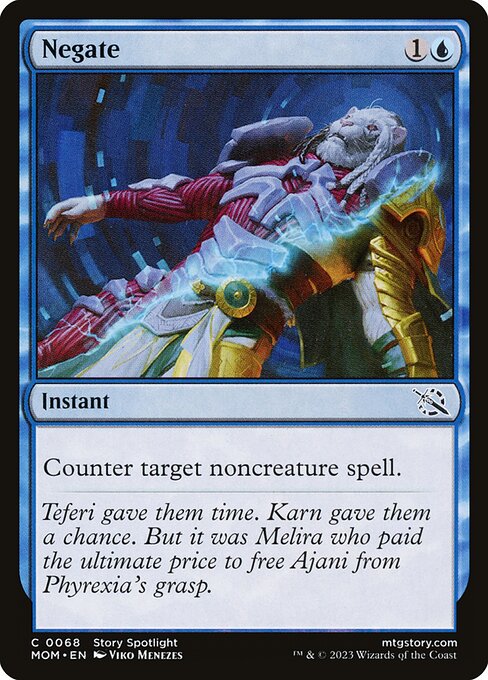
Negate is another card that was already legal in Standard, but its printing in Foundations secures its place in Standard for years to come.
Negate is the perfect sideboard counterspell, because in almost every matchup non-creatures are going to be a problem. Need help against control decks using sweepers or counterspells? Try Negate. Need help against black removal spells like Go for the Throat? Negate has got you covered.
The only problem Negate is going to have for the next few years is that Spell Pierce was just reprinted in Aetherdrift, and while some decks will still want Negate in their sideboard, any aggro or tempo decks are likely to gravitate more towards Spell Pierce.
Regardless, if you are a blue mage, craft Negate and I promise you will use them at some point.
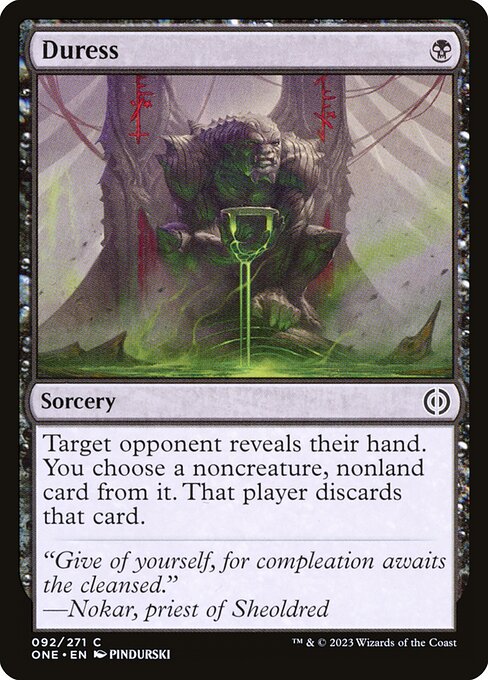
Once again, Duress was already legal in Standard, but its printing in Foundations keeps it legal for the next four to five years.
Duress is very similar to Negate, because it only takes out non-creature spells, but it is the best tool for black decks against control decks, and is even useful against other midrange decks to attack their card advantage engines or removal spells, or even against certain types of aggro decks to take out their problematic spells like Monstrous Rage.
Duress had actually rotated out of Alchemy, but now it’s back in the mix for the next couple of years, helping black decks take on pesky non-creature spells.
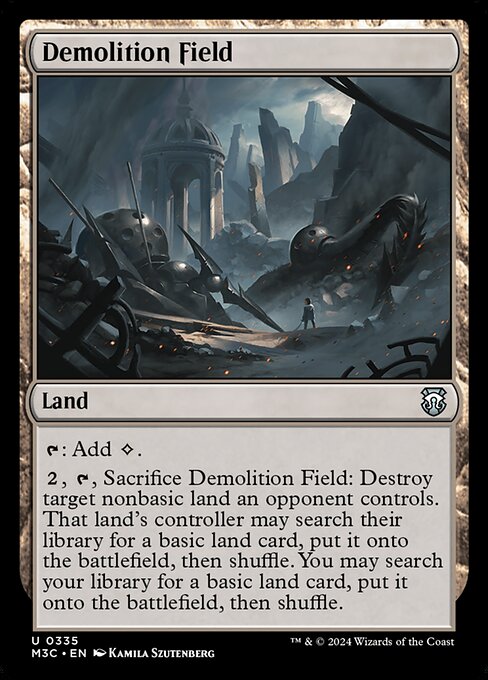
Our last “this card was already in Standard, but…” card is Demolition Field, which is a great tool for one and sometimes two color decks to attack greedy mana bases or powerful non-basic lands like Fountainport.
Its reprint in Foundations means that players have to be slightly more honest with their mana bases for the next several years, or risk having their lands destroyed for free.
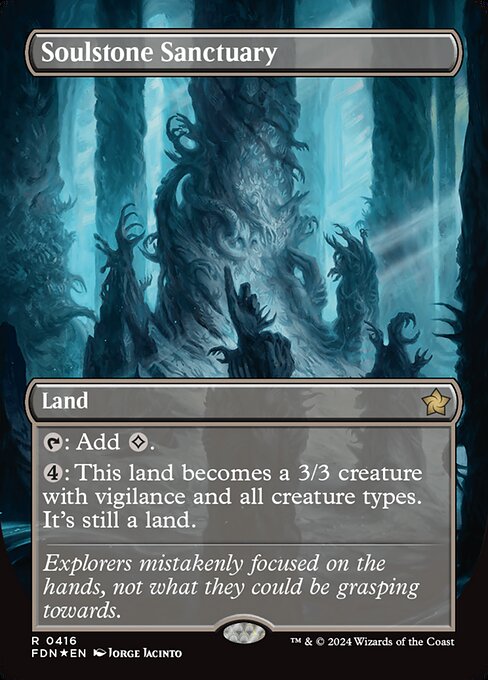
Soulstone Sanctuary was a big surprise to me, but I think that the fact that you can tap it to pay for its activation cost is part of why it is so great. Soulstone Sanctuary is really the winner in terms of new cards from Foundations, as it is the third most played land in Standard according to MTGGoldfish, just behind Swamp and Island.
Being able to activate it on turn four while holding up interaction or a flash spell really puts your opponents in awkward positions where they can’t feel confident about deploying their own threat, or just passing while doing nothing, because either way you can use your cards to answer their play or make your own threat.
Since it can go in a deck of any color, regardless of how Standard changes over the next few years, Soulstone Sanctuary is going to always be a possibility in one or two color decks. The fact that it is every creature type also gives it play for typal decks.
Soulstone Sanctuary is a necessary craft, but I would feel pretty safe crafting it, because you will definitely have the option to use it for years to come.
Wrapping Up
Foundations is a strange set because of how large it is and how many reprints were included in it. So I suppose it shouldn’t be surprising that most of the impactful cards from the set are reprints from older sets, but does feel a bit strange that only one of the new cards from Foundations is seeing any play.
Of course, as the years go by, we will have to reevaluate each and every card from Foundations, as sets come and go, but it remains as a pillar of the format.
With all that said, let’s look forward to Aetherdrift making an impact on the format, both old cards and new, and get ready for its release on Tuesday the 11th on Magic Arena.
I wrote several articles about cards I think will have an impact on Standard from the set, so once we get to the end of Aetherdrift Standard I’ll look back and see how right I was.
Until then, enjoy the last weekend of Foundations Standard, and we’ll see you next week for Aetherdrift!
Premium
Enjoy our content? Wish to support our work? Join our Premium community, get access to exclusive content, remove all advertisements, and more!
No ads: Browse the entire website ad-free, both display and video.
Exclusive Content: Instant access to all exclusive articles only for Premium members, at your fingertips.
Support: All your contributions get directly reinvested into the website to increase your viewing experience!
Discord: Join our Discord server, claim your Premium role and gain access to exclusive channels where you can learn in real time!
Special offer: For a limited time, use coupon code L95WR9JOWV to get 50% off the Annual plan!