Plum showcases five fresh Historic brews built around the new Avatar set and the creative engines it introduces, offering a first look at what these cards can do on day one.
The Avatar: The Last Airbender set arrives on Tuesday, bringing one of the most creatively charged releases we’ve had in a while. The power level is solid, but what stands out even more is the design work. So many of these cards feel like open invitations to build something strange, ambitious, or playful.
I mainly brew in Historic because I find it to be the perfect home for that kind of exploration (excluding the presence of Eldrazi). It has the depth to support wild concepts and the flexibility to reward anyone willing to try something new. Avatar has plenty of shiny new toys for us to play with, and I’ve spent the last week or some drafting up initial decks so we have a “jumping off point” so to speak when the set drops on the 18th.
Today, we’re looking at five first brews that highlight the most interesting interactions from the set. Again, I haven’t had a chance to test these, so I won’t promise you much. But these are just a few lists I’m excited to test out.
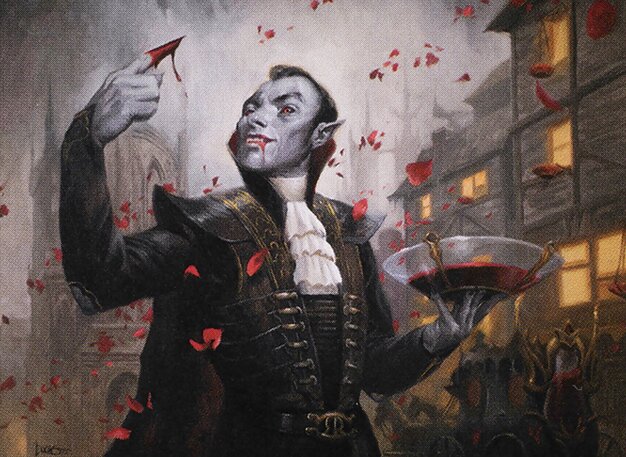
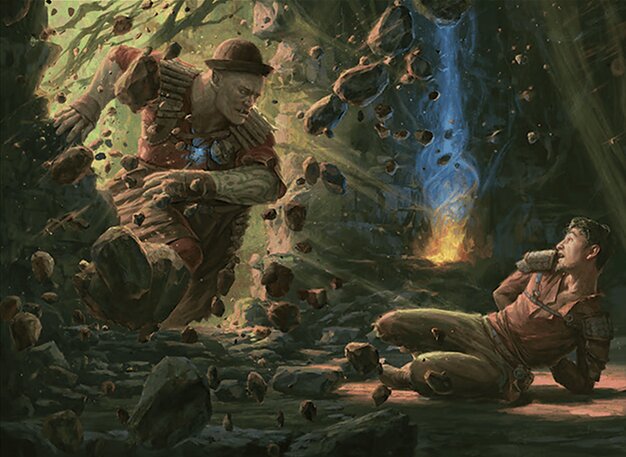
This brew centers on Obsessive Pursuit, which ends up behaving a lot like a slower, stranger take on Bitterblossom. Instead of generating creatures, it hands out a Clue every turn. Those tokens don’t pressure the opponent directly, but in this shell they create two kinds of advantage at the same time.
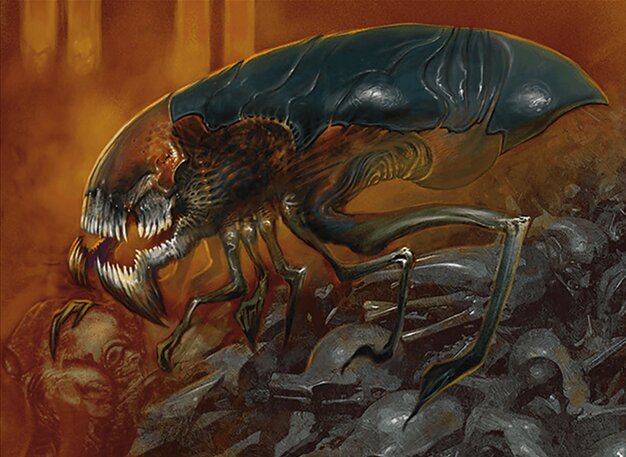
First, the Clues quietly reduce the cost of your threats. Cards with affinity or improvise suddenly become easier to deploy. Etherium Pteramander, Imskir Iron-Eater, and Herald of Anguish all benefit from a board full of cheap artifacts that you didn’t have to work for. Even small pieces like Cranial Ram scale naturally as your artifact count rises.
Second, the Clues patch the usual weakness of these shells. Traditional Affinity lists can dump their hand on turn three and pray to topdeck well. Pursuit changes that rhythm. Once you stall out, you can start cashing in clues for cards and keep the pressure going without losing tempo. The deck can afford to grind much longer than it looks.
The reason this list isn’t just another “Historic Affinity” pile is speed. Pursuit is powerful, but it’s slower than the hyper-linear openings you’d want in a pure Affinity deck. So instead of trying to race, this build shifts toward an improvise-centric midrange plan. You use early artifacts to develop wide, then drop oversized improvise creatures and leverage sacrifice synergies to push through damage. Galvanic Blast gives you clean reach and some extra removal if needed.
It’s an unexplored angle, and the play patterns feel different from both sacrifice decks and classic Affinity. Pursuit ties the whole thing together by giving you a repeatable source of artifacts, a draw engine, and a damage pump all in one. Improvise feels like an often overlooked mechanic when Historic has such a powerful affinity deck already, but I’m excited to try this one out.
I don’t think I’ve encountered anyone playing Flood of Tears combo in a looooong time. But it has gotten some decent upgrades in recent sets, and more importantly, it now has Chakra Meditation.
The enchantment is a self-contained loop piece: when you cast Flood of Tears with Meditation and 3 other permanents already on the battlefield, the enchantment returns to your hand along with everything else, and you can drop Omniscience into play while also looting off of Meditation. Then you can recast it for free, return Flood of Tears to your hand, and do it all over again. That role used to be handled by Tamiyo, Collector of Tales at four mana. Meditation gives you the same function for cheaper, cleaner, and with far more velocity.
The deck becomes much smoother with that change. Meditation both enables the Flood of Tears requirement and accelerates you toward your payoffs. Every time you cast a spell, you get to loot meaning you can naturally draw your whole deck while comboing and win via Jace.
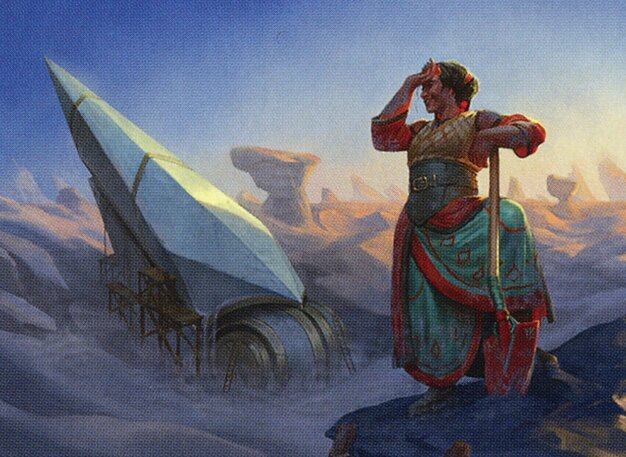
Meditation also makes your setup turns less painful. Instead of hoping to naturally curve into six mana and the perfect board state, you can sculpt hands as you go. Between Archaeologist, Thundertrap Trainer, and Stock Up, it should be easy to find all your pieces each game.
Although this combo sits at the higher end of the mana curve, the shell is surprisingly customizable. The core loop is entirely blue, which makes splashes easy and low-risk. This version uses green for ramp and consistency, but you could just as easily stay mono-blue and load up on extra protection and interaction. White is another clear option, offering removal and sweepers to help you reach the Flood turn more reliably. Meditation doesn’t lock you into a specific build, so there’s plenty of room to tune the deck.
I hope everyone likes a bit of nostalgia, because this brew reaches back to one of Historic’s earliest success stories. Feather was a real deck when the format was young, but power creep moved fast and the archetype eventually slipped far behind the current field. With the Avatar set arriving, it felt like the right time to dust it off and see whether the new tools can bring it back into the conversation.
Red and white both picked up some meaningful upgrades. Monstrous Rage and Cori-Steel Cutter give the deck more efficient ways to push damage and maintain tempo, reinforcing the classic “cheap creature plus targeted spell” gameplay that made Feather worth playing in the first place. Those additions alone justify revisiting the shell.
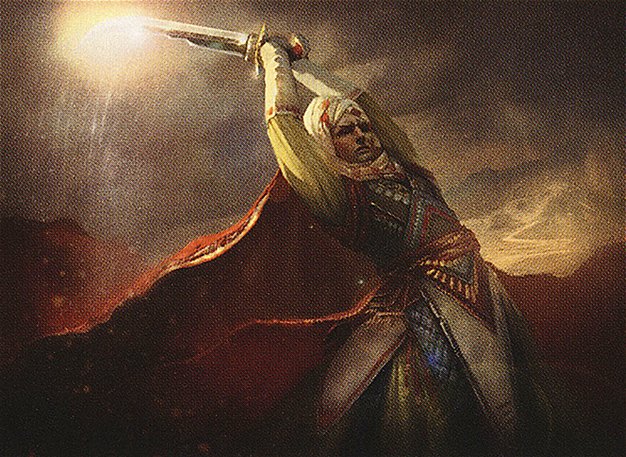
What caught my eye, though, is Enter the Avatar State. A combat trick, life gain, and protection rolled into one feels like an incredible piece for a deck like this. One well-timed Avatar State lets you stabilize, punch through blockers, and survive removal-heavy turns while still applying pressure, with Feather rebuying it to use again the next turn. It plays offense and defense at the same time.
I tried not to reinvent the old Feather engine much. I mainly just wanted to update some pieces and play with new cards that felt kind of tailor-made for this archetype. If nothing else, it’s a satisfying return to an early Historic staple.
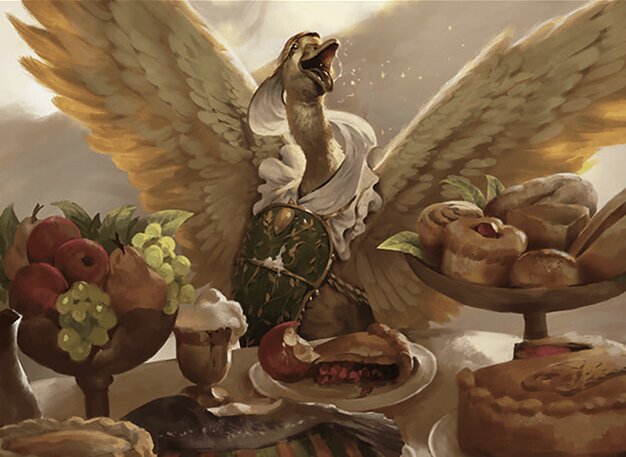
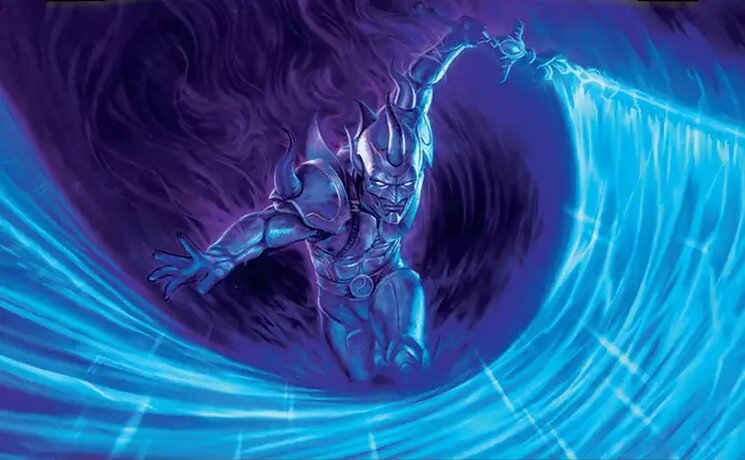
The new card at the center of this one is Benevolent River Spirit, and the first thing you notice is how hard it is to cast honestly. Waterbending 5 is a steep cost in a deck like ours. Instead of trying to brute-force the mana, this version looks for a way to cheat it onto the battlefield.
That’s where Break Out comes in. If you keep your curve extremely low and make sure all your creatures cost two mana or less, Break Out suddenly becomes a powerhouse in my opinion. It allows us to play Spirit on turn 2, with haste!
To give the plan some real structure, the deck uses the Domain Zoo core as a foundation. You get efficient early creatures, Tribal Flames for reach, and Leyline Binding as a removal spell that stays cheap throughout the game. Obviously Spirit isn’t nearly as good here without break out, but I have my fingers crossed that the interaction will be a common play pattern. Whether the numbers hold up or not, the concept is powerful, and it’s a fresh way to explore this archetype!
This list revisits a strategy that’s been floating around Historic for a while: Esper Invocation decks that copy enter-the-battlefield triggers from cheap, value-heavy enchantments. Cards like Momentum Breaker, Hopeless Nightmare, and Nowhere to Run already give the archetype a steady drip of pressure and disruption. The shell is very playable, albeit a bit slow and easy to disrupt.
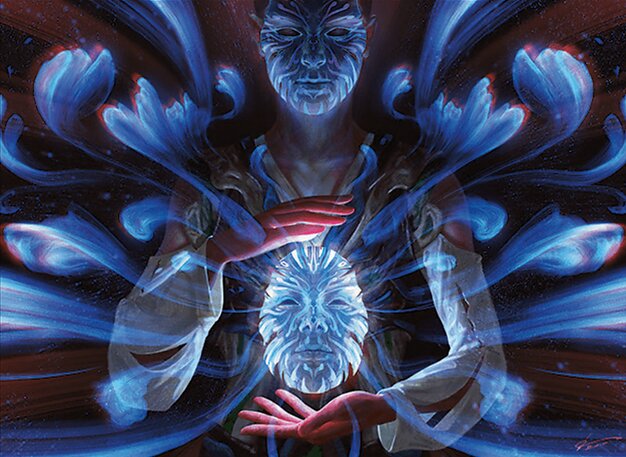
This is yet another archetype getting a sweet upgrade from Chakra Meditation, which gives the deck a line it simply didn’t have before. When you pair Meditation with Esper's Invocation, you can copy Meditation every upkeep. Each copy enters, triggers, and lets you rebuy an instant or sorcery from your graveyard every turn as long as you keep the chain going. That alone is a powerful loop, but it becomes something much sharper when you choose the right spell.
If that spell is Orim’s Chant, the deck stops being a value engine and turns into a soft lock. You copy Meditation, pick up Chant, cast it again on their upkeep, and repeat every turn. Most opponents never get the chance to meaningfully interact once the loop stabilizes. Chant is already a strong tempo tool; Meditation turns it into a renewable resource Invocations can keep feeding back to you.
What makes the deck appealing is that it doesn’t rely on the lock to win. The baseline plan still works. Phelia acts as another way to blink Meditation every turn, or even scam an Overlord of the Floodpits onto the board early. Invocation copying a Nightmare or Momentum Breaker every turn can disrupt your opponent’s plans incredibly well.
I think having access to a rather simple lock that can almost completely shut your opponent out of the game so early will be powerful.
Closing Thoughts
These are just a few lists we brewed on stream! Release weeks are always a blast, but this one feels especially wide-open and I can’t wait to mess around with the new cards. We’ll be streaming throughout the week so feel free to drop by and say hello!
Thanks for reading!
As always, feel free to comment and leave any questions you have below. And make sure to come back next week for even more Fun & Jank!
If you want to see these decks in action, come hang out with me on stream, where we test, refine, and have a ton of fun together.
Happy Brewin’!
Premium
Enjoy our content? Wish to support our work? Join our Premium community, get access to exclusive content, remove all advertisements, and more!
No ads: Browse the entire website ad-free, both display and video.
Exclusive Content: Instant access to all exclusive articles only for Premium members, at your fingertips.
Support: All your contributions get directly reinvested into the website to increase your viewing experience!
Discord: Join our Discord server, claim your Premium role and gain access to exclusive channels where you can learn in real time!
Special offer: For a limited time, use coupon code L95WR9JOWV to get 50% off the Annual plan!
Plum is the creator of the Jank Tank.
He started playing at the ripe old age of 12 and immediately fell in love with the infinite possibilities that deck building could lead to.
He truly understands that jank is a mindset, and spends most of his free time brewing and concocting new and exciting deck lists to help inspire and promote creativity within the MTG community.