Hey all. Bloomburrow releases on July 30th on MTG Arena not just adding a new set to Standard and Alchemy, but also triggering rotation in both of those formats. That means that both formats are ripe for experimentation and brewing, as surviving decks try to rebuild, and new decks emerge to take the place in the top tiers. So as we peruse spoilers we have to keep in mind my usual card evaluation philosophy:
Card Evaluation Philosophy: When evaluating new cards there are three categories to keep in mind when trying to decide if they are going to see play or not:
Will this card be added to an existing deck,
Does this card create a new deck or revive an abandoned deck, and
Is this an impactful sideboard option?
(A quick note: These rules are mostly for evaluating cards from a competitive standpoint. When it comes to brewing, let your imagination run wild and try out any of the new cards that you think look awesome or seem fun!)
As this is rotation, I will be taking a slightly different approach, and will be first talking about individual cards that stand out to me as possible players in the new format, and then go over groups of cards that I think can come together to form a new deck. With all that said, let’s jump right in.
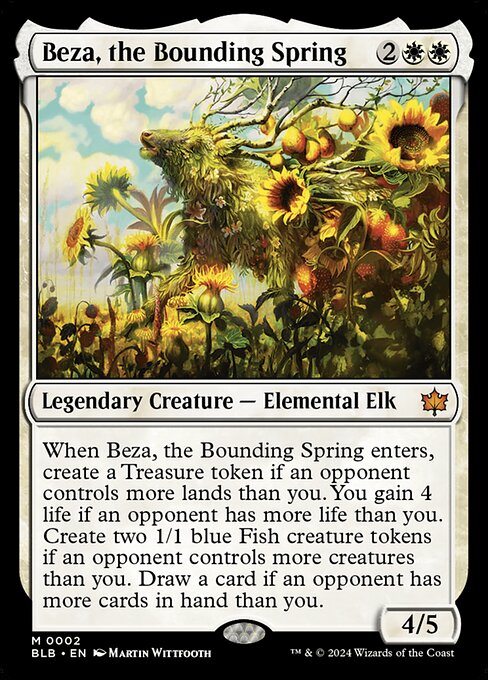
Beza, the Bounding Spring is a sweet new tool for white midrange and control decks to help stabilize against aggro decks, or catch up against other midrange/control decks. The 4/5 body for four mana is going to hold the ground against most boards, but in most games against aggro it is also going to come with four life and two 1/1 fish tokens, almost completely stabilizing the board and getting you out of burn range.
Against other midrange or control decks, it can replace itself if you are down on cards, and ramp you if you are behind on lands. Beza is just a well rounded card that is almost always going to get you some amount of value. While it doesn’t have flash like The Wandering Emperor does, this does seem like a worthy replacement as a stabilizing four drop.
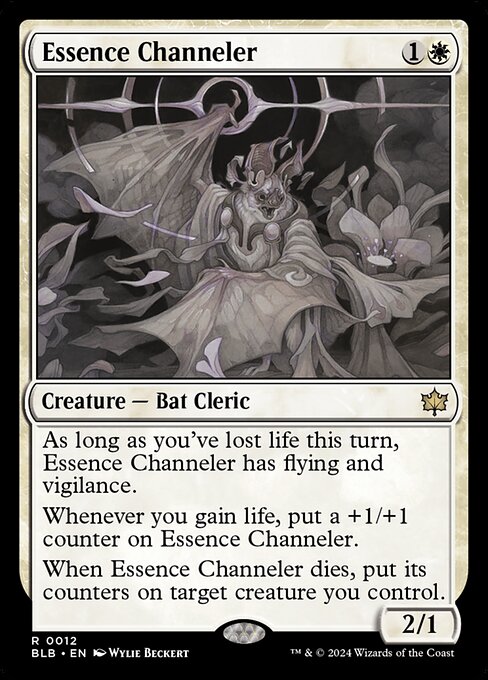
Life-gain decks get an amazing new tool in Essence Channeler to replace the rotating Voice of the Blessed. Essence Channeler has different upsides than Voice. If you have ways to lose life on your own turn (like perhaps Darkstar Augur, discussed below) it can get flying and vigilance regardless of how many counters it has on it. But more importantly it gets to put its counters on another of your creatures when it dies, and your opponent is likely going to have to point a removal spell at this at some point giving you some value.
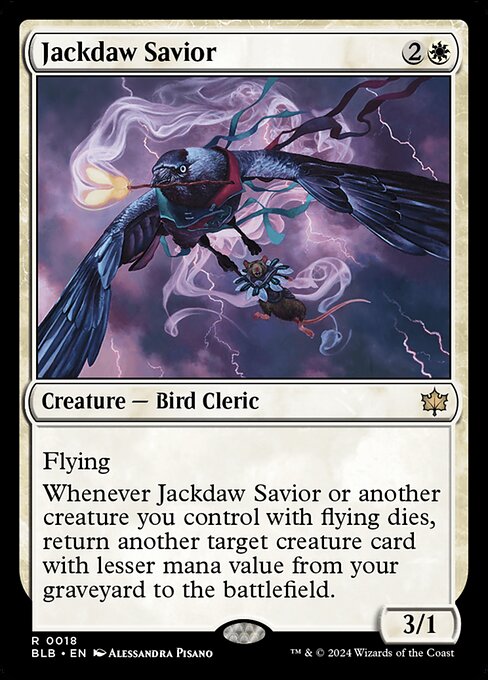
Jackdaw Savior is an impressive aggressive creature, with the same stats as Elite Spellbinder, but it has the upside of recurring a one or two drop when it dies, surely frustrating opponents looking to efficiently remove all of your creatures on curve. Jackdaw Savior also gives your other flying creatures that trigger of returning creatures with lesser mana value when they die, which is likely only to come up if they die in combat, since your opponent will want to remove the Savior first.
While not a human, the previous binding creature type for white aggro, most of the human payoff cards are rotating with the Innistrad sets, meaning that white aggro can look to any creature types to fill out its curve.
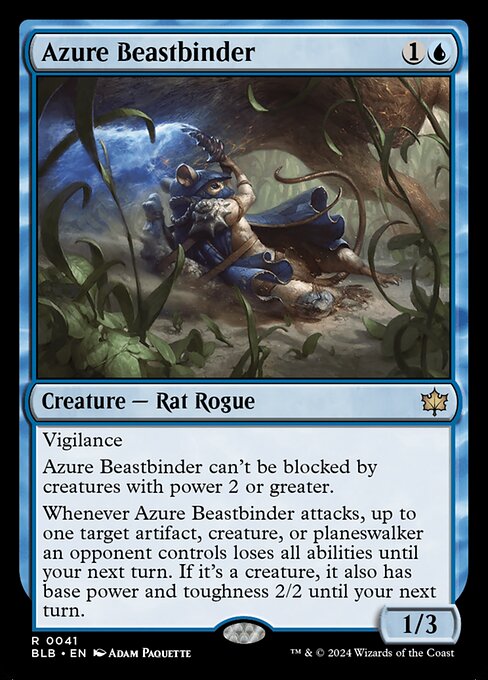
Azure Beastbinder has a really awesome ability that is going to help you force through damage and shut down problematic creatures on your opponent’s side of the board. Imagine removing all of the abilities from Sheoldred, the Apocalypse and shrinking her down to a 2/2, allowing you to get in with all of your creatures. Your opponent is going to have such an awkward time deploying blockers when you have an Azure Beastbinder in play, that they likely have to spend a turn removing it instead.
The other side of this card is the fact that it isn’t very easily blocked. Making it a great target for auras, equipment, or counters. I expect this to see play in aggro and tempo decks alike.
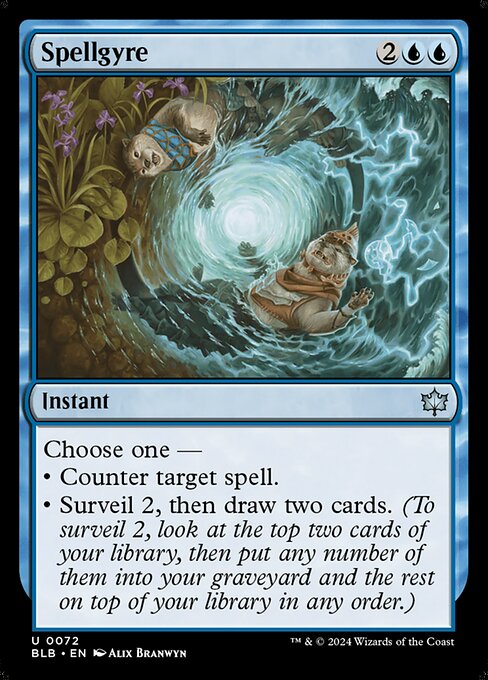
Spellgyre is not Memory Deluge, but it could be a suitable replacement for the rotating card selection spell. Flexibility is the name of the game here, and this kind of flexible card is exactly what control decks need to be competitive. Passing with Spellgyre up means that if your opponent plays something that you must answer you can choose the counterspell mode, and if they don’t you can take the time to surveil 2 and then draw 2. This means that you can see up to four cards deep, just like Memory Deluge.
Of course without flashback it won’t give you the same late game value as Deluge, but the flexibility makes me think this will be a good tool for control decks in the post-rotation world.
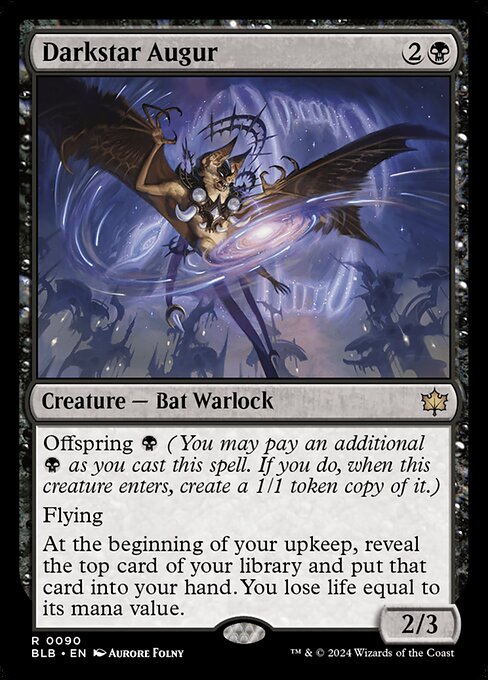
Wake up, a new Dark Confident variant just dropped! It used to seem like every year or two there was a new Dark Confident variant with the likes of Pain Seer and Asylum Visitor, and they almost always flopped, seeing next to no play. So what makes Darkstar Augur, at 3 mana, stand out? First of all, a 2/3 flying is pretty decent stats for a three drop, it can attack well and block a variety of aggressive creatures. Second, the offspring ability just makes for fun and risky gameplay.
In an aggro deck with a low curve, drawing three cards a turn (with both Darkstar Augur and its offspring in play) can easily and quickly lead to closing out the game. But it does put a ticking clock on you as well. It can be easy to accidentally put yourself to a dangerously low life total. Thus, I think this card is great at the top of an aggressive deck, but won’t quite cut it in midrange decks.
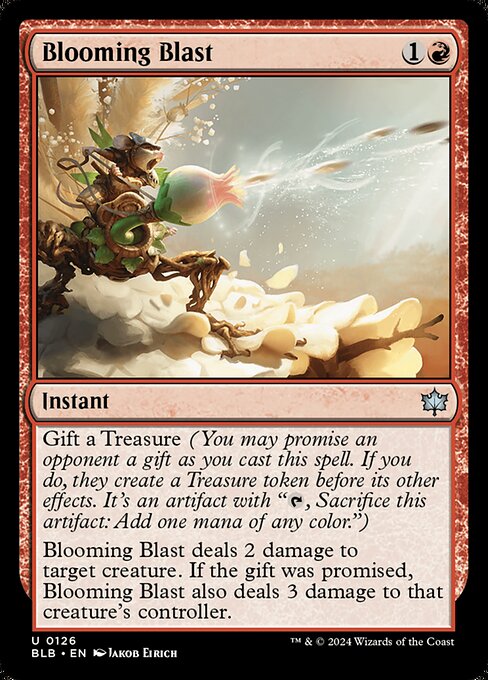
Blooming Blast is our newest Searing Blood or Searing Blaze variant, and it should add even more power to mono-Red Aggro decks in Standard. While gifting a treasure isn’t a small cost, and can help your opponent stabilize the board the following turn, removing a blocker and dealing three damage upstairs for one card is so much pressure that they may not be able to recover. If you are looking to fight against mono-Red I suggest creatures with three or more toughness, because Blooming Blast is going to be picking off anything smaller for the next three years.
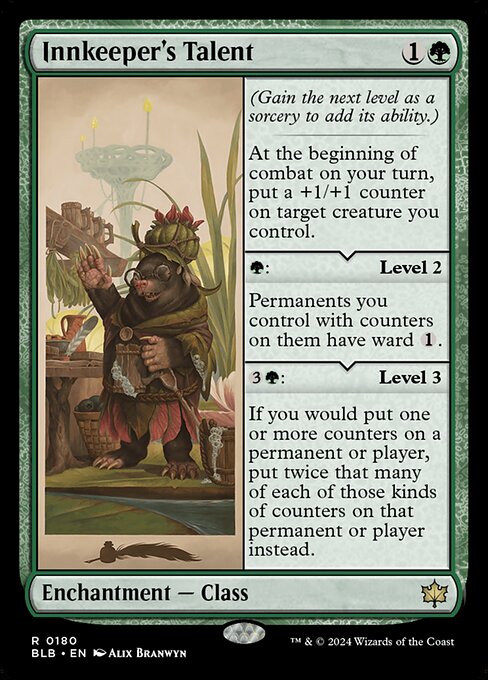
At a base Innkeeper’s Talent is Luminarch Aspirant on an enchantment instead of a creature, which means that it is harder to kill but can’t pump up itself. Thus, it is going to be great when following up a one drop, or later in the game once you have a board.
Leveling it up the first time doesn’t give you much, but you can usually find a turn to spend that extra mana on it. Later in the game leveling it up to the final level will at a base make it start to put two counters on a creature every combat, but also is great if you have other effects putting counters around like Ornery Tumblewagg.
Luminarch Aspirant was such a powerful card in its standard format, that I am inclined to think that Innkeeper’s Talent at least has a shot at making it in a green aggro deck.
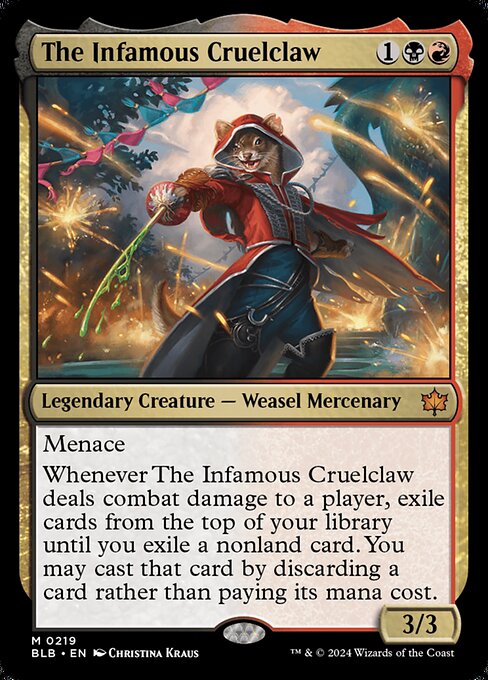
The Infamous Cruelclaw is good in two types of decks. The first is an aggressive black/red deck that plays cards like Inti, Seneschal of the Sun, which can make use of the discard synergy, and whatever you hit of cruelclaw is going to help you keep the pressure up.
The other type of deck is a combo deck, where you try to put an expensive card, like Portal to Phyrexia, Atraxa, Grand Unifier, etc. on top of your deck via cards like Insatiable Avarice, and then trigger cruelclaw to cast it for free on turn four.
I expect there to be a lot of brews built around this card, so I wanted to shout it out here.
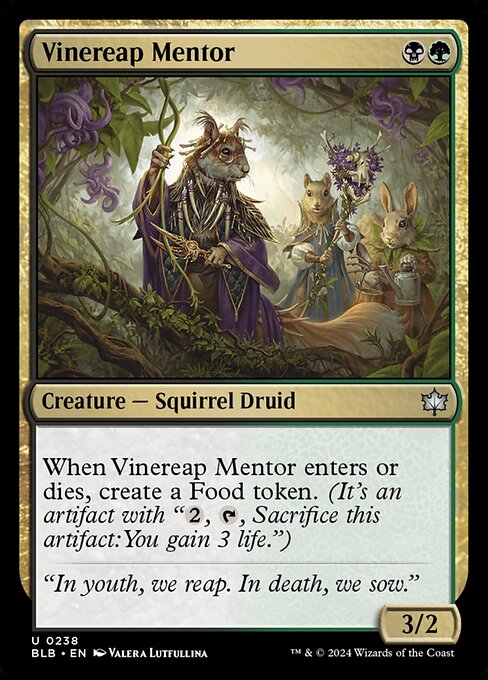
If some sort of food or Squirrel deck does come together, it will be because Vinereap Mentor is so strong. A 3/2 for two is good aggressive stats, and a food coming in and going out is going to feed (pun intended) whatever food payoff you have or Forage costs you need to pay.
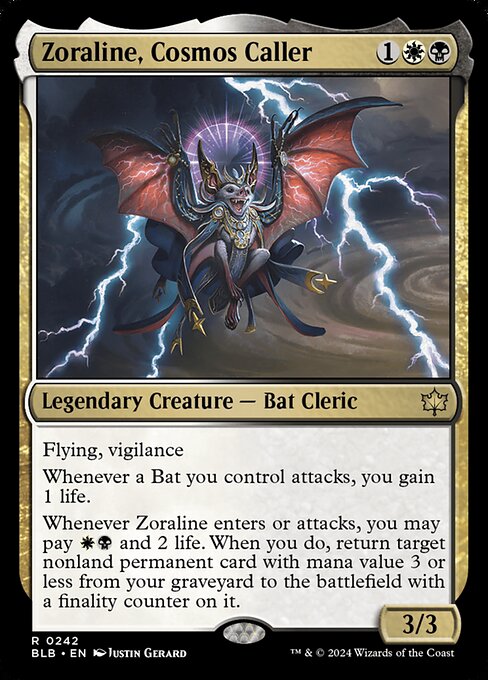
Points at Zoraline, Cosmos Caller “Is this Lurrus of the Dream-Den?” Okay, obviously Zoraline is nowhere close to as broken as Lurrus is, but she does have a really sweet effect that can definitely be a build around worth exploring in Standard.
First off, a 3/3 flying, vigilance for three mana is great stats, she also gains a life when she herself attacks but also for each other attacking bat (looking at you Deep-Cavern Bat). Her triggered ability also costs 2 life, so if you play any of the other bat cards from this set that care about losing life on your turn, she will help you there.
But the real meat here is returning not just creatures, but any nonland permanent with mana value 3 or less to play. Just like Lurrus, Zoraline is going to get you something back every turn, making her a must answer threat. I think the natural home for Zoraline is a deck making use of Helping Hand, which can return Zoraline to play, triggering her ability, and giving you a chance to return something else as well.
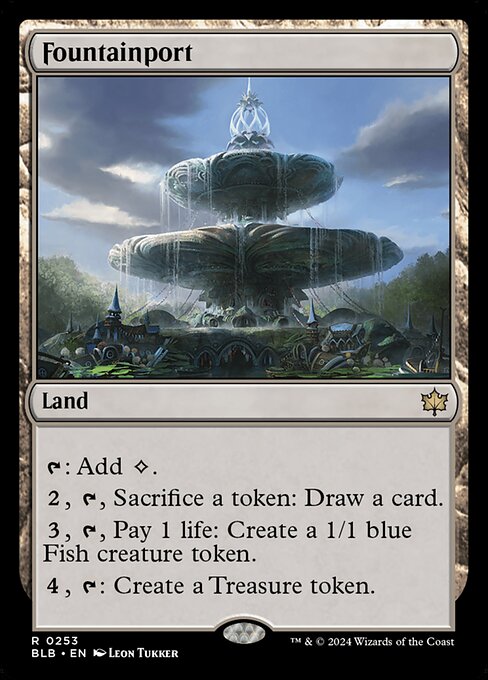
Fountainport is just good value. Mirrex fills a very similar role, and some decks will want both of these lands, but Fountainport gives you more options than Mirrex does. Turning spare tokens into cards, making tokens that can block, unlike the mite tokens from Mirrex, or ramping in decks that have expensive plays, are all great options. I expect Fountainport to be at least a one-of in most decks.
New Archetypes
Mice Cards
Mice are one of the ten heavily supported creature types of Bloomburrow, hanging out in white and red. Mice are fairly aggressive, featuring a lot of one and two drops, and it feels to me that there are enough mice cards to form a powerful aggro deck.
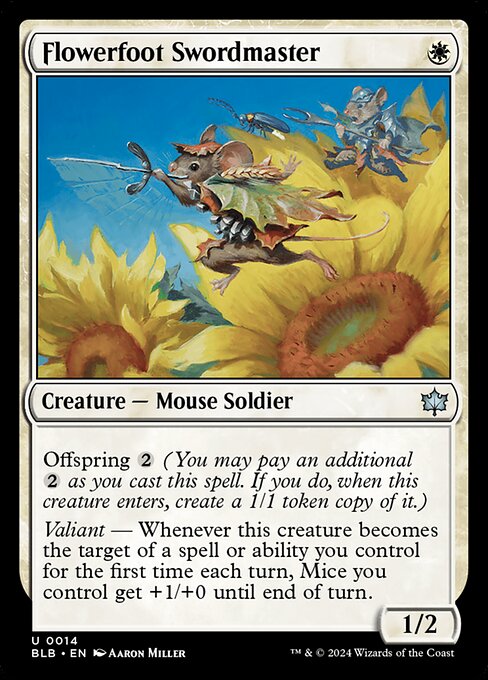
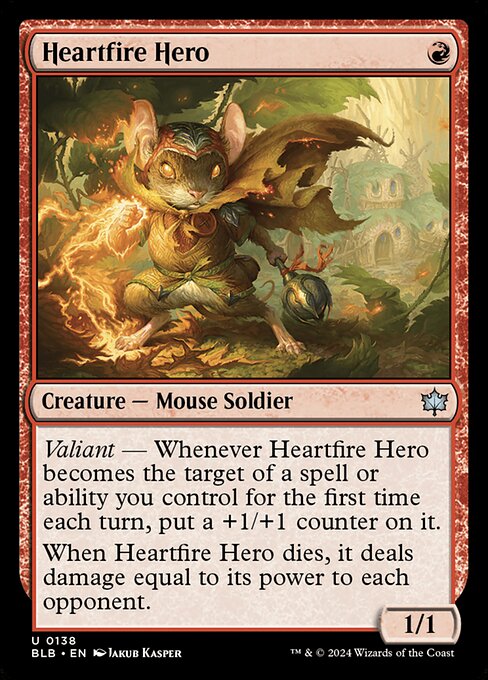
New mice cards include two one drops in Flowerfoot Swordmaster, which features two new mechanics, Offspring, which works kind of like kicker, giving you a 1/1 copy of the creature when you pay it, and Valiant, which gives you an effect when you target that creature with a spell or ability for the first time each turn, and Heartfire Hero, also featuring Valiant.
These two one drops really want you to be triggering Valiant so they can grow themselves or your whole team, which fortunately can be triggered with abilities, which we get from some other mice both new and old.
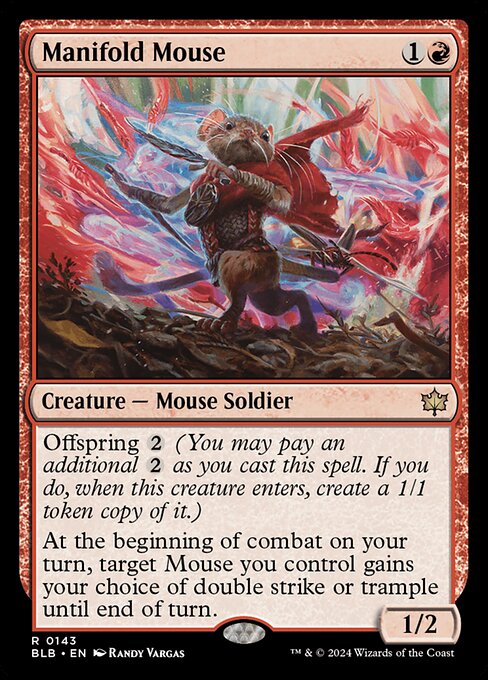
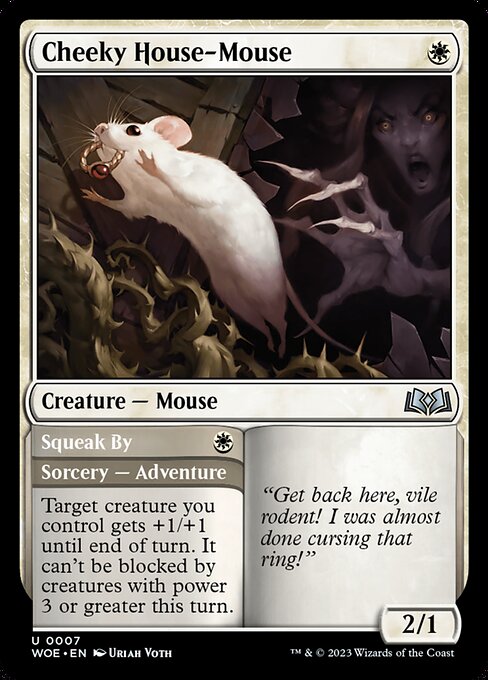
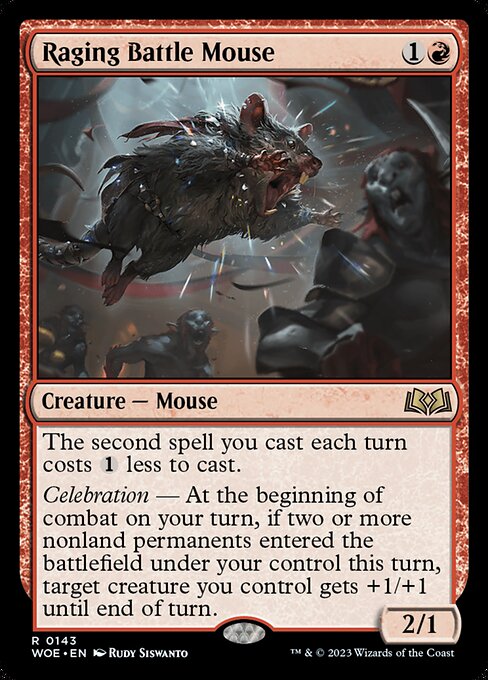
New from Bloomburrow is Manifold Mouse, which can help push through damage, but from Wilds of Eldraine we also have Cheeky House-Mouse, which can serve as a one drop or as a nice pump spell that triggers Valiant, and Raging Battle Mouse, which can also provide Valiant triggers if you have two permanents enter the battlefield before combat.
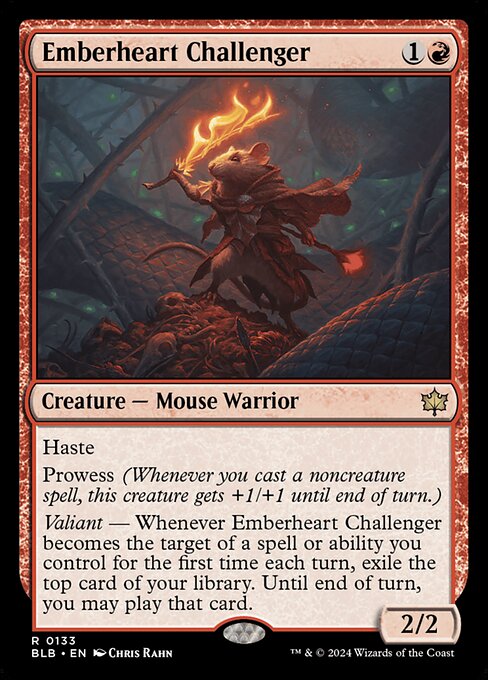
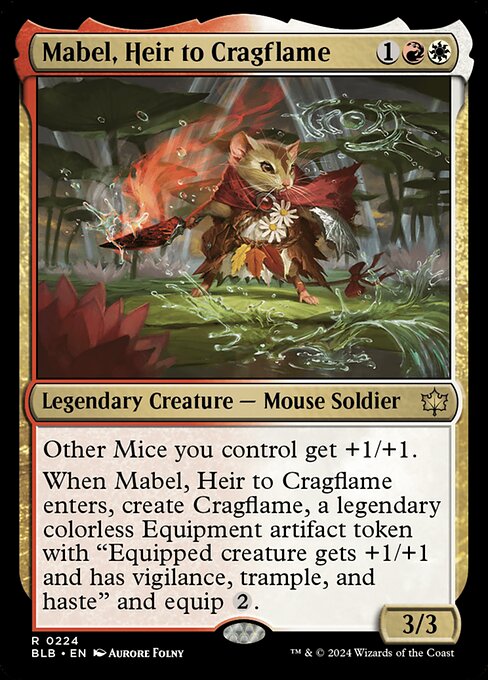
Other mice to keep on a eye on are Emberheart Challenger, which likely has a role outside of just a dedicated Mice deck, as a powerful haste and prowess threat, and Mabel, Heir to Cragflame as both a lord and a source of an equipment that can provide Valiant triggers when you target your creature with its equip ability.
I’m excited to try Mice Aggro, so lookout for an upcoming article where I show you the deck I’ve brewed around the little dudes.
Lizard Outlaws
Lizards are in Black and Red in Bloomburrow, and boy did they get some sweet aggressive creatures to fill out the archetype.
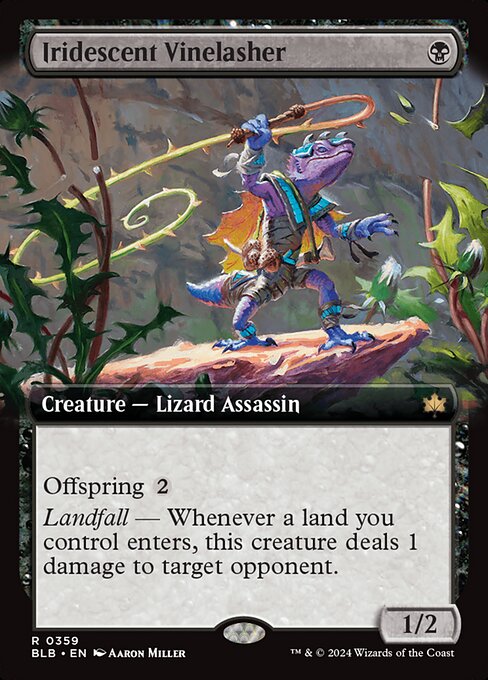
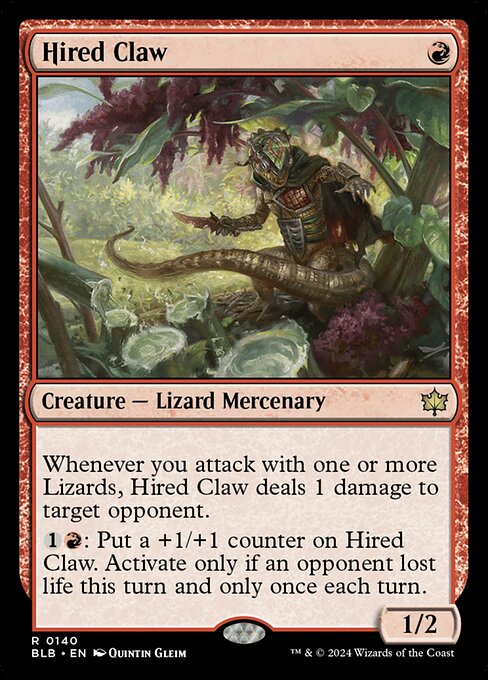
Iridescent Vinelasher and Hired Claw are both one drops that provide a lot of damage over the course of the game and provide something to do with your mana when you have extra around, with the offspring ability of Iridescent Vinelasher and the activated ability of Hired Claw to keep it growing as the game goes on.
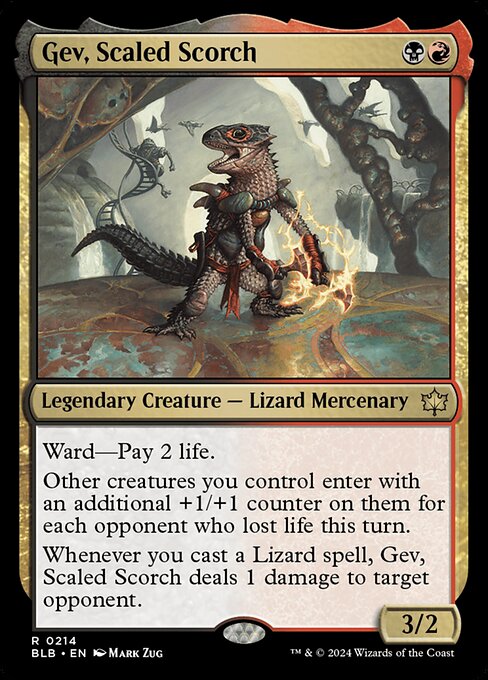
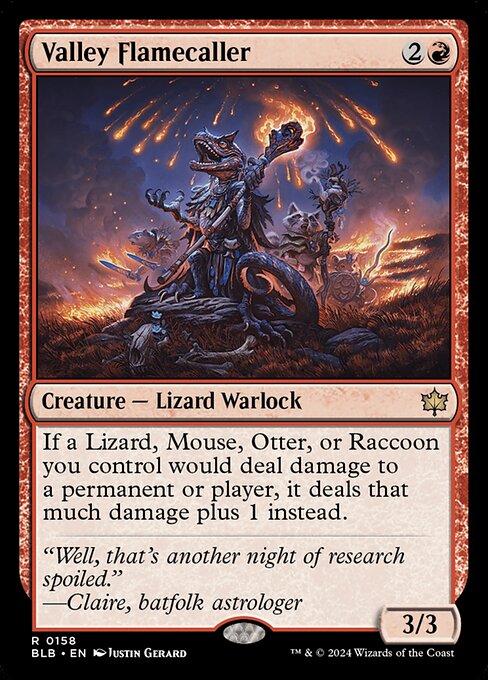
Gev, Scaled Scorch helps pump up your creatures, as long as you’ve done damage that turn, and gives you some extra reach with your other lizards. And Valley Flamecaller helps turn all of those little pings from your one-drops into real damage.
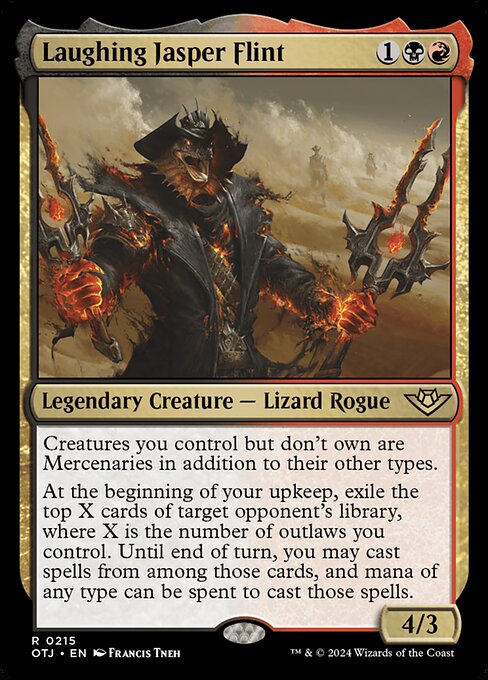
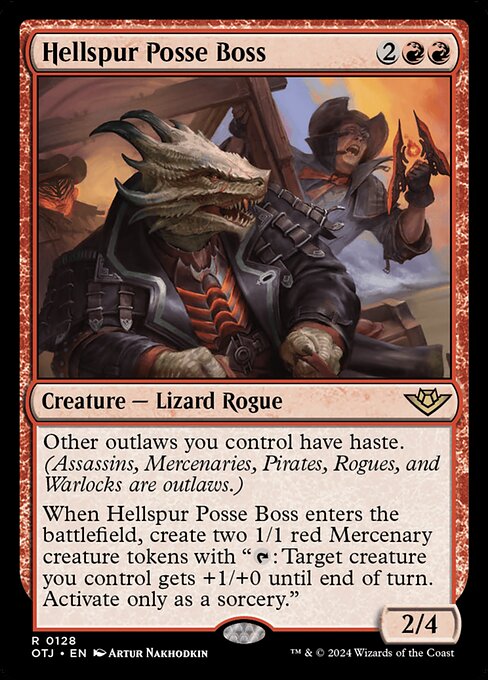
All four of these lizards are also outlaws, making them fit into an outlaws deck with fellow lizards Laughing Jasper Flint and Hellspur Posse Boss. They also fit into just an aggressive Rakdos deck as cheap aggressive creatures, making me think that these lizards are going to get their time to bask in the sun.
Green Aggressive Creatures
I’ve decided to group all of the green aggressive creatures here because wow are there a lot of them. Green aggro hasn’t really been a deck since Blizzard Brawl rotated out years ago, but perhaps we have a critical mass now to put something together.
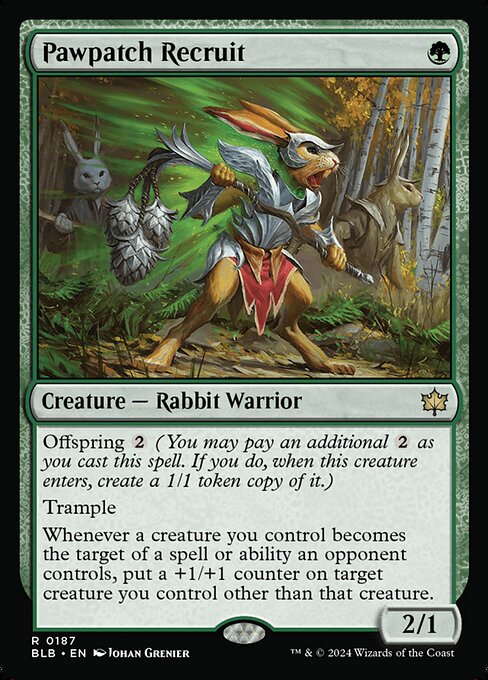
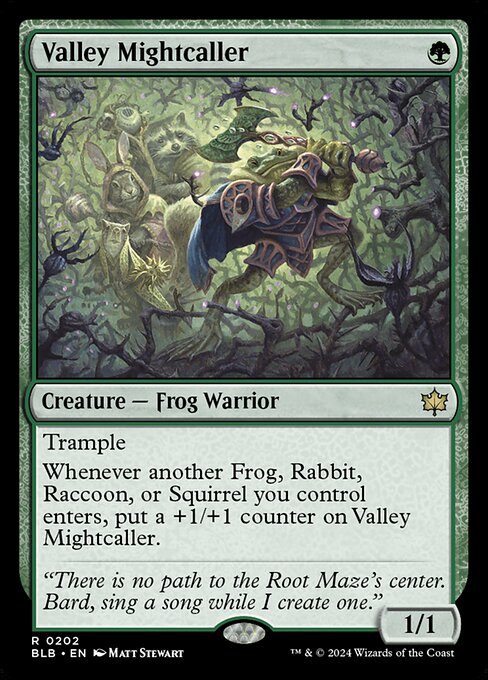
We have a variety of one drops coming in, Pawpatch Recruit is good on turn one and turn three thanks to offspring, and helps spread out some counters when your creatures are targeted. Valley Mightcaller slowly grows over the course of the game if you are playing the right creature types and has trample to push through chump blockers.
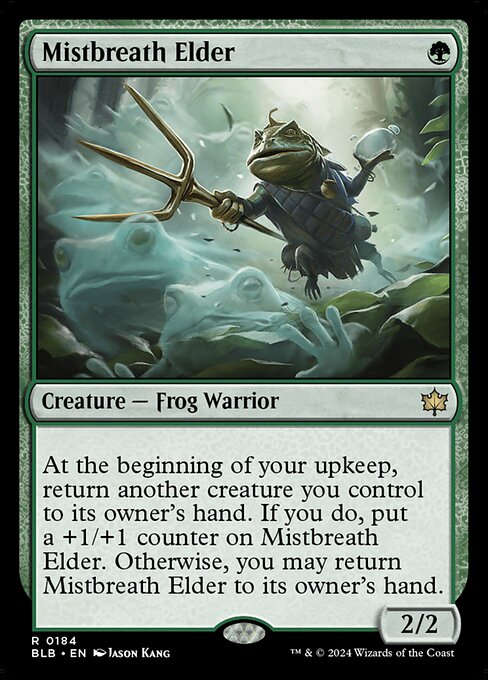
Mistbreath Elder, perhaps the strangest of the bunch, is also able to grow, but at the cost of returning your other creatures. Now that isn’t always a bad thing, as bouncing a Pawpatch Recruit can let you cast it with the offspring cost the next turn, and a green aggro deck likely has Quirion Beastcaller in it, so recasting a creature every turn isn’t a complete downside.
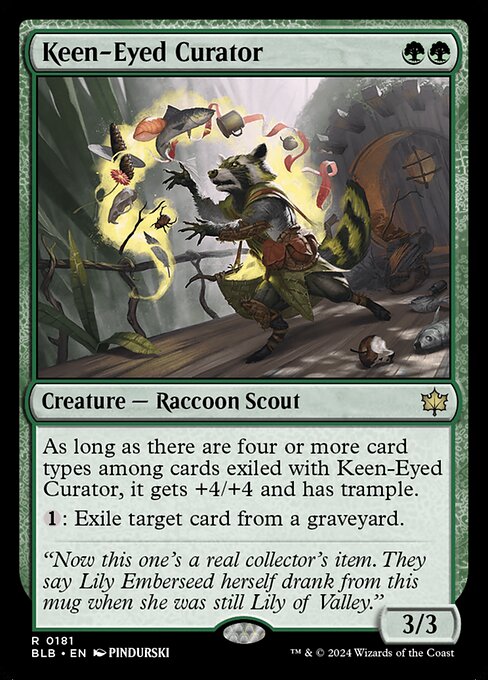
Next we have some strong two drops. Keen-Eyed Curator gives us some main deck graveyard hate and can grow up to a 7/7 in the right scenarios, and the aforementioned Innkeeper’s Talent, discussed above, helps grow our creatures every turn.
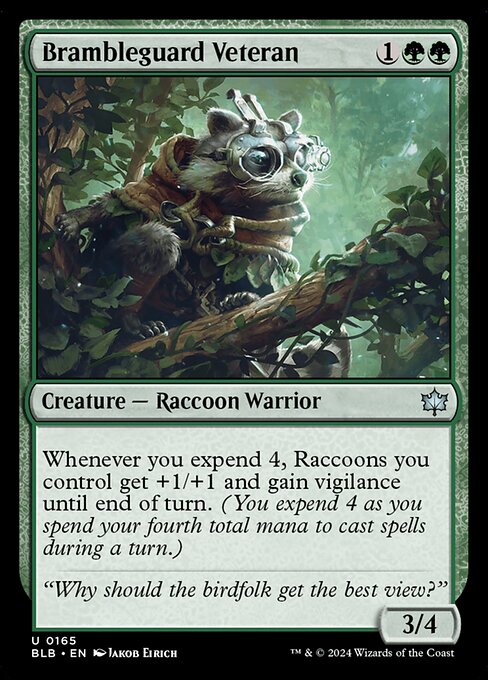
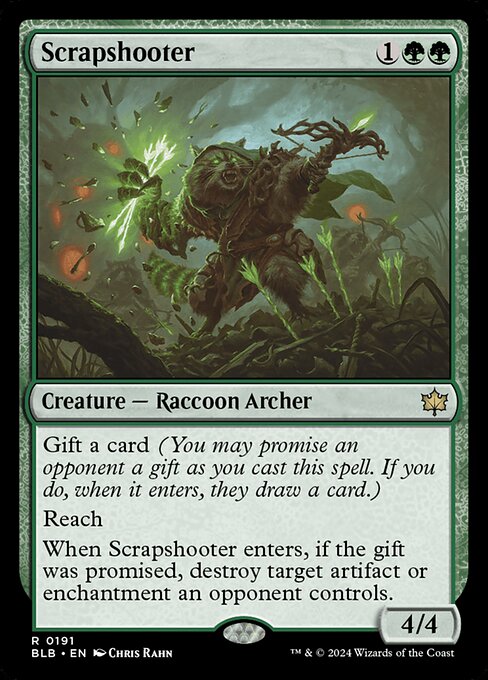
At three we have Brambleguard Veteran, which has fine stats as a 3/4 for three, but when you spend four or more mana on a turn it pumps itself and other Raccoons up. One of those Raccoons is Scrapshooter, with even better stats as a 4/4 Reach for three, and can give your opponent a card to take out a problematic artifact or enchantment.
So will Green aggro come together? Maybe. It certainly has a lot of new toys to try out!
Discard Deck Upgrades
Last standard I wrote about a discard deck that I was playing to decent success, and wow did it get some great upgrades in Bloomburrow.
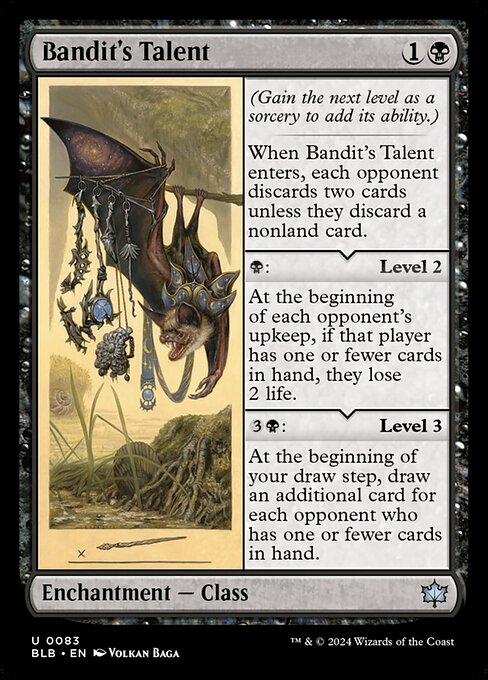
Bandit’s Talent comes down for two mana and forces an opponent to essentially, either discard two land cards or one non-land card, but then for just one mana it levels up to become a late game threat that can ping our opponent for two every turn they start with one or fewer cards in hand. Later in the game we can level it up to its final form to start drawing extra cards that help keep our opponents out of resources.
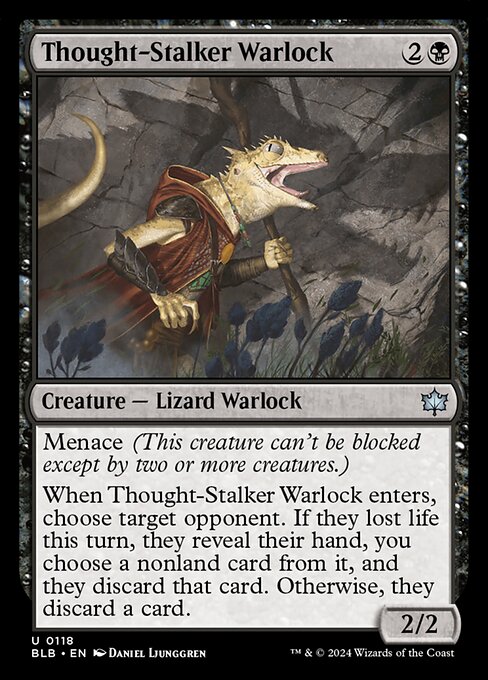
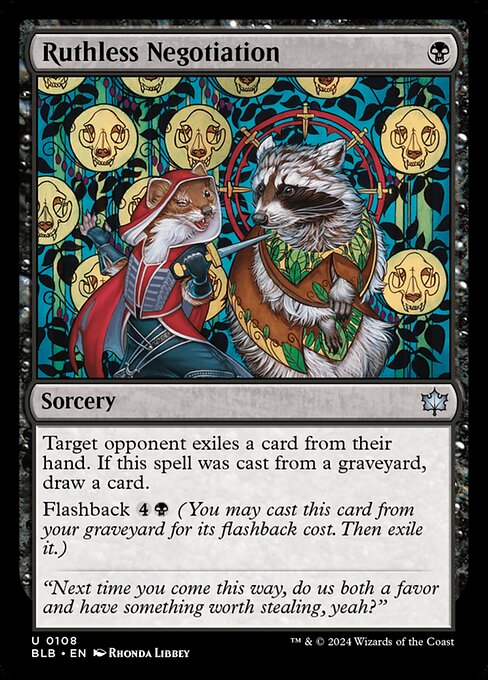
Thought-Stalker Warlock provides us another creature that helps us attack our opponents hand, while Ruthless Negotiation is a cheap discard up front, and then a 2-for-1 later in the game, drawing us a card when we flash it back from the graveyard. I’m excited to update this deck, so look out for my list when I release my next article going over my new decks for the new format.
Wrapping Up
There are even more sweet cards in this set that I didn’t have the chance to go over, so check out the cards for yourself and have some fun brewing! Check out my other article where I talk about other cards I think will make an impact in Alchemy, and keep an eye out for my upcoming article where I go over my new decks for both formats. As always, best of luck in your games, and in this case, in your brewing!
Premium
Enjoy our content? Wish to support our work? Join our Premium community, get access to exclusive content, remove all advertisements, and more!
No ads: Browse the entire website ad-free, both display and video.
Exclusive Content: Instant access to all exclusive articles only for Premium members, at your fingertips.
Support: All your contributions get directly reinvested into the website to increase your viewing experience!
Discord: Join our Discord server, claim your Premium role and gain access to exclusive channels where you can learn in real time!
Special offer: For a limited time, use coupon code L95WR9JOWV to get 50% off the Annual plan!