Hey all. Strickles here, bringing you three Alchemy control decks that I’ve been having fun playing as of late. As we wait for Foundations to release, both Standard and Alchemy are kind of in limbo, waiting for the new cards to enter into the format and shake things up.
Standard has been taken over by the decks from the World Championships, so I’ve been having a bit more fun in Alchemy. I know a lot of players think poorly of Alchemy or don’t think about it at all, but I think it is in a pretty good and diverse spot right now. There are plenty of strong players in the format, but there is also a lot of unexplored territory.
These decks look to take a stab at some of that unexplored territory, so if you are an Alchemy enjoyer, hopefully these decks offer something new for you to try, and if you are a Standard player, hopefully these decks offer you a look into the format. If you want to give Alchemy a try, you can check out the Alchemy tier lists that I recently updated for more decklists.
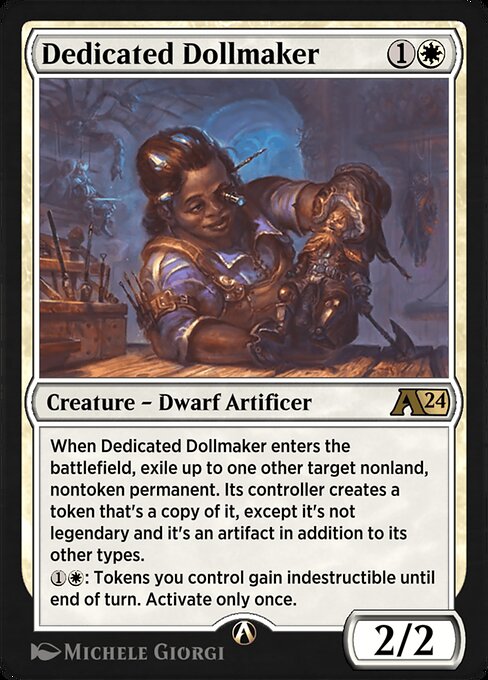
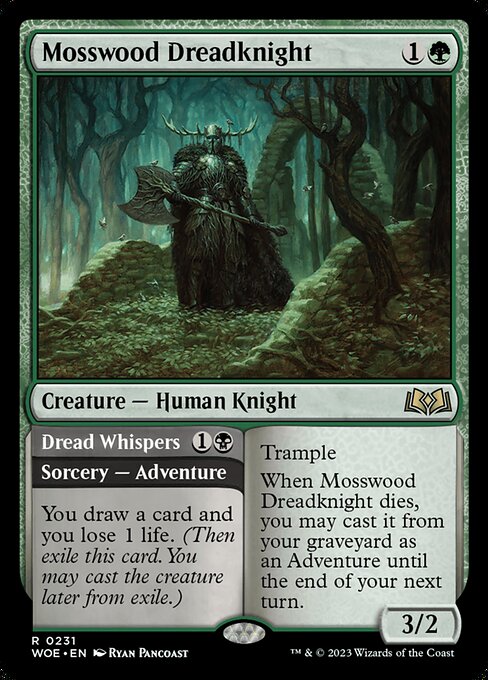
This deck is a slower midrange deck looking to take over the board in the mid game thanks to synergies we have around Dedicated Dollmaker, one of the most classic Alchemy cards at this point.
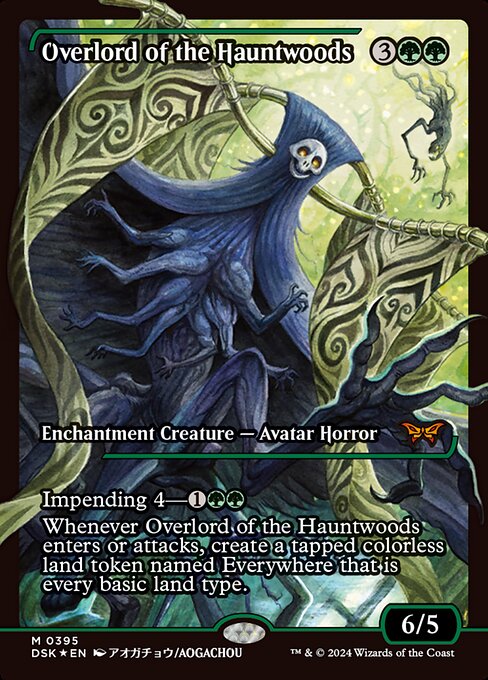
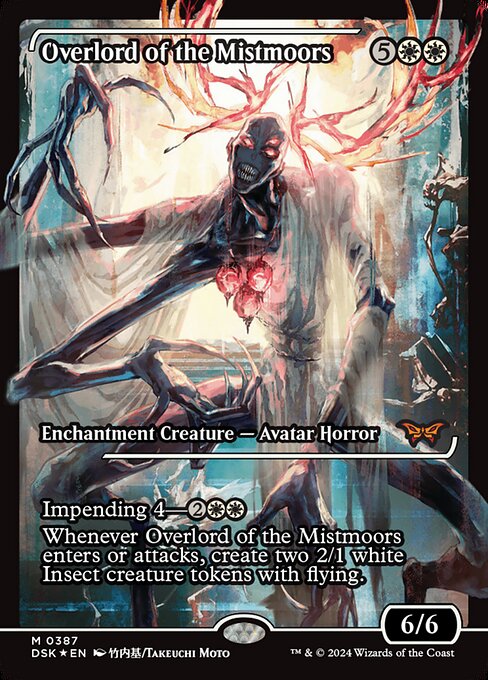
Dedicated Dollmaker just works well with everything going on in the deck. For example, if we cast Overlord of the Hauntwoods or Overlord of the Mistmoors for their impending cost, we can target them with Dollmaker to create a token copy that is a creature, and re-triggers their enters effect.
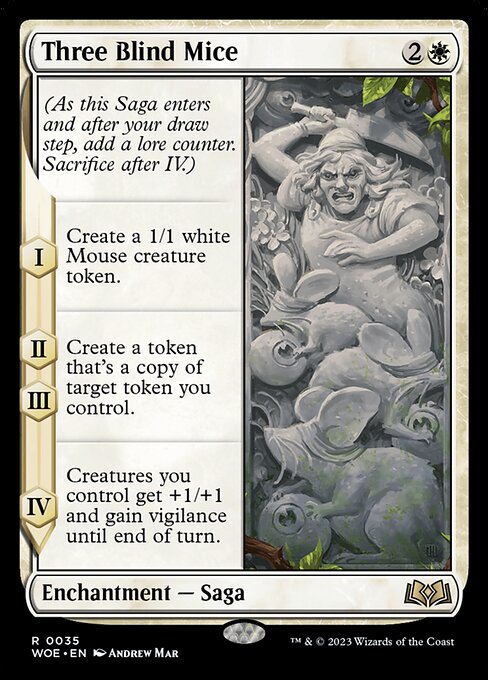
Three Blind Mice is another classic synergy with Dedicated Dollmaker, as a token copy of the saga, can target itself with chapters II and III, to make more copies of itself, flooding the board with mice tokens, to slowly take over the board by giving us chump blockers until we are ready to turn them all sideways and win in one or two big swings.
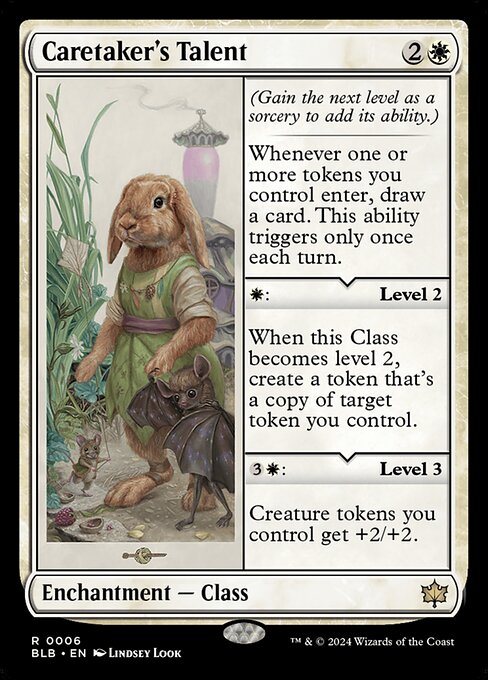
Caretaker’s Talent also works great with Dedicated Dollmaker, as a token copy of the talent will trigger itself, and then with Level 2 it can copy itself, making more and more copies that will all draw cards. Later on, we can pump these talents up to level three to make our mice and moth tokens into huge threats.
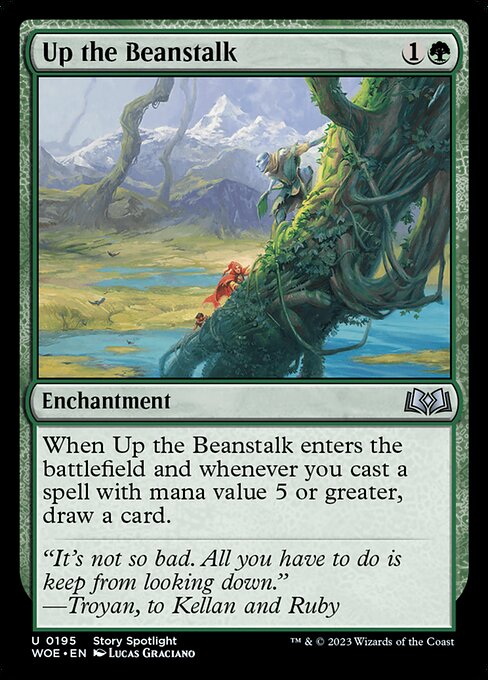
Lastly, we have Up the Beanstalk, which we can exile with Dedicated Dollmaker in a pinch to draw a card, but it’s really in the deck because of how great it works alongside overlords. When you cast an overlord for its impending cost, it will still trigger Up the Beanstalk, giving us even more card advantage.
A cool synergy in the deck is that the token copy abilities of Three Blind Mice and Caretaker’s Talent can target whatever token we have made with Dedicated Dollmaker or even our Everywhere tokens made with Overlord of the Hauntwoods, so slow down a second when using those abilities to consider all of the options.
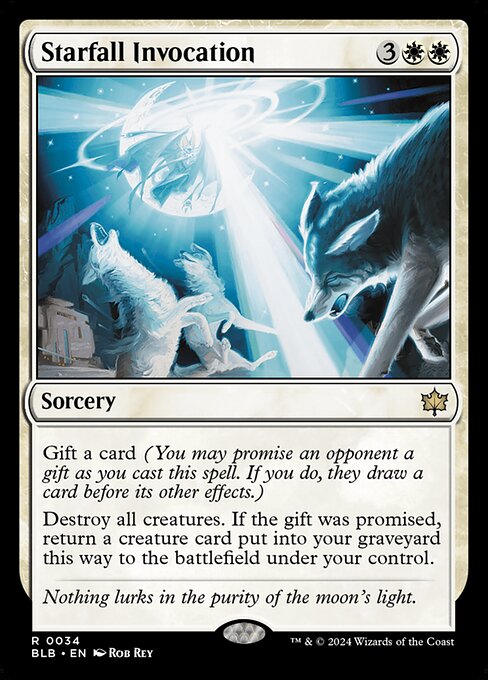
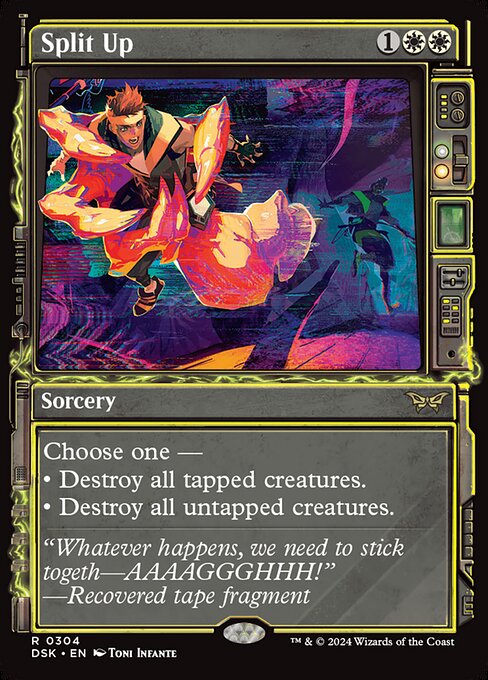
The rest of the deck is all about staying alive. Starfall Invocation will trigger Up the Beanstalk, but we can gift our opponent a card to get back an overlord or a Dollmaker that we have in play to keep our synergies going. Split Up is also trying to help us stay alive, by slowing down aggressive draws. Later in the game, we can even activate our Dollmaker to give our tokens indestructible and then wrath, leaving our tokens alive to finish the opponent off.
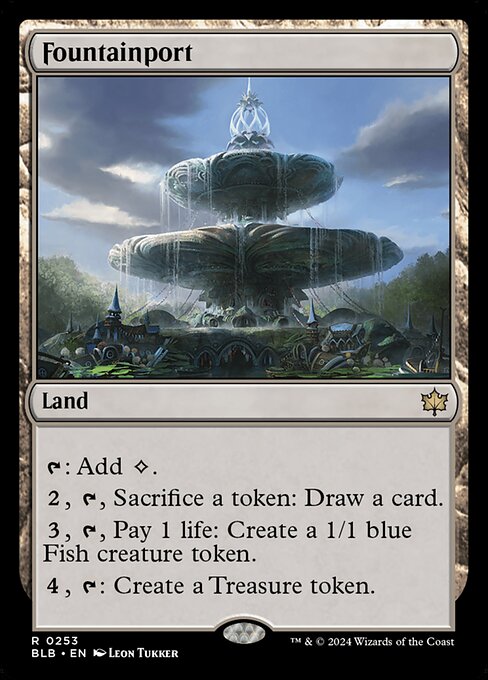
Fountainport is also great in our deck, turning all of our tokens into potential sources of cards. Remember that you can even sacrifice Everywhere tokens, if you have a lot of mana but need to find specific cards to advance your game plan.
The sideboard gives us options at taking out enchantments with Pawpatch Formation, graveyard hate in Rest in Peace, Parting Gust for more spot removal and to fight against Heist, Split Up against aggressive decks, and Royal Treatment to protect our key threats, and the role token will draw a card if we have Caretaker’s Talent in play.
Overall, this deck is great at taking over the mid and late game. We have an abundance of card advantage, and good tools to keep the board clear. I will say, this deck can struggle against aggressive decks just because it wants to spend its first few turns setting up. So when we instead have to spend those turns removing threats, we are behind on cards and behind on mana.
If you like Dedicated Dollmaker shenanigans, this deck is likely right up your alley!
Inspired by the Golgari Ramp deck played to a Top 4 finish at the World Championship by Seth Manfield, this Golgari Ramp/Control deck is looking to take over the mid and late game by just going bigger than the opponent. This build of the deck plays very few Alchemy only cards, so it’s a good place to start if you haven’t built up your Alchemy collection yet.
This deck is built around the synergy of Up the Beanstalk and Overlord of the Hauntwoods, giving us the perfect two-three curve to kick start our card advantage and get our ramp started. Ramping with overlord of turn three is key, because it unlocks all of our five drops to come out on turn four, to help us control the board or further advance our game plan.
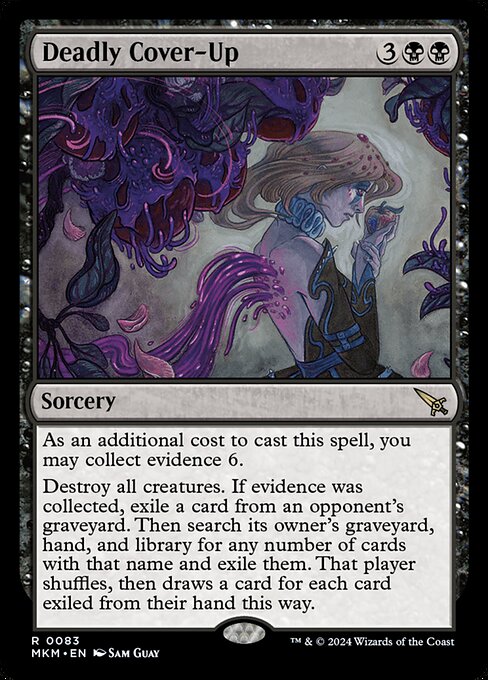
One of the best parts of this deck is its access to great sweepers. Deadly Cover-Up not only clears the board, it also triggers Up the Beanstalk, and if we have enough evidence we can exile a card from our opponent’s graveyard and then all the copies of that card from their deck and hand. This is key against cards like Enduring Innocence, which would otherwise return to the battlefield as an enchantment, or even great when just taking a haste threat like Emberheart Challenger, to remove that threat of haste damage.
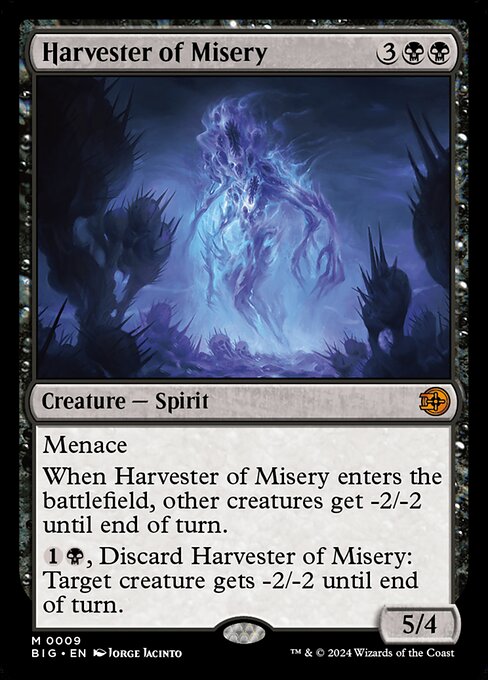
Harvester of Misery serves as spot removal early on, but is a great sweeper against token decks, mice decks, and bat decks that are all popular in the format right now. It also triggers Up the Beanstalk, which is just gravy.
The rest of our cards are either removal to slow down the opponent or card advantage in one way or another.
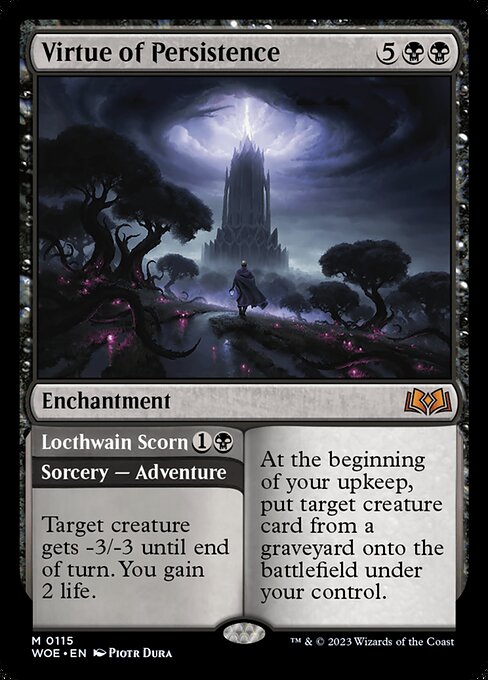
Virtue of Persistence does double duty, acting as removal early on and then turning into a powerful source of card advantage later on, not only reanimating a creature every turn, but also triggering Up the Beanstalk when we cast it.
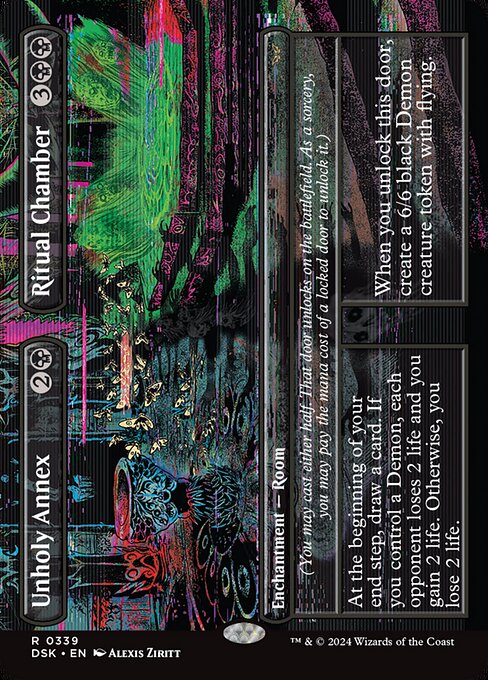
Our other sources of card advantage include Unholy Annex // Ritual Chamber. It can be a bit risky in this deck, as we don’t have a ton of demons to turn the life loss into life drain, but the card advantage can usually help us find our ways to stabilize the board and then activate the Ritual Chamber to make a demon token and start draining.
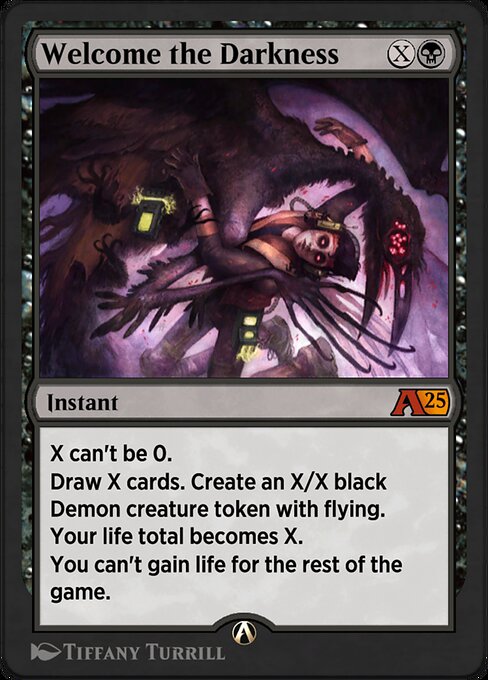
Our other way to make a demon is Welcome the Darkness, a risky new draw spell from Alchemy: Duskmourn. We make a X/X demon, draw X cards, set our life total to X and can’t gain life for the rest of the game.
This might seem too risky, but in most games we have enough mana to actually gain life with this, for example our opponent has us down to four and we cast it for X=7 to gain three life, and the demon token is a great surprise blocker. Mostly, the card advantage is usually enough to help us close out the game, as we can untap, cast a sweeper, and deploy a threat.
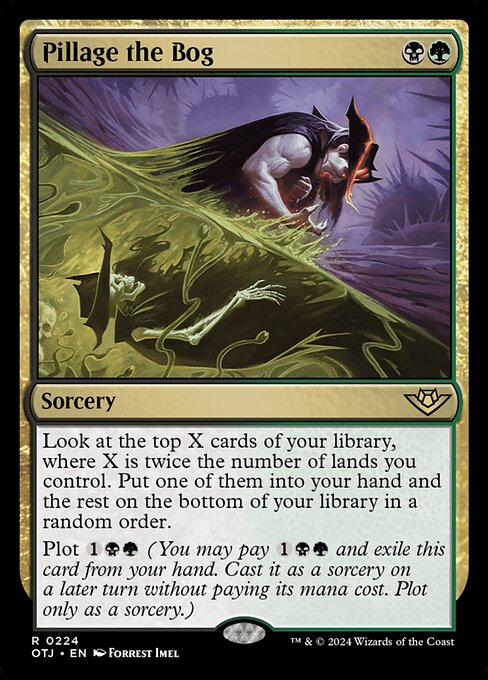
Pillage the Bog is fine early if we need to find more lands or a piece of spot removal, but it works great once we get our ramp going with Overlord of the Hauntwoods, and we are frequently looking at 14-16 cards with it, making it close to Demonic Tutor in the mid and late game.
This deck can struggle against really aggressive draws, but it has the tools to fight those decks and take over the mid and late game. Thanks to our ability to remove permanents of all kinds, this deck can compete against other greedy decks trying to go big. If you wanted to get even more greedy, you could easily splash Doppelgang, without adding any blue lands, thanks to Overlord of the Hauntwoods and Captivating Crossroads.
Like I said, this deck is only playing a few Alchemy exclusive cards, so if you are a Standard player looking to try out Alchemy, this could be a good starting point, as it will only cost you a few wildcards to make it happen.
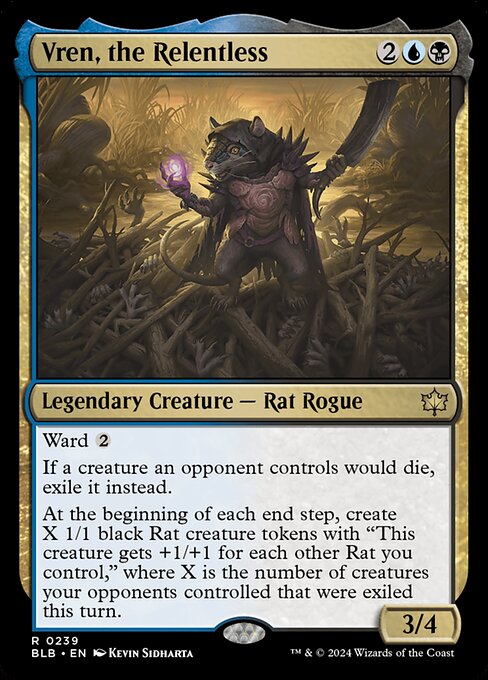
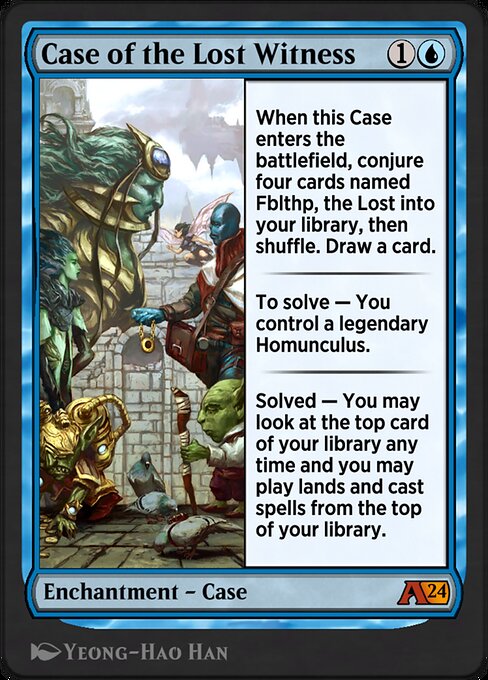
Our last deck is looking to do something completely different from the previous two decks. This build of Esper Control is looking to keep the board clear and take over the late game with our Heist spells, Vren, the Relentless, or Case of the Lost Witness.
This deck is much more straightforward in what it is trying to do, there aren’t a ton of cute synergies or tricky plays, just trying to disrupt your opponent for long enough that you can take over.
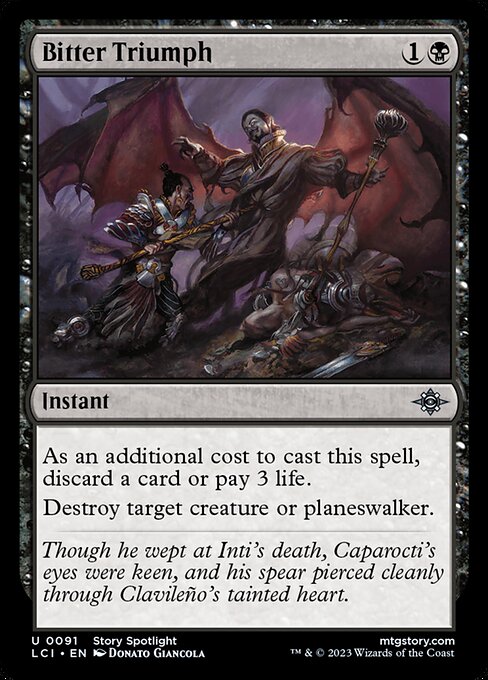
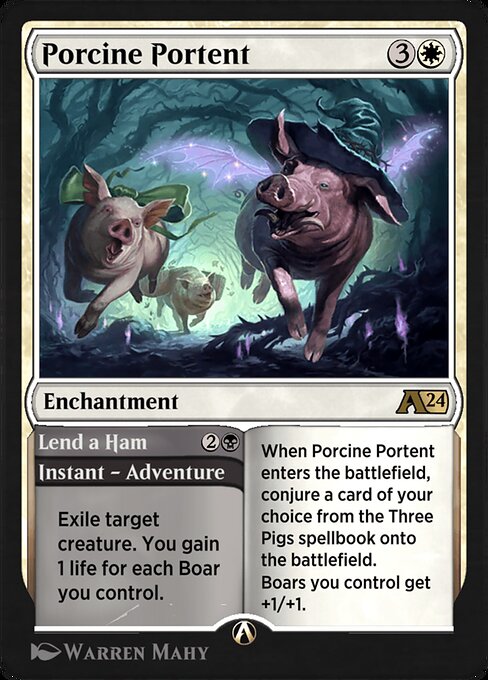
We have a ton of removal. Bitter Triumph is our go to in the early game, alongside Porcine Portent, which is one of our two reasons for splashing white, as the enchantment side is helpful at either making a powerful threat with the Second Little Pig, or at taking out an artifact or enchantment with the First Little Pig.
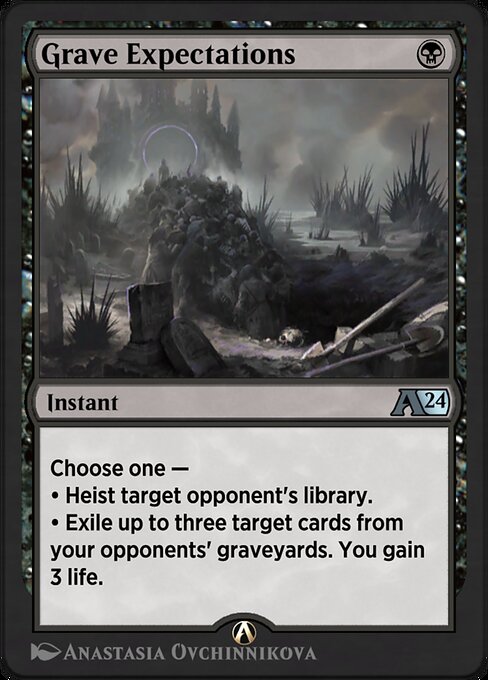
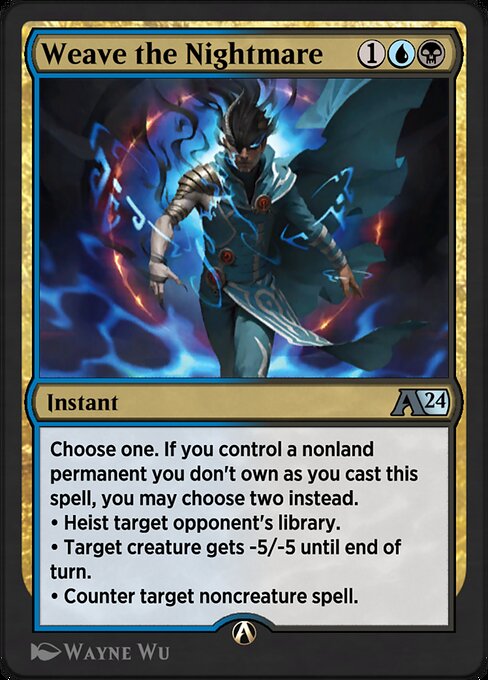
Our heist package is very straightforward, we have Grave Expectations to heist early or in a pinch to exile cards from a graveyard and gain life, and Weave the Nightmare is just so flexible, giving us additional removal, a counter for non-creature spells, our a heist in a pinch. Our deck doesn’t have many threats, so our heist cards are our win condition in a lot of games.
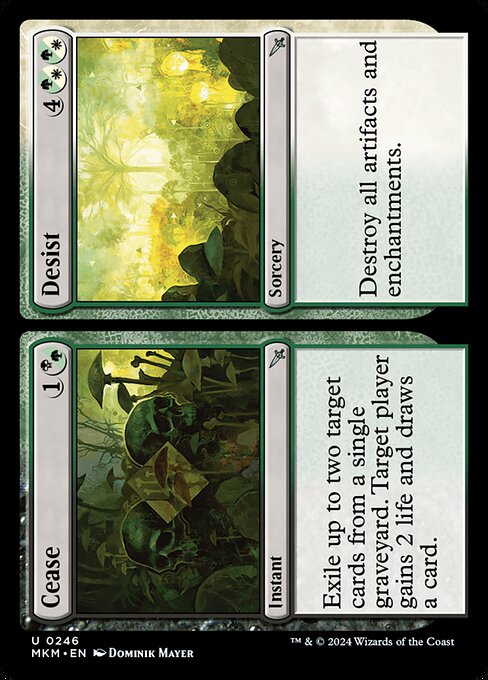
Deadly Cover-Up cleans up the board, while Cease // Desist can exile cards from a graveyard, gain us life, and draw a card early, but also there are a lot of players looking to play strategies similar to the Selesnya deck covered above, making access to an effect that wipes out all enchantments very appealing.
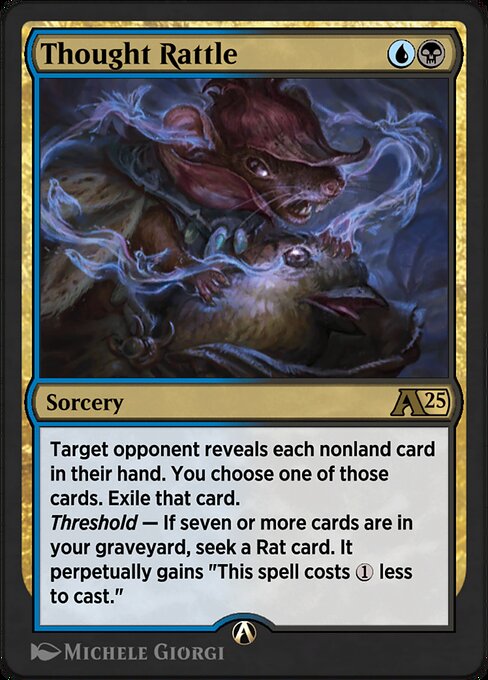
Thought Rattle helps break up the opponent’s curve, and later in the game can seek us a Vren, the Restless. Vren is great at taking over a board, turning all of our removal into rat tokens at the end of turn, which all grow based on the number of rats we control.
Case of the Lost Witness is great for some card advantage, putting copies of Fblthp, the Lost into our deck to serve as card draw and chump blockers, but if we solve the case we are able to play lands and cast spells from the top of our deck, giving us a usually insurmountable amount of card advantage over our opponent.
This deck also looks to make use of Welcome the Darkness, as a way in the late game to refill our hand and make a large threat. This deck doesn’t do any ramping like the previous deck, so usually we are using this around X=5 or 6, making it a bit more risky. Hopefully those cards can help us keep any remaining threats our opponent’s have at bay.
This deck is absolutely going to frustrate the opponent, as it picks apart all of their threats and uses their own cards against them to take over the late game. Unlike a lot of control decks, we aren’t very heavy on counterspells, making it more proactive in its game plan, and a bit more interesting to play and play against.
Wrapping Up
All three of these decks have felt competitive in the current Alchemy format, but I wouldn’t say they are perfect foils to the current meta. There is still a ton of room to explore interesting synergies or different builds of decks in the format, and I don’t think it is anywhere close to being stale or solved.
Alchemy was what got me into writing about Magic, so it will always have a soft spot in my heart. I hope that this article piqued your interest and showed that Alchemy is quite different from Standard, and has a lot of cool stuff going on and high potential. I hope you give it a try!
As always, regardless of which format you choose to play, best of luck in all of your matches!
Premium
Enjoy our content? Wish to support our work? Join our Premium community, get access to exclusive content, remove all advertisements, and more!
No ads: Browse the entire website ad-free, both display and video.
Exclusive Content: Instant access to all exclusive articles only for Premium members, at your fingertips.
Support: All your contributions get directly reinvested into the website to increase your viewing experience!
Discord: Join our Discord server, claim your Premium role and gain access to exclusive channels where you can learn in real time!
Special offer: For a limited time, use coupon code L95WR9JOWV to get 50% off the Annual plan!