Hey all. Aetherdrift has been fully revealed, and we can now view the set in context with the rest of Standard to discuss how the set will impact the format.
While my previous articles reviewing previews were just talking about cards that I thought were cool or looked interesting or fun, this review is much more focused on the cards that I think have the best chance to appear in the format either in existing top decks or by creating new decks all by themselves, as is in line with my card evaluation philosophy.
Card Evaluation Philosophy: When evaluating new cards there are three categories to keep in mind when trying to decide if they are going to see play or not:
1) Will this card be added to an existing deck,
2) Does this card create a new deck or revive an abandoned deck, and
3) Is this an impactful sideboard option?
(A quick note: These rules are mostly for evaluating cards from a competitive standpoint. When it comes to brewing, let your imagination run wild and try out any of the new cards that you think look awesome or seem fun, like I discussed in my previous spoiler review articles!)
There are several powerful Aetherdrift cards, so let’s dive right in.
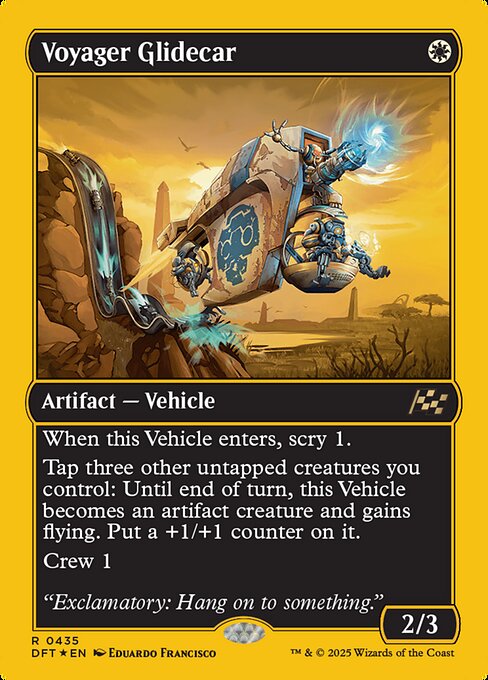
Later on, if you don’t have the creatures to spare, you can simply crew it and get in, and crew 1 means that any of your tokens or small creatures can turn it on.
Voyager Glidecar only scries once, compared to Warden of the Inner Sky that can scry many times, but it does scry when it enters, meaning that you can keep slightly sketchy hands and try to fix them with the scry on turn one.
The downside of this card is that it has to use creatures to activate, whereas Warden of the Inner Sky can also tap artifacts, but it is also artifact itself that can be used with the Warden itself, or even as an emergency target for Gleeful Demolition.
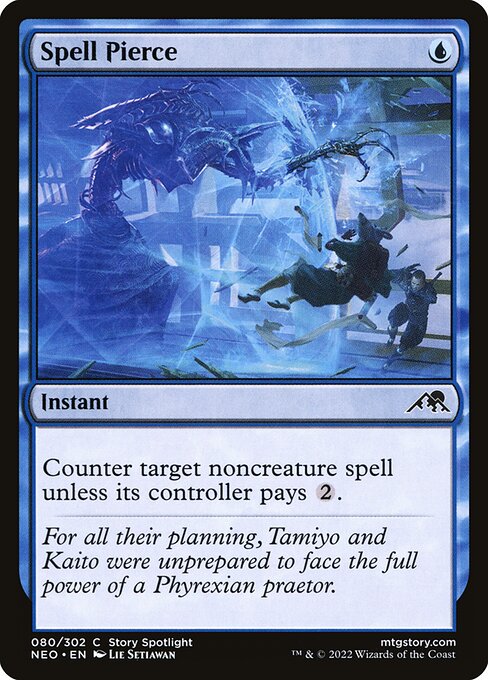
Spell Pierce is back and just at the right meta. With a variety of tempo based blue decks popular in the meta, Spell Pierce is going to lead to very silly stacks in mirror matches. If you are a blue deck, you should have some of these in your main deck or sideboard to make those copies of This Town Ain’t Big Enough just a bit more awkward.
For more aggressive blue decks, like Azorius Artifacts or Jeskai Convoke, this is also a good sideboard option to counter sweepers like Sunfall.
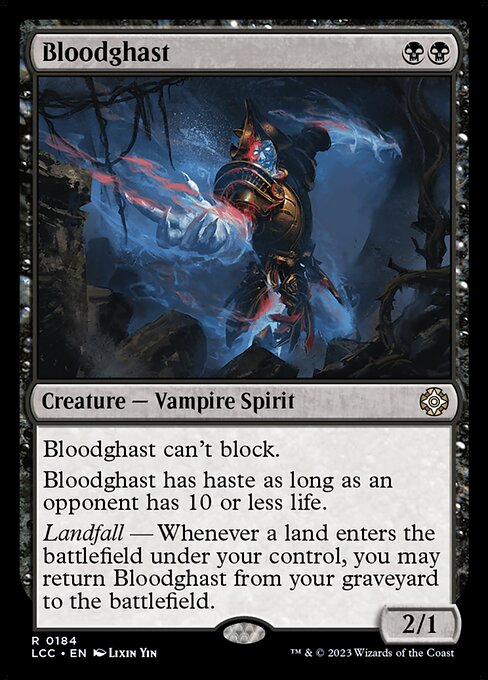
Bloodghast is a crazy powerful reprint. It can be sacrificed, it can attack, it can be milled over, it can be discarded, it can be used to crew vehicles, etc. and it is going to keep coming back everytime you play a land. The only thing it can’t do is block.
I don’t think there is currently a home for Bloodghast in Standard, but it is such a powerful card, and there are lots of great sacrifice enablers that I will discuss later, that I think it is likely to find a home at some point.
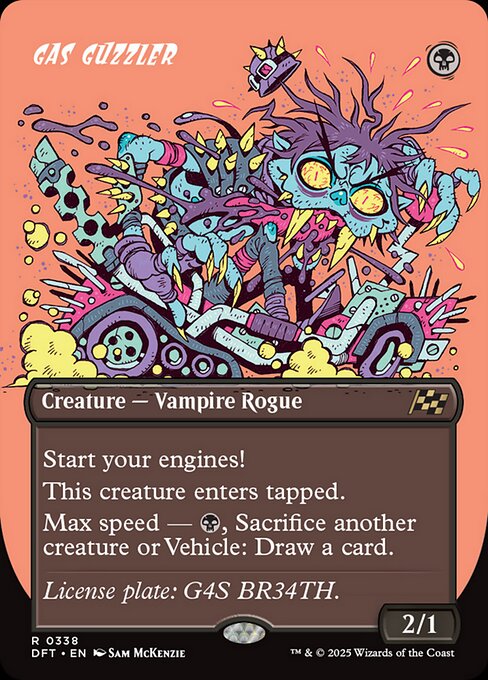
Speaking of sacrifice enablers, Gas Guzzler is one of our one drops with Start your engines! getting the speed started right away. Once you have max speed, Gas Guzzler is a great way to turn creatures into cards, such as Bloodghast or an extra token or two.
Gas Guzzler could also just contribute to a Mono-Black Aggro deck, with other cards like Forsaken Miner and Cult Conscript, that you can sacrifice to draw a card and then bring back to the battlefield to keep the pressure and value on.
There are a lot of sacrifice payoffs and enablers in Standard already, and this set adds a whole lot more, making me think that there has to be some build of sacrifice that comes together.
I am definitely going to be trying it out, so keep an eye out for an article next week where I go over my new brews for the set.
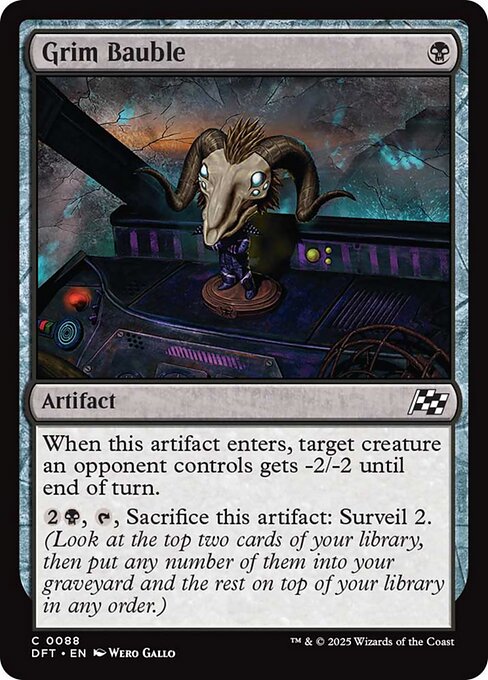
Grim Bauble is a simple removal spell, it comes in and kills a small creature, and just like Hopeless Nightmare it can be sacrificed later on to scry 2.
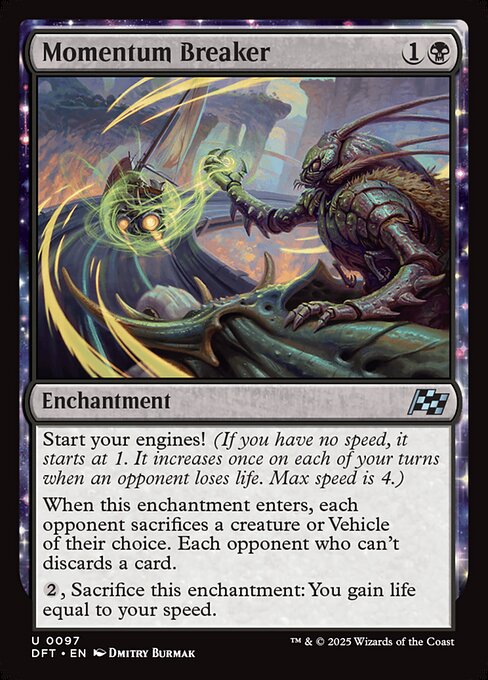
Momentum Breaker is a nice sacrifice effect, because it can also hit vehicles, or if your opponent doesn’t have a creature they have to discard a card. Later on, it can be sacrificed to gain some life.
The reason I’ve grouped these two cards together, is because they are both possible inclusions in Dimir or Esper Self-Bounce decks.
Grim Bauble is a good sideboard option against aggro decks. While it doesn’t have flash like Nowhere to Run, only costing one mana can lead to a turn where you kill two creatures with it, by using a Nurturing Pixie or This Town Ain’t Big Enough on turn three and four respectively.
Momentum Breaker is much more main deckable, and can easily replace a card like Tithing Blade, because of its discard back up, it is a viable option to play out even if your opponent doesn’t have any creatures.
Expect both of these to be tested in Dimir and Esper Self-Bounce, and if you are a fan of those decks, consider trying them yourself and figuring out if they are worthy upgrades.
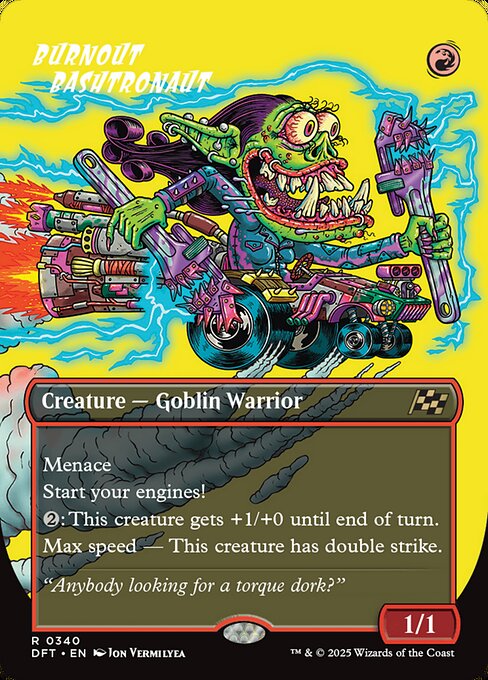
Burnout Bashtronaut is another one drop with Start your engines! which is necessary if you are going to get to max speed in a timely manner.
Menace on Burnout Bashtronaut means that it can attack and get in damage early on to increase your speed, and once you have max speed the double strike plus pump ability is going to make it a very scary threat.
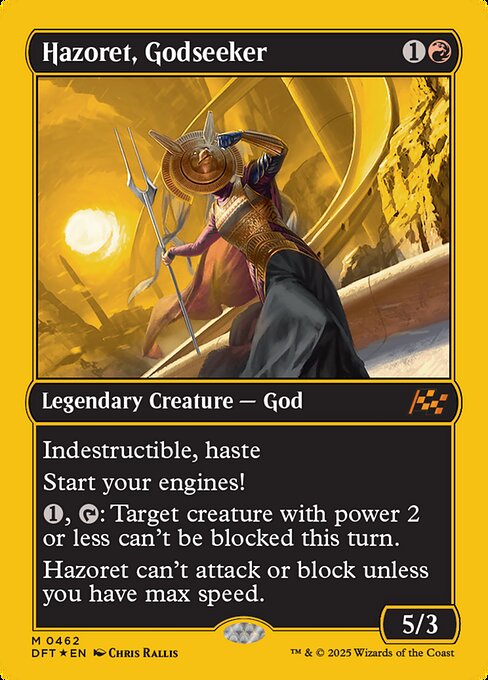
Hazoret, Godseeker is a 5/3 with indestructible and haste for just two mana. Now, the catch is that you can’t attack unless you have max speed, which is part of why that clock started as early as possible is important.
Hazoret’s activated ability helps you get in damage to increase your speed, and it works well with a creature like Burnout Bashtronaut, because you could activate Hazoret to make it unblockable and then pump it up for more damage.
I’ve paired these two cards together because they are the two most powerful Red aggressive cards with Start your engines! So, the question is are these cards, and is this mechanic, worth playing over the current aggro decks in the format?
Honestly, I don’t think so. The current red aggro decks are blisteringly fast, and are trying to kill on turn four or five, which is when you are going to be getting to max speed.
I know I said I would be talking about the cards that I thought were going to make an impact on the format, but I wanted to talk about these two just to caution that I think the proper way to build a max speed deck is not in red aggro but in other colors and strategies.
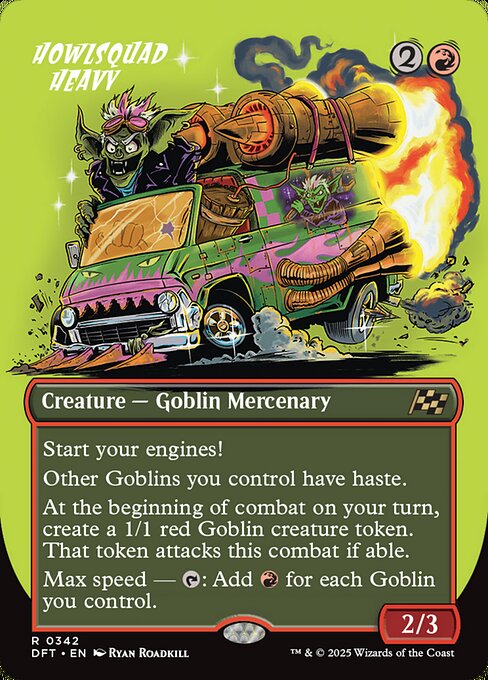
While Legion Warboss was more of a sideboard card for control mirror matches, Goblin Rabblemaster was powerful because it was in a format with Elvish Mystic, meaning that you could get it out on turn two to start making tokens before your opponent could even respond.
Howlsquad Heavy is entering a format with Llanowar Elves, meaning that it is also set up to come down early and start the pain. Howlsquad Heavy doesn’t hit as hard as Goblin Rabblemaster, so it isn’t going to end the game by itself in just a few turns, but giving all your goblins haste opens up other possibilities as well.
The best curve is to follow up a Howlsquad Heavy with Krenko, Mob Boss, and then activate Krenko right away thanks to haste. We have slowly been building to a playable Goblin typal deck in Standard, and I think that Howlsquad Heavy and a few other goblins from this set make it worth trying out.
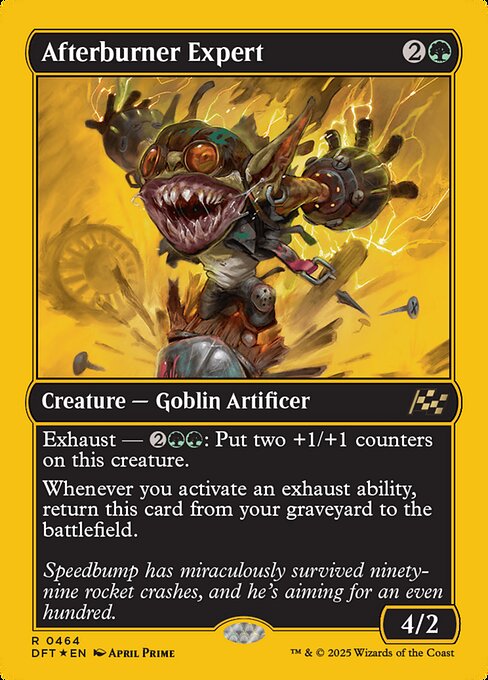
Afterburner Expertdoesn’t need many other cards with exhaust to become a very powerful and recursive threat. On its own, a 4/2 for three isn’t all that impressive, but it can grow to a 6/4 later on, and it can be powered out turn two thanks to Llanowar Elves.
The real power comes once you start getting these into your graveyard, either just by attacking and blocking, or doing some self-mill, or discarding them to your opponent’s copies of Hopeless Nightmare etc.
Then a top decked exhaust creature is suddenly so much more than just one creature, it is two or three or more creatures. This can help you claw back games that had almost slipped away, or reestablish your board after a sweeper like Day of Judgment cleared you out.
Afterburner Expertis exactly the kind of aggressive creature that I love to play with, because you can get so aggressive with your attacking and blocking. I don’t expect existing Gruul aggro or Golgari midrange decks to pick it up by itself, but if they decided to play another set of exhaust cards, then it is a totally reasonable inclusion.
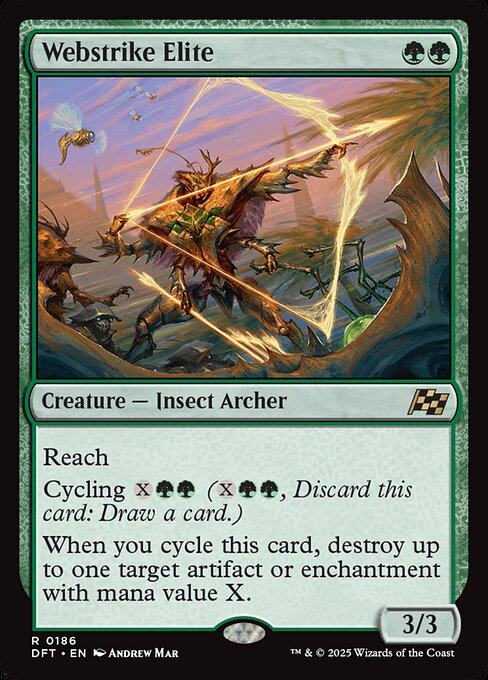
Webstrike Elite is the best type of cycling card, because it is basically a split card. The first half of the split card is a creature that is a 3/3 reach for two mana, which is very nicely stated in current Standard, blocking opposing copies of Nurturing Pixie or Spyglass Siren, etc.
The other half of the split card is an Instant that can be used to destroy an artifact or enchantment and draw a card. There are a lot of relevant artifacts and enchantments in the format, so later in the game when a 3/3 isn’t as impressive, or you really need to answer a problematic permanent, you have that option.
Again, I’m not sure that there is an existing deck that wants this, but it is possible that it could sneak into Gruul Aggro decks or Golgari Midrange decks.
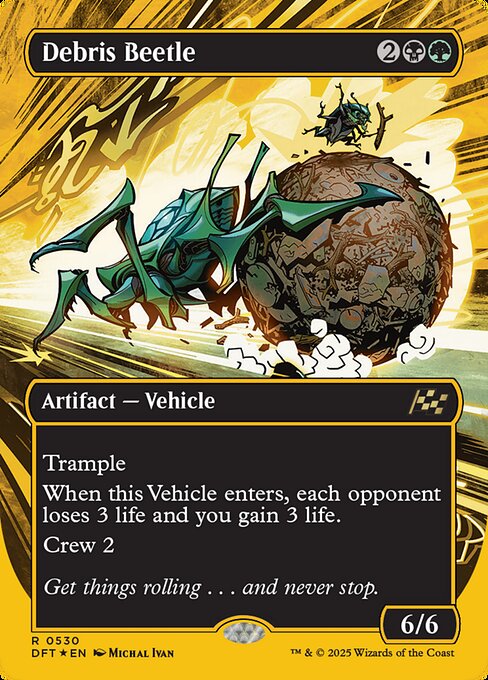
Debris Beetle will get compared to Siege Rhino by more people than just me, but they are very similar. Multicolor four drops that drain for three when they enter, have trample and good stats.
Obviously the biggest difference is that Siege Rhino immediately has board presence, whereas Debris Beetle requires that you have other creatures to make use of its 6/6 body.
But when you do have the creatures to crew it, oh boy does it pack a punch. A 6/6 trample that doesn’t die to any of the commonly played removal spells that already drained for 3 when it entered? That is going to end the game very quickly.
Even if your opponent is bouncing it with This Town Ain’t Big Enough, you can just cast it again and drain for three.
I expect Golgari Midrange players to give this a try, as all of their creatures except for Llanowar Elves can crew it, and while Sheoldred, the Apocalypse is hard to replace, I could honestly see Debris Beetle being more powerful in the current meta.
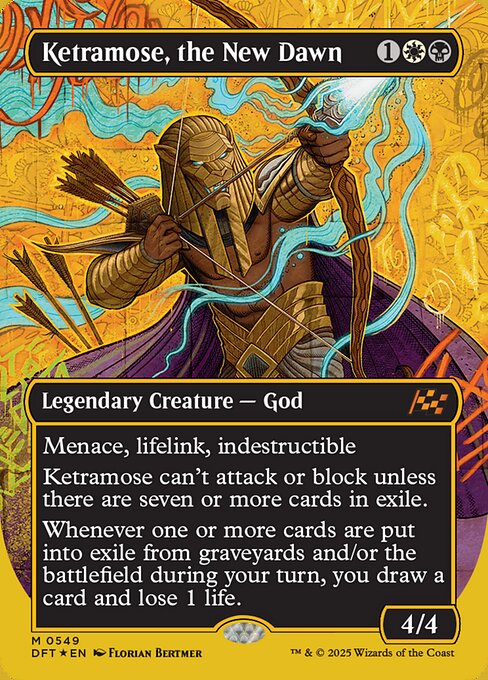
Ketramose, the New Dawn is a very powerful three drop. A 4/4 menace, lifelink, indestructible is great on defense, as it can block any creature and live to gain some life, and good on offense thanks to menace. The trick is getting it to turn on.
Well, actually Ketramose is also about the journey, because on your way to reaching that threshold of seven or more cards in exile, you get to draw cards as long as you are doing it on your turn.
The natural friends to Ketramose are cards like Ghost Vacuum and Agatha’s Soul Cauldron, that can be used on your turn to exile a card, and thus draw a card, but other forms of graveyard exile work, such as Rest in Peace.
Other cards that work are removal spells like Lay Down Arms, or The End or even blink effects that exile a creature and then return it to play.
I think Ketramose is a card that you need to build around, but you could just play a Orzhov Midrange deck with ample exile effects and use Ketramose as your main source of card advantage.
There isn’t a deck that wants him right now, but Orzhov Midrange or Orzhov builds of Token Control could resurface to make use of this powerful new god.
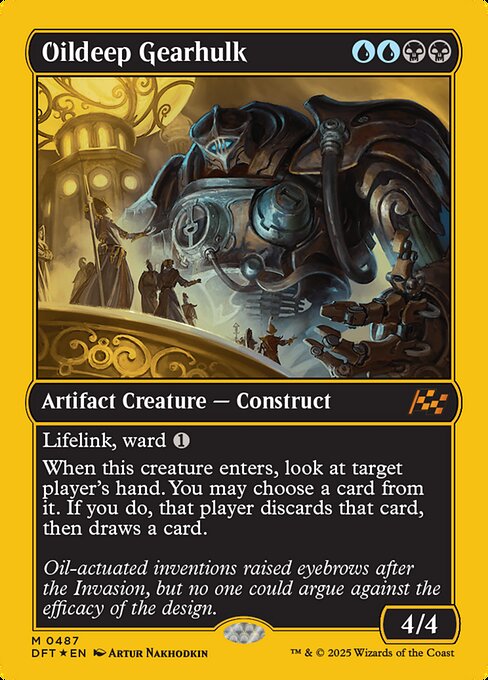
Oildeep Gearhulk has a shot of seeing play just because it is the right colors. Dimir is a popular color combo, with Dimir Midrange, Dimir Self-Bounce, and Esper Self-Bounce, all being popular decks in the format.
I think of those three decks, Oildeep Gearhulk has the best chance in Dimir Midrange as a tool against aggro decks, thanks to the lifelink and ward 1 making it tough to deal with, and against control decks as a way to take their problematic cards out of their hand.
In a pinch you can target yourself with its ability, pitching an extra land or expensive spell to try to find interaction or another threat, whatever you need.
A lack of flash does hurt this card’s chance of seeing play, just because all of the Dimir based decks do like to play at instant speed, but I think it could be a reasonable sideboard option.
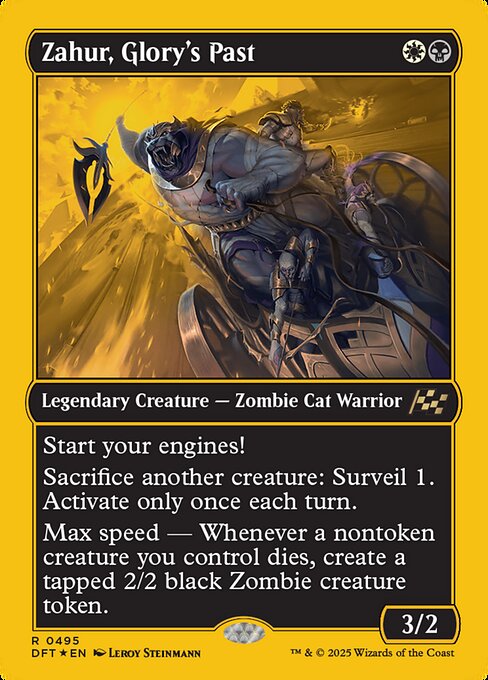
Zahur, Glory’s Past is a good option for a sacrifice deck, as it lets you sacrifice creatures to surveil and find whatever pieces you are missing. While the only once per turn clause may seem damning, you can also use it on your opponent’s turn, so you get two sacrifices every turn cycle.
Once you have max speed you really get to start generating value, making 2/2 zombies whenever your nontoken creatures die. This card will be best friends with Bloodghast, as you can sacrifice Bloodghast on your turn, then play a land, get it back into play, and then sacrifice it again on your opponent’s turn, making two zombie tokens to attack with the following turn.
Zahur might end up being too slow for Standard, but I’m looking forward to trying it in this sacrifice deck that I’ve been talking about all article.
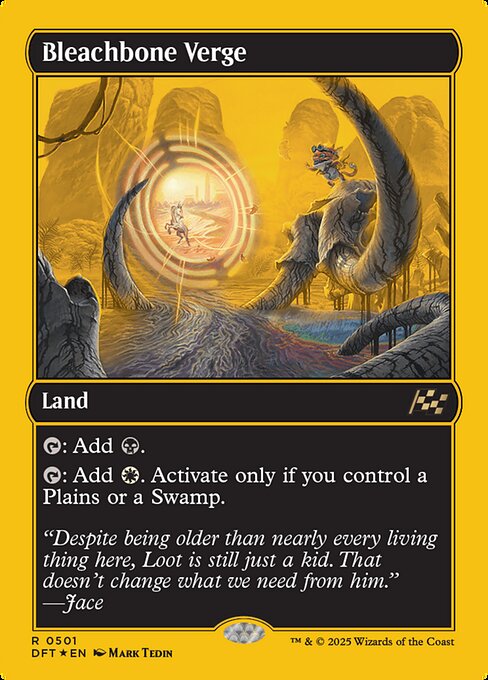
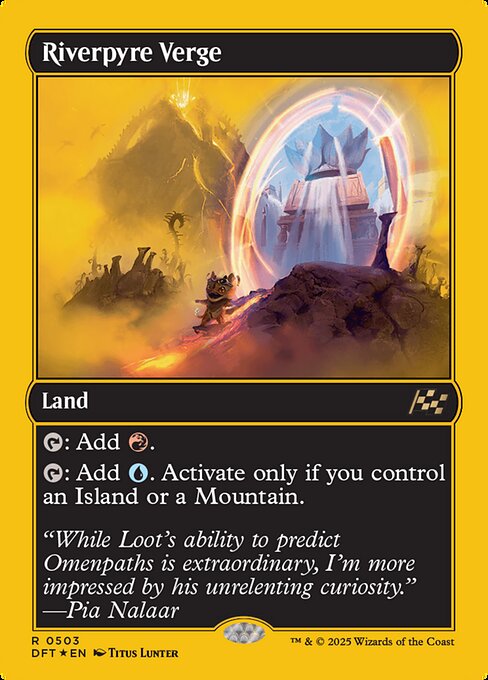
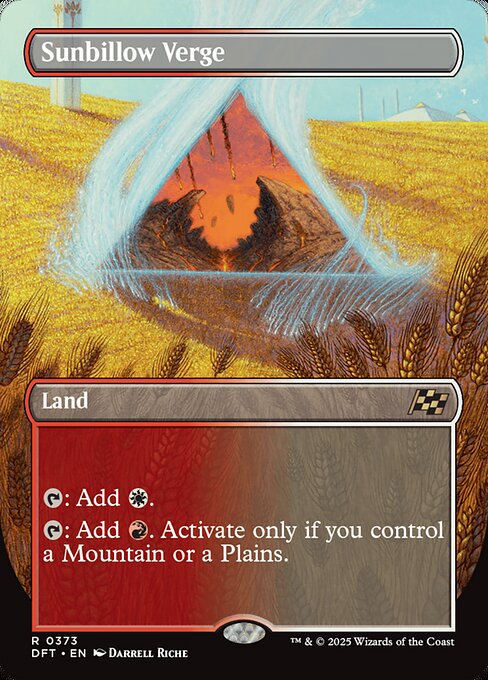
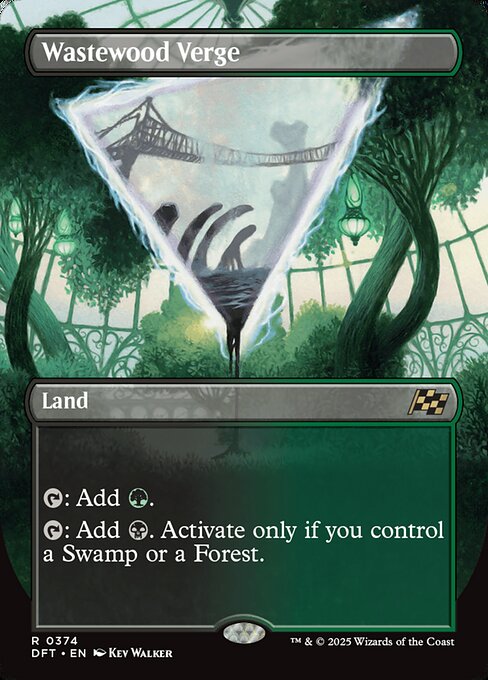
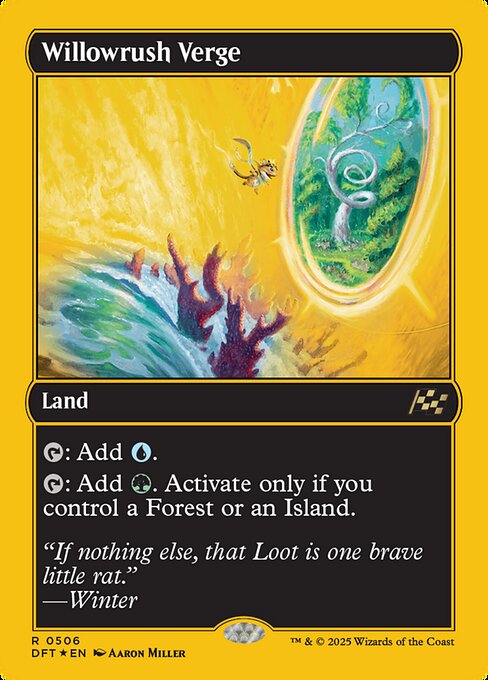
With the addition of these five verge lands, the mana in Standard is going to be almost perfect. Yes you have to make sure that you have typed lands to turn the verges on, but with surveil lands and basic lands that shouldn’t be too tough.
Expect some players to try three color decks now, and the enemy color pairs are all worth looking at again.
Wrapping Up
Aetherdrift has a lot of interesting cards, and while there are a couple that stick out as worthy additions to existing decks, a lot of the cards have me more excited to brew than just upgrade. Of course, what I love most about Magic is brewing new decks, so I am completely fine with that.
As Standard continues to grow in size I feel like brewing has become both easier and more difficult. There are a lot more options but it is so easy to forget about whole batches of cards. This just makes the puzzle of brewing require a bit more time and effort, which is fine by me.
I hope this card evaluation, and the two spoiler review articles, were helpful as you look over the set and plan what cards you want to build new decks with. I will be back on Monday where I will go over all of the decks I have brewed for the format, so look forward to that!
Aetherdrift releases on Magic Arena on Tuesday the 11th, so until then, best of luck in all of your matches!
Premium
Enjoy our content? Wish to support our work? Join our Premium community, get access to exclusive content, remove all advertisements, and more!
No ads: Browse the entire website ad-free, both display and video.
Exclusive Content: Instant access to all exclusive articles only for Premium members, at your fingertips.
Support: All your contributions get directly reinvested into the website to increase your viewing experience!
Discord: Join our Discord server, claim your Premium role and gain access to exclusive channels where you can learn in real time!
Special offer: For a limited time, use coupon code L95WR9JOWV to get 50% off the Annual plan!