With the release of Lorwyn Eclipsed, one of Magic’s most beloved planes has officially shifted into the Historic queues on MTG Arena. Whether you’re a veteran player nostalgic for the days of Bitterblossom and Cryptic Command, or a newcomer ready to explore the duality of the sunny Lorwyn and the shadowy Shadowmoor, this set has some very interesting mechanics and that means I’m excited to get brewing!
Week one of a new meta is the best time to experiment. While the “tier one” titans are still figuring out their new toys, you can take advantage of everyone messing around with fun ideas to test out brews of your own. The field is generally a bity lower in power level as people try out the new tech.
Like many of you, I’ve been brewing a bunch on stream leading up to release, and I’m excited to share some of the initial brews I’ve put together for Historic. I didn’t want to overload you with too much in a single article, so we’ll be starting with just a couple decks I’ve excited to paly with the most!
If you have ever played Mono-Green Devotion and thought, “I love having 40 mana, but I wish I had more turtles and sentient trees,” then this is the deck for you.
Historic is currently a format where “fair” Magic often gets run over by turn-three Eldrazi or explosive Boros Energy starts. To survive, you need a board that is too wide to ignore and too tall to fly over, while also being able to fight back with haymakers of your own.
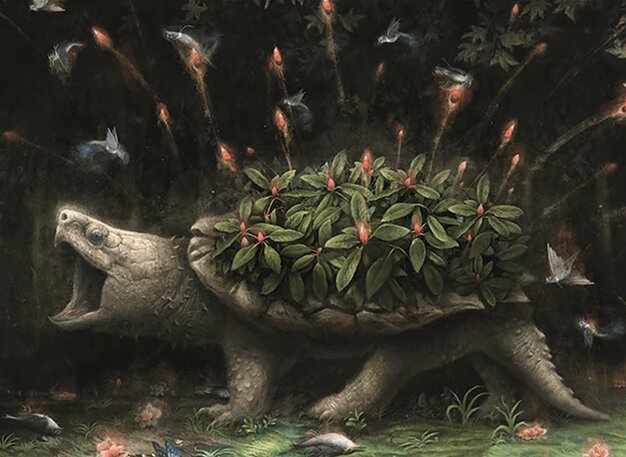
This deck takes inspiration from a few older Historic lists, Focusing on the ability to trigger Fecund Greenshell with Kozilek’s Command easily. But, now we have a fun new tool that provides additional power.
The brilliance of this deck lies in a specific technicality: Fecund Greenshell triggers whenever a creature with toughness greater than its power enters the battlefield.
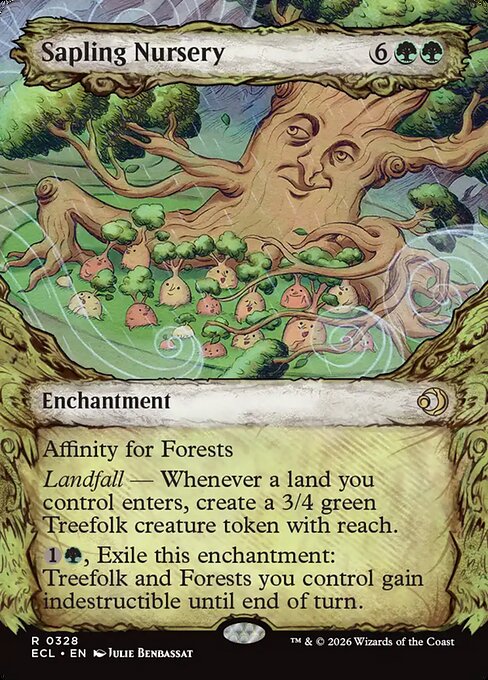
You land Sapling Nursery, which often costs just two mana thanks to its Affinity for Forests.
You play a land. This triggers Landfall, creating a 3/4 Treefolk token with Reach.
Because a 3/4 has more toughness than power, Fecund Greenshell triggers. You look at your top card. If it’s a land, you put it onto the battlefield tapped.
That new land triggers Sapling Nursery again, creating another 3/4, which triggers Fecund Greenshell again and you keep going until you miss a land on top.
In a deck with a high land count, you can regularly “chain” three or four 3/4 blockers into play just by playing your land for the turn. Against an aggro deck, putting 12+ points of reach-toughness on the board in one turn is essentially back breaking on their ability to attack. However, these cards are bulky, and we needed a way to ramp them out.
We’re running the gold standard of one-drop mana producers to ensure we stay ahead of the curve.
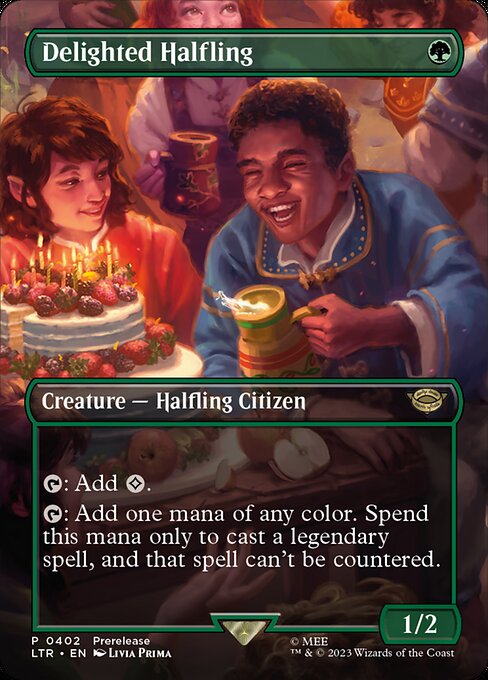
Delighted Halfling: This is your most important turn-one play. Its 1/2 body lets it ignore the “ping” effects that kill traditional 1/1 elves, and it makes your legendary spells like Six or Emrakul uncounterable. Also essential for casting Kozielk’s Command.
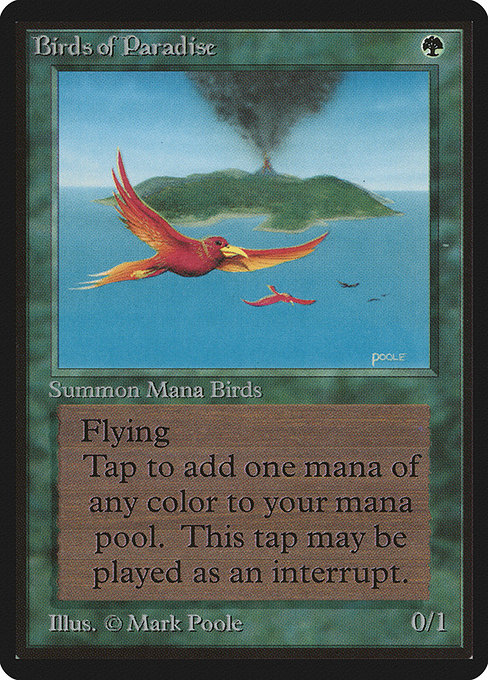
Birds of Paradise: Provides any color of mana (useful if we splash for utility).
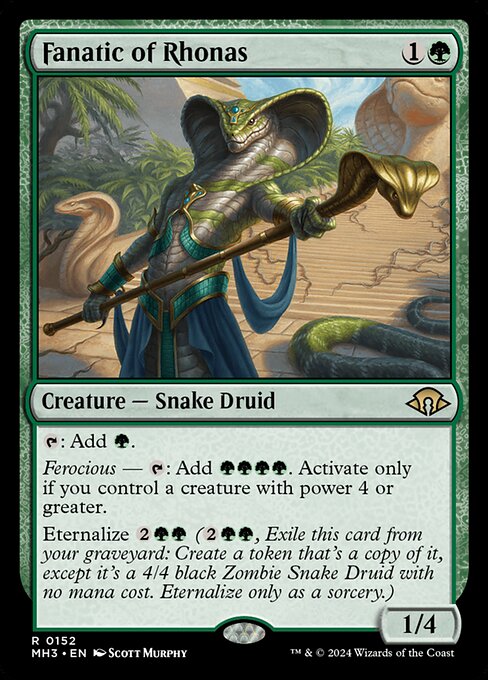
Fanatic of Rhonas: This card is a beast. As a 1/4 for 2 mana, it blocks early aggro like a pro. Its real power, however, is Ferocious: if you control a creature with power 4 or greater, it taps for four Green mana.
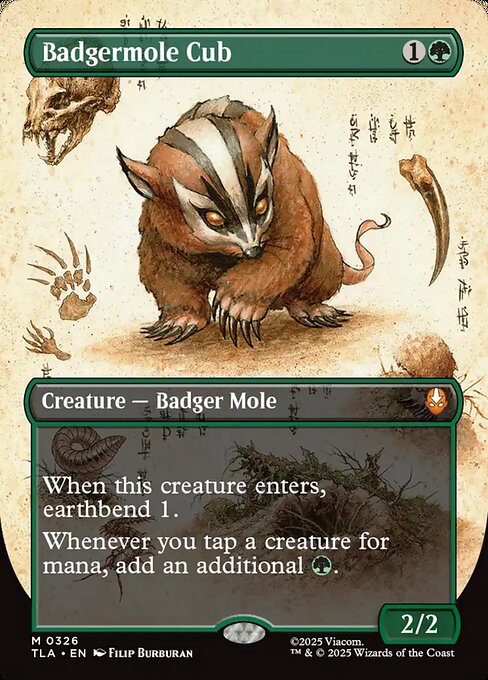
Badgermole Cub is a newer favorite for ramp fans. When it enters, it Earthbends turning a land into a 0/0 creature with a +1/1 counter. More importantly, it adds an additional Green mana every time you tap a creature for mana, effectively doubling the output of your other dorks.
Its important to note that the 3 three dorks lists have Power < Toughness, meaning they’re still decent top decks in the late game when we have a Fecund Greenshell out.
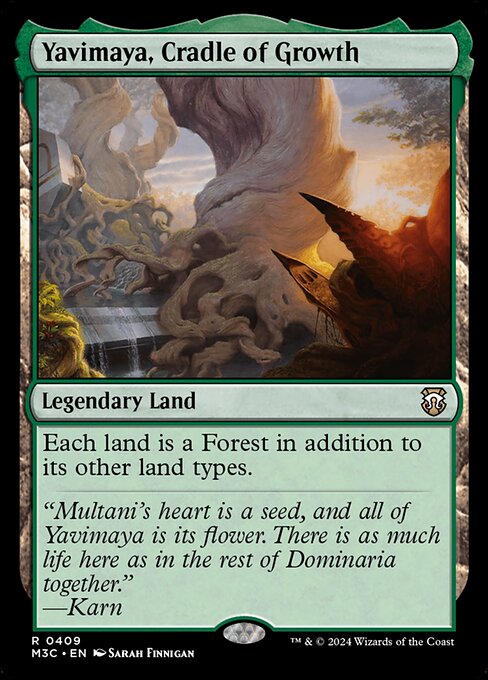
This land is the glue that holds the deck together. Since Sapling Nursery has Affinity for Forests, every non-basic land we play (like Nykthos) normally makes the Nursery more expensive. Yavimaya fixes this by turning everything into a Forest, allowing you to jam your nursery for just two mana while still accessing your high-power utility lands.
The Legendary clause also happens to come into paly rather often and allows us some additional synergy with Icetill Explorer. We can loop a couple of these bad boys from the graveyard to trigger Nursery multiple times.
Support
To bridge the gap between your early mana dorks and the late game army created by Greenshell, you need cards that churn through your library and ramp out our threats.
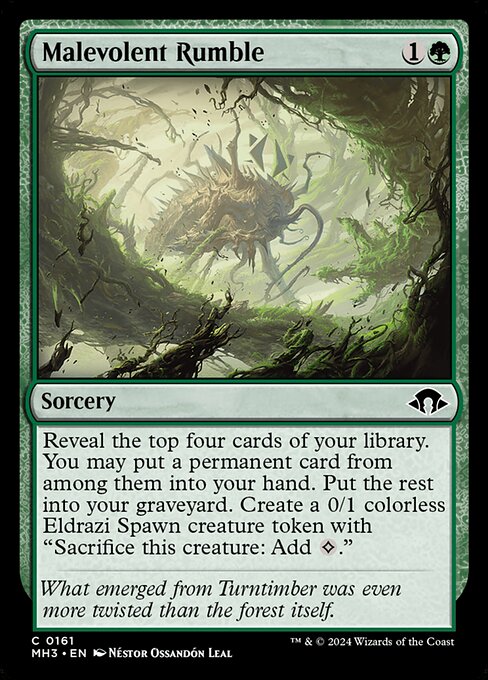
Malevolent Rumble: This is one of the most important setup cards in the deck. It lets you dig four cards deep for a land or a permanent (like Fecund Greenshell) and puts the rest into the graveyard. Plus, it leaves behind an Eldrazi Spawn that triggers Greenshell.
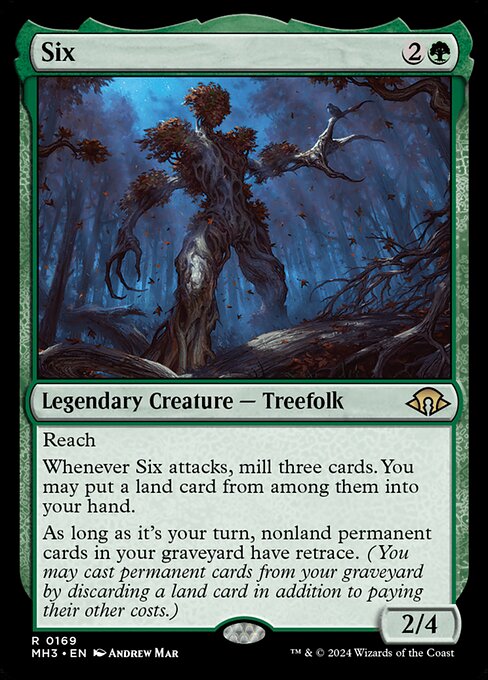
Six: This card turns your lands into re-buy spells. As long as Six its your turn, you can discard a land to cast permanents from your graveyard. If your opponent kills your Sapling Nursery, you just discard a Forest and bring it right back.
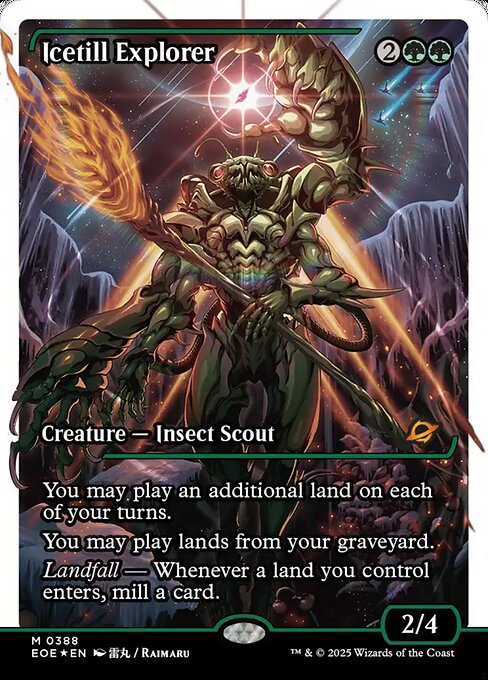
Icetill Explorer: A versatile new addition that helps with land velocity. It allows you to play additional lands from the top of your library or your graveyard, ensuring you never miss a trigger for your Nursery. Combined with Ghost Quarter we can actually hit 4-land drops a turn which can get out of hand quickly Nursery.
Other Finishers
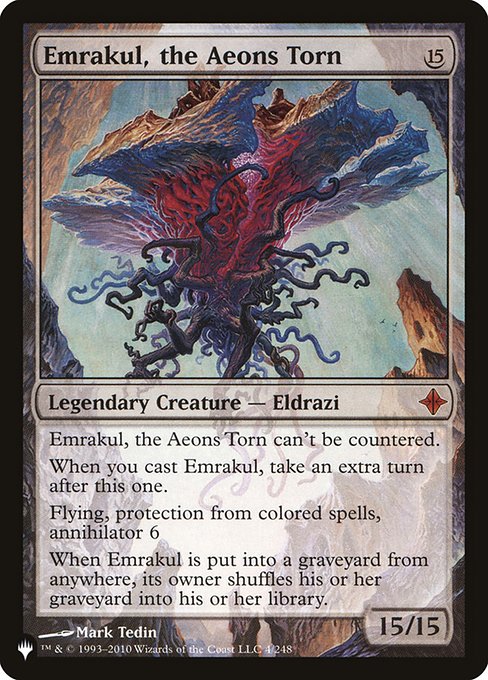
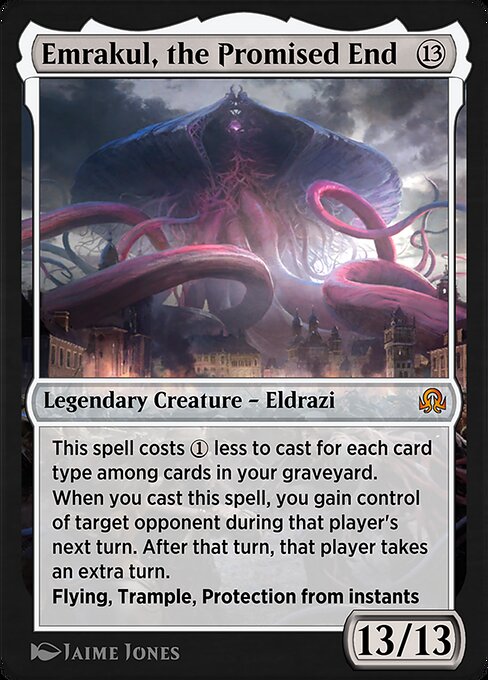
Obviously as we naturally play the game, we’ll amass a huge board and close out the game with Treefolk. However, we’re also playing two different Emrakuls as late-game mana dumps that will usually win the game on the spot.
I don’t think I need to explain why htese are good, but I would like to mention that during my prelim testing there were multiple games where I got to use Shifting Woodlands to copy the Promised End, which was freakin sweet.
I’m verrrry excited to brew more with this shell, and although we’ll more than likely be splashing another color, the initial testing and core is proving to be quite powerful. But, as much as I love a good turtle, I do have another brew I’m excited to test.
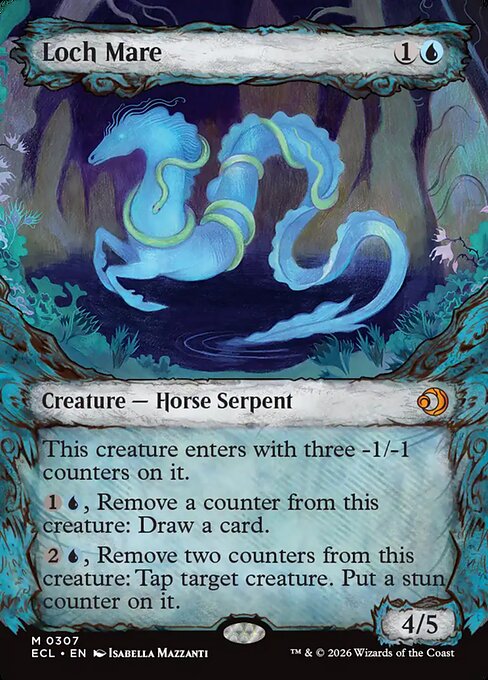
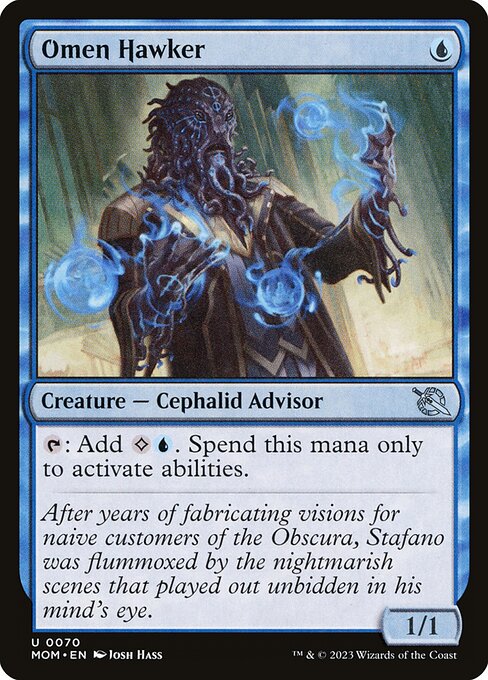
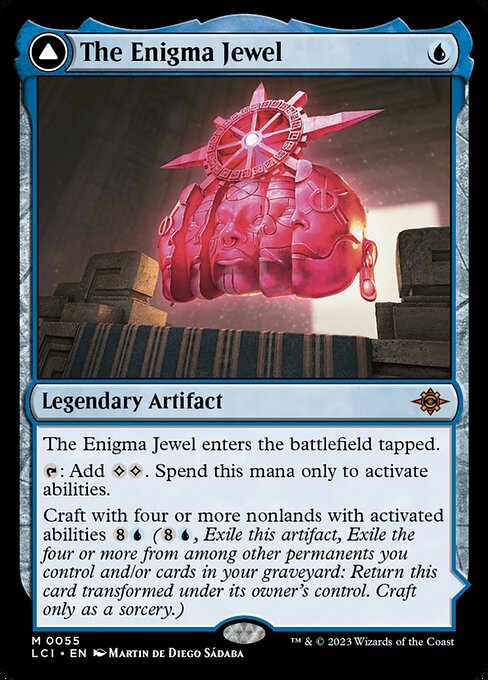
We’ve played shells like this before, more specifically a Combo Deck in Episode 41. But Loch Mare actually allows us to slow the game plan down, and get grindy, all while still taking advantage of the fast mana provided my cards like Omen Hawker and The Enigma Jewel.
At first glance, a 2-mana 4/5 looks like an absolute steal, but Loch Mare enters with three -1/-1 counters, making it a humble 1/2. However, it’s the activated abilities that make this Horse Serpent a nightmare for the opponent:
Card Draw: For 1U, you can remove a counter to draw a card.
Board Control: For 2U, you can remove two counters to tap and stun an opponent’s creature.
Essentially, Loch Mare is a split card: it’s an early-game blocker that eventually draws you three cards and grows into a 4/5 beater. But we aren’t just playing it “fairly.” While drawing cards is great, we want that 4/5 body as soon as possible. We use a suite of “fast mana” that doubles as a way to reset our Serpent.
Omen Hawker: A turn-one play that specifically pays for activated abilities. It lets you start drawing cards or stunning creatures with Loch Mare without ever tapping your actual lands, leaving your mana up for interaction.
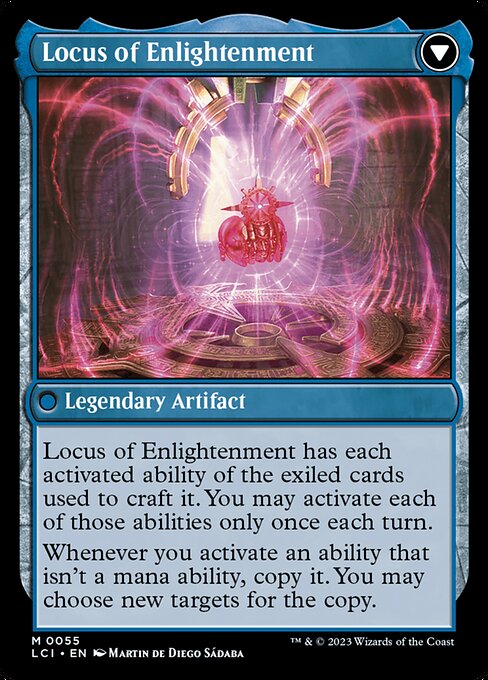
The Enigma Jewel: This legendary artifact enters tapped but provides C specifically for activated abilities. It’s the perfect battery for our Horse Serpent’s engine.
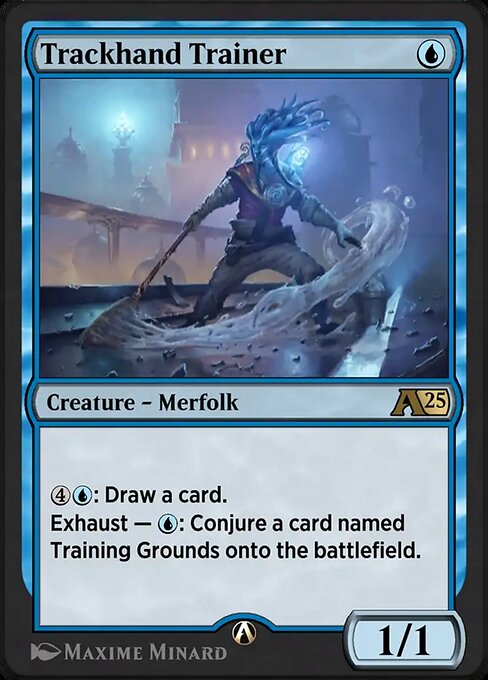
Trackhand Trainer: For U, this can conjure a Training Grounds onto the battlefield. This is the holy grail for the deck, reducing Loch Mare‘s abilities to a single blue mana each.
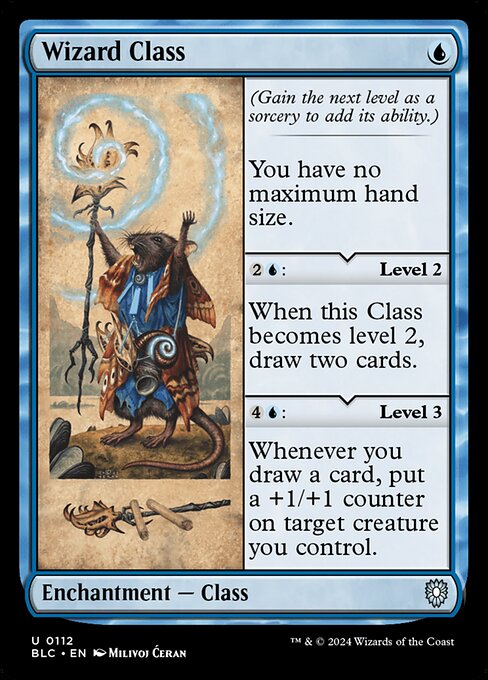
With these three combined, we can quickly dump mana into not only the abilities of Loch Mare, but also Surge Engine, Wizard Class, and Rona. Keeping us ahead of the curve.
Just like its predecessor, the initial build of this list is also playing the Wizard Class Combo.
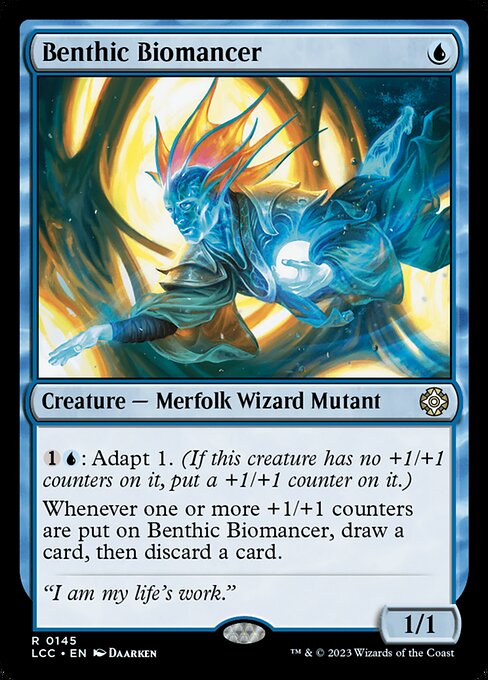
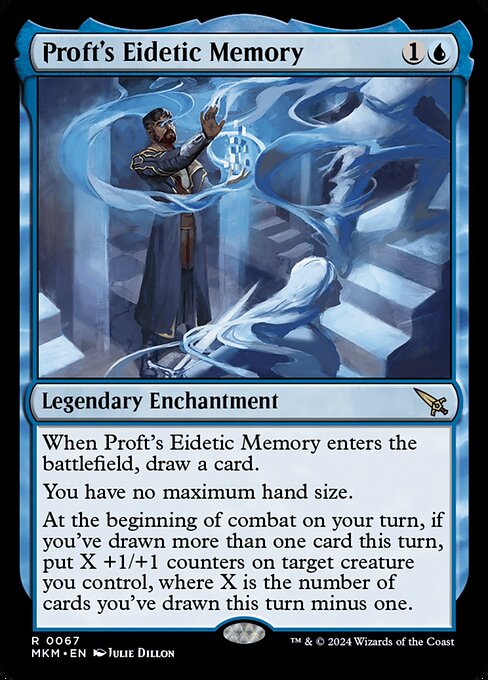
With Class on Level 3 and a Benthic Biomancer out, you can draw your entire library while simultaneously growing Biomancer to a game-ending threat. Throw in Eidetic Memory and you can put a ton of power on board.
But here’s the kicker: Both of those cards act as additional engines for Loch Mare. Mare only cares about counters on it, not the type, just the fact that they exist. That means we can remove a counter to draw a card, and if we have a Level 3 Wizard Class, we get to immediately put a counter back on. So we can grow it bigger, or activate its ability again to draw more cards (hopefully for just a single U). This also goes for Eidetic Memory, although we don’t get the counters until our combat phase.
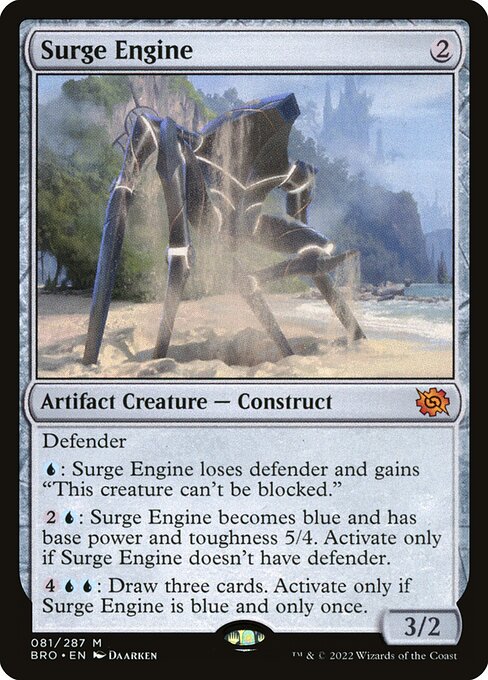
Surge Engine: This is your secondary mana sink. Much like the Horse Serpent, Surge Engine starts as a humble defender but can be “upgraded” using the mana from Omen Hawker or The Enigma Jewel (or reduced with Training Grounds). Once it loses defender and becomes a 5/4 unblockable blue creature, it can draw you three cards in a single burst, refueling your hand for the late game.
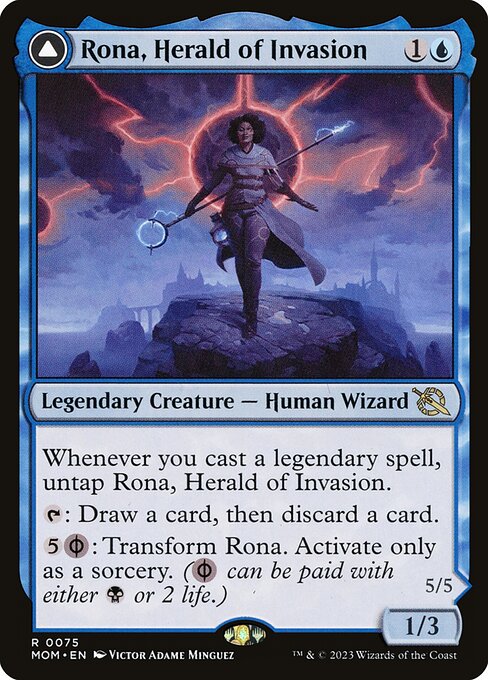
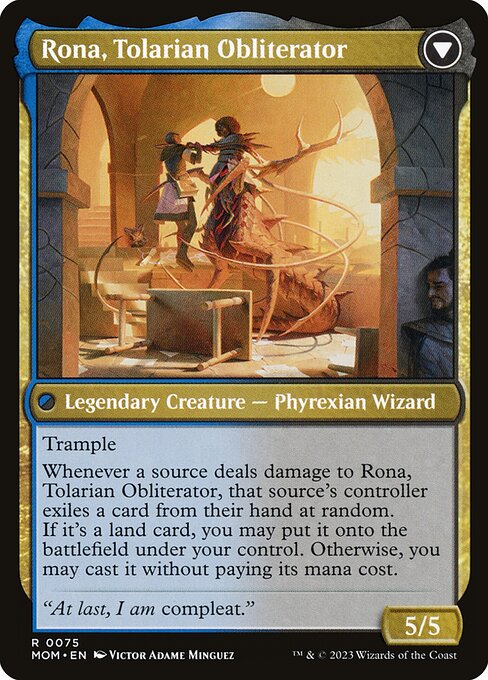
Rona, Herald of Invasion: Rona is the grease in the gears. She lets you loot (draw and discard) and If the game goes long, you can even transform her into a 5/5 Rona, Tolarian Obliterator that punishes your opponent for trying to damage her. Usually we try and flip her early though, using the cards above.
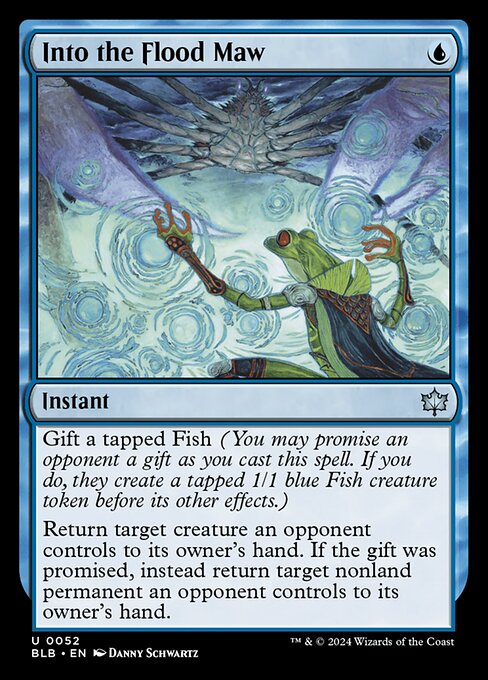
Into the Flood Maw: This is your premier interaction. For just a single blue mana, you can bounce any creature back to its owner’s hand. If you need to hit a pesky Enchantment or Artifact (like a Leyline Binding or The One Ring), you can choose to “Gift” your opponent a 1/1 Fish to bounce any non-land permanent instead.
Loch Mare has a lot going on for it, and I’m really really hoping that its a another peice of the Omen Hawker puzzle. I’ve played a ton of variations of this shell, but always leaned towards the combo oriented builds because Surge Engine was never enough on its own. Between the Wizard Class combo potential and the raw card-draw power of a Trackhand Trainer-boosted Serpent, the deck has multiple layers to it now, and I’m hoping that will be enough to compete in Historic.
Closing Thoughts
We’ve covered the deep-rooted ramp of Sapling Greenshell and the blue value of Mono-Blue Loch Mare. These decks are just the tip of the iceberg for what’s possible in Lorwyn Eclipsed, but they represent two of the strongest “new” directions for the Historic format.
These first few weeks after set release are always my favorite. Don’t get me wrong—the top contenders aren’t going anywhere and any brew we make eventually has to figure out a way to beat them. But right now, the puzzle is still fresh. Plus we get a chance to see what other Jank the community is cooking up.
Thanks for reading.
As always feel free to comment and leave any questions you have below! Make sure to come back next week for even more Fun & Jank!
If you want to see these decks in action, come hang out with me on stream where we test, refine, and have a ton of fun together!
Happy Brewing!
Premium
Enjoy our content? Wish to support our work? Join our Premium community, get access to exclusive content, remove all advertisements, and more!
No ads: Browse the entire website ad-free, both display and video.
Exclusive Content: Instant access to all exclusive articles only for Premium members, at your fingertips.
Support: All your contributions get directly reinvested into the website to increase your viewing experience!
Discord: Join our Discord server, claim your Premium role and gain access to exclusive channels where you can learn in real time!
Special offer: For a limited time, use coupon code L95WR9JOWV to get 50% off the Annual plan!
Plum is the creator of the Jank Tank.
He started playing at the ripe old age of 12 and immediately fell in love with the infinite possibilities that deck building could lead to.
He truly understands that jank is a mindset, and spends most of his free time brewing and concocting new and exciting deck lists to help inspire and promote creativity within the MTG community.