Hey folks, Plum here, back again with another installment of Fun & Jank. If you’re new to the series, welcome aboard! Each week, I give a deck tech highlighting brews from myself, other members of our community, or sweet lists we encounter on the ladder! I try to find decks that are interesting, unique, and competitive. Most our time is spent trying to take our Jank brews to Mythic, but I also love taking deep dives into brewing concepts and show how I got to the version I played on stream.
For me, playing Magic is only half the fun! The other half is pulling apart the gears, tinkering with the engine, and seeing how all the strange little pieces fit together.
Just like we talked about in our last episode, the addition of Arena Anthology 2 has given some old decks new life. This week we’re taking a look at a well known combo shell featuring Jeskai, and showing off the evolution of the list as I tried to tune it for the Historic ladder. It’s been through quite a few iterations (and will probably go through even more) since I started drafting a list, and I want to take you through my thought process behind each decision and update to the deck.
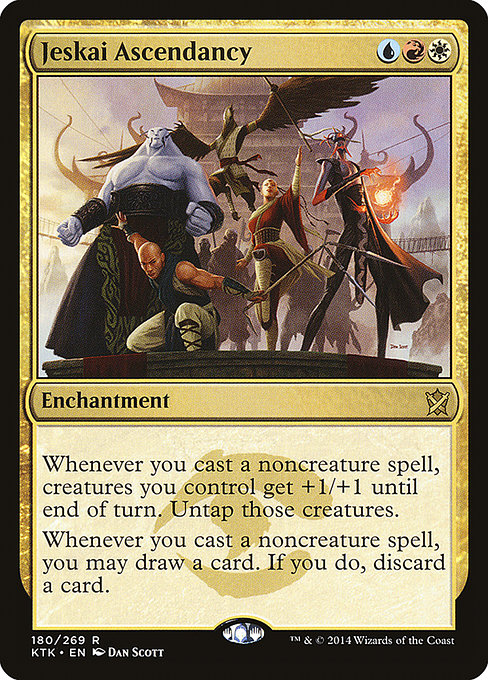
Players have been trying to break Jeskai Ascendancy since it was originally printed in Khans of Tarkir. Over the years, the shell has worn many faces, but the core idea has always stayed the same: cast a bunch of cheap spells, untap your mana sources, dig through your library, and eventually end the game either by attacking with huge creatures or storming into something like Grapeshot.
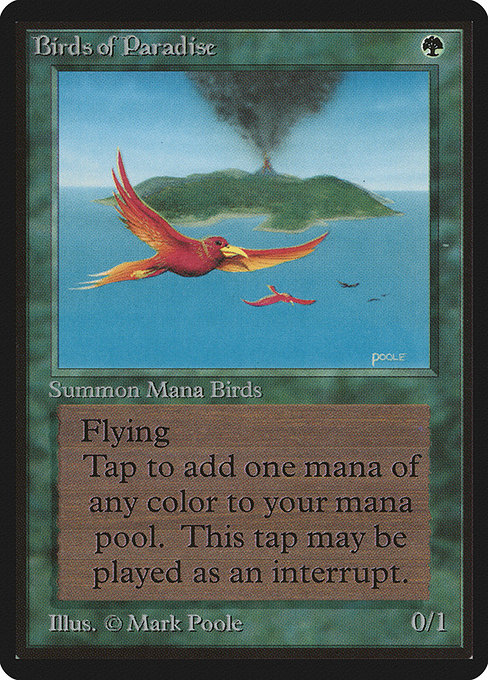
The earliest builds leaned on mana dorks—things like Sylvan Caryatid or Birds of Paradise—to untap with Ascendancy triggers and generate the mana you needed to keep chaining spells. Later, more elaborate versions popped up:
Fatestitcher builds, which used the namesake to untap lands.
Retraction Helix, to bounce and replay a 0 cost permanent an infinite number of times.
Pinnacle Emissary + Emry, Lurker of the Loch variants, which is the most recent version where artifacts act as both fuel and combo pieces. Uses Emry to rebuy 0-cost artifacts like Mox Amber or Mishra's Bauble.
Each iteration had its strengths and weaknesses, but the constant was always the Ascendancy engine itself.
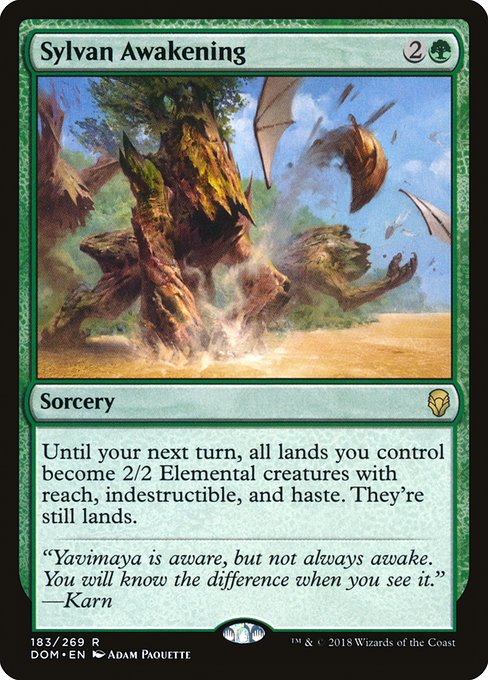
The version I’m using as a starting point today is one that leans on Sylvan Awakening. This approach turns your lands into indestructible 2/2 creatures for the turn, which then untap and grow with every spell you cast. Once the engine is running, you can swing with an army of oversized lands or keep digging until you find a finisher like Grapeshot. It’s one of the cleaner ways to showcase what Jeskai Ascendancy decks are all about. We’ve had Sylvan Awakening and Ascendancy on Arena for quite some time actually. I dabbled with it once or twice in Pioneer but wasn’t really impressed.
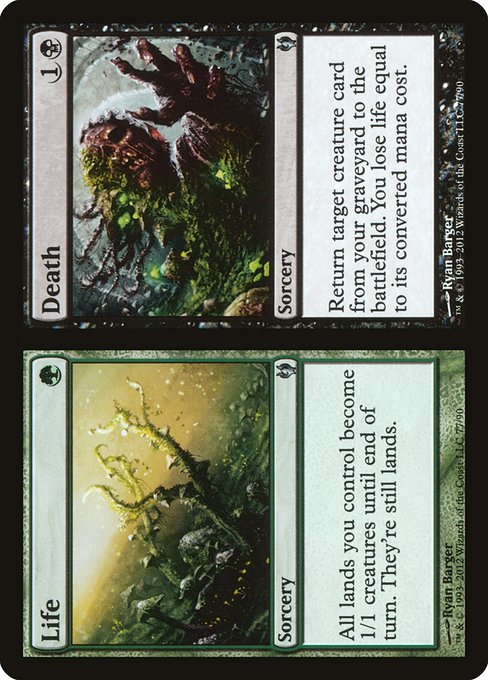
Enter Arena Anthology 2, and Life // Death. This card reignited my interest in the shell again, but this time I wanted to play it at a Historic power-level with the help of some powerful alchemy cards.
While Sylvan Awakening offers a sturdy way to get your Ascendancy engine rolling—turning your lands into indestructible 2/2s with reach and haste—it comes with a real price tag: three mana. In a format as fast and punishing as Historic, spending that much just to set up often meant you were already behind.
That’s where Life // Death comes in. The Life half of the card does almost the exact same job, animating all of your lands so they can untap and grow with each spell, but for a single green mana. That difference is massive. Suddenly, you can go off on turn three with nothing more than a Jeskai Ascendancy, a mana dork on the board, and single cantrip.
Of course, you’re trading durability for speed. Instead of beefy 2/2s with indestructible, Life leaves you with fragile little 1/1s that die to basically any spot-removal. Without indestructible, a single spell aimed at the wrong time can collapse our entire setup. The good news is that you can still go off without Life // Death, using multiple mana dorks.
With all that in mind, let me show you the first draft I came up with.
Step 2: Cast Life, turning your lands into creatures.
Step 3: Chain cheap spells to untap your mana base and snowball through the deck.
Step 4: Finish with either a gigantic land beatdown or wish for a Grapeshot.
This first version had a lot of raw power, but it also came with some serious growing pains. Sanctum Weaver was what I thought to be a sweet little addition to the suite of mana dorks. With other enchantments like Unbridled Growth, Underworld Breach, and Ascendancy, it was possibly to go off with a single Weaver as your mana engine. But it often felt unnecessary when the main combo already demanded tight card slots. Likewise, a relatively light land count plus Gemstone Caverns sometimes left the manabase awkward. Starting Town, Unbridled Growth, and 10 dorks that produce all five colors helped make up for that, but it still led to some tough starting hands.
One of the big experiments here was running Wish as a way to effectively give the deck extra copies of Jeskai Ascendancy out of the sideboard. In theory, it added flexibility—you could grab combo pieces or situational tools as needed. But in practice, I kept running into the same problem: the times I needed Ascendancy most, spending three mana to fetch it and then another three to actually cast it slowed the deck down way too much. There were countless games where I would’ve killed for just a clean fourth copy in the main instead of having to jump through hoops.
The main thing I wanted to try and fix in the next version was actually finding our combo pieces in a timely manner. This deck needed to be able to go off on turn 3 or 4 consistently in order to compete in the Historic Format.
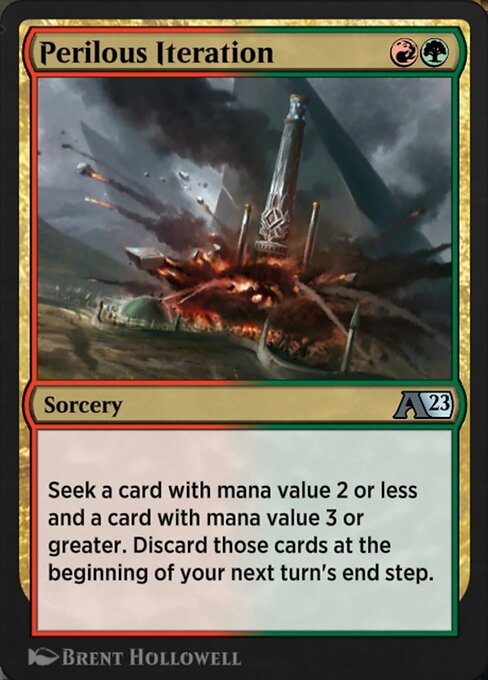
My solution to the problem was to play eight Iterations. Expressive Iteration performed very well in the original version, but I had forgotten that we also have Perilous Iteration. If we dropped Treasure Cruise, Perilous Iteration would find either Life // Death or Ascendancy 100% of the time we casted it, along with something to hopefully start and/or keep the chain going. The other benefit here is that we get to keep the cards we seek for a whole turn, and they stay in our hand meaning they can be used as discard fodder for Ascendancy which helps us get un-hellbent during our combo turn.
You’ll also notice I unintuitively dropped down to just three copies of both our engine pieces, hoping that the eight Iterations would make up for the reduced number of copies. I cut Wish all togetherand jammed Grapeshot in the mainboard to make it easier to find and cast. This also opened up some additional sideboard slots for us. I consolidated the sideboard into actual protection and disruption: Pact of Negation, Swan Song, and Orim’s Chant all helped buy time against the interaction that usually blew me out.
The change gave the deck a much smoother goldfish. Instead of wasting turns durdling with Wish, I could now just line up Ascendancy + Life and go off as early as turn three without burning half my resources. As long as I have one half of the combo in my starting hand, a Perilous Iteration on turn 2 usually (emphasis on “usually“) found me the other piece and I could go off soon after.
That said, this version was still rough around the edges. The mana dorks like Weaver and Sylvan Caryatid were just a tad too slow for my liking, It was tough to get Life // Death to resolve without resistance. A single well-timed removal spell still spelled disaster (we got Kozilek’s Return’d on stream), and sometimes I’d flood out or stall because my enablers were too redundant.
So I tested some more. Mainly playing with the numbers and getting some more reps in to see how the deck felt. I ended up with a couple more iterations before I had another brainstorming session off-stream.
After a handful of experiments, cuts, and tweaks, the deck finally started to feel like a real storm machine. Earlier versions leaned on clunky cards like Sanctum Weaver for mana explosions or Thought Scour to fuel graveyard synergies, but in practice they just weren’t pulling their weight. With Treasure Cruise gone, Thought Scour was basically just a bad cantrip, and Weaver too often sat around doing nothing.
For this most recent version, I wanted to maximize turn three wins as best I could.
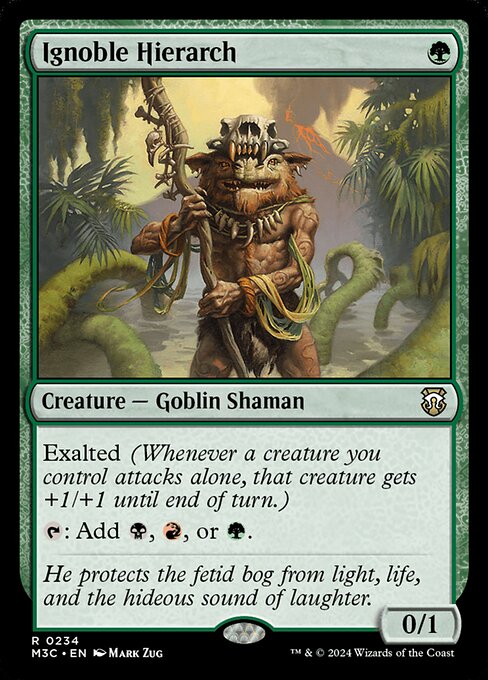
Mana Dork Package: By adding Ignoble Hierarch alongside Birds of Paradise, the deck now runs eight one-drop accelerators. Sure, Hierarch doesn’t make blue or white, but by committing to a base-green build, that tradeoff became manageable. Hierarch’s exalted trigger even occasionally gave us a funny backup clock.
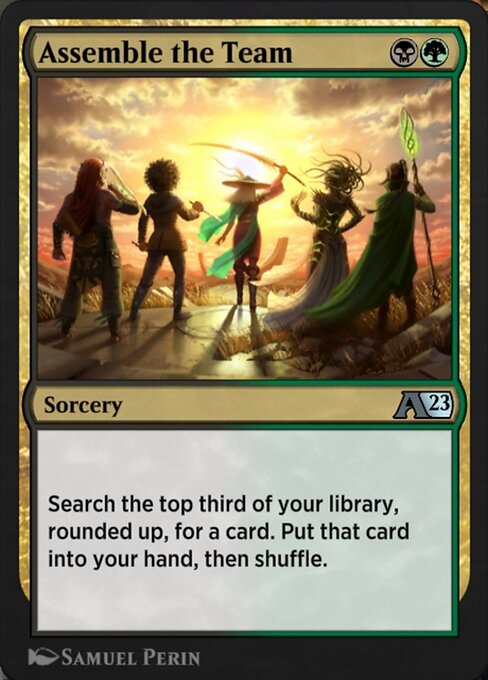
Tutoring Consistency: Cutting down on Expressive Iteration to make room for Assemble the Team gave the deck more reliable ways to find the exact piece it needed—whether Ascendancy, Life, or a mana creature. Expressive Iteration is great, but I rather be able to find a missing piece of the combo on turn two every game.
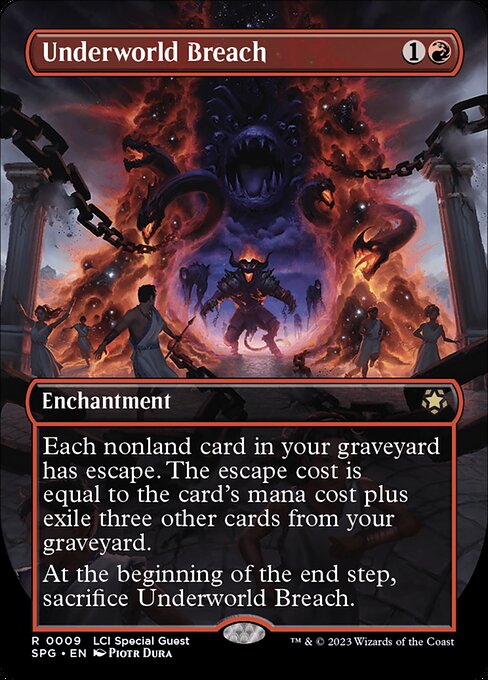
Graveyard Engine:Underworld Breach remained indispensable. Between cantrips and Ascendancy looting, there was always plenty of fuel to escape spells and keep the chain alive once you started spinning. Even without Thought Scour, Breach gave the deck that crucial “second wind” when you needed to keep going. And the ability to go off if we somehow ended up in the late-game from almost no presence on board made it too good to pass up.
My resulting list feels much leaner. You don’t waste time with side engines or conditional pieces—you stick Ascendancy, animate your lands, and try to kill on turn three. The lack of interaction still makes it a bit fragile, sure, but in exchange you get blistering speed and a much tighter overall gameplan.
Gameplay
(Note: this is the v1.0 from my first stream playing the deck. The most recent build has performed much better)
Gameplay is rather straightforward, as the only thing you’re trying to do is combo off each game. We did have a janky win on stream where we animated 9+ lands during a game with Life // Death and nothing else on board, and we ended up winning with 1/1 beatdown, but that doesn’t usually happen.
My goal is for the deck to go off on Turn 3 as consistently as possible, and that can be done a few different ways.
With Mana Dork Turn 1: Mana Dork Turn 2: Draw/Tutor to find another combo piece Turn 3: Cast Jeskai Ascendancy. Then cast Life // Death which untaps your Mana Dork and animates your lands. Then cast any cantrip to start the loop.
With Only Mana Dorks Turn 1: Mana Dork Turn 2: Mana Dork + Spell (cantrip or tutor) Turn 3: Cast Jeskai Ascendancy, and chain spells using just your Mana Dorks as the engine.
Without Mana Dorks Turn 1: Anything Turn 2: Cast Jeskai Ascendancy Turn 3: Cast Life // Death and any other spell to start the chain.
Pretty much every game is just trying to find and play Jeskai Ascendancy as fast as possible, and then figuring out your method of looping from there. Also note that the land you play on the turn you combo cannot be used with Life // Death because it doesn’t grant haste.
Navigating Disruption
The deck is powerful, but it’s also fragile. A single removal spell on a mana dork in the early turns can slow you down. Lose a land-creature after Life resolves, and you risk losing both your mana and your combo. Sweepers like Kozilek's Return or instant-speed interaction can be devastating. Fragment Reality is probably the most popular and versatile piece of hate against us.
That’s why sequencing matters. Sometimes you want to bait out removal before committing to Life. In games two and three, you’ll need to lean on sideboard protection. Pact of Negation, Swan Song, or even Orim’s Chant are used to force the combo through.
I’ve found that choosing whether or not to reveal Underworld Breach in game one allows you to “big brain” you opponent during your next game. If they see it game one, they’ll likely bring in graveyard hate like Rest in Peace or Tormod's Crypt under the assumption that you’re playing more than two copies.. So if we side them out completely, as they’re not needed to combo, you can turn that hate into dead cards for the opponent.
Vice versa, many black-based midrange decks will bring in hand disruption against us. If they didn’t see it game one, Breach is always a surprise that catches them off-guard. It allows us to combo with basically nothing in hand, making it a great top deck against any deck relying on early disruption to seal-the-deal so to speak.
Closing Thoughts
At the end of the day, this deck checks all my boxes—it’s fast, consistent, and still has room for refinement. Historic is a format full of versatile answers, so I’m not expecting Jeskai Ascendancy + Life // Death to suddenly take over the ladder. That said, it’s absolutely a deck that lives off the beaten path and can steal matches out of nowhere, especially if your opponent isn’t prepared for it.
The addition of Life has given the archetype blistering speed and any deck that can goldfish turn three wins with real consistency deserves at least a little respect, even if it’s fragile.
I also hope you enjoyed following along with the explanations and thought process behind how this list evolved. Brewing isn’t always straightforward—sometimes you get tunnel vision and it’s hard to see how to actually improve the deck. In those moments, bouncing ideas off other people can make all the difference. That’s one of the reasons I love brewing live on stream: input from the community often sparks the breakthroughs I never would’ve found alone.
Thanks for reading.
As always feel free to comment and leave any questions you have below! Make sure to come back next week for even more Fun & Jank!
If you want to see these decks in action, come hang out with me on stream where we test, refine, and have a ton of fun together!
Happy Brewing!
Premium
Enjoy our content? Wish to support our work? Join our Premium community, get access to exclusive content, remove all advertisements, and more!
No ads: Browse the entire website ad-free, both display and video.
Exclusive Content: Instant access to all exclusive articles only for Premium members, at your fingertips.
Support: All your contributions get directly reinvested into the website to increase your viewing experience!
Discord: Join our Discord server, claim your Premium role and gain access to exclusive channels where you can learn in real time!
Special offer: For a limited time, use coupon code L95WR9JOWV to get 50% off the Annual plan!
Plum is the creator of the Jank Tank.
He started playing at the ripe old age of 12 and immediately fell in love with the infinite possibilities that deck building could lead to.
He truly understands that jank is a mindset, and spends most of his free time brewing and concocting new and exciting deck lists to help inspire and promote creativity within the MTG community.