Hello, my fellow Planeswalkers! I am The MTG Hero, and Standard has settled into a pretty interesting place. Right now, I keep seeing the same major strategies at the top of the format: Izzet Elementals, Landfall, Doomsday Combo, and 4c Control. When the metagame starts to become this defined, I always start asking the same question: Can we build something specifically designed to attack what everyone else is doing?
I believe the answer is Dimir Midrange.
This isn’t some brand-new strategy that nobody has ever seen before. It isn’t. But I think Dimir has the perfect mix of removal, counterspells, hand disruption, tempo, and card advantage to attack the current Standard metagame. More importantly, it can apply pressure in a way that doesn’t simply fold when Sunderflock comes down and bounces the board.
Dimir is basically a proactive tempo deck that can pressure the opponent early, generate absurd amounts of card advantage, and then use counterspells and removal to make sure the opponent never gets a clean chance to recover and in the current metagame, I think that gives Dimir some serious anti-meta potential.
Unlike some of the other decks in Standard, we aren’t trying to slam one enormous threat and hope it survives or resolve one or two big spells. Instead, we’re applying pressure with cheap, evasive creatures while keeping mana available for interaction.
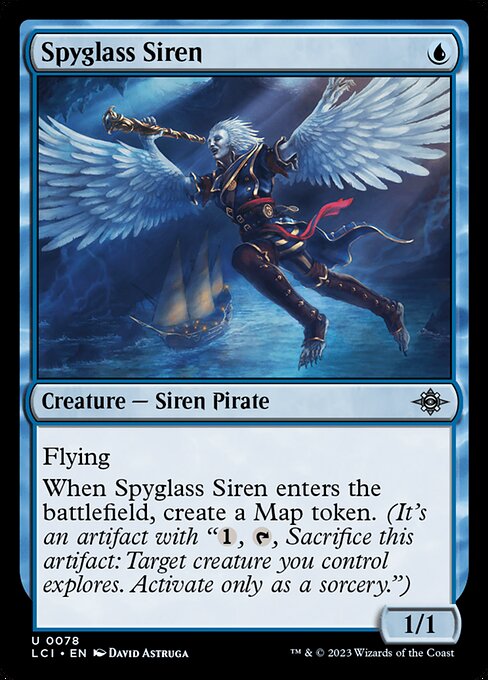
Spyglass Siren and Dream Beavers are perfect examples of what we’re trying to accomplish. Both give us cheap threats that can start putting pressure on the opponent while also providing value along the way. Their ability to get through the opponent’s defenses is important because we really want our attacks to connect.
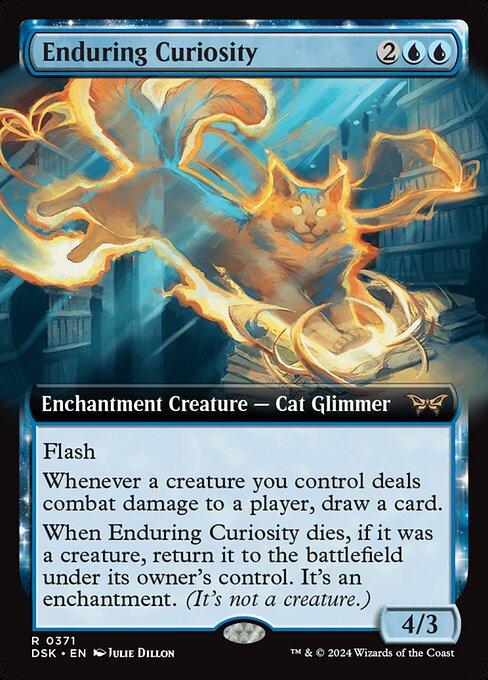
That is where Enduring Curiosity becomes so important by rewarding us for hitting with those small evasive creatures and letting us draw cards to counter and get more interaction to keep the opponent under our control.
That can get out of hand very quickly.
A Spyglass Siren getting in for a few points of damage is nice. A Dream Beavers connecting is nice. But when those creatures are also drawing us cards every time they connect, suddenly our opponent has a much bigger problem to deal with. We’re developing our board while constantly refilling our hand.
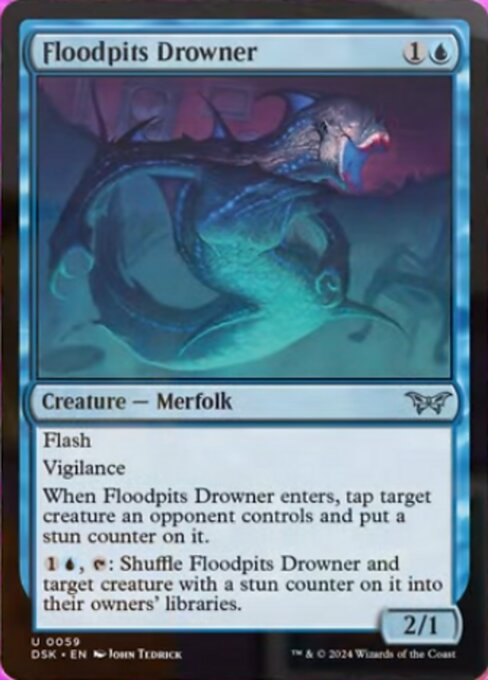
Then we add counterspells, removal, and tempo creatures like Floodpits Drowner.
That’s the part of the deck I really enjoy. We’re not simply trying to answer everything the opponent does. We’re using our interaction to create opportunities for our small creatures to keep attacking, and every successful attack can turn into another card through Enduring Curiosity.
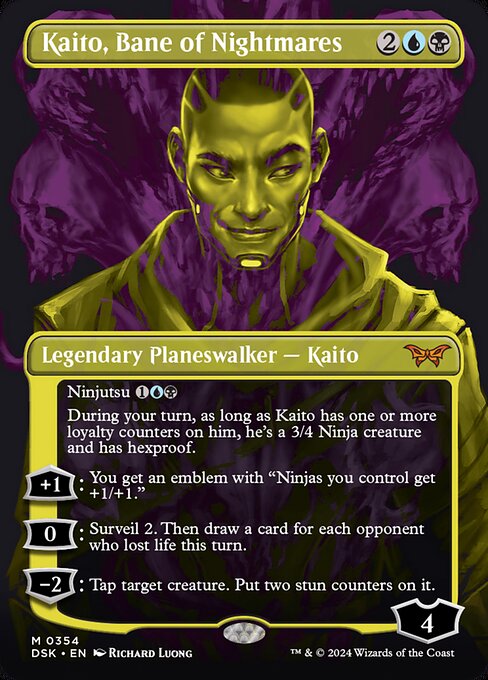
Now our “ace” card and the main reason to play this deck is definitely Kaito.
Kaito is obviously a planeswalker, but in this deck he is also the best creature we have.
On our turn, Kaito has hexproof, which makes him extremely difficult for the opponent to interact with profitably. He can draw us cards, lock down a creature, or grow himself and our other Ninjas. The Ninja synergy isn’t enormous in this particular build, but the combination of Kaito and Soulstone Sanctuary gives us enough to take advantage of it.
And Kaito’s ninjutsu ability is fantastic here.
One of the coolest things about this deck is that Kaito can bounce our own disruptive creatures and let us replay them later. If we have already gotten value from Floodpits Drowner, we can return it with Kaito and use it again. The same principle applies to our other creatures that have already done their jobs.
That gives Kaito another layer of utility beyond simply being a planeswalker that generates value.
The best part is that Kaito is at his strongest when we already have some control over the board. Once the opponent is struggling to establish a meaningful threat, Kaito can take over the game while our cheap creatures continue attacking and Enduring Curiosity continues turning those attacks into cards.
We don’t have to play every game the same way. If the opponent is presenting something dangerous, we can sit back and play a more controlling game with our cheap counterspells and removal. If they aren’t doing much, we can get on the board with Dream Beavers and Spyglass Siren and start applying pressure.
We can also use our tempo creatures to punish the opponent for trying to develop their board.
Floodpits Drowner is particularly interesting because you don’t always want to use its ability immediately after the opponent plays a creature. In many situations, it is better to wait until the opponent moves to combat on their next turn.
If they cast a creature on turn three, for example, you don’t necessarily need to lock it down immediately. Let them untap. Let them commit to attacking. Then use Floodpits Drowner to interfere with their combat step.
These plays can be much better than simply destroying the creature because we’re developing our own board while disrupting theirs. We’re buying time, getting attacks through, and setting up our more powerful cards for the turns that follow.
Its ability to put a stun counter on a creature means we can effectively lock something down before it gets a chance to attack. Because the stun counter keeps the creature from untapping for another turn, we can often get multiple turns of breathing room from a single activation.
And if that creature is still a problem after that, Drowner can eventually turn into removal by forcing the creature to shuffle back into its owner’s library.
That flexibility is exactly what I want in a tempo deck.
It also works incredibly well with Kaito. We can ninjutsu Floodpits Drowner back to our hand, replay it, and use the effect again. We can even use Kaito to put stun counters on problematic creatures and then use Drowner to deal with them permanently when necessary.
The card does a lot more than it looks like it does at first glance.
There are plenty of creatures in Standard where the body itself isn’t necessarily the entire problem. The abilities are what make the creature dangerous. Being able to shut those abilities off gives us another way to answer threats without relying entirely on traditional removal.
And just like Drowner, Wasp can become especially annoying when we’re able to reuse it.
Tidebinder can counter a triggered ability that is already on the stack, and it isn’t restricted to creature abilities.
That distinction matters a lot in the current Standard metagame.
Cards like Doomsday Excruciator and Bringer of the Last Gift can generate enormous amounts of value through their triggered abilities. Tidebinder gives us a way to stop those abilities and turn the creature itself into much less of a problem.
Once Tidebinder resolves, the affected creature loses its abilities for as long as Tidebinder remains on the battlefield.
That is an incredibly powerful effect when you can time it correctly.
The Removal
Our removal package is another major reason I like this deck.
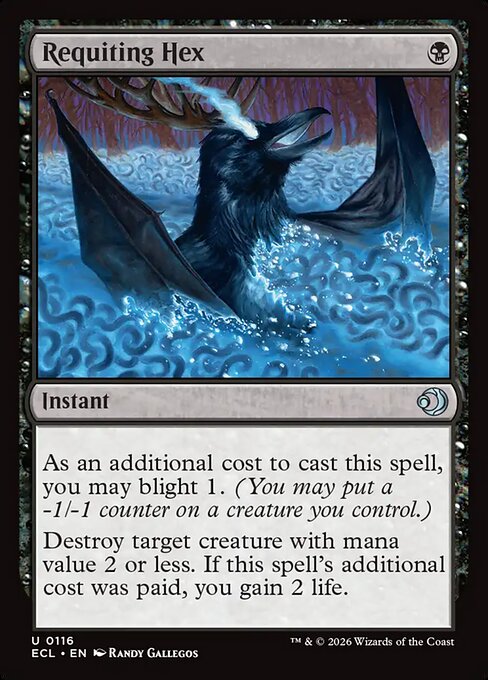
Requiting Hex is about as close to Fatal Push as we’re going to get right now. It gives us a cheap way to destroy a smaller creature, and the ability to gain life can also matter when we’re trying to stabilize against aggressive decks.
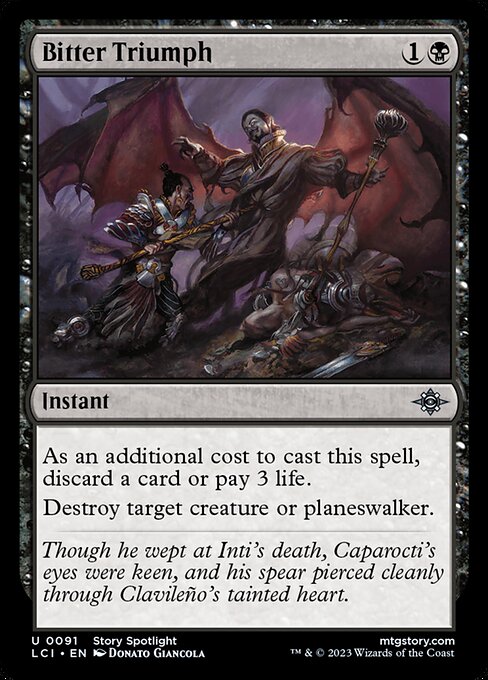
Two mana to destroy a creature or planeswalker at instant speed without worrying about its size is exactly the kind of interaction I want in this deck. We can hold up our mana and let the opponent decide what they want to do before we commit to an answer.
That flexibility is incredibly valuable when our plan revolves around playing at instant speed and maintaining tempo.
The Counterspells
This deck also gets to play some of my favorite cheap counterspells.
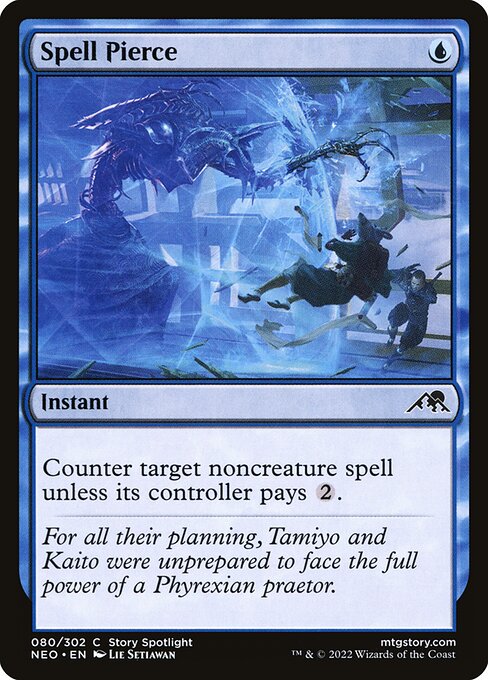
Spell Pierce has been one of the most efficient counterspells in Magic for a very long time. It has seen play across multiple formats for a reason. For one mana, it can protect something important like Kaito or stop the opponent from resolving a major spell.
I wouldn’t want to play a huge number of copies, but two feels right to me. It handles a surprising number of important spells for only one mana, and that efficiency is exactly what this deck needs.
The whole idea is to make the opponent spend more mana than we do.
If they’re spending four mana on a spell and we’re spending one mana to counter it, we’ve created a huge tempo swing. When our cheap creatures are already attacking and Enduring Curiosity is drawing us cards, those little advantages start adding up very quickly.
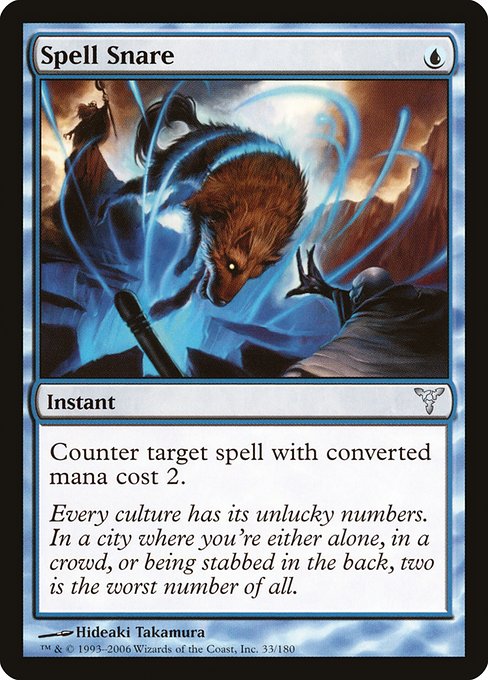
I am going to be honest: this is probably my least favorite card in the deck.
I keep looking at it and thinking of Quench. I know that’s probably not fair. The teamwork mechanic makes the card fundamentally different and potentially much better than that comparison gives it credit for.
But every time I cast it, I feel like I’m jumping through another hoop to make my counterspell work.
That said, about 98% of the current lists I’m seeing are playing two copies, so I am just going to assume the hivemind knows more than me.
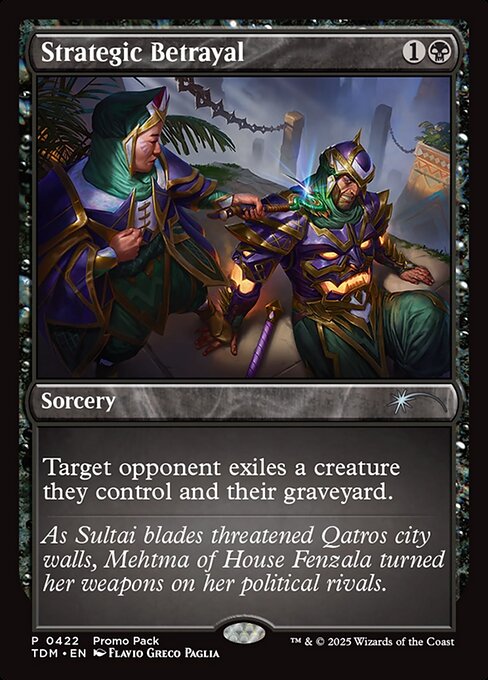
Strategic Betrayal pulls double duty against aggro and graveyard decks as a way to force the opponent to remove a problematic threat when well timed and exiles the graveyard after.
At the end of the day, I think Dimir has everything I want in an anti-meta deck. It can pressure the opponent early, generate card advantage with Enduring Curiosity, disrupt their creatures with cards like Floodpits Drowner, and keep their most important spells from resolving with our counterspell package. Then, once the game starts to slow down, Kaito, Bane of Nightmares can take over.
With the perfect combination of pressure, counters, and removal, Dimir is hard to beat in any format. You are constantly making your opponent answer something while still having the ability to answer whatever they throw at you. That puts them in a position where every turn becomes a decision about what they can afford to play around.
And that is exactly where I want my opponent.
I don’t know if Dimir will become the next deck everyone is talking about, but I do know that I am enjoying playing it. In a Standard format filled with powerful, well-established strategies, sometimes the best thing you can do is step outside the obvious choices and attack the format from a different angle.
If you’re tired of playing against the same decks over and over again, maybe it is time to stop trying to beat the meta on its own terms.
My name is The MTG Hero. I have played Magic for over 15 years. I am a consistent high Mythic ranked player. Follow me on Twitch and subscribe on YouTube!