Plum here, and welcome back to our Fun & Jank series!
Reality Fracture has been out for a little over a week now, and I have to say, I’m having an absolute blast with Historic at the moment. Between all the new cards, the recent changes to the format, and the sheer number of different strategies people are experimenting with, it feels like there’s something new to try every time I open Arena. I’ve already got more brews sitting around than I realistically have time to play, and every time I start working on one, I inevitably stumble across another interaction that sends me down an entirely different rabbit hole. Which seems like a good problem to have.
Last time, we were messing around withRoiling Canopy and trying to make Primeval Titan approximately the size of a small building. This week, we’re turning our attention to one of the most popular cards to come out of Reality Fracture: Darklight Phoenix.
If you’ve played much Historic, you’re probably familiar with Arclight Phoenix, the classic graveyard threat that rewards us for casting a bunch of cheap spells in a single turn. Darklight Phoenix follows a similar philosophy, giving us a recurring flying threat that we can bring back from the graveyard without paying its mana cost. The difference is how we go about bringing it back.
Rather than chaining together instants and sorceries, Darklight Phoenix encourages us to build around sacrificing creatures, which opens the door to an entirely different collection of cards and interactions.
Unsurprisingly, people have already been experimenting with all sorts of ways to make it work. There are plenty of different directions you can take a Darklight Phoenix deck, but I wanted to throw my hat into the ring with something a little more ridiculous than the usual lists. After all, this is Fun & Jank!
So rather than simply building the most efficient Phoenix deck possible, I decided to see what would happen if we combined the sacrifice engine with one of my favorite enormous creatures that almost nobody plays: Demon of Death’s Gate.
And after a couple of rounds of testing on stream, we’ve ended up with two rather different versions of the same idea.
The Core
The appeal of Darklight Phoenix is pretty straightforward. We want to get as many copies into our graveyard as possible, then take advantage of our sacrifice engine to bring them back and start attacking. And thanks to a handful of cards already available in Historic, setting that up can be surprisingly easy.
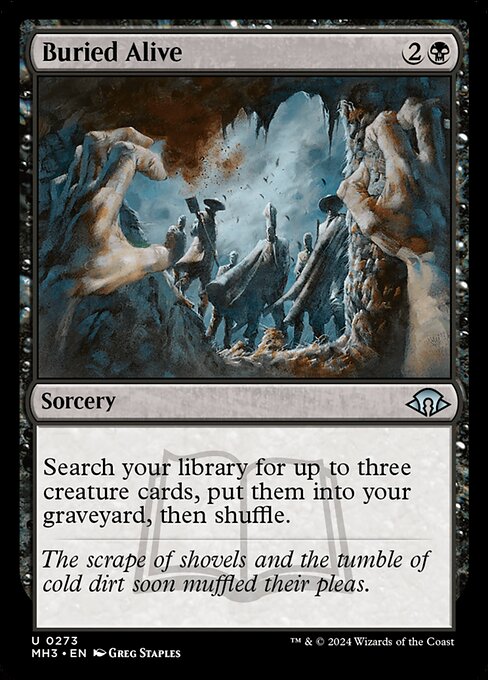
The most important of those cards is Buried Alive.
For just three mana, Buried Alive lets us search our library for three creatures and put them directly into our graveyard. In a normal deck, that’s a fairly substantial investment into setting up future plays. Here, it’s potentially three Phoenixes ready to come back and start attacking.
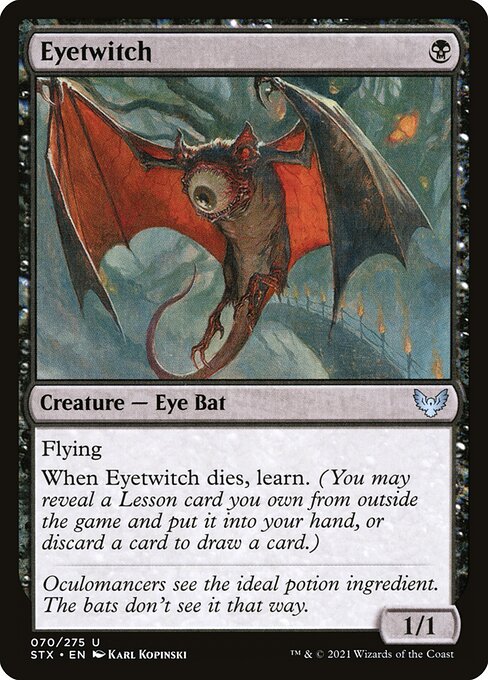
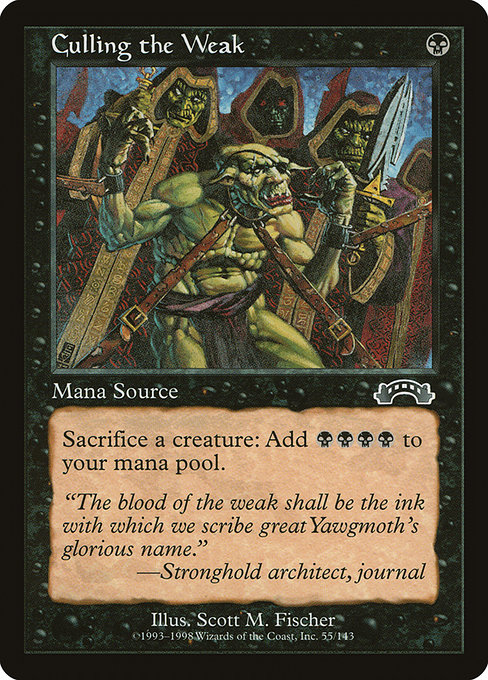
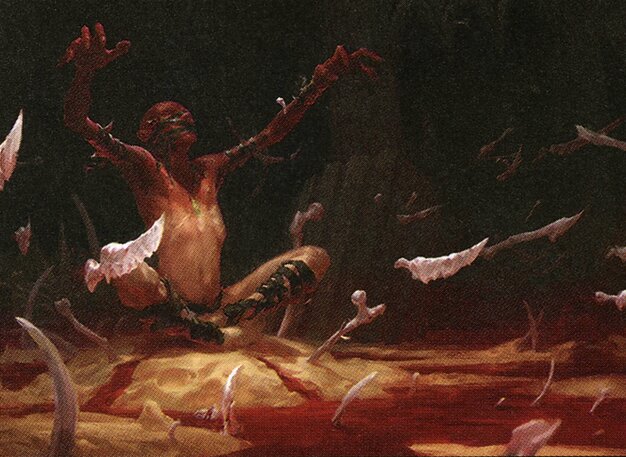
Of course, putting the Phoenixes into the graveyard is only half the equation. We still need a reliable way to satisfy their recursion condition, which is where our sacrifice package comes into play. Eyetwitch and Culling the Weak are two of the cards that have become central to these strategies.
Eyetwitch is a cheap creature that we’re perfectly happy sacrificing, and its death trigger can replace itself with another resource. Culling the Weak turns one of those expendable creatures into four black mana, giving us the explosive acceleration needed to start putting everything together.
That combination is what makes these decks so interesting. We’re not simply filling our graveyard and hoping our Phoenixes eventually come back. We’re actively turning our creatures into mana, cards, and other resources while simultaneously advancing our primary win condition.
A typical opening might involve developing a couple of cheap creatures, sacrificing one to Culling the Weak, and using the mana to cast Buried Alive. From there, we’re looking to complete the sacrifice requirements and bring back a small army of flying threats. And because those Phoenixes can keep coming back, opponents can’t necessarily solve the problem by killing them once.
The deck can generate some incredibly explosive turns, but it also has the potential to keep applying pressure through removal and board wipes. That’s already a pretty compelling strategy, but I wanted another payoff for all those creatures we were sacrificing.
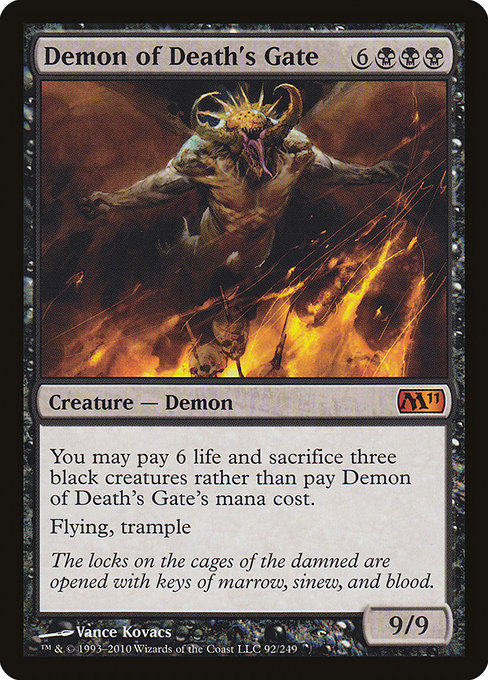
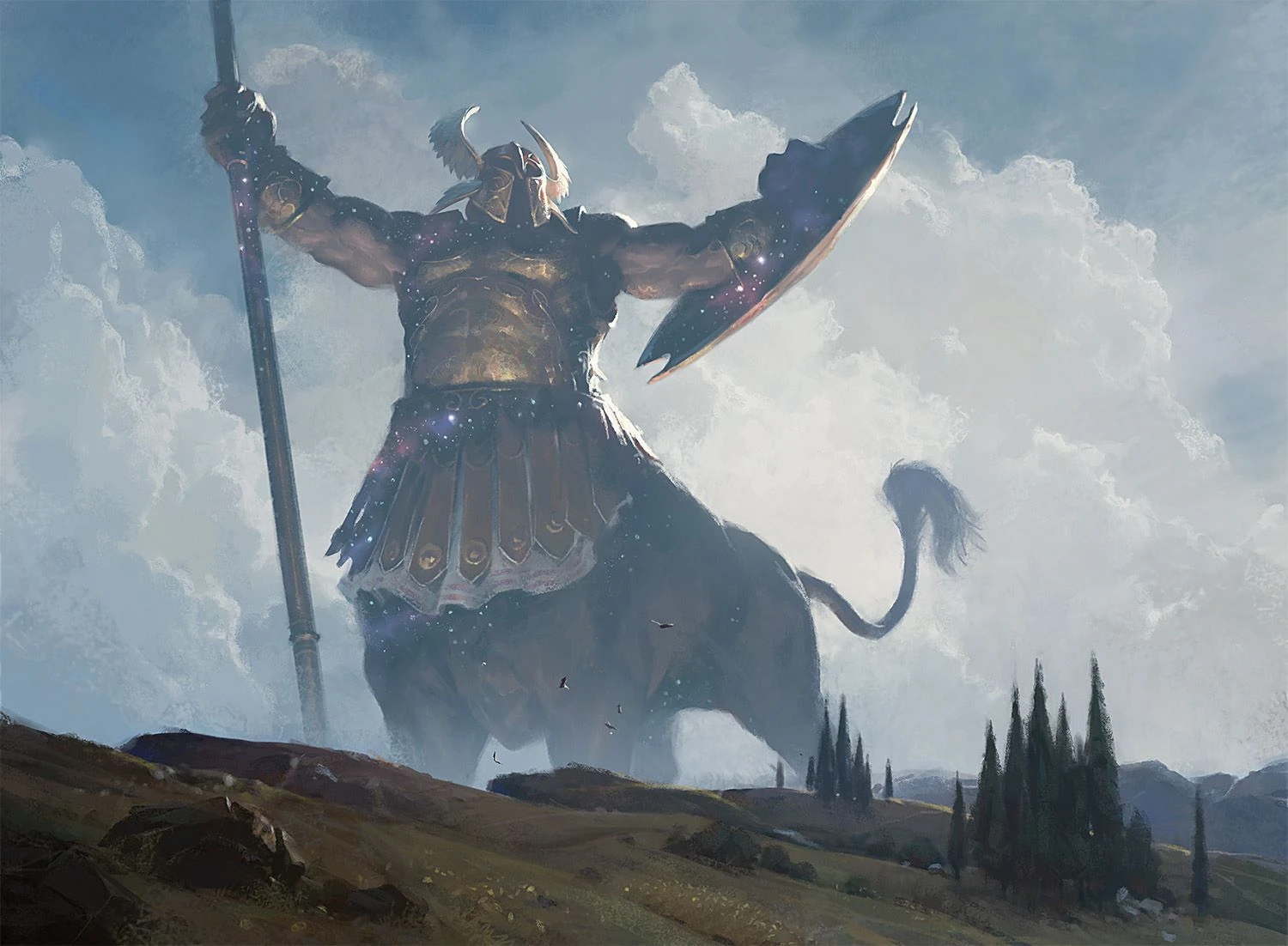
This is a card I’ve wanted an excuse to play for quite some time. For nine mana, we get a 9/9 flying, trampling Demon. That’s certainly a big creature, but nine mana is an awful lot to pay for something that doesn’t immediately win the game.
Fortunately, we’re not particularly interested in paying nine mana.
Demon of Death’s Gate has an alternative casting cost that allows us to pay six life and sacrifice three black creatures instead. In other words, if we have three expendable creatures lying around, we can put a 9/9 flying trampler onto the battlefield without spending a single mana.
That sounds much more appealing.
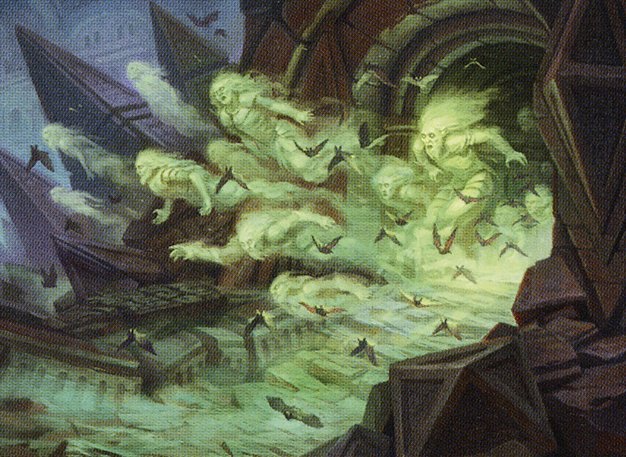
And it just so happens that our Darklight Phoenix deck already wants to play a ridiculous number of cheap creatures and sacrifice them for value. Rather than including an entirely separate package to support Demon, we can use the same creatures that are already enabling our Phoenix strategy. Eyetwitch, Stitcher’s Supplier, Greedy Freebooter, and the rest of our early creatures all help make Demon a realistic threat.
The six life is certainly not irrelevant, particularly against aggressive decks, but getting a 9/9 onto the battlefield several turns earlier than we’re supposed to can end games in a hurry.
There’s another important distinction here, too. We’re actually casting Demon of Death’s Gate, rather than cheating it directly onto the battlefield. That means the alternative cost gives us an enormous threat without requiring a reanimation spell or another expensive enabler.
It’s an odd inclusion, and certainly not the most conventional way to build Darklight Phoenix, but that’s exactly what I liked about it. If our opponent is already trying to deal with a recurring army of Phoenixes, asking them to find an answer to a 9/9 flying trampler on top of everything else seems like a perfectly reasonable way to make their life miserable.
The first version of the deck was built around maximizing the overlap between our sacrifice engine and Demon of Death’s Gate. We had the full playsets of Darklight Phoenix, Demon of Death’s Gate, Buried Alive, Culling the Weak, and a collection of cheap creatures that could help fuel both plans.
But there were a few other inclusions worth talking about.
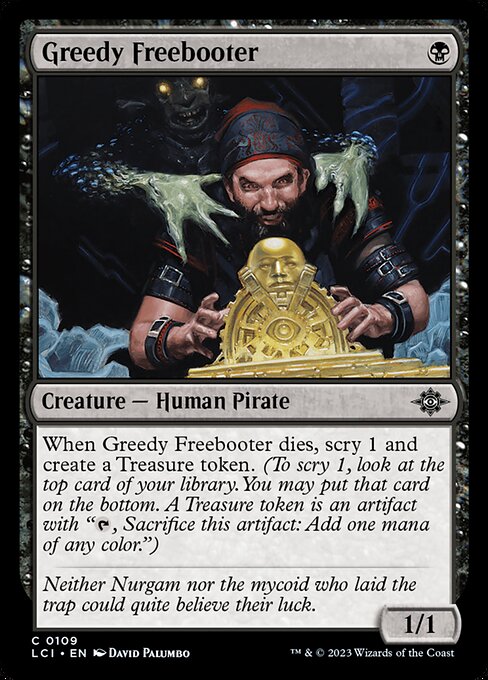
Greedy Freebooter was one of the first cards I wanted in the deck. We’re already planning on sacrificing creatures, so getting a Treasure token and a little card selection when one dies is exactly the sort of value we’re interested in. The Treasure is particularly useful because it lets us continue developing our board after spending resources on a sacrifice effect.
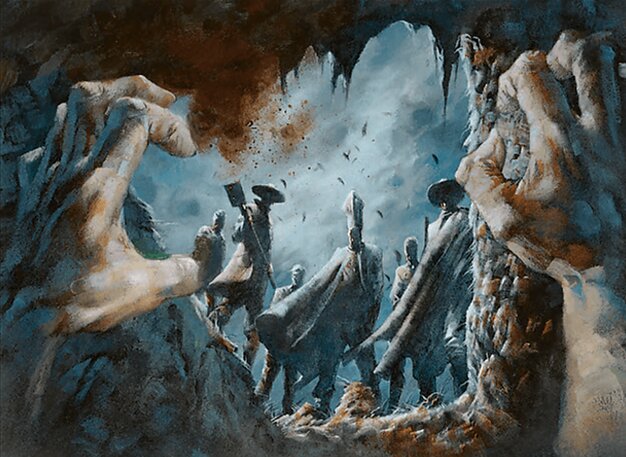
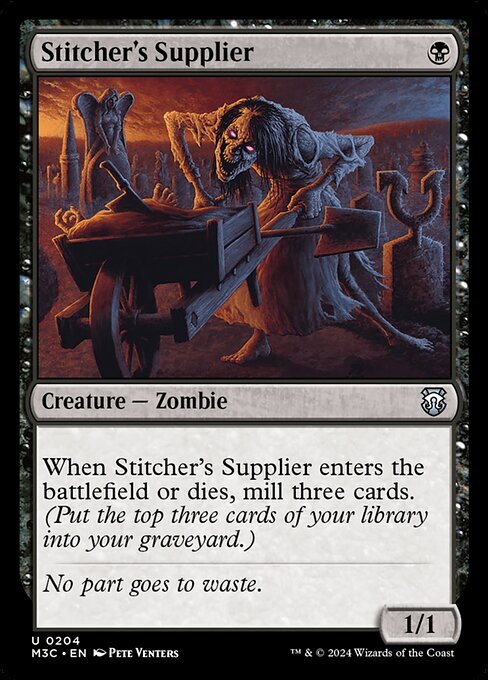
Stitcher’s Supplier is another natural inclusion. Supplier gives us a cheap body to sacrifice while filling our graveyard in the process. Sometimes we’ll mill a Phoenix, saving ourselves the trouble of finding Buried Alive, and other times we’ll simply be happy to have another creature available for our various sacrifice effects. Because Supplier mills cards both when it enters and when it dies, it fits particularly well into a deck where creatures rarely stick around for very long.
I also wanted to experiment with Dark Matter Manipulator. The initial build had room for a few cards that weren’t necessarily part of the established Phoenix core, and Manipulator was one of the ways I wanted to explore what else the sacrifice engine could support. The important question with these sorts of inclusions is whether they actually improve our explosive turns or simply give us another thing to spend resources on.
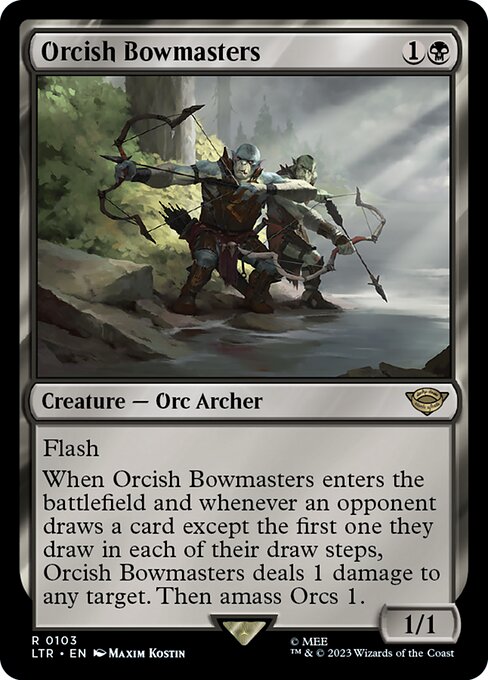
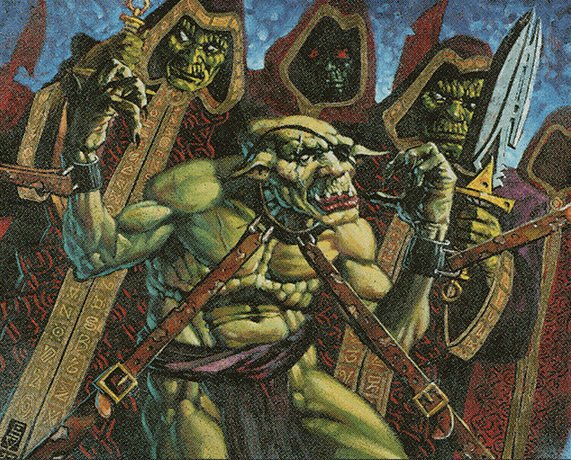
Then we have Orcish Bowmasters. Bowmasters is already an excellent card in Historic, but it’s particularly appealing here because it gives us multiple bodies from a single card. Both the Bowmasters and its Orc Army can contribute to our sacrifice plan, while the card itself provides interaction against opposing creatures and card-draw engines. Sometimes we need to kill something, and sometimes we need more creatures to sacrifice. Bowmasters helps with both.
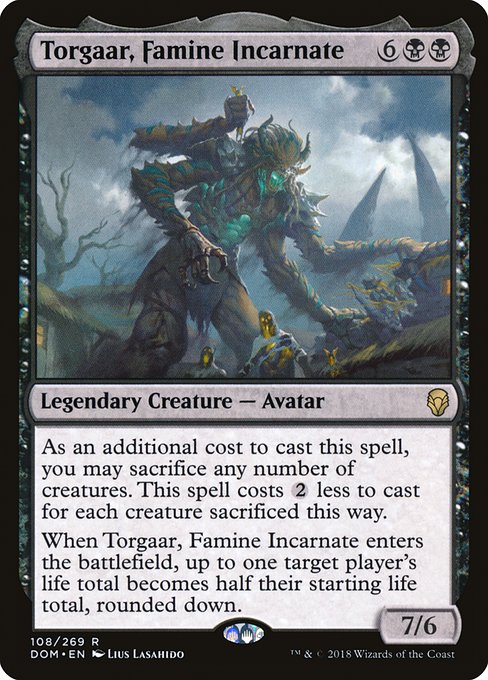
Finally, I included two copies of Torgaar, Famine Incarnate. Torgaar was another attempt to take advantage of all the expendable creatures we were generating. Much like Demon of Death’s Gate, it rewards us for sacrificing creatures by dramatically reducing the amount of mana we need to spend on a large threat. And setting a player’s life total to half their starting life total can make our Phoenix attacks considerably more threatening.
It’s a pretty amusing way to turn a handful of small creatures into a potentially game-ending sequence.
Lands
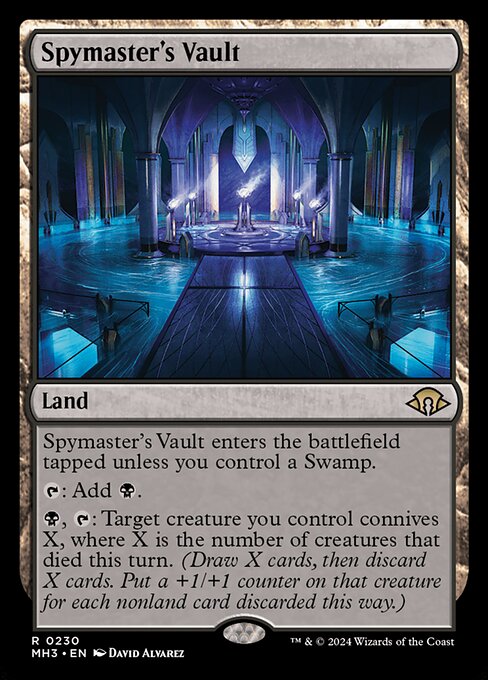
As important as all those creatures are, I think the mana base might actually be the most interesting part of the original list. In particular, Phyrexian Tower and Spymaster’s Vault.
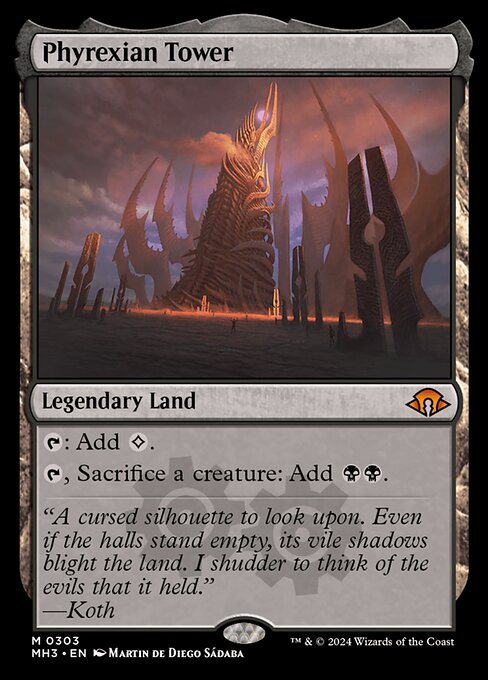
Phyrexian Tower is almost everything we want in a land. It gives us another sacrifice outlet, provides additional mana, and lets us turn otherwise expendable creatures into explosive plays without spending a spell slot.
In a deck trying to combine Buried Alive, Culling the Weak, and Demon of Death’s Gate, having that functionality built directly into the mana base is incredibly valuable. It’s the sort of land that makes hands work that otherwise wouldn’t.
Spymaster’s Vault, meanwhile, fills a different role.
Rather than accelerating our mana, it helps us turn creatures dying into additional card selection and pressure. The ability to filter through cards is particularly appealing in a deck that wants specific combinations of pieces rather than simply drawing whatever happens to be on top.
Between Tower and Vault, our lands pull double duty.. They’re actively helping the deck execute its game plan. And when so much of our strategy revolves around assembling the right pieces at the right time, that extra utility can make a substantial difference.
Gameplay
The first version gave us a useful starting point, but there were several things I wanted to reconsider before taking the deck back onto the ladder.
The biggest question was how much space we could realistically devote to secondary payoffs. Demon of Death’s Gate was the reason I wanted to build this particular version of Phoenix in the first place, so I wasn’t particularly interested in cutting it. But cards like Torgaar and Dark Matter Manipulator were competing for space with cards that could potentially make the central Phoenix engine more consistent.
And that’s an important distinction.
There’s nothing wrong with having multiple powerful things to do, but when all of those things depend on having the right creatures and sacrifice outlets available, we need to be careful about drawing too many payoffs and not enough enablers.
I also wanted to reconsider the way the deck found its resources. Buried Alive is fantastic when we draw it, but we can’t assume we’ll have it every game. Stitcher’s Supplier helps fill that gap, but there’s room for more ways to stock our graveyard while still developing our board.
Finally, the original build was entirely black, which made the mana relatively straightforward but limited some of our options after sideboarding. So for the second version, I decided to revisit a color that seems to keep finding its way into my decks lately.
For the second version, like many others, I decided to splash green and make a few changes to the supporting cast. The core of the deck remains largely unchanged. We’re still playing four copies each of Darklight Phoenix, Demon of Death’s Gate, Buried Alive, and Culling the Weak. Those are the cards that make the deck interesting, and I wanted to preserve that identity rather than slowly turn it into another conventional Phoenix list.
Instead, the goal was to make the deck more consistent, improve our ability to find the right pieces, and give ourselves some better options against the rest of Historic.
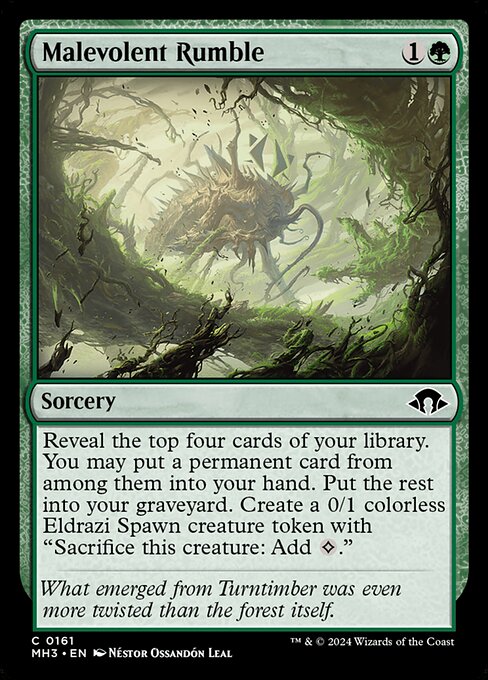
The biggest reason to splash green in the main deck was Malevolent Rumble.
Rumble is a fantastic fit for what we’re trying to accomplish. It digs through the top four cards of our library, potentially finds another permanent, and puts the remaining cards into our graveyard.
That’s already useful when we’re trying to find sacrifice fodder or important lands, but the real appeal is that we’re also getting more opportunities to put Darklight Phoenix into the graveyard.
And unlike some other graveyard enablers, Rumble leaves behind an Eldrazi Spawn token that we can sacrifice for mana. That’s an extra body for our sacrifice engine, an additional source of acceleration, and another way to help us assemble our various combinations of cards. The Spawn isn’t black, so it won’t help pay Demon of Death’s Gate’s alternative casting cost directly, but there’s still plenty we can do with it.
The other major change was replacing some of our original supporting creatures with a few more experimental inclusions.
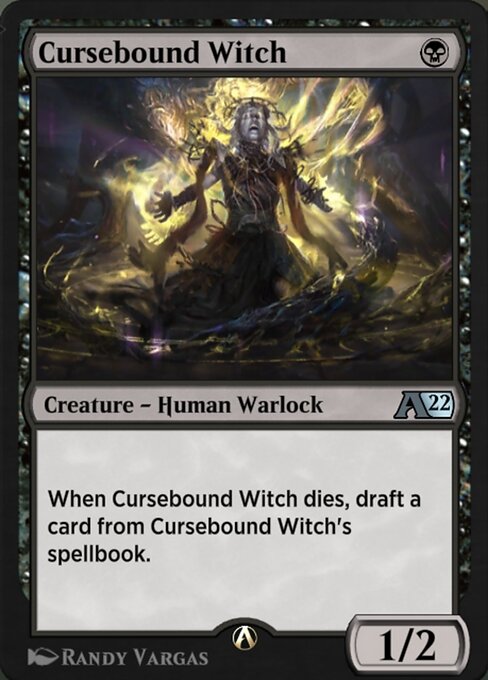
Cursebound Witch is an interesting option because it gives us another cheap black creature that actually rewards us for sacrificing it. That’s important in a deck like this. We’re going to sacrifice creatures regardless, so we might as well get something out of the deal whenever possible.
The Witch’s spellbook mechanic also introduces a little extra variety into our games. We aren’t always going to get exactly the same resources, but that flexibility can be valuable when we’re trying to turn otherwise expendable creatures into something useful. And, naturally, there’s something appealing about adding a little more randomness to a deck that already has this many moving pieces.
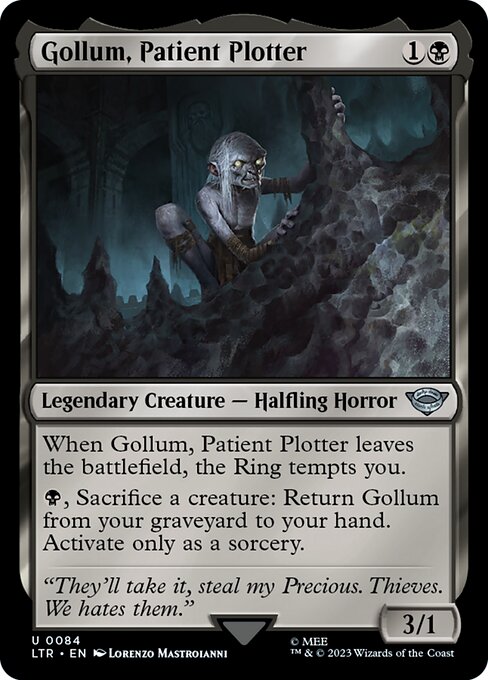
I also wanted to experiment with Eternal Student and Gollum, Patient Plotter as additional creatures we could find with Buried Alive.
One of the interesting things about playing Buried Alive is that we’re not obligated to find three Phoenixes every single time. That’s certainly going to be the default in a lot of games, but having a few other creatures that can provide value from the graveyard gives us more flexibility.
Sometimes we’ll already have Phoenixes available. Sometimes we’ll be missing another part of our engine. And sometimes the game simply won’t be about putting as much flying power onto the battlefield as possible.
Having a couple of alternative targets means Buried Alive can potentially do more than just assemble the same three-card package every game. Whether those extra options are actually worth the deck slots is another question, but that’s what we’re here to find out.
A Better Sideboard
The other major advantage of adding green is access to a much more flexible sideboard.
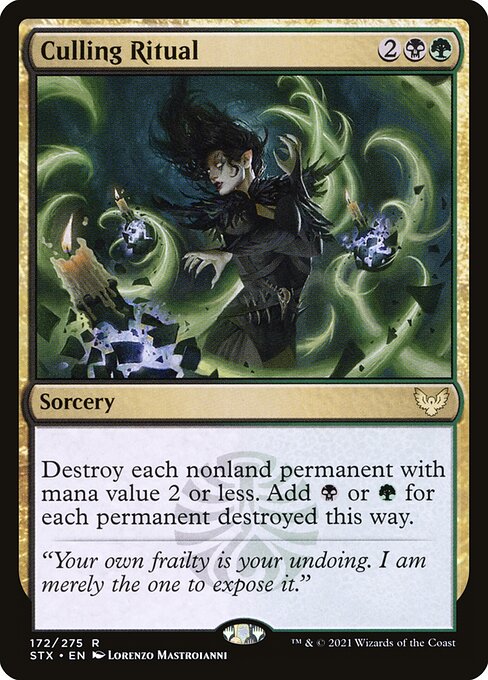
Culling Ritual is one of the biggest additions. Historic has no shortage of decks relying on cheap permanents, and Culling Ritual can completely dismantle certain board states while generating a substantial amount of mana in the process.
It’s particularly appealing against decks that flood the battlefield with inexpensive creatures, tokens, or other low-cost permanents. Of course, there’s a downside: we’re playing plenty of cheap permanents ourselves.
So this isn’t necessarily something we can throw into every matchup without thinking. But having access to a powerful reset button against decks that can otherwise overwhelm us is a worthwhile tradeoff.
Witherbloom Charm gives us another flexible piece of interaction, with multiple modes that can be relevant depending on what we’re facing.
I’m a big fan of sideboard cards that cover several different situations, especially in a format as broad as Historic. We only have fifteen slots to work with, and dedicating too many of them to narrow answers can leave us exposed to everything else.
The second sideboard also includes cards like Phoenix Fleet Airship, Origin of Metalbending, Thoughtseize, and True Ancestry.
The idea here was to give ourselves more ways to adjust our approach depending on the matchup, rather than relying entirely on racing our opponent with the same creature package every game.
Gameplay
The second version is where I wanted to see whether the additional consistency and flexibility were worth complicating the mana base. That’s always the tradeoff when splashing another color. The original mono-black version had the luxury of playing almost entirely black mana sources, which is particularly important when our explosive turns involve cards like Culling the Weak and Buried Alive.
Adding Blooming Marsh and Overgrown Tomb gives us access to green, but we now have to pay more attention to our opening hands and the order in which we’re playing our lands.
On the other hand, Malevolent Rumble offers something the original list was missing: a way to simultaneously dig for resources, fill our graveyard, and develop another sacrificeable body. That’s a lot of useful functionality packed into one card.
The other question is how much value we’re getting from the new creature package. Cursebound Witch is appealing because it fits naturally into what we’re already doing, but the randomness of its spellbook means it won’t always give us the exact resource we need.
Likewise, having additional Buried Alive targets sounds great in theory, but the real test is how often we’re happy to find something other than Darklight Phoenix. If those situations are relatively rare, we might be better off using those slots on additional interaction or consistency tools.
And that brings us back to the question that has been following this deck since the first version: How much extra stuff can we afford to play before we start making our best draws worse?
That’s particularly important when we’re already dedicating four slots to Demon of Death’s Gate. Demon is an incredibly powerful payoff when everything comes together, but it also asks quite a bit from us. We need three black creatures, we need to be able to afford the life payment, and ideally we want to cast it early enough that a 9/9 flying trampler can take over the game.
Adding too many other cards that require specific setups can make our opening hands awkward. On the other hand, the deck is capable of doing some genuinely absurd things when the pieces line up, and I don’t want to sacrifice all of that explosiveness just to make it look more like a conventional Phoenix deck.
Finding the right balance is the interesting part.
Closing Thoughts
Darklight Phoenix has quickly become one of the most interesting cards to build around in Historic, and I can understand why so many people have been experimenting with it.
The combination of Buried Alive, cheap sacrifice fodder, and explosive mana generation gives the deck a remarkably powerful foundation. It’s capable of putting a lot of pressure onto the battlefield in a hurry, and the recursive nature of Phoenix means opponents can’t necessarily answer that pressure with a single removal spell.
But what I like most about the card is how much room there is to experiment with the rest of the shell. You can focus entirely on maximizing Phoenix’s consistency, build around additional sacrifice payoffs, or try to find entirely different ways to take advantage of all those creatures dying.
Naturally, I chose the option that involves sacrificing three creatures and six life to cast a gigantic Demon, because why wouldn’t I?
Demon of Death’s Gate might not be the most efficient thing we could be doing with this strategy, but it gives the deck a completely different way to threaten the opponent. And there’s something deeply satisfying about taking a collection of otherwise unassuming one-mana creatures and turning them into a 9/9 flying trampler.
The first version was an attempt to see just how much we could squeeze out of that sacrifice engine, with cards like Torgaar and Dark Matter Manipulator providing additional ways to take advantage of our resources. The second version takes a slightly different approach, trading some of those payoffs for more graveyard setup, card selection, and sideboard flexibility.
I think there’s still plenty of room to keep working on the idea, particularly as the Historic metagame continues to settle following Reality Fracture. There’s no shortage of potential sacrifice payoffs or graveyard synergies we could explore, and I wouldn’t be surprised if the best version of this particular Demon shell looks quite different after another round or two of testing.
Thanks for reading!
As always, feel free to comment and leave any questions you have below. And make sure to come back next week for even more Fun & Jank!
If you’re interested in more fun content, come join me on stream and help brew our next deck! Until next time, have fun, play jank.
Happy Brewin’!
Premium
Enjoy our content? Wish to support our work? Join our Premium community, get access to exclusive content, remove all advertisements, and more!
No ads: Browse the entire website ad-free, both display and video.
Exclusive Content: Instant access to all exclusive articles only for Premium members, at your fingertips.
Support: All your contributions get directly reinvested into the website to increase your viewing experience!
Discord: Join our Discord server, claim your Premium role and gain access to exclusive channels where you can learn in real time!
Special offer: For a limited time, use coupon code L95WR9JOWV to get 50% off the Annual plan!
Plum is the creator of the Jank Tank.
He started playing at the ripe old age of 12 and immediately fell in love with the infinite possibilities that deck building could lead to.
He truly understands that jank is a mindset, and spends most of his free time brewing and concocting new and exciting deck lists to help inspire and promote creativity within the MTG community.