Last episode we focused on the list we took to Mythic this month: Matchstick Burn. This week, I’m going to take a step back from attacking the meta with oddballs and focus on some random brews we’ve been playing on stream. None of these have been totally fleshed out, but it’s been fun testing out some new (and old) interactions that I haven’t seen anyone try out yet.
Here is what we’re diving into today:
Mindrake Moonshadow: A mono-black deck trying to play Hymn to Tourach at home
Political Convoke: A known aggro tokens shell with a bit of an upgrade.
Ironheart Improvise: A mono-blue artifact list that cheats out big spells with a fun package we have’t played before.
Let’s get right into the lists, how they work, and the specific gameplay choices you have to make to get the most out of them.
Rakdos Moonshadow lists rely heavily on Red’s explosive discard engines, things like Faithless Looting, Detective’s Phoenix to recur, and threats like Marauding Mako. When you cut Red, you lose that immediate card filtering and the hyper-aggressive phoenix recursion, but I wanted to see if mono-black has any merit in terms of consistency, clean mana, and better disruption.
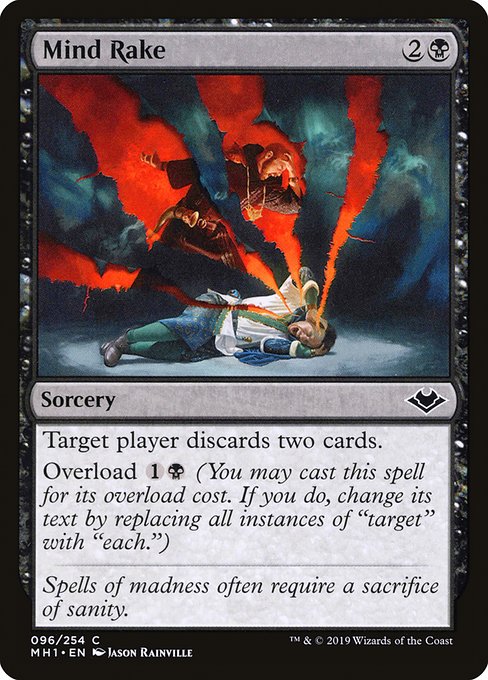
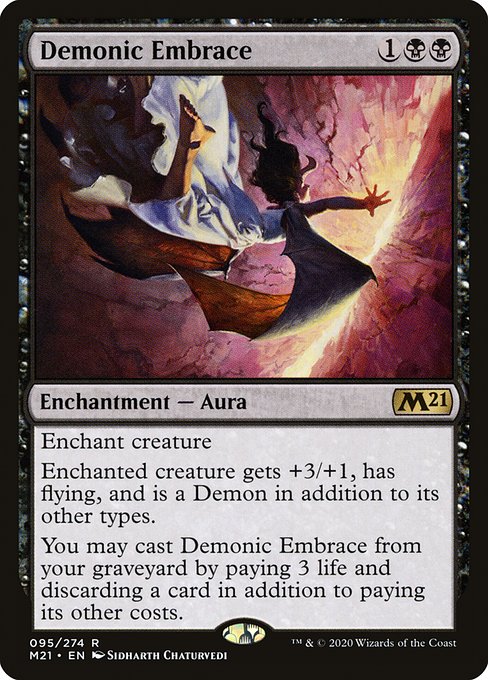
Instead of trying to replicate Red’s discard tools, we are treating the “symmetric discard” of Mind Rake not as a penalty, but as our main engine. Putting Demonic Embrace into the deck is a perfect pivot here. It’s not quite as easy to recur as Detective’s Phoenix, but it gives our massive ground-pounders (Nethergoyf and Moonshadow) exactly what they need in the mid-game: absolute evasion and a massive power boost.
Gameplan
This deck can trade early explosiveness for early disruption. Without Red, we can’t rely on looting. Instead, this list pivots into a heavy hand-shredding strategy. Curving Thoughtseize into an overloaded Mind Rake feels absolutely disgusting against most decks. By overloading Mind Rake, we tear our opponent’s hand apart while discarding our own permanent cards to instantly wake up Moonshadow and grow our Nethergoyfs. If the opponent manages to stabilize on the ground, we buy back Demonic Embrace from the graveyard to give our giant threats Flying and +3/+1 to close out the game quickly
Mind Rake: This is a pet card I’ve been trying to find a home for, and it fits perfectly here. For two mana, you can Overload it, forcing both players to discard two cards. Normally, hitting yourself for two cards is a massive downside. But when you have Nethergoyf on the board, discarding two permanent cards (like a land and a creature) instantly grows our goyf while stripping their best cards away.
Demonic Embrace: While we don’t have access Detective’s Phoenix in mono-black, Demonic Embrace plays a similar role. It gives the enchanted creature +3/+1, Flying, and Demon typing. The best part? You can cast it directly from your graveyard by paying 3 life and discarding a card. It’s the perfect discard outlet for Mind Rake or Bitter Triumph, and it turns a vanilla Nethergoyf or Moonshadow into a terrifying, evasive threat.
Overlord of the Balemurk: This acts as our self-mill engine to help grow our threats, it mills us for four cards right away. This feeds our Nethergoyf with different card types and has a very high chance of dumping lands or creatures directly into the yard to make Moonshadow into a big ‘ol mama. Not a bad threat if it sticks around long enough to turn into a creature.
Things to Note
1.) Since Mind Rake hits your hand too, you have to be very careful about what you hold onto. Ideally, you want to sequence your turns so that you play your threats first, like turn-one Moonshadow or Nethergoyf, and then use Mind Rake on turn two when the only cards left in your hand are lands, Demonic Embrace, or redundant spells you don’t mind losing.
2.) Remember that Dauthi Voidwalker exiles cards your opponent discards with a void counter instead of letting them hit their graveyard. Obviously this can do a decent job of hosing a few strategies, but it also allows you to steal some incredible cards for your opponent.
Gameplay
Although Mind Rake and Demonic Embrace are highly entertaining and can really catch opponents off guard, staying mono-black is most certainly not optimal. Splashing red for card filtering (Faithless Looting) and better recurring threats (Detective’s Phoenix) ultimately yields a stronger deck. But the fact that other midrange decks like Jund and Frog have a much higher card quality means that it struggles to out-value those builds in general.
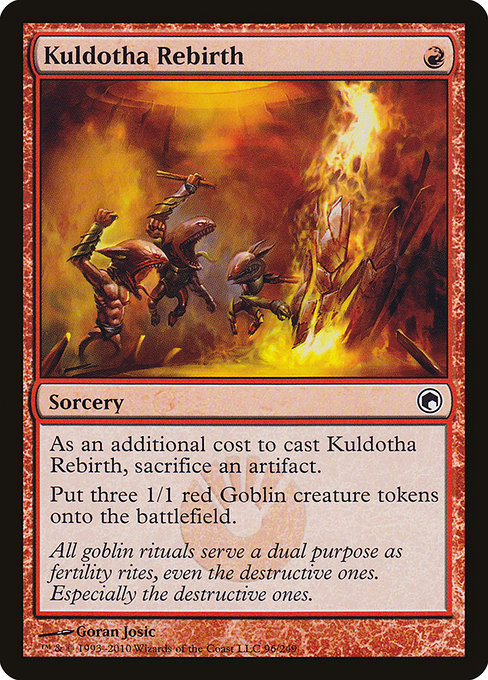
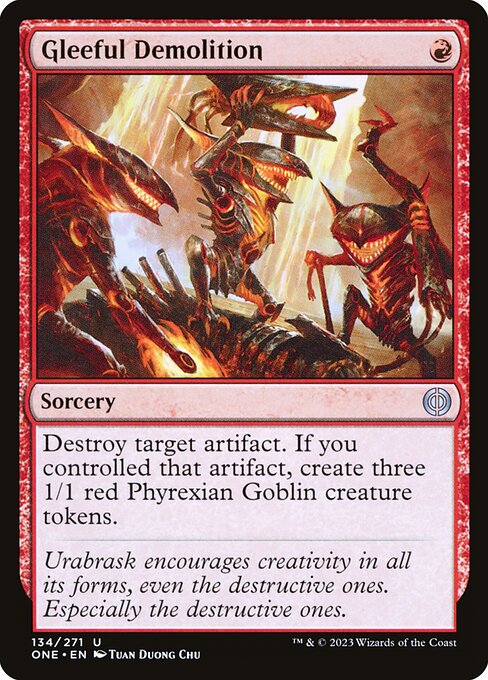
Boros Convoke is a well known deck featuring incredibly cheap ways to build a token army like Gleeful Demolition and Kuldotha Rebirth. The deck aims to flood the board quickly with cheap creatures and then use those to power out big threats like Venerated Loxodon or go wide with Goblin Bushwhacker.
It’s a rather explosive strategy that can easily get 8+ power on the board by turns 2-3 which can be hard for many decks to match.
I’m not sure why I haven’t seen anyone play it, but Political Triumph feels like a shoe-in for this strategy. Because Political Triumph costs only W and places a counter on itself whenever a creature enters, token-generating decks can easily trigger its fourth counter the turn after it’s played. This immediately draws you a card and pumps your entire board with +1/+1 counters. It’s an incredibly cheap investment for a payoff thats trivial to achieve.
If you happen to not be familiar with Boros Convoke, the goal is pretty simple. You get an artifact on the board early such as Ornithopter or the token from Voldaren Epicure, then trade it for three 1/1 creatures with Rebirth or Demolition.
The deck has multiple ways to take advantage of having 3+ creatures ont he board that early such as Venerated Loxodon or one of our Bushwhackers to pump the team and get in quick damage. Adding Political Triumph to this hyper-aggressive shell creates an incredible engine.
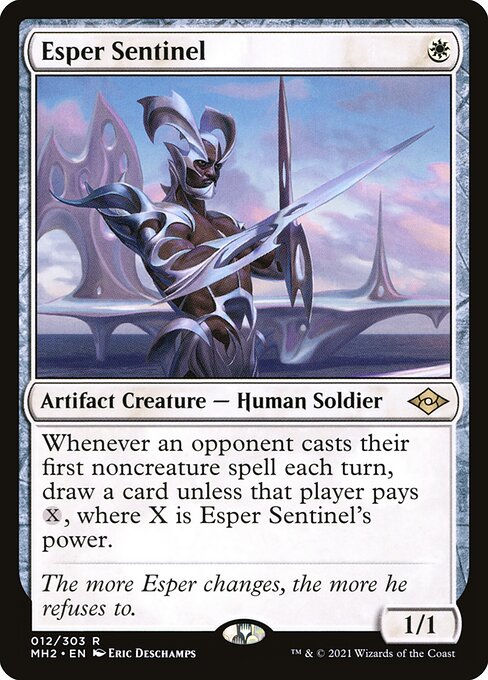
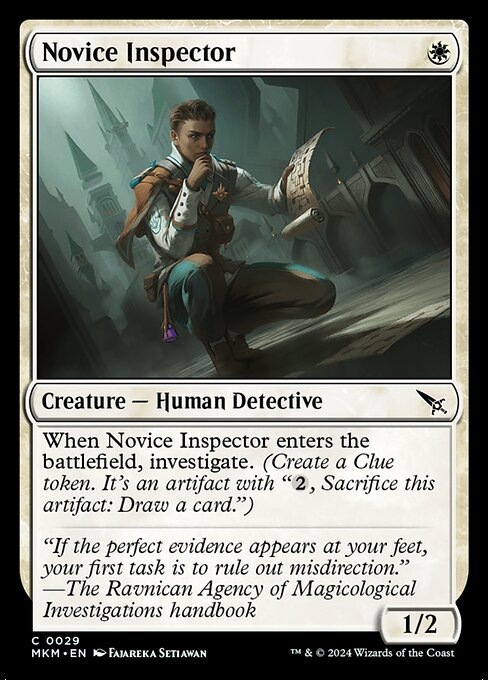
Artifact Enablers: This deck relies heavily on getting an artifact on the board on turn one. Esper Sentinel, Epicure, Inspector, and Ornithopter set us up for a turn two (or one) Kuldotha Rebirth effect. It’s nice that these are all one mana or less meaning that they help get Political Triumph triggers easily, but can also just be used to spam the board and build our creature count quickly if we don’t have a token maker in hand.
Payoffs: The payoffs come in two different categories. Permanent buffs, or quick damage. This is technically a variant of 8-Whack since we play both Goblin Bushwhacker and Reckless Bushwhacker to pump the team in swing in fast. However, we also have Loxodon, Warden of the Inner Sky, and Poltical Triumph to give our board a permanent buff of some sort.
Grind: Although this deck doesn’t “grind” in the traditional sense, it has plenty of ways to keep the cards flowing. Clues, Blood tokens, and Sunbaked Canyon Tokens provide card draw while Triumph and and Warden give us card selection via their scry abilities. Even after board wipes or removal heavy matchups it can be easy to rebuild your board quickly.
Things to Note
This deck is incredibly consistent. Political Triumph on turn one into pretty much any creature and a Rebirth effect on turn two gives you 8 power on the board regularly. Ornithopter plays an important role in getting these explosive starts, but they happen quite often without it thanks to our cheap artifact enablers. You can even Gleeful Demolition an Ornithopter on turn one and follow it up with a Goblin Bushwhacker on two to get the party started even sooner.
Gameplay
When the deck works, it feels completely unfair. We had a game where we put 20 power on the board on turn three, leaving the opponent helpless. While explosive, the deck can occasionally run headfirst into a brick wall. We ended up losing to a random player jamming Fog in their Bo3 green deck and we just couldn’t come back that game.
I’d give this one a 10/10 in the Fun Department and I think Political Triumph over-performed every time we had it. The extra card draw helps mitigate the card-disadvantage of throwing away cards to fast aggro, while the scry triggers help clean up your draws and prevent you from flooding out on lands.
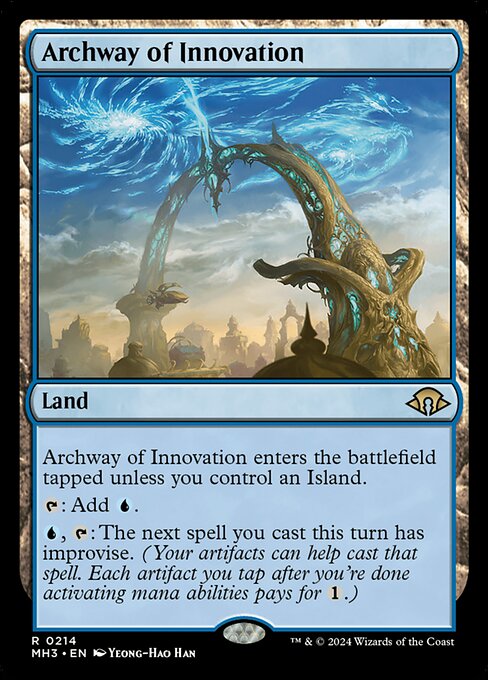
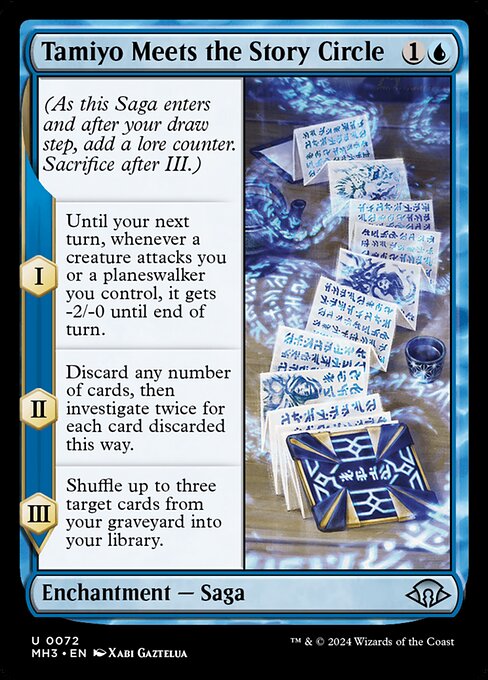
This is a fun version of a big mana deck that revolves around an engine we haven’t had a change to play on stream yet: Archway of Innovation and Tamiyo Meets the Story Circle
For Chapter II of the Saga, you can discard any number of cards to investigate twice for each discard. If you pitch two cards, you get four Clues. Archway of Innovation can then tap to give your next spell improvise, allowing those four Clues to act as four mana toward massive spells like The One Ring or Urza, Lord High Artificer. So rather than using traditional mana ramp like Hedron Archive or Forsaken Monument, we’re trade the extra utility for quicker starts. We even had a game where we played an Ugin on turn three off of a quick Archway start.
Gameplan
It just so happens that a new card from Marvel Super Heroes compliments our Archway of Innovation package rather nicely.
Serving as a backup “Archway on a stick,” this flying 3/4 legendary artifact creature gives all of your noncreature spells improvise. It lets you tap those clues, talismans (which already ramp lol), and other artifacts to help drop your high-cost Ugins, Kozilek’s Commands, or Rings. Along with Urza, Lord High Artificer we have a lot of ways to take advantage of getting a lot of artifacts on the board early.
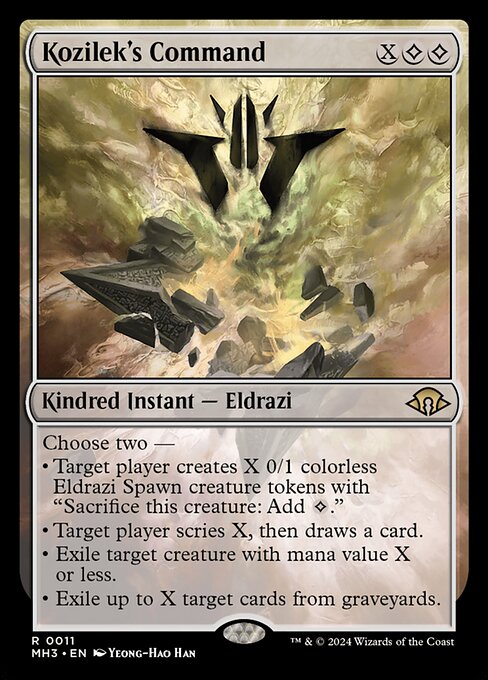
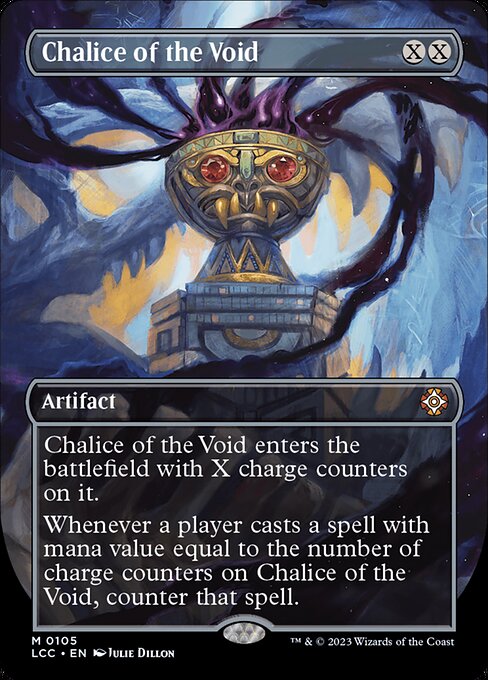
Early Interaction: Our main goal is to drop and Ugin as quickly as possible, but it can be challenge to do so in a world Psychic Frogs and Lightpaws. We to our best to bridge the early to mid-game through interaction and lock pieces like Kozilek’s Command and Chalice of the Void. Since we’re playing 8+ colorless cards with mana value seven or great we get to take advantage of Ugin’s Labyrinth too! A turn one Chalice hoses quite a bit in this format.
Ramp: Obviously our key components are Ironheart, Urza, and Archway, but we are playing some regular ‘ol mana rocks like Mind Stone and Talisman of Progress to make sure we have colorless mana for K-Command and can still advance our board without Tamiyo Meets the Story Circle.
Lands: Despite our main win-cons costing 7+ mana I’ve elected to only play 20 lands with Lorien Revealed as 4-of. With our improvise enablers its pretty easy to actually cast Lorien Revealed off of 2-3 lands while also having access to it as a land tutor. Keeps us lean and mean.
Things to Note
1.) Urza is a win condition on his own. The construct he makes can get huge if we end up making a lot of Clues with Tamiyo Meets the Story Circle. Those same Clues can also be tapped for mana to pay the 5 mana for his ability and spin the wheel into something useful.
2.) Tamiyo Meets the Story Circle’s third ability is actually rather useful in grindy match ups. Shuffling The One Ring, dead Ugin’s and even used up Story Circles is great and can give you a lot of inevitability in games that go long.
Gameplay
This deck did exceptionally well on stream, sporting a 5-1 record. Although we lost to Frog, we ended up beating some of the meta decks in the format like UW High Noon and Ruby Storm.
It still feels a touch clunky from time to time but the ability to drop an Ugin on turn three or four hopefully makes up some percentage points against a lot of decks. By the end of the matches, a few immediate changes were implemented to smoothen out the late game and I talked about some future tweaks. Mainly adding some more early game interaction thats easier to cast than Kozilek’s Command. Cyclonic Rift seems like a good contender for early game plays that also happens to be useful later on too.
Closing Thoughts
Individually, none of these concepts quite warranted a 2,000-word deep dive of their own. They still have some rough edges, a few clunky opening hands, and the occasional matchup where they run face-first into a brick wall (looking at you, random Green Fog player). But that’s what we’re here for, ya’ know? I love experimental brewing and trying weird stuff.
These three brews were a lot of fun to play and test on stream and I think each of them has promise in one way or another. I think we’ll be revisiting them in the near future and see if we can iterate more on their basic gameplans and come up with something even better.
Thanks for reading!
As always, feel free to comment and leave any questions you have below. And make sure to come back next week for even more Fun & Jank! If you’re interested in hearing about the other cards I’m brewing with from MSH, check out a previous article: Historic Brewer’s Review – Marvel Super Heroes
You can also check out more Fun & Jank in standard with The MTG Hero as he takes you through a fun new deck: Jeskai Synthesizer!
If you want to help me brew, come hang out with me on stream where we test, refine, and have a ton of fun together.
Happy Brewin’!
Premium
Enjoy our content? Wish to support our work? Join our Premium community, get access to exclusive content, remove all advertisements, and more!
No ads: Browse the entire website ad-free, both display and video.
Exclusive Content: Instant access to all exclusive articles only for Premium members, at your fingertips.
Support: All your contributions get directly reinvested into the website to increase your viewing experience!
Discord: Join our Discord server, claim your Premium role and gain access to exclusive channels where you can learn in real time!
Special offer: For a limited time, use coupon code L95WR9JOWV to get 50% off the Annual plan!
Plum is the creator of the Jank Tank.
He started playing at the ripe old age of 12 and immediately fell in love with the infinite possibilities that deck building could lead to.
He truly understands that jank is a mindset, and spends most of his free time brewing and concocting new and exciting deck lists to help inspire and promote creativity within the MTG community.