I’m Plum, and welcome back to Episode 81 of Fun & Jank!
We’ve got the big Marvel Super Heroes set right around the corner, which means everyone’s gonna be brewing with all the new superhero cards soon. But in the meantime, I’m still cooking up some brews on stream, and one deck I’ve been having a lot of of fun iterating on is Pupa Zoo.
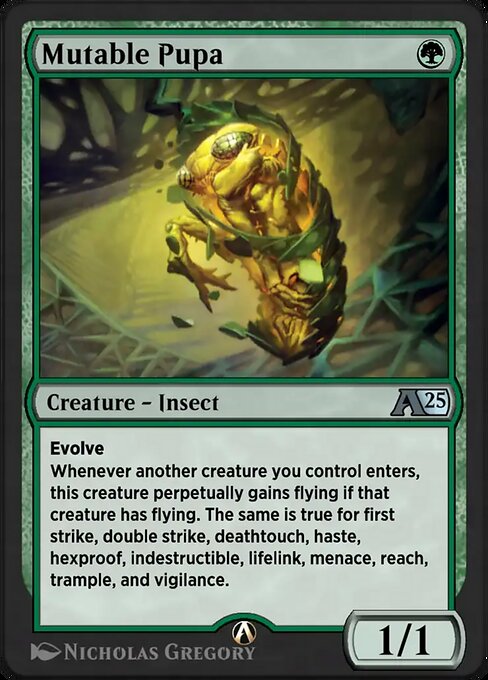
This deck is exactly what it sounds like, a Naya Zoo shell built around everyone’s favorite little 1/1 Insect, Mutable Pupa. The plan is simple: flood the board with efficient creatures and then turn that humble Pupa into a massive, keyword-stacked monster that can close out games in a hurry.
I’ve been tuning this list for a couple stream now and its been very enjoyable while also putting up some decent results. There’s a million ways to go about brewing a zoo list, and I’ve tried about 5 different versions of this deck so far, but the most recent one is something I think is worth sharing. Hence, I’m telling you about it write now haha. So let’s take a look at this fun little deck and our favorite new insect friend.
Let’s dive in.
Gameplan
Zoo is a long standing archetype in almost every format magic has to offer. It’s a highly aggressive deck historically named for its wide variety of animal and creature types. The strategy relies on playing the most mana-efficient, high-stat creatures available and backing them up with direct burn spells. Zoo typically features a low mana curve (averaging 2-3 mana) designed to drop fast threats and push lethal damage by turns 4 to 5. While it historically started in Naya colors (Red, White, Green), it has evolved into a powerhouse archetype you might be more familiar with known as Domain Zoo, shown below.
Although the modern iterations of the deck looks quite a bit different from the original versions, the formula has stayed the same. Cast some good creatures, attack with them, and then use burn to finish things off.
So while we’re still following that classic Zoo formula, play efficient creatures and attack, we’ve put a very fun twist on it by building the entire deck around Mutable Pupa. Mutable Pupa is the star of the show. For just one green mana, you get a 1/1 Insect with a powerful evolving ability (and the actual Evolve ability): whenever another creature you control enters the battlefield, Pupa permanently gains all of its keywords (flying, double strike, deathtouch, haste, lifelink, trample, vigilance, etc.).
Because we’re already playing a bunch of efficient creatures packed with relevant keywords, Pupa naturally turns into an absolute keyword soup as the game progresses. The deckbuilding opportunity cost is extremely low. We were going to play good aggressive creatures anyway, so Pupa basically gets all those abilities for free while growing over the course of the game. It rewards you for doing what Zoo already wants to do: flooding the board with creatures.
Creature Suite
The real joy of this deck comes from how we build up Mutable Pupa. Since Pupa permanently gains every keyword from creatures that enter the battlefield under your control, we deliberately chose creatures that provide the strongest, most relevant abilities.
Here’s the breakdown of our creature package and why we chose them:
4 Mutable Pupa – Our star and the reason the deck exists. A 1/1 for one mana that gets bigger and gains new abilities every time we play a creature. It starts small but becomes the biggest threat on the board by turn 4–6.
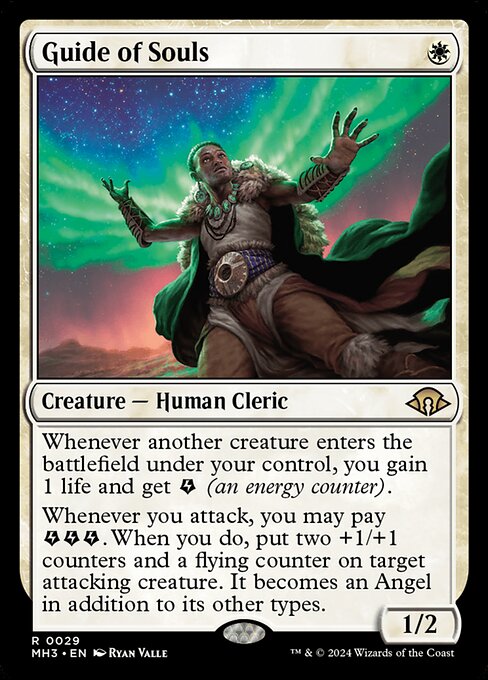
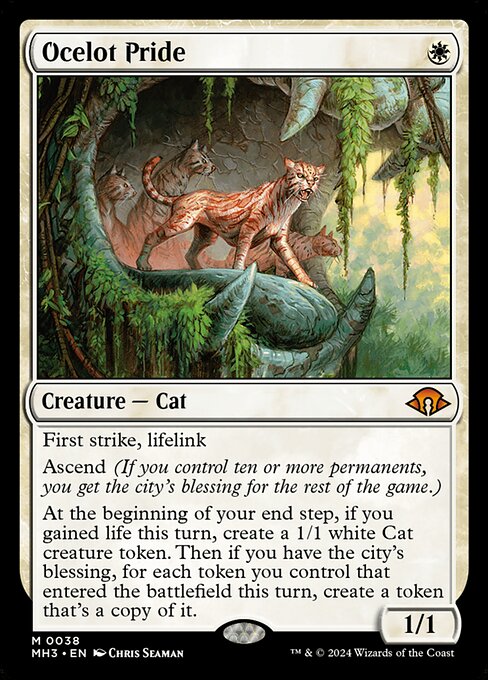
Guide of Souls and Ocelot Pride – This package is tried and true, and still good enough for a fast aggressive strategy like ours. During testing we won a lot of game just by getting these two on the board together. Although Pride doesn’t trigger Pupa’s evolve, it does give it First Strike and Lifelink.
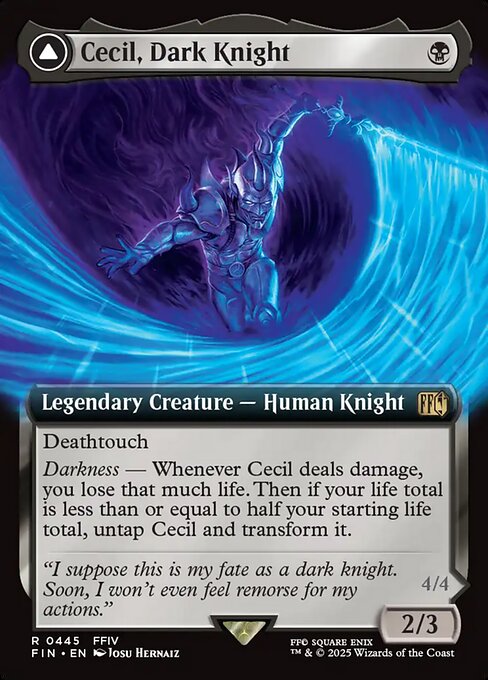
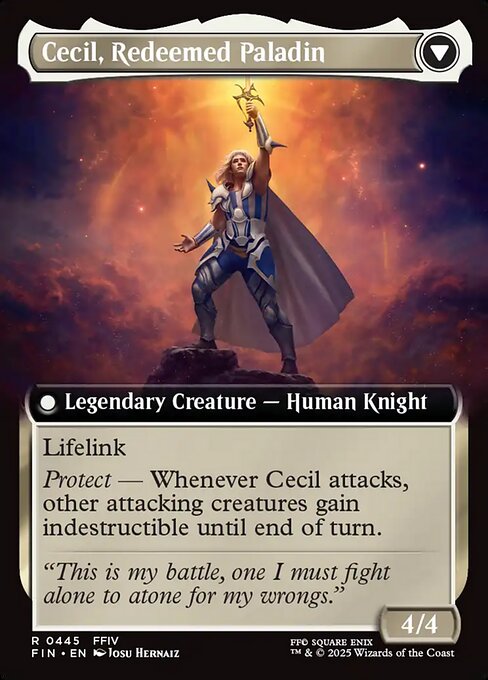
Cecil, Dark Knight – This is the most recent addition to the list and I’m still not sold on it. Since most of the other creatures will gain Lifelink at some point during the game, Cecil will almost never flip despite our painful manabase. However, a 2/3 can Evolve Pupa when it has either 1 or 2 power while also giving the bug Deathtouch too. He’s been good jsut based on stats alone, but I think we could find something more useful.
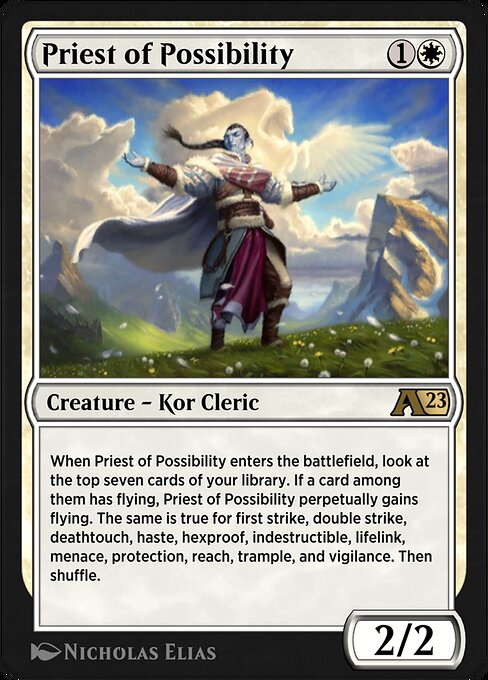
Priest of Possibility – Another keyword-soup alchemy card that also happens to be Pupa’s best friend. Since Pupa’s ability is checked on ETB, it will get any and all abilities Priest gets after it looks at the top 7 cards of your library. A curve of Turn-1 Pupa into Turn-2 Priest usually results in a two threats with Haste, Lifelink, and Flying.
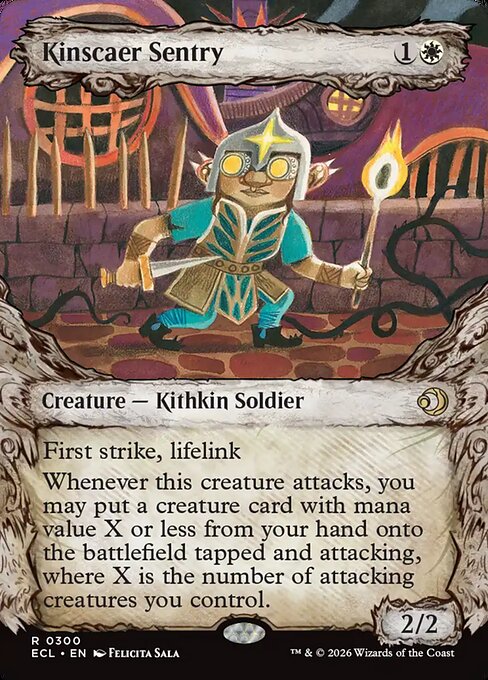
Kinscaer Sentry – A card we tried in Winota waaaay back when, but left us disappointed, actually feels powerful in a zoo shell. Just like Pride it gives Pupa First Strike and Lifelink, but also Evolves it on curve. But the real power comes from allowing us to “double-spell,” putting an extra creature on the field during combat. Notably this ability does not cast anything, which means it’s great against decks like High Noon. Sentry is also particularly powerful when played off of a Break Out granting it Haste.
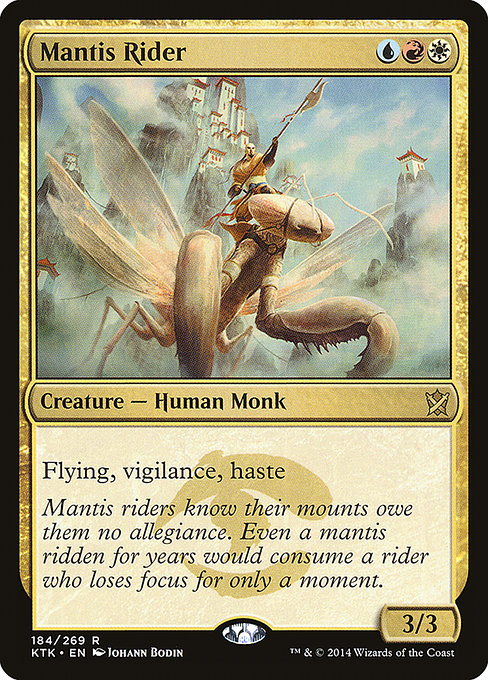
Mantis Rider – God I love this card. This whole deck may have just secretly been an excuse for me to cast Rider again. It’s fast, efficient, and evasive. More importantly it also grants Pupa three keywords, flying be the most important to help push damage through a clogged up board.
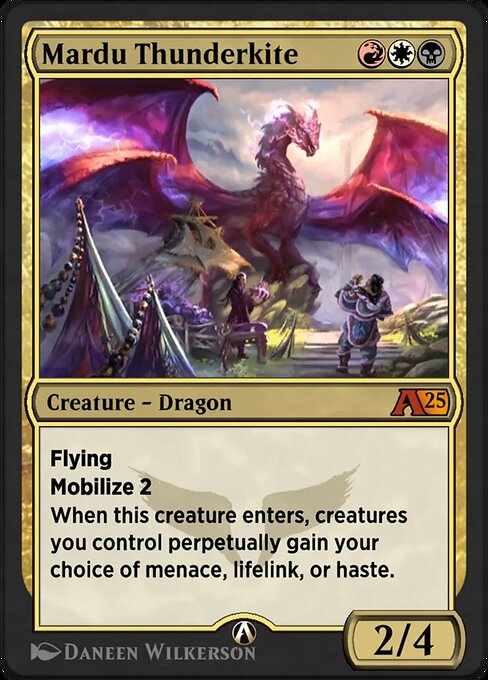
Mardu Thunderkite – This is another high priority target alongside Mantis Rider to help close out games. The 4 toughness helps get Pupa up to a 4/4 in most games and we mainly use it to grant our entire board Lifelink or Menace. Menace is especially effective at making blocking fruitless against most other creature decks.
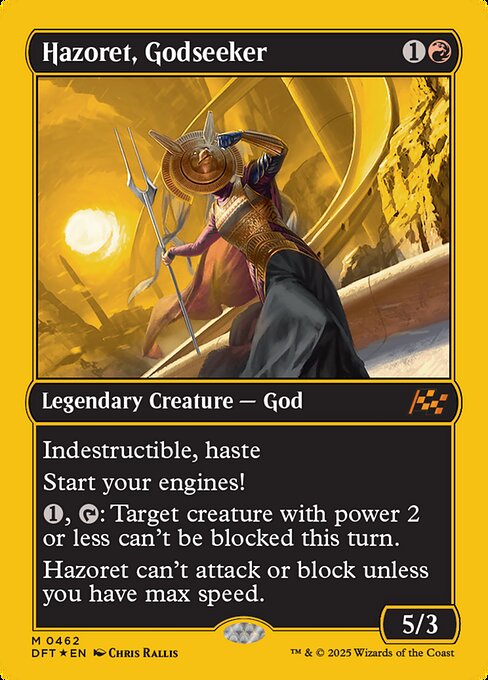
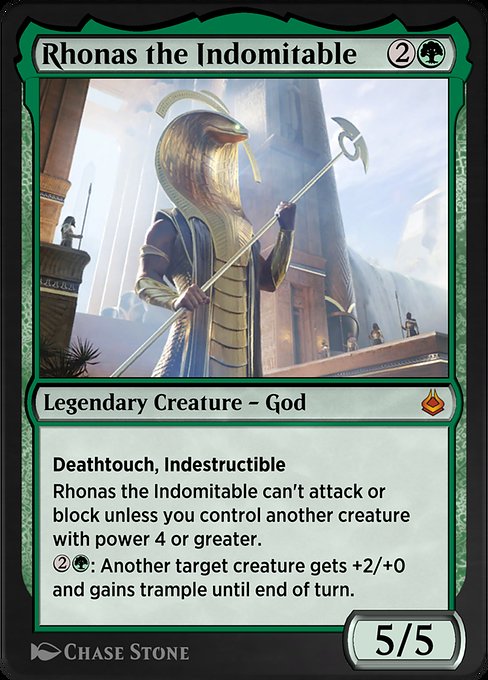
Hazoret, Godseeker & Rhonas the Indomitable – These are the two flex spots that I’m currently trying a pair of Gods in. They’re a couple of strong singleton payoffs, granting Pupa/Priest Indestructible and Deathtouch or Haste. Rhonas is particular is a great mana sink in the late game, and Hazoret’s restriction can be negated by putting her into play with Kinscaer Sentry.
Spells
While the creatures do most of the heavy lifting, we only run two non-creature spells in the main deck, but both have proven their worth during testing.
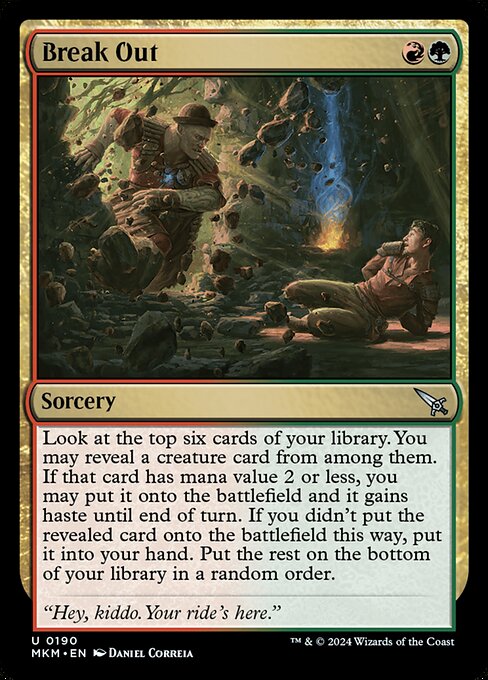
Break Out – Another recent addition but one I think we’ll be keeping in future versions of the deck. Giving any of early creatures haste is beneficial, but Break Out is insane with Kinscaer Sentry. You can can do some fun plays like the following:
Turn 1 – Mutable Pupa Turn 2 – Break Out, putting Sentry into play (Pupa becomes a 2/2 First Strike + Lifelink). Swing with both and use Sentry to put Hazoret into play (Pupa becomes a 3/3 First Strike + Lifelink + Indestructible).
That’s 10 damage on turn 2, and you gain 4 life, and it happens more than you think. Our other one-drops are still strong hits off of Break Out too, and I don’t mind snagging a Guide or Cecil either.
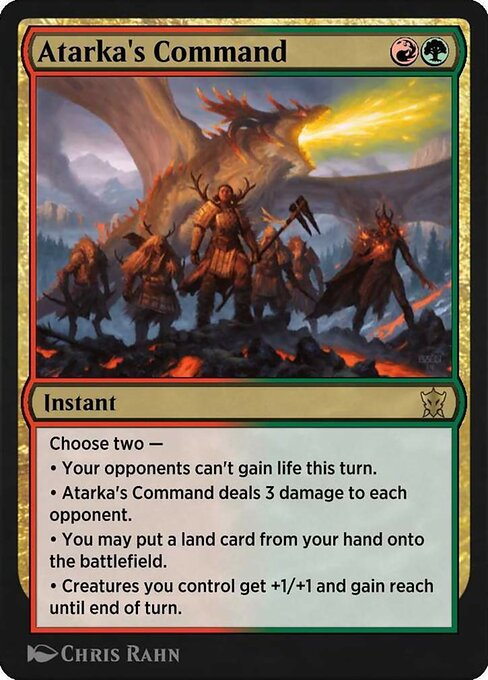
Atarka’s Command – I was jamming Chain Lightning and Boros Charm in previous versions, but cut them for other creatures. However, Command has stuck around because its proven to be a useful swiss-army knife. If we get Guide + Pride going and establish some tokens, the pump can double our clock. If we need some extra reach our to prevent our opponent from gaining life off of their own Guide/Pride then it stops that too. Could maybe go down to just a couple copies but I’ve liked it so far.
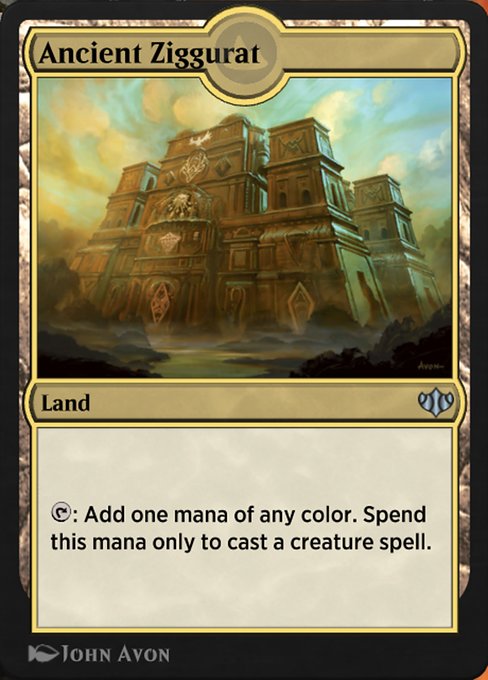
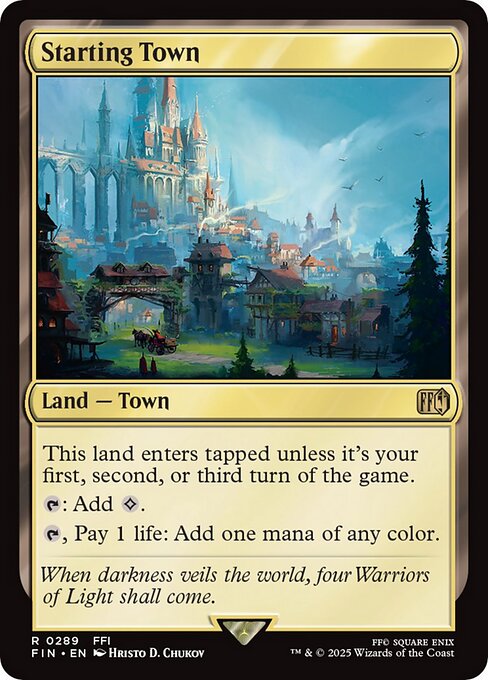
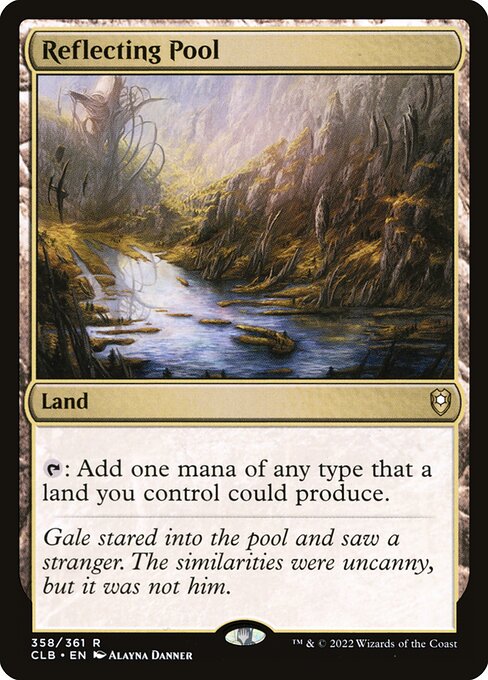
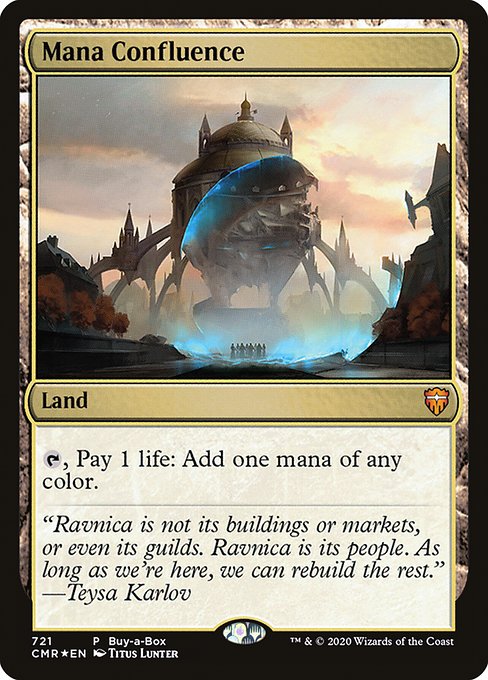
One of the more interesting parts of this deck is the mana base. Instead of going with the usual mix of shocklands and fastlands you see in most creature aggro lists, we’re running a full rainbow mana base built around Reflecting Pool, Ancient Ziggurat, Mana Confluence, and Starting Town.
The problem was that we have a ton of different color requirements (White for Guide of Souls and Cecil, Black for nothing but still splashed through some cards, Red and Green heavily). The shocklands were painful with all our one-drops, and we were often missing colors on key turns. The tradeoff is that the mana is a little more fragile to hate (like Blood Moon or Field of Ruin effects), but in practice it has felt way smoother than the shockland version. We very rarely color screw, and we can cast our spells on curve much more reliably. I will say that Ziggurat can be a bit awkward some times when we need to cast Break Out or Atarka’s Command.
I’ve been having a ton of fun playing this deck on stream, and it delivers exactly what I wanted. Normal games feel like classic Zoo: you curve out with one-drops into two-drops, establish a board, and start pressuring early. But the deck has a much higher ceiling than regular Zoo. Once Pupa starts collecting keywords and evolving, it can usually close out games by itself.
The deck is surprisingly resilient thanks to all the lifegain from Guide of Souls and Lifelink on Pupa. It also has more reach than it looks because of Atarka’s Command.It does have some bad matchups (heavy control or board wipes can be rough), but the explosive potential makes up for it. Overall it’s been one of the most enjoyable aggro decks I’ve played in a while.
I think a lot of losses we had on stream came from me not quite feeling settled on some mainboard numbers and the mana base. However, we have the speed to outclass a lof the format with the right hand. I’ve had good success against Jund Goyfs, UW High Noon, and other generic creature decks. Other matchups are highly sideboard dependent but still feel winnable.
The sideboard can really be anything you’re feeling but I tried to lean towards fighting the combo and graveyard centric decks, while also playing generic utility like Fragment that can be useful in a wide range of matchups.
The deck feels faster and more explosive than a normal Zoo list. You can steal games out of nowhere with a well-timed Break Out but it relies heavily on curving out properly and consistently. Playing around removal is challenging but fun when facing decks like Jund or Frog, but too much of it can just end the game for us before we even get going.
Closing Thoughts
Overall, Pupa Zoo has been one of the most fun decks I’ve brewed in a while. It feels good to play a somewhat traditional creature based aggro deck in Historic. The deck definitely has its rough spots, the mana base can still bite you sometimes, and it’s very reliant on curving out and finding Pupa or Break Out. And there’s some decks where playing creatures and swinging just isn’t enough.
If you enjoy aggressive creature decks I highly recommend giving this one a try. The best part is you can kind of play whatever key-word soup creatures you want. We didn’t even talk about cards like Swiftblade Vindicator, Barrowgoyf, or Qarsi Revenant that can also supe up your Pupa in cool ways.
It’s been a blast iterating on, and I’ll probably keep tuning it even after Marvel drops. That’s going to do it for Episode 81!
Thanks for reading!
As always, feel free to comment and leave any questions you have below. And make sure to come back next week for even more Fun & Jank!
If you want to help me brew, come hang out with me on stream where we test, refine, and have a ton of fun together.
Happy Brewin’!
Premium
Enjoy our content? Wish to support our work? Join our Premium community, get access to exclusive content, remove all advertisements, and more!
No ads: Browse the entire website ad-free, both display and video.
Exclusive Content: Instant access to all exclusive articles only for Premium members, at your fingertips.
Support: All your contributions get directly reinvested into the website to increase your viewing experience!
Discord: Join our Discord server, claim your Premium role and gain access to exclusive channels where you can learn in real time!
Special offer: For a limited time, use coupon code L95WR9JOWV to get 50% off the Annual plan!
Plum is the creator of the Jank Tank.
He started playing at the ripe old age of 12 and immediately fell in love with the infinite possibilities that deck building could lead to.
He truly understands that jank is a mindset, and spends most of his free time brewing and concocting new and exciting deck lists to help inspire and promote creativity within the MTG community.