Welcome back to Fun & Jank, and today we have Episode 83! Marvel Super Heroes has dropped and I’m very excited to start jamming all the fun an interesting cards the set has to offer
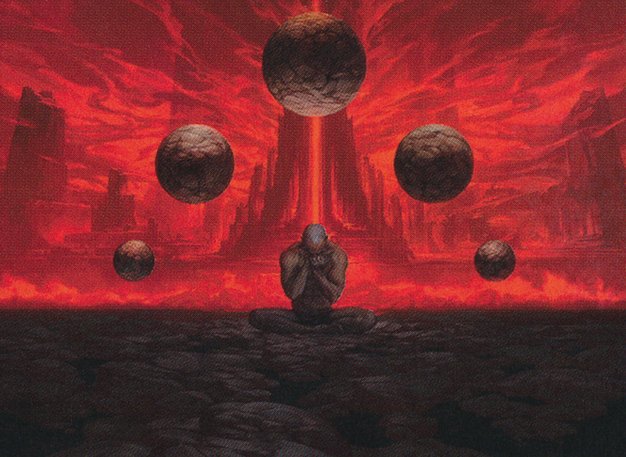
Hopefully you were able to check out my Brewer’s Review from a couple weeks ago to see all the things we’ll be playing on stream in the coming weeks. But there’s one card that has been stuck in my brain for a little while. Wizards is bringing one of the most powerful, iconic, and notoriously complex combo cards in the entire history of Magic: The Gathering to the Historic format: Doomsday.
For the uninitiated, Doomsday isn’t just a card; it’s an entire subculture of competitive Magic. It’s a literal puzzle box that forces you to exile your entire library and graveyard, replacing them with a custom-built, five-card stack of your choosing. Historically, this archetype has dominated eternal formats like Legacy and Vintage by leaning on hyper-efficient, free mana pieces and instant-win conditions like Thassa’s Oracle.
Unfortunately, we don’t have free card draw like Street Wraith, and we also don’t have Thassa’s Oracle. Which means we have to get a little more creative to win the game with the 5-card piles we make with Doomsday.
That means we’ll be playing more old-school, hard core Doomsday shells. Taking inspiration from the pre-Oracle days. I have a few piles figured out, some of which are more easy to make work than others. But before we look at our primary rough draft, we need to establish the foundational rules of the deck and the specific terminology we’ll be using to navigate these lines.
Doomsday Dictionary
If you dive into classic eternal format resources like the DDFT Wiki or historical retrospectives on the archetype, you’ll encounter a highly specialized language used to describe how these five-card stacks operate. To make sense of our Historic builds, here are the core terms you need to know:
1. The Pile
This is the heart of the deck. “The Pile” refers strictly to the five specific cards you choose to place back into your library after Doomsday resolves. Because your library is reduced to only these five cards, every single draw step, mill effect, and cantrip becomes entirely deterministic.
2. The Pile Cracker (or Enabler)
A pile cracker is the card you use to draw or manipulate that very first card sitting on top of your five-card stack. In faster formats, players look to hold up a cycler (like a card with cycling 0 to open the pile the exact same turn they cast Doomsday. In Historic, our pile crackers are standard, high-value cantrips like Opt and Thought Scour that we plan to naturally draw during our next turn’s draw step. Most of the time we’ll be waiting to win the turn after casting Doomsday.
3. The Pass-the-Turn (PTT) Pile
Because Historic lacks free mana acceleration like Lion’s Eye Diamond, we cannot realistically generate enough mana to cast Doomsday, crack the pile, and cast our win condition all in a single turn. Most of the time that’ll be 8+ mana, which is possible, yes, but much slower than we’d like. Therefore, all of our strategies rely on a Pass-the-Turn Pile. You cast Doomsday on Turn 3, look your opponent dead in the eye, and pass. You rely on your hand disruption to keep you safe, untap on Turn 4, and use your natural draw step to hand you your pile cracker.
4. The Devotion Check vs. The Empty Library
In modern versions of the deck, players rely on a “Devotion Check”—meaning they win via Thassa’s Oracle checking if their blue devotion matches or exceeds the remaining cards in their library. Because we are playing without Oracle, we are shifting entirely back to classic Empty Library win parameters (winning by attempting to draw a card when zero cards remain) or Cheating the Curve (using the empty library state to perfectly setup an un-interactable reanimation loop).
Now that we speak the language, let me show you a few very basic Piles we have available to us in Historic.
Simple Example Piles
Now, like I mentioned earlier, most of these will be PTT Piles, but if you have a cracker in hand and the mana required, you can make them happen the same turn you cast Doomsday, but the few following examples assume you’ve already set up your pile and passed the turn.
Note: “?” card are miscellaneous cards, and can be anything you want. Discard, Counter Spells, Protection, etc.
Example #1 – Jace Pile Starting Requirements: 5 mana (including at least UUUU)
Cast Jace, Wielder of Mysteries and use his +1 to mill two cards and draw into Consider
Cast Consider, surveilling your last card into your graveyard and draw.
Win the game because you’re drawing from an empty library via Jace’s static ability.
Example #2 – Manamorphose Chain Starting Requirements: 4 mana (including at least RU)
With four mana open, including U for later, cast Manamorphose.
Using the two mana you made from the first Manamorphose, chain into the other three until you draw Jace, Wielder of Mysteries. Use the last Manamorphose to make UU.
Use the two mana we left open from earlier in addition to the UU from the last Manamorphose to cast Jace, and use his +1 to win the game by drawing from an empty library.
Example #3 – Tainted Pact Starting Requirements: 6 mana (including at least BUUU) + A Pile containing 3 cards with unique names as cards 2, 3, and 4.
Cast Tainted Pact, exiling cards until you hit Jace, Wielder of Mysteries, putting him into your hand.
Cast Jace, Wielder of Mysteries, and activate his +1.
Draw a card from an empty library and win via Jace’s static ability.
Example #4 – Shelldock Isle (Non-Deterministic) Starting Requirements: 1 Mana (U) + 2 Turns
Play Shelldock Isle, and use it’s Hideaway ability to exile Emrakul, the Aeons Torn.
Wait a turn
Activate Shelldock Isle’s ability to cast Emrkaul and take an extra turn.
Swing with Emrkaul until your opponent is dead.
Example #5 – Cosmogoyf Fling (Non-Deterministic) Starting Requirements: 4 Mana (including at least BRRG) + Two misc. card in hand
Cast Faithless Looting, drawing into Cosmogoyf + Thud and discard two misc. cards from your hand.
Cast Cosmogoyf and then cast Thud, sacrificing Cosmogoyf to deal damage equal to it’s power (the number of cards exiled by Doomsday) to your opponent.
Now, of course there’s a bajillion other ways to achieve the same outcome with Doomsday piles. Dozens of spells, multiple color combos, and a variety of win-conditions means you can probably build Historic Doomsday in any manner you choose.
With the core philosophy and a few general combos apparent, let’s take a look at how we can structure the rest of the deck to be a competitive and interactive deck around these lines.
A Dimir Framework
To actually survive long enough to pull off these intricate wins on the Arena ladder, you can’t just be a glass-cannon combo deck. You need a shell that can interact, disrupt, and pivot if the opponent tries to lock down your graveyard.
I’ve been talking with many members of various Historic Discords since Doomsday was spoiled. We figured with so many pieces in Dimir colors being useful outside of a pile, and UB already having a strong suite of interaction, we concluded that a Dimir shell would support Doomsday well.
Hmm…a Dimir shell full of interaction? Does that ring a bell?
I took some notes from Dimir Frog and created something that functions somewhat as a hybrid of archetypes, much akin to old Gifts Ungiven Reanimator shells. With the Dimir framework as our base, we can use Doomsday as an immediate game ender after we play a long, controlling game.
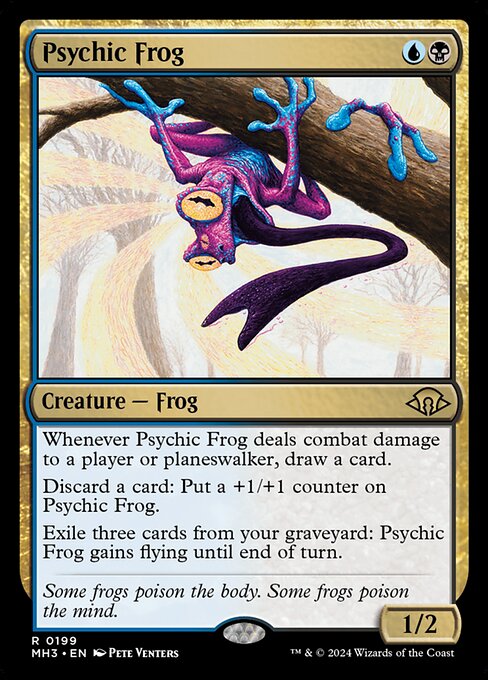
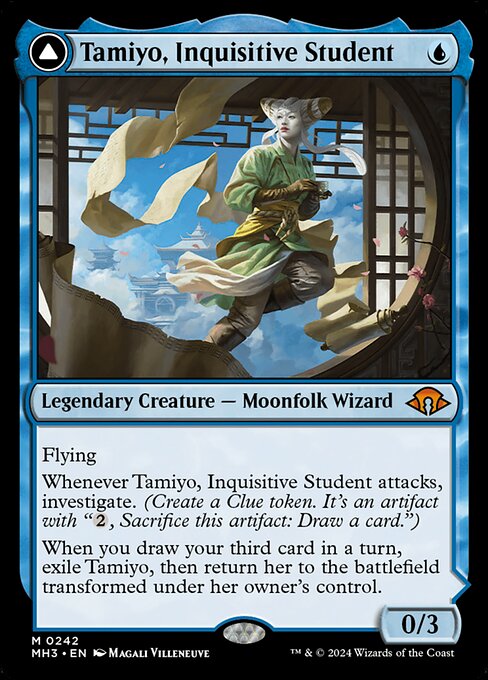
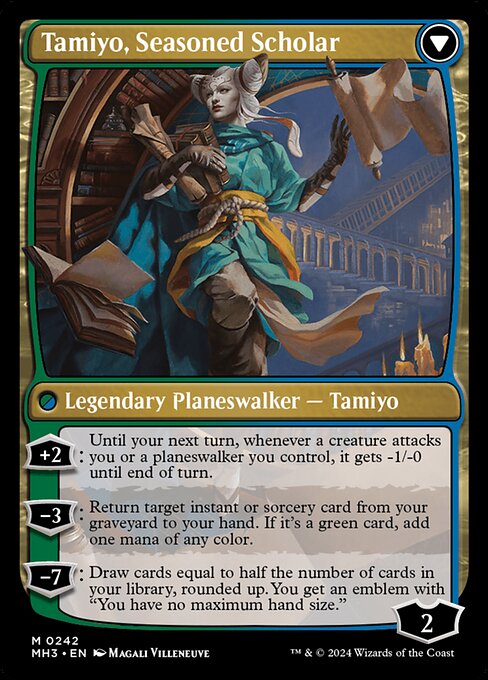
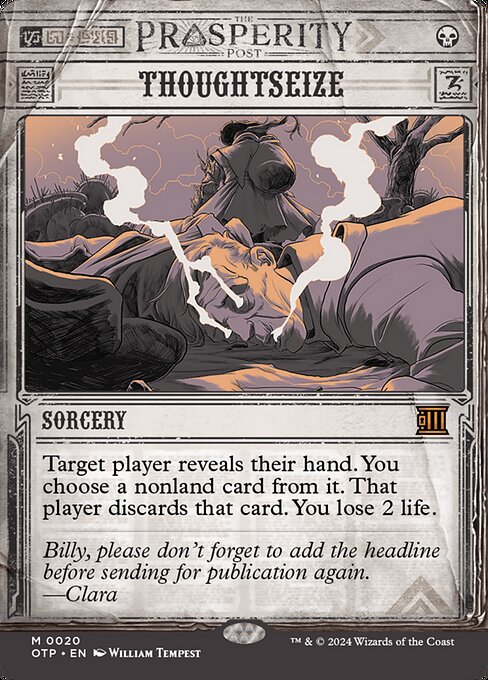
By running a full playset of Psychic Frog and Tamiyo, Inquisitive Student, we can easily force our opponent to play a traditional, interactive game. You use Thoughtseize, Counterspell, and efficient removal to keep the board clear while chipping away with threats. The moment your opponent stumbles, overcorrects, or taps out to answer your midrange pressure, you can turn on a dime and construct one of our two primary, customized turn-kills.
Pile #1: Laboratory Maniac Requirements: 5 mana (Including UUB) + At least 2 cards in hand + At least 4 life
Cast Does Machines to mill Laboratory Maniac and Deep Analysis, draw Pact of Negation and Unearth, and then discard two miscellaneous cards from your hand.
Cast Unearth to return Laboratory Maniac to the battlefield, then flashback Deep Analysis to draw from your empty library.
Win via Laboratory Maniac’s ability while having Pact of Negation as back up protection.
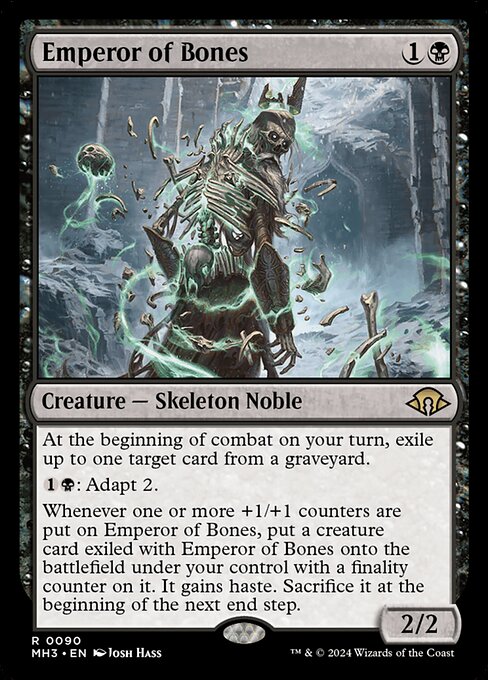
Pile #2: Emperor of Bones (Non-Deterministic) Requirements: 4 mana (Including UBB)
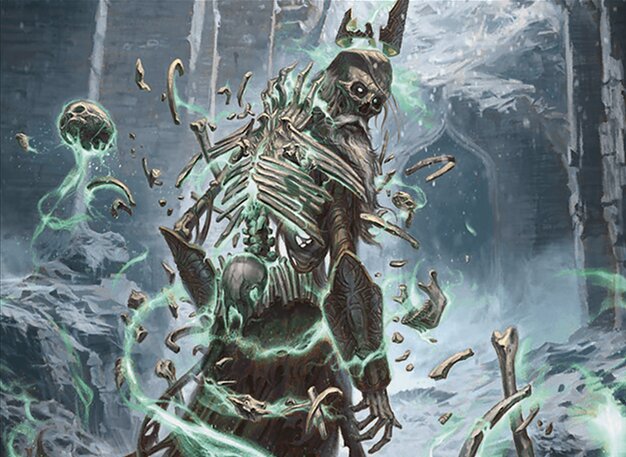
Cast Thought Scour milling Emperor of Bones and Ulamog, and drawing Unearth.
Cast Unearth to bring Emperor of Bones back to the battlefield.
Use Emperor’s triggered ability to exile Ulamog pre-combat.
Activate Emperor of Bones’ ability to put Ulamog on the battlefiled with ten +1/+1 counters on it
Attack with Ulamog (and other creatures) as a 17/17 creature with Annihilator 10.
Win (we hope).
By utilizing standalone threats like Psychic Frog and Emperor of Bones as the core engines of our Doomsday piles, we avoid the classic deck-building trap of stuffing the list with dozens of hyper-specific, uncastable combo pieces. ou don’t need to clutter your deck with four copies of clunky win conditions when Doomsday acts as a literal tutor for your entire library.
Running the rest of the package as 1-ofs, like a single Laboratory Maniac, a single Deep Analysis, and a single Ulamog, the Defiler keeps the main deck lean, interactive, and fluid. If you draw them naturally, you can pitch them to Psychic Frog or use them as standard midrange tools.
So with our core piles defined we can throw in the rest our Dimir staples and get ourselves up and running.
To successfully execute a Pass-the-Turn pile, you must ensure that your opponent cannot disrupt your hand, progress their board state efficiently, or counter your combo pieces.
4 Thoughtseize: The premier hand-disruption
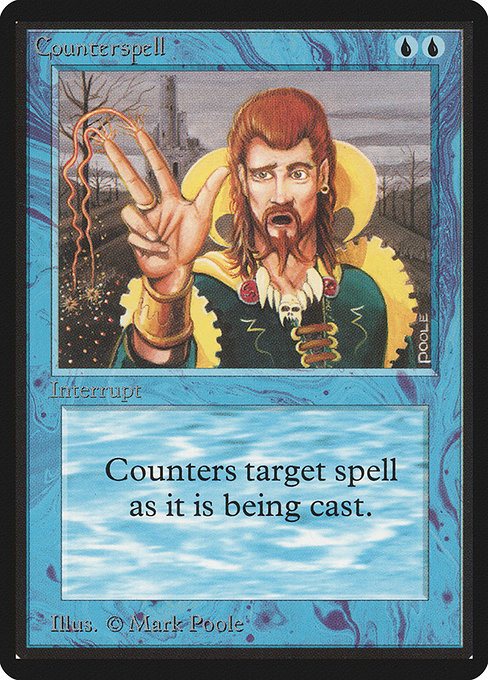
3 Counterspell: Standard, clean, hard interaction. It stops anything from an opposing threat to a hate piece like a graveyard-exile effect.
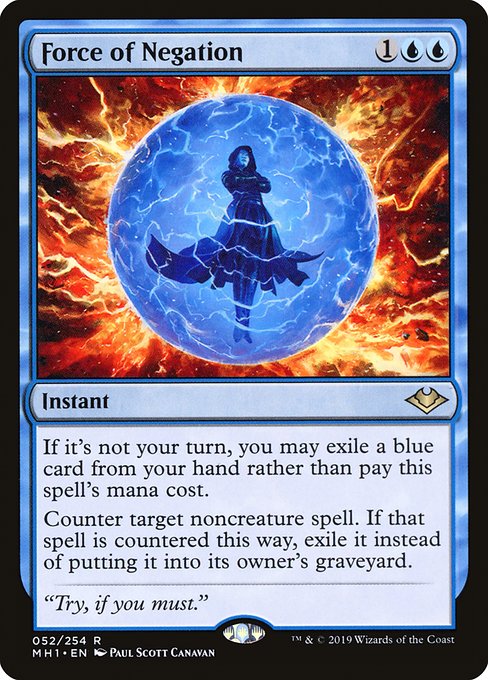
2 Force of Negation: Vital protection against opposing combo or heavily interactive decks. Always nice to have a free spell to keep your opponent on their toes.
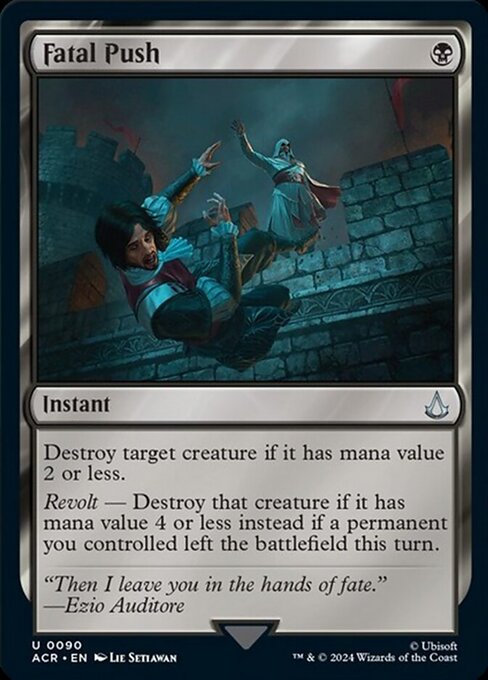
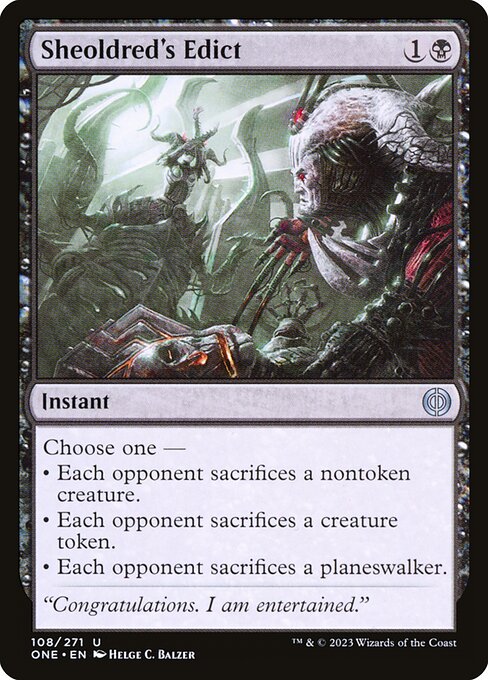
3 Fatal Push & 1 Sheoldred’s Edict: A simple removal package. Fatal Push efficiently answers early creatures like Tamiyo or Guide of Souls for a single mana, while Sheoldred’s Edict provides flexible tracking against larger threats, planeswalkers, or creatures with hexproof.
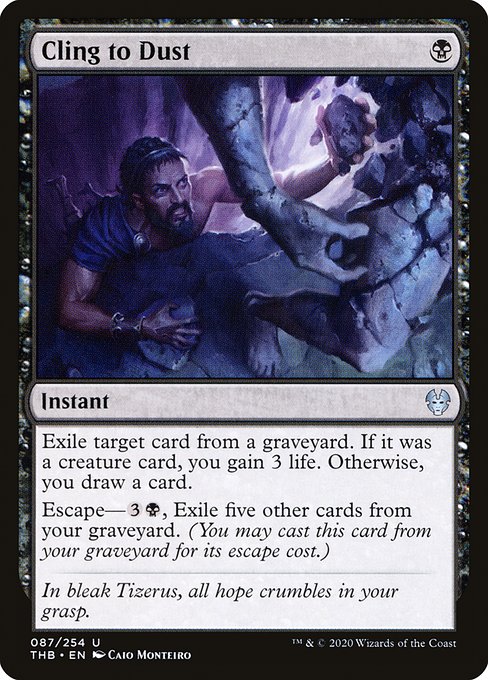
1 Cling to Dust: A highly flexible 1-of utility piece. It provides main-deck graveyard interaction against opposing reanimation or flashback strategies, acts as a repeating card-draw engine in long games via Escape, or gains us life against aggressive decks
Gameplay
On paper, pairing a tight, aggressive tempo threat like Psychic Frog with an all-in combo spell like Doomsday might look like two entirely different decks fighting for space. However, with Frog and Emperor playing so well by themselves in a highly interactive shell, it’s rather easy to marry the two ideas with enough efficient cards to glue it all together.
Frog demands a response the second it hits the board. Your opponent is forced to burn their removal spells, expend their countermagic, or tap out to try and block it. While they are completely distracted trying to keep the Frog from running away with the game, they are actively clearing the runway for you to safely drop Doomsday. Conversely, if your opponent plays overly cautious, holding up mana and interaction to try and stop a potential combo turn, you get to completely punish their passivity.
We ended up 3-2 on our first run with the deck, losing to Mono-G Devotion twice (not good for us). Despite that, the deck actually felt incredible. We beat a variation of Auras, UB Frog, and UW Control quite handily even with myself making some mistakes during pile construction.
The Matchup Breakdown
Mono-Green Devotion (0-2)
This is a tough nut to crack. Mono-Green doesn’t care about our efficient 1-for-1 spot removal, and they can completely out-pace our countermagic once they establish a big mana engine. Because they clog up the board with massive blockers and can easily race us with a Karn, the Great Creator package fetching graveyard hate or lock pieces straight out of the sideboard, this matchup is highly unfavorable. Going forward, we might need to adjust our sideboard to respect their ramp targets a bit more or just give in to the fact its a bad matchup.
Blue-Black Frog Mirror and Auras (2-0)
Against traditional fair decks, our hybrid design absolutely shines. In the UB Frog mirror, our ability to suddenly pivot from a tempo war into an un-interactive Turn 4-5 kill caught them completely off guard. Against Auras, our early interaction suite (Fatal Push and Thoughtseize) disrupted their initial setup, and once they slowed down to recover, a resolved Doomsday ended the game before they could rebuild.
Azorius Control (1-0)
Control decks are notoriously terrified of Doomsday, and this match proved why. Because we force them to respect our early threats like Tamiyo and Psychic Frog, they are constantly under pressure to tap out or play proactively on their own turn. Even with myself making a few pilot errors during pile construction, having access to Pact of Negation and Force of Negation meant we could force our win conditions through their entire wall of counter-magic.
Even with some rough numbers and a ton of room for refinement, this deck feels like it has some real game so far. I’m excited to see where more testing will take us.
Closing Thoughts
Taking this list through its paces on stream was so much fun. At its core, the deck plays like a traditional Dimir Frog build, but it comes with the added complexity of stacking custom five-card piles for Doomsday.
We definitely feel the absence of eternal-format staples. Lacking the raw velocity of free cyclers like Street Wraith or the explosive mana acceleration of Lotus Petal and Lion’s Eye Diamond means we have to work a lot harder for our wins. But even with the restriction of having to rely strictly on PTT piles (unless we have a lot of mana), the strategy feels more than strong enough to compete and hold its own in the current Historic landscape.
This is only week one of the new post-Marvel Super Heroes meta. Over the next few weeks, as more brewers experiment with Doomsday in different shells and discover new piles, I’m hoping that the deck gets innovated on fast. This Frog shell is fun as heck, but I’m also hoping we can develop a more traditional build focused more on having access to dozens of piles to play off of and win.
If you want to be ahead of the curve when that happens, grab this list, jump into the queue, and start practicing your piles now!
Thanks for reading!
As always, feel free to comment and leave any questions you have below. And make sure to come back next week for even more Fun & Jank! If you’re interested in hearing about the other cards I’m excited to play with from MSH, check out my last article: Historic Brewer’s Review – Marvel Super Heroes
If you want to help me brew, come hang out with me on stream where we test, refine, and have a ton of fun together.
Happy Brewin’!
Premium
Enjoy our content? Wish to support our work? Join our Premium community, get access to exclusive content, remove all advertisements, and more!
No ads: Browse the entire website ad-free, both display and video.
Exclusive Content: Instant access to all exclusive articles only for Premium members, at your fingertips.
Support: All your contributions get directly reinvested into the website to increase your viewing experience!
Discord: Join our Discord server, claim your Premium role and gain access to exclusive channels where you can learn in real time!
Special offer: For a limited time, use coupon code L95WR9JOWV to get 50% off the Annual plan!
Plum is the creator of the Jank Tank.
He started playing at the ripe old age of 12 and immediately fell in love with the infinite possibilities that deck building could lead to.
He truly understands that jank is a mindset, and spends most of his free time brewing and concocting new and exciting deck lists to help inspire and promote creativity within the MTG community.