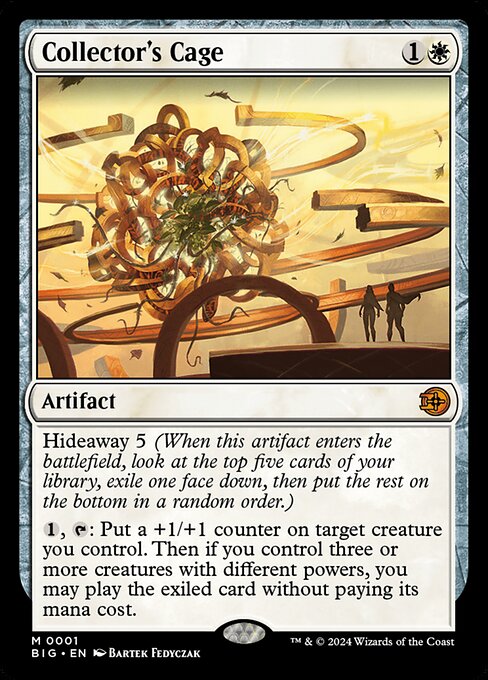
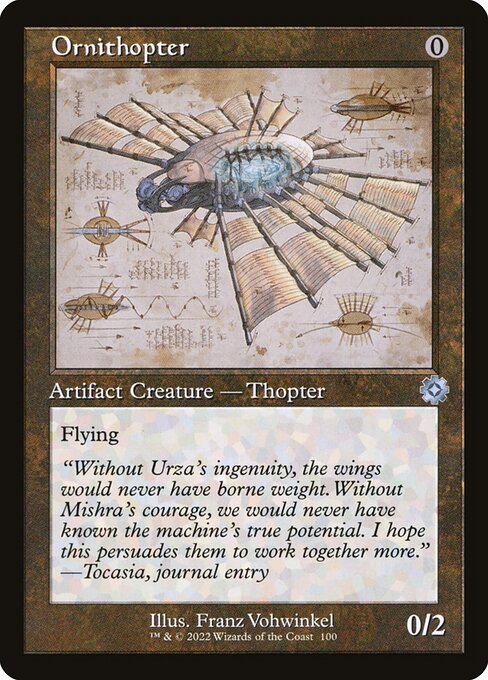
Fight Rigging is making a big splash in eternal formats. Join Plum as he explores the brewing process to see if Collector's Cage can make a splash too!
I’m Plum and today we’re going to taking a jab at a fun package that I haven’t seen anyone really mess with in Historic yet.
But first, let’s talk turkey.
Fight Rigging has been making real noise across eternal formats lately, including right here in Historic. In fact, we played it and broke it down in an article not too long ago. But while green beatdown decks have been having all the fun dumping massive threats onto the board, another Hideaway card got left in the dust.
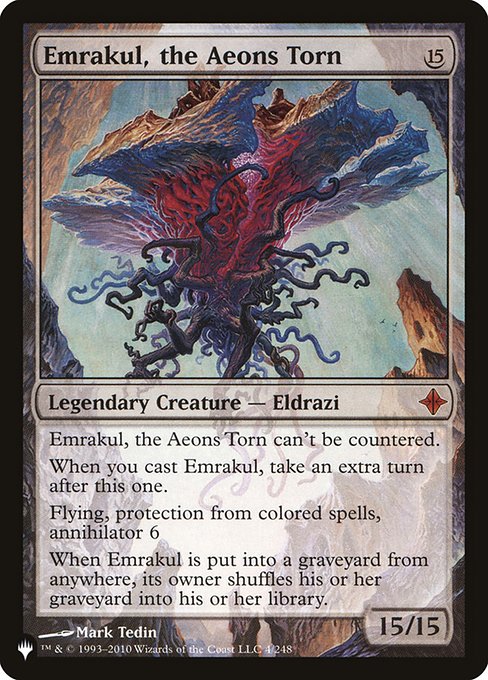
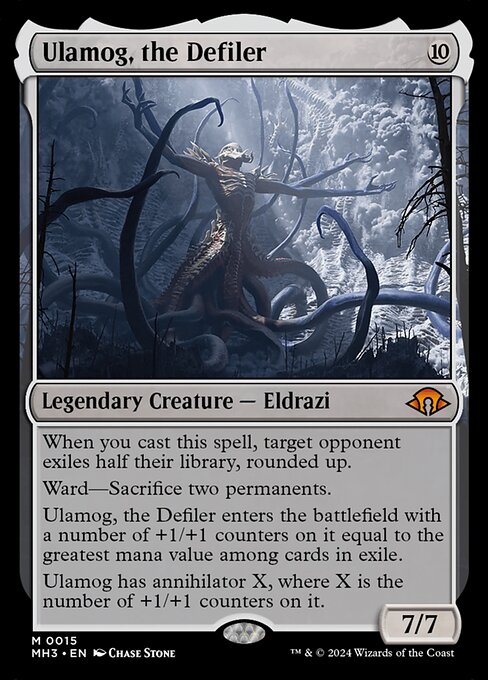
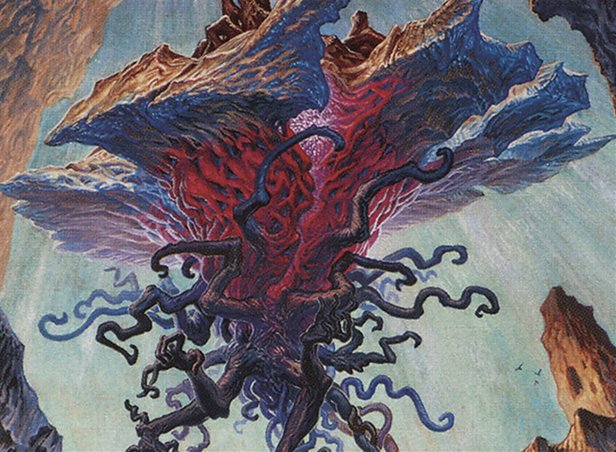
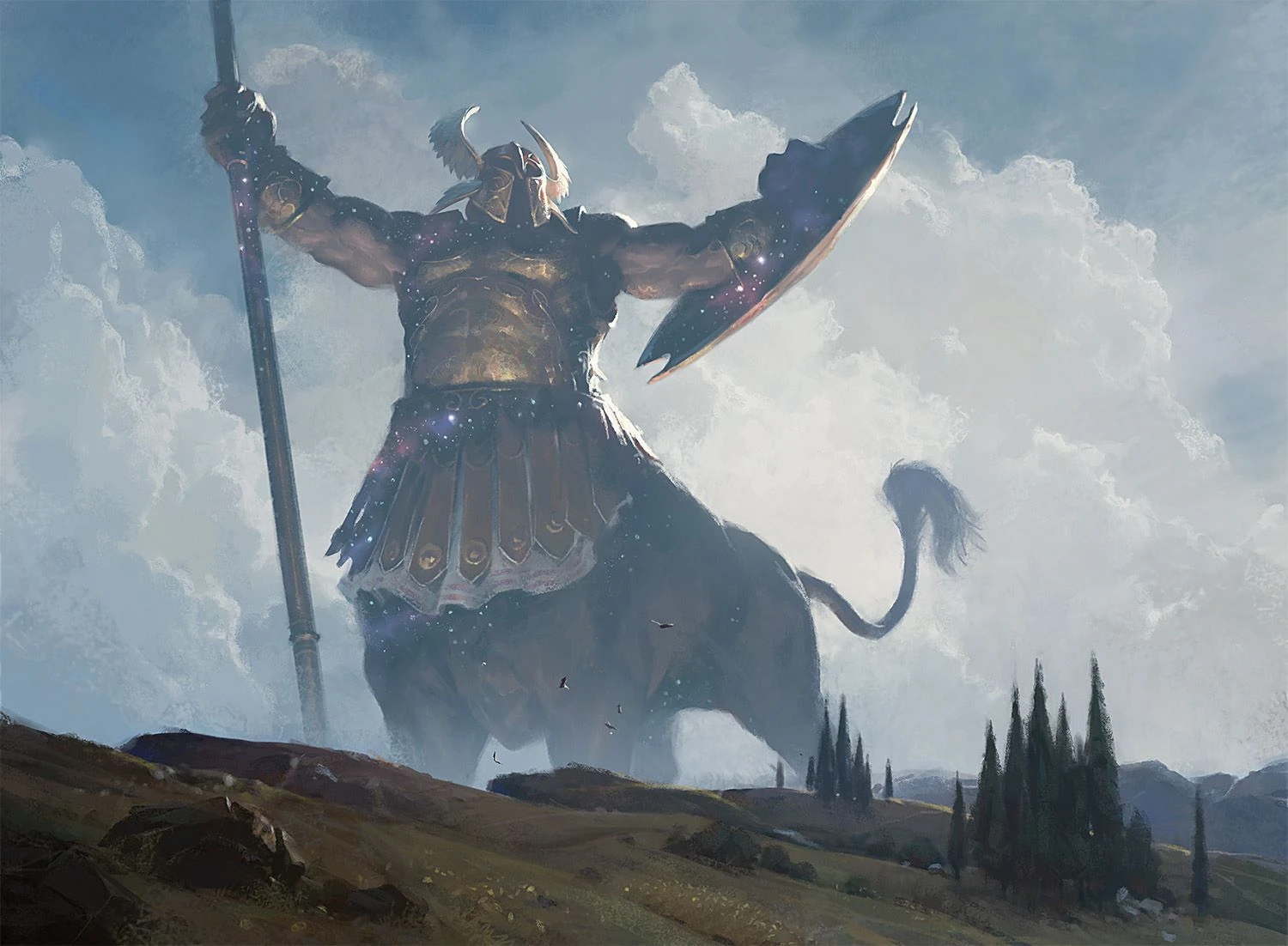
When Outlaws of Thunder Junction first dropped, Collector’s Cage had a brief moment in the spotlight, most notably when AspiringSpike gave it a spin, but it quickly fell off everyone’s radar. Yet, watching the ongoing success of Mono-Green Fight Rigging got me thinking: Are we sleeping on other ways to cheat out Emrakul and her giant Eldrazi friends? Can we take those same explosive principles and take another crack at Collector’s Cage instead?
And that thought sent me down a rabbit hole. So today I just want to show you my progression from one iteration of these decks to another. This is most certainly not the only way to brew with Cage, but you’ll get a peek into my thought process and how my mind naturally progressed from one idea to the next. I’m just one dude, and it’s hard to break away from the tunnel vision of brewing, so just be aware of that as you take a look at the following.
Let’s Dive in.
The Initial Idea
When I decided to build around Collector’s Cage, the first question I had to answer was simple: What are we actually trying to hit?
To make it simple, I just stole my targets from the Trudge Decks. Big, dumb, eldrazi seemed liked a great starting point.
Then I needed to answer the second question: How can I enable Collector’s Cage?
To enable this requirement cheaply and reliably, the initial build turned to a Mono-White Convoke shell. I’ve seen AspiringSpike play similar shells with Cage in the past and we have enough of the package available to us in Historic that I thought it’d be a good base to get us going.
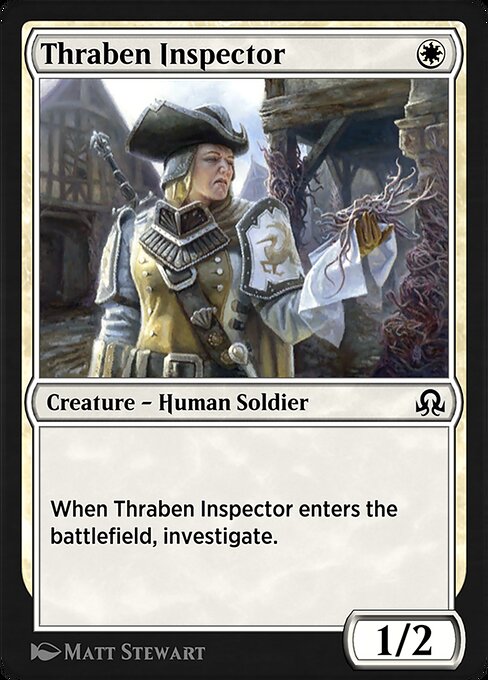
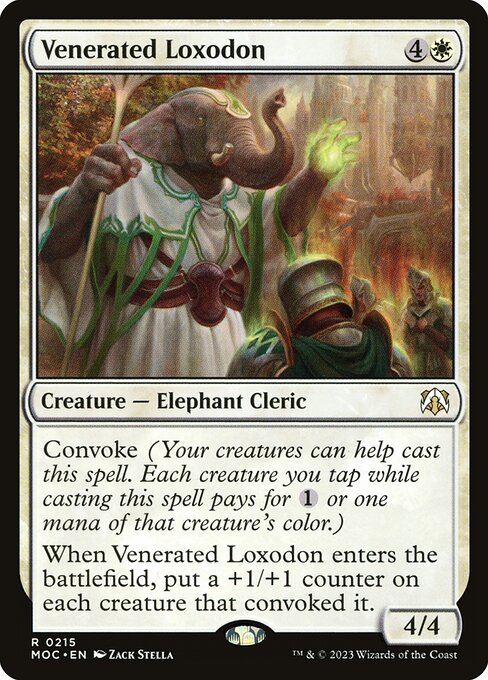
Cheap creatures like Novice Inspector let you flood the board with bodies on turns one and two without spending heavy mana. And with a top-end we can power out reliably on turn 2 or 3 like Loxodon and Knight-Errant, it seemed we could easily meet the requirement of three creatures with different powers pretty easily.
I was especially keen on this idea at first because I felt we had a decent Plan-A, a white weenie convoke shell. But with Collector’s Cage thrown into the mix we had the “oops, I win” option to help win games we normally wouldn’t.
It seemed pretty neat to me. Play some dudes and start swinging, and if that doesn’t work you can just smack people with an Emrakul. But if you’re at home thinking “Mr. Plum, you have nothing else to do with those Eldrazi, won’t they just sit in your hand?”
Yes.
They would. And they did.
A Mono-White Convoke shell has zero filtering, zero looting, and zero ways to shuffle those cards back into the library. I was essentially playing the game with a five-card hand because two 10+ mana Eldrazi were stuck in my hand every game.
How could we have possibly seen this coming???
You can check out our initial matches in this video, but let me tell ya’, they did not go well. But when developing ideas like this its almost impossible to get a list fleshed out perfectly on the first go-around. I mainly wanted to see if this Collector’s Cage package had any merit.
Even though that first Convoke version was clunky, it wasn’t a total waste of time. My main pitfall was over-indexing into the package itself. Packing 8 Eldrazi that I couldn’t reasonably cast outside of Collector’s Cage felt reeaallly bad. It felt better when we could play a beatdown plan and had Collector’s Cage as insurance or a get-out-of-jail free card.
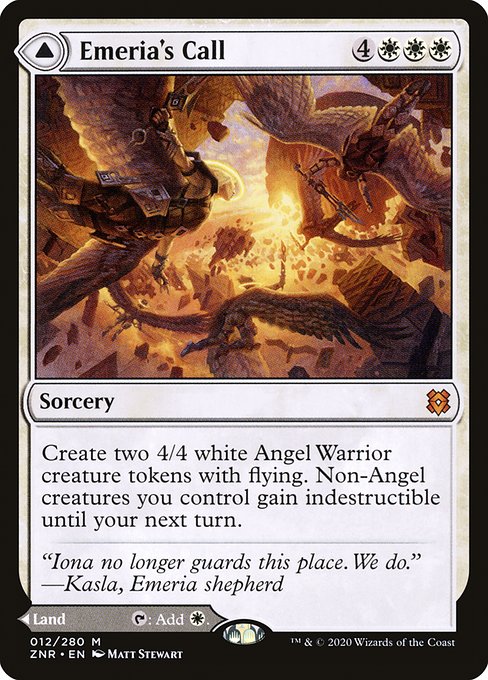
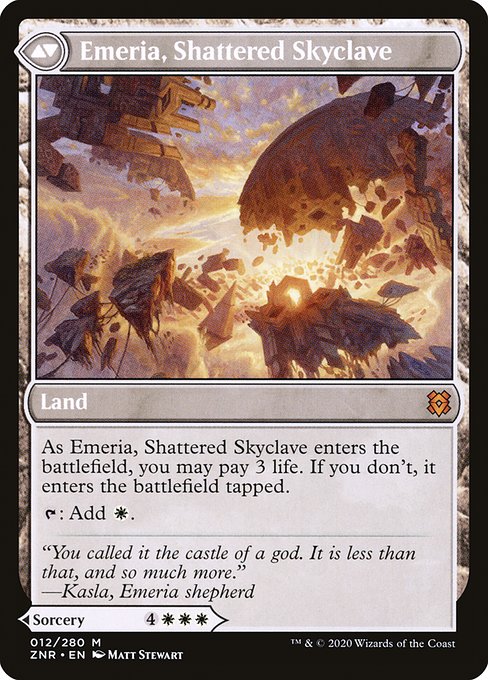
I was also a fan of stealing some more tech from the Fight Rigging shells and playing MDFC’s in the mana base as additional hits for Hideaway. Is hitting an Emeria’s Call off Collector’s Cage as soul-crushing for the opponent as dropping a turn-four Emrakul? No, of course not. But it’s still 8/8 worth of flying stats that makes your entire board indestructible until your next turn, which usually wins the game on the spot anyway.
With those initial lessons fresh in mind, it was time to rebuild from scratch. I needed a core Plan-A that was aggressive and stronger than basic token convoke, without sacrificing the ability to cheat massive spells.
But while refining our initial list I came across another fun toy.
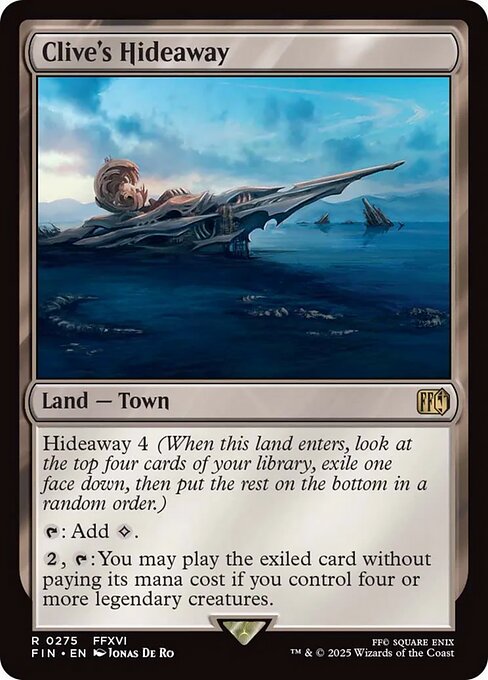
The realization was immediate: both Collector’s Cage and Clive’s Hideaway want you to control creatures, but Clive specifically demands legendary creatures. If we leaned into a Mono-White Legends deck, we could run two completely different Hideaway engines in the same list, with one being built right into our mana base.
I also trimmed the payoff package down to the absolute bare minimum: Emrakul, the Aeons Torn and Emeria’s Call. A little lean, but Cage or Clive hitting an extra creature for cheap isn’t the worse thing we could be doing if we miss on these. If we naturally drew Emeria’s Call, it just functioned as an untapped land. If we naturally drew Emrakul, it was a minor annoyance, but drastically less frequent. Every other slot in the deck was now dedicated to cheap, aggressive legendary creatures that could hopefully win the game on their own.
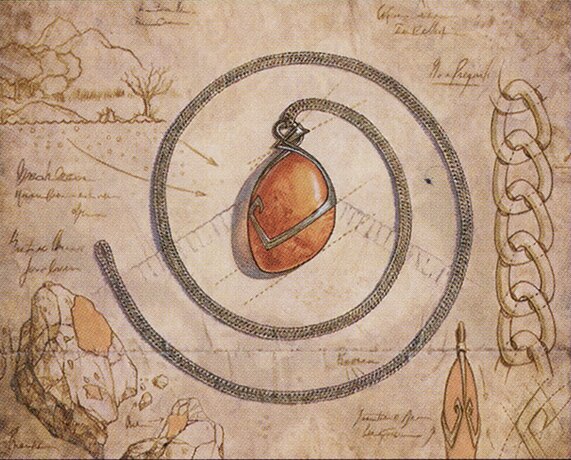
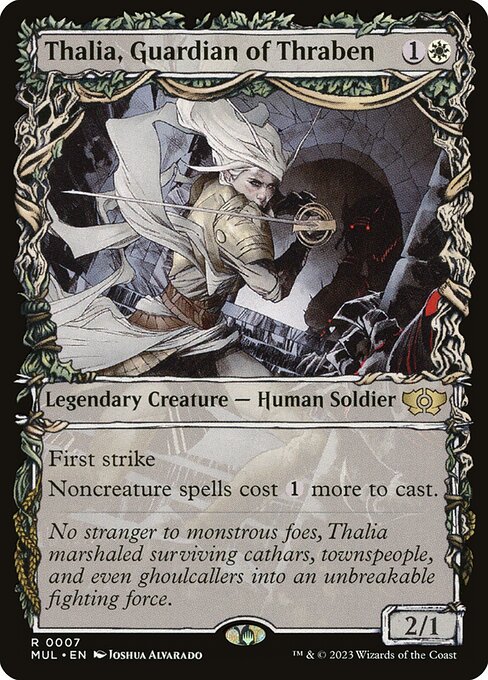
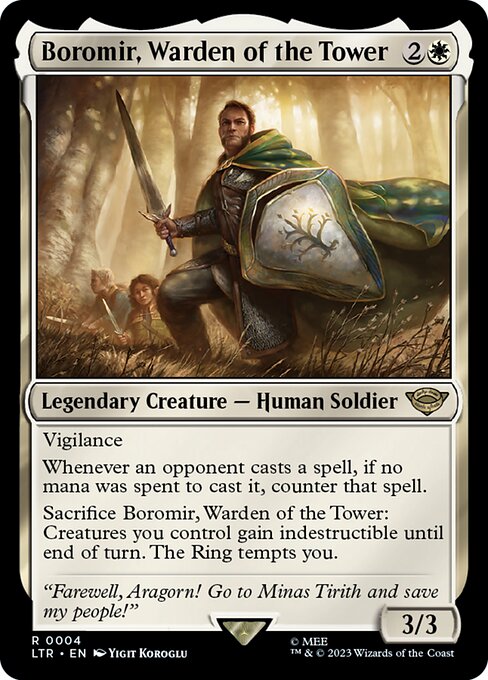
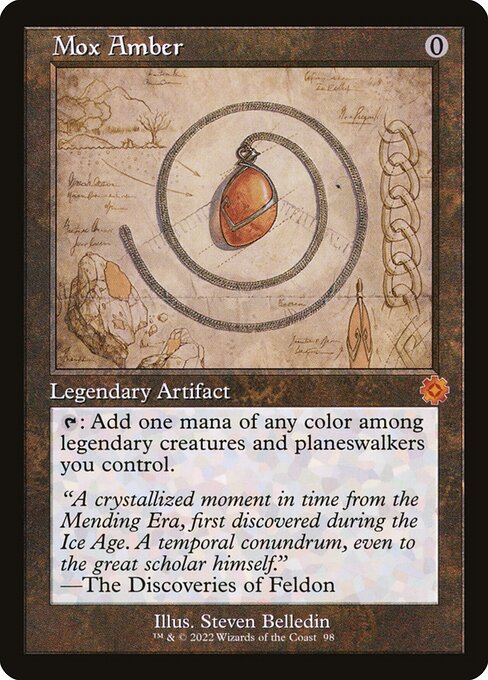
A legends theme meant we also get to take advantage of cards like Mox Amber and Flowering of the White Tree to give us some explosiveness. It helps that we also get to run a couple hatebears in the form of Thalia and Boromir in the currently combo-leaning Historic meta.
Just by playing our normal, aggressive curves on turns one, two, and three, we naturally hit our three different powers threshold without spending extra mana or turning wheels. And if we drew Clive’s Hideaway, any single legendary creature on the board unlocked a second chance to cast Emrakul or Emeria’s Call for free. It can be a little “win-more” at times, but this it’s great against a clogged up board state.
I didn’t have a chance to record gameplay for this one, but it definitely felt like a major improvement from out first build. Being an aggro list first and foremost felt like a much better direction to pay into. The only thing I wasn’t exactly pleased with was our choice of Legends. Being limited to a single color excluded some of the other major draws to the Legendary sub-theme, so I decided I’d take another crack at the Legends archetype and play something similar to a build we had on stream a couple weeks ago.
Third Iteration
Mono-White Legends was a massive step up, but if we were going to commit to a Legendary tribal theme, staying in a single color was leaving some of the strongest cards in the archetype on the table. Red offers some of the most explosive Legendary creatures that provide both speed and card advantage.
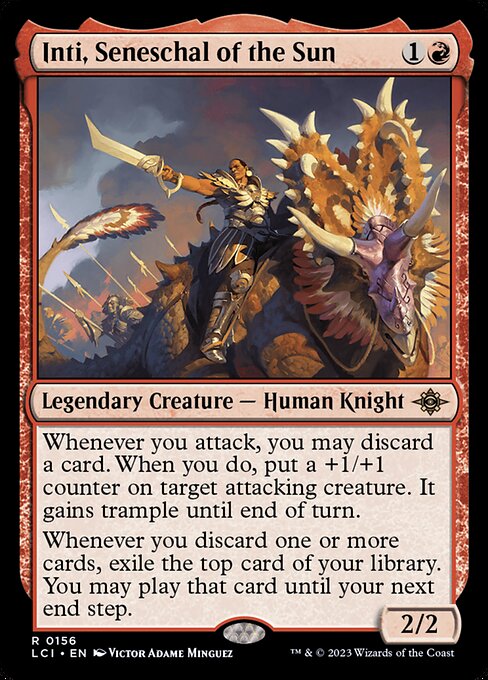
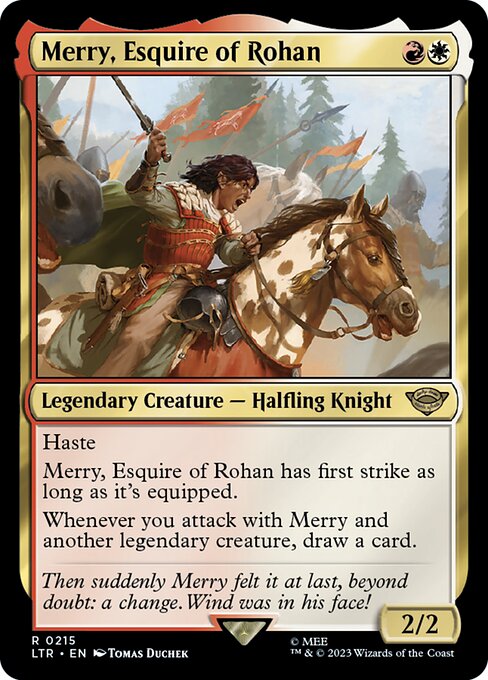
The biggest additions to the deck was Inti, Seneschal of the Sun, Merry, Esquire of Rohan, and Quicksilver. Inti and Merry can are the best cards for the archetype by a mile, and Inti specifically fixes those moments where Emrakul gets stuck in our hand. When we add Quicksilver into the mix, we now have a way to enable Mox Amber on turn one for free. That means we can play a Merry or Inti on turn one and start putting the pressure on while gaining card advantage at the same time.
When you build a deck with 20+ legendary creatures, you run headfirst into a classic deckbuilding dilemma: you want to run four copies of your best cards like Inti, Merry, or Adeline to draw them consistently, but drawing duplicate Legendaries usually leaves them dead in your hand because of the legend-rule.
Thankfully we have Key to the Side-door now. Normally, running four-ofs in Legendary decks leads to awkward hands. Key turns those duplicate Legendaries into more gas. It’s also quite strong with Adeline or creatures buffed via White Tree to help push through the last points of damage in a stalled board state. Between Key to the Side-Door and Inti, extra Legendary copies in your hand are no longer dead weight.
I know the manabase is rather greedy, and you’d possibly expect it to be awkward since we’re running for colorless lands, but it’s been rather trivial so far. Mox Amber makes up for awkward mana most of the time.
You can check out gameplay of my initial build of this deck here:
What makes this Red-White build feel so much smoother than the previous iterations comes down to balance: it never sacrifices its aggressive Plan A just to support its Hideaway payoffs. Instead, the legendary synergy and the cheat engine naturally reinforce each other. It’s basically everything I was looking for at the start. A strong, fast, and cheap aggro deck that can cheat out a game ending threat out of nowhere.
Closing Thoughts
You might notice I didn’t dive deep into a detailed, card-by-card matchup guide here, and that was entirely by design. My main goal today was to focus on the progression and thought process from one build to the next. It’s always neat to see a polished, final deck list, but I wanted to pull back the curtain and share the creative process behind the deck construction itself.
Brewing around a card like Collector’s Cage is a great reminder that your first idea is rarely your best one. We started with a Mono-White Convoke shell that tried way too hard to force the Eldrazi combo, resulting in clunky hands and fragile boards. Pushing into Mono-White Legends got us on the right track by naturally enabling our creature stats and introducing Clive’s Hideaway. But making that final leap into Boros Legends is where I think we’re starting to geta cohesive and refined deck. The RW build seems incredibly sweet on paper, and now that the concept is refined, I’m really looking forward to taking it onto the ladder and putting it through its paces some more.
I don’t think any of the iterations shown here are better than the Fight Rigging decks floating around, but Cage is certainly a comparably to Rigging in the right shell in my opinion. It’s just going to take some time (and maybe some new cards) to find the perfect home for it. Is this the only way to build with Collector’s Cage in Historic? Definitely not. But hopefully, taking a look through my brewing notes gives you some ideas for your own deckbuilding projects.
Thanks for reading!
As always, feel free to comment and leave any questions you have below. And make sure to come back next week for even more Fun & Jank!
If you’re interested in more fun content, check out the MTG Hero’s article on Standard Landfall now that Cub is gone!
Happy Brewin’!
Premium
Enjoy our content? Wish to support our work? Join our Premium community, get access to exclusive content, remove all advertisements, and more!
No ads: Browse the entire website ad-free, both display and video.
Exclusive Content: Instant access to all exclusive articles only for Premium members, at your fingertips.
Support: All your contributions get directly reinvested into the website to increase your viewing experience!
Discord: Join our Discord server, claim your Premium role and gain access to exclusive channels where you can learn in real time!
Special offer: For a limited time, use coupon code L95WR9JOWV to get 50% off the Annual plan!
Plum is the creator of the Jank Tank.
He started playing at the ripe old age of 12 and immediately fell in love with the infinite possibilities that deck building could lead to.
He truly understands that jank is a mindset, and spends most of his free time brewing and concocting new and exciting deck lists to help inspire and promote creativity within the MTG community.