Hey all. This weekend we saw the return of Grand Prixs. Sort of. The Magic Spotlight Series is a big open tournament that anyone can compete in, with $50,000 of cash prizes and an invitation to the Pro Tour to the Top 8 players. So in many ways, they are what Grand Prixs used to be.
I cut my Magic chops in the hey-day of Grand Prixs and SCG Open Series, aka the mid 2010s, and it does my heart good to see a Grand Prix like tournament return for players both old and new to experience.
This weekend we had Spotlight Series: Foundations take place in Atlanta, featuring the Standard format. So today I’m going to break down the top decks from the tournament, and you’ll be happy to see a mix of decks both old and new make their way into the Top 32, and even the Top 8.
Gruul aggro was the clear best deck of the weekend with eleven copies in the Top 32, and three copies in the Top 8, including the event win.
What was interesting was the diversity in builds that made it into the Top 8. Let’s start with the decklist above, as that build of the deck by Nicholas Odenheimer was the winner of the event. This build brings back an old boogeyman: Leyline of Resonance. And wow was it just the right weekend to bring an all-in aggro deck.
If you look at the rest of the decks in the Top 32, you’ll notice that most of them lack cheap removal. Since the Dimir Enchantments and Esper Pixie were the most prevalent black decks, Cut Down was almost nowhere to be found, and while opposing Gruul decks have access to removal like Burst Lightning and Torch the Tower, they don’t always have it, or may even deploy their own threat on turn one/two instead.
This makes it much easier to go all-in on turn two or three for the win, since your opponents are just less likely to have the removal to blow you out. Even if they do, this build has four copies of Snakeskin Veil and two copies of Overprotect to shield a threat from removal.
I don’t expect Leyline of Resonance to become the standard build of the deck moving forward, but I like that it can pop up and punish the meta when it becomes too greedy, which we kind of saw this weekend with the prevalence of Dimir Enchantments and Esper Pixie pushing out Dimir and Golgari Midrange.
While the other two Gruul decks to Top 8 are not using Leyline of Resonance, they are slightly different from each other. One taps Inti, Seneschal of the Sun to help push through damage, while the other is sticking with old reliable Screaming Nemesis and Innkeeper’s Talent.
Gruul Aggro has proven to be the best aggro deck in the format, and I like that there are different builds of it and different creatures and spells it can use, because that keeps the games playing with and against it more interesting.
Dimir Enchantments is an evolution of Dimir Midrange looking to grind even more value to beat out other midrange and control decks going into the mid and late game. It had a good weekend, with three copies into the Top 32, and one copy into the Top 8, with a second place finish.
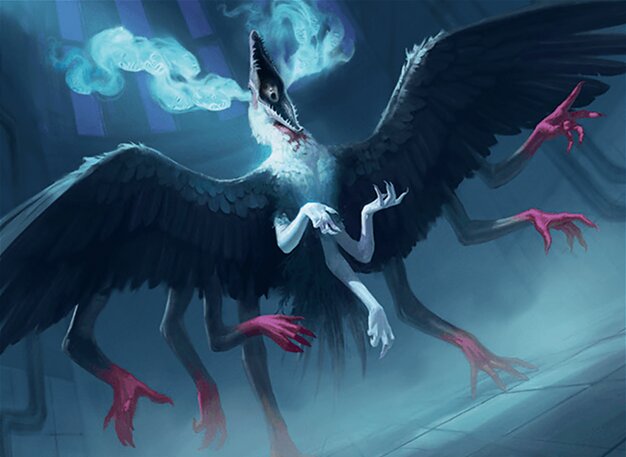
To facilitate these cards, this build has Hopeless Nightmare, Nowhere to Run, Stormchaser’s Talent, Spyglass Siren, and Floodpits Drowner as great permanents to bounce and then recast. This engine keeps the deck stocked on cards and gives the deck a great amount of flexibility as it can decide what it needs and return the matching permanent.
For example, if you need to attack the opponent’s hand you can bounce Hopeless Nightmare, to deal with a small creature you can bounce Nowhere to Run, to generate a threat you can bounce Stormchaser’s Talent, etc.
The sideboard of this build also has a lot of the normal Dimir Midrange tools, so in matchups where it needs to be less about value and more about controlling the opponent’s board or getting on the board, it can do that too.
This deck is a great call in a field where you are expecting a lot of other midrange decks, as it has the tools to outgrind them all. But, if you are expecting a lot more aggro, traditional Dimir Mirange may be a better call.
Domain didn’t have a big showing this weekend, as this build by Gray Payne was one of two copies in the Top 32, but they did make it all the way to the Top 4, so it gets a shoutout here.
There aren’t a ton of new things going on in this build, but I do think it is interesting that Payne decided to include one copy of Atraxa, Grand Unifierinto the now established Zur, Eternal Schemer build of the deck.
Payne was certainly prepared for aggro with two copies of Elspeth’s Smite in the main, and a mix of sweepers, which probably helped them make a deep tournament run while other players on Domain fell flat.
I also think they have a lot of good tools in the sideboard to help against aggro, and Obstinate Baloth is great against decks like Dimir Enchantments and Esper Pixie using Hopeless Nightmare.
Temur Otters was another deck that didn’t have a great weekend overall, but user cftsoc piloted it into the Top 4, the only copy of the deck in the Top 32.
As I’ve always said about this deck, I am not the best to speak on it as I am not an experienced pilot. I have broken down how the deck functions before, so if you have never seen it before you can look at my Standard Tierlists for a basic breakdown.
That said, if you want to learn more about the deck and see some gameplay, I recommend searching for that on Youtube and seeing what comes up.
Azorius Oculus made a surprise comeback, as this build of the deck was the only one in the Top 32, but it did secure a spot in the Top 8.
This build is a more traditional build of the deck, featuring no copies of Founding the Third Path and only one copy of Kiora, the Rising Tide, but it does have a lot of good tools against aggro, which as we saw was a big portion of the top 32 field.
Four copies of Into the Flood Maw, two copies of Get Lost, and two copies of Soul Partition are going to do a lot of heavy lifting in the early turns against aggro decks, while Phantom Interference holds the early and mid game against midrange decks, and is great with Haughty Djinn to protect it.
I prefer this nuts and bolts build that actually plays removal and counterspells over the more all-in versions that have popped up as of late, and I think that return to simplicity was part of why this build of the deck was able to have a good finish.
Azorius Aggro was another unique deck in the Top 8, as it had no other copies in the Top 32. This build is similar to the deck we call Azorius Artifacts, but it does not include Zoetic Glyph, making me want to just call it Azorius Aggro.
In many ways it is kind of a blend between the Azorius Artifacts deck and Dimir Midrange. Let me explain.
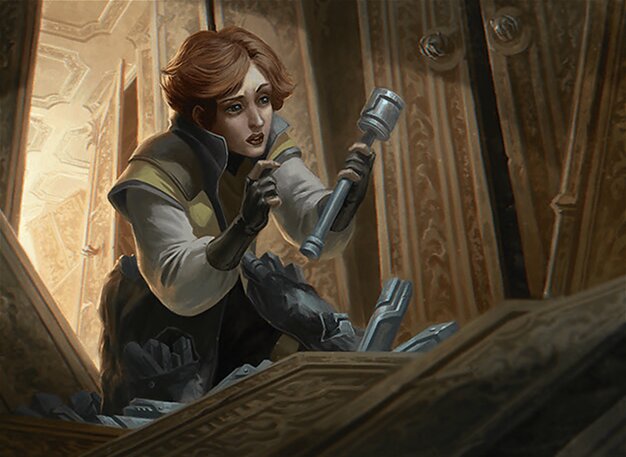
We have the core creature base of Azorius Artifacts, with Novice Inspector and Spyglass Siren providing us two permanent for one, Mockingbird copying our key threats, Warden of the Inner Sky to grow into a big threat, Regal Bunnicorn to scale with our number of permanents, and Steel Seraph to give out keywords that help us force through damage or play defence.
Rounding out this build is Sheltered by Ghosts for removal and Sanquine Evangelist for more pressure.
I like this build because it has a lot of powerful threats and good tools to force through damage. A lot of the times the problem with a card like Regal Bunnicorn is that it gets chump blocked, but thanks to all the ways to tap opposing creatures and Steel Seraph, it is much easier to get it through.
I’m not sure if this deck is the real deal, but it is nice to have an alternative to Gruul or Mono-Red Aggro in the aggro department.
Mono-White Token Control put four copies into the Top 32, but no copies into the Top 8. Still, it was a decent showing for a deck that had fallen off the map for a while. This build has a lot of great tools for fighting against aggro decks and the tools to grind against midrange decks.
I do think that this deck suffers a bit against Dimir Enchantments and Esper Pixie because they now have This Town Ain’t Big Enough to answer their card advantage engines in Enduring Innocence and Caretaker’s Talent.
Lay Down Arms is great against most builds of Gruul Aggro, but if Leyline of Resonance becomes more popular then Lay Down Arms being a sorcery is going to hurt a lot. In that case, the deck likely needs to shift to more copies of Elspeth’s Smite in the main, as it is a live card against a lot of decks in the format currently.
Two copies of Dimir Midrange made it into the Top 32, making it a pretty disappointing weekend for the deck overall.
I think this can be explained by the uptick in decks like Dimir Enchantments and Esper Pixie which have good answers to Enduring Curiosity by just bouncing it, and are in general able to out grind Dimir Midrange, and this build of Dimir does not have the tools to fight the card advantage engines of Mono-White Token Control.
Since those three decks had a good showing this weekend, this deck likely suffered, despite having a better matchup against aggro thanks to all the copies of Cut Down and ways to buy time with Floodpits Drowner and Faebloom Trick.
Dimir Midrange will likely be replaced by Dimir Enchantments, although I expect Dimir Enchantments to play more main deck removal to fight against aggro, so Faerie Mastermind and Spell Stutter may find themselves back on the shelf.
Esper Pixie was a breakout deck this weekend, and it had a good showing, with five copies making it into the Top 32. This deck plays similar to Dimir Enchantments in many ways but it has a few extra tools from the White mana.
First, and the namesake of the deck, is Nurturing Pixie, which fills a similar role to Fear of Isolation to return a value generating permanent like Hopeless Nightmare or Stormchaser’s Talent to hand.
Second, this build has Optimistic Scavenger, as a payoff for all of our enchantments entering the battlefield over and over again, to grow up our board and make them scary. Spiteful Hexmage is a nice inclusion because not only does it add an enchantment to our board to trigger Optimistic Scavenger, but that cursed role token is easily dealt with thanks to Nurturing Pixie or Fear of Isolation, giving us a 3/2 for just one mana.
The sideboard is also very different from Dimir Enchantments, with cards like Destroy Evil to answer enchantments, like in the mirror, and Pest Control and Temporary Lockdownto help slow down go wide aggro decks.
Overall, this deck is a great grindy midrange deck. It will be interesting to see how it fares in the coming weeks as I expect more players to choose Dimir Enchantments as their deck, and the main difference between these two decks is Nurturing Pixie and Optimistic Scavenger vs Enduring Curiosity. So is it better to be more aggressive or have more card advantage? Time will tell.
Regardless, I’m glad to see a refreshed version of an old deck do well, and it seems like a lot of players decided to bring it this weekend.
Mono-Red Aggro had one copy make it into the Top 32, and this build is pretty typical, so I’m not going to spend any time talking about it besides shouting it out here.
New deck alert! Squeaking in at 32nd place, we have Selesnya Tokens, a Selesnya aggro deck built to make a wide board and end the game with a couple of big attacks.
Our other token maker is Overlord of the Hauntwoods, which we can cast for impending or try to hit with Collector’s Cage, the other key card in the deck. Our creatures that make tokens have different powers than the tokens they make, meaning that with just one other creature in play we can use Collector’s Cage and trigger its Hideaway very easily, letting us cheat a permanent into play.
We have a couple of other ways to make tokens, including paying for Offspring on Pawpatch Recruit, or by saddling up our Seraphic Steed.
Rounding out the main deck we have Wilt-Leaf Liege to pump up our team, and punish everyone playing Hopeless Nightmare, and Sheltered by Ghosts and Get Lost for removal. We also have Melira, the Living Cure as a good threat early, and a way to protect one of our creatures. Since Melira returns the creature from the graveyard to play, it will retrigger its enters effect if it is one of our token makers.
The sideboard gives us various tools against other aggro decks, and disruption against midrange and control decks with Aven Interrupterand Invasion of Gobakhan.
I’m not sure if this deck is better than a deck like Jeskai Convoke, but I think it shows how deep this large Standard format is, and that there are several decks out there that just haven’t had their chance to shine yet, or haven’t even been put together yet.
So if you are looking for something new to try, this looks like a sweet deck!
Analysis
The biggest loser this weekend was Golgari Midrange, which couldn’t seem to keep up with the value coming from Dimir Enchantments, Esper Pixie, and Mono-White Token Control, or with the pressure coming from Gruul Aggro.
I think the problem with Golgari Midrange is that it is just too fair, it really isn’t doing anything super out of bounds or attacking from a unique angle, making it tough to compete against all of these other decks.
I think it will also be interesting to see how these Dimir and Esper value decks evolve moving forward. It is clear that they need to be better prepared to fight Gruul Aggro, so perhaps they need to tone down the grindy aspects in favor of cheap interaction, but if they do that are they just worse builds of Dimir and Golgari Midrange?
This is why it is great to have big tournaments like this, because now we have an idea of the shape of the meta, and players on the ladder or preparing for upcoming tournaments can adapt and tune their decks accordingly.
Wrapping Up
Magic Spotlight Series is a great event that hopefully continues to revive competitive Magic. Grand Prixs and SCG Opens were the heart and soul of competitive Magic ten years ago, and were how many players such as myself fell in love with tracking tournament results and brewing decks to try to attack the meta.
These big tournaments give us so much data and really show us how the format is evolving, and proves that certain metagame calls can win you the day. The build of Gruul Aggro that took it down decided to play Leyline of Resonance, and was rewarded with a meta that was less focused on early interaction and more focused on grinding.
This is because Dimir Midrange had such a big target on its back, and now that Gruul Aggro and the grindy builds of Dimir and Esper have the target, the format will continue to evolve.
I hope this article was helpful as you try to decide what to play on the ladder or what to prepare for in an upcoming tournament. As always, best of luck in all of your matches and I’ll see you next time!
Premium
Enjoy our content? Wish to support our work? Join our Premium community, get access to exclusive content, remove all advertisements, and more!
No ads: Browse the entire website ad-free, both display and video.
Exclusive Content: Instant access to all exclusive articles only for Premium members, at your fingertips.
Support: All your contributions get directly reinvested into the website to increase your viewing experience!
Discord: Join our Discord server, claim your Premium role and gain access to exclusive channels where you can learn in real time!
Special offer: For a limited time, use coupon code L95WR9JOWV to get 50% off the Annual plan!