We’ll talk more about it in a future article, but we’ve been jamming a lot of midrange piles on stream lately, and that means we’ve also been losing a lot on stream lately. The format is currently defined by extremes, and that makes very few midrange decks playable at the moment. Between Eldrazi doing it bigger and better, Wizards and Auras killing you faster, or UR Lotus Field or Reanimator not caring about your gameplan, the metagame is hostile to anything trying to 1-for-1.
Which means that your good pal
Plum here, decided to play midrange anyways!
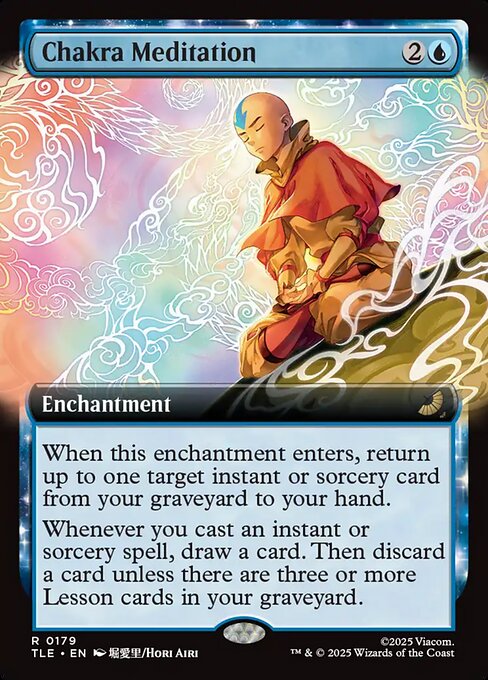
But I had to take a slightly different approach and tune a list that I’ve had my eye on every since Chakra Meditation was spoiled from TLA.
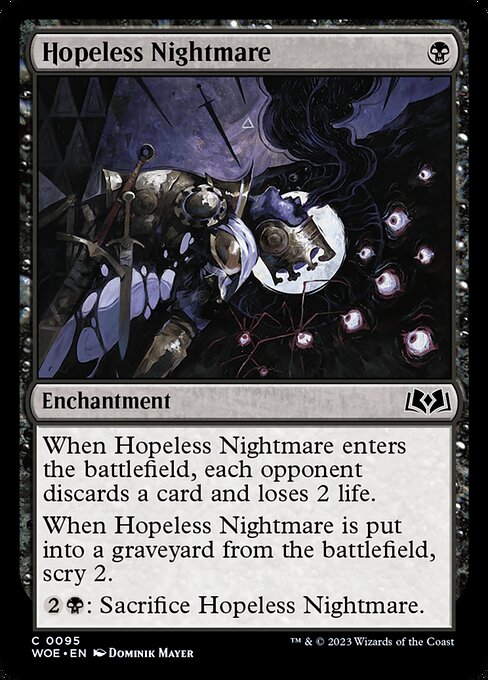
So for Episode 58, we shifted gears. Instead of trying to “out-midrange” a format that has zero interest in fair Magic, we took a popular Esper Invocation shell that’s been bubbling around the ladder (you’ve probably seen people looping Hopeless Nightmare or chaining Momentum Breaker) and we grafted something sweet onto it:
Chakra Meditation returns an instant or sorcery to your hand every time it enters the battlefield.
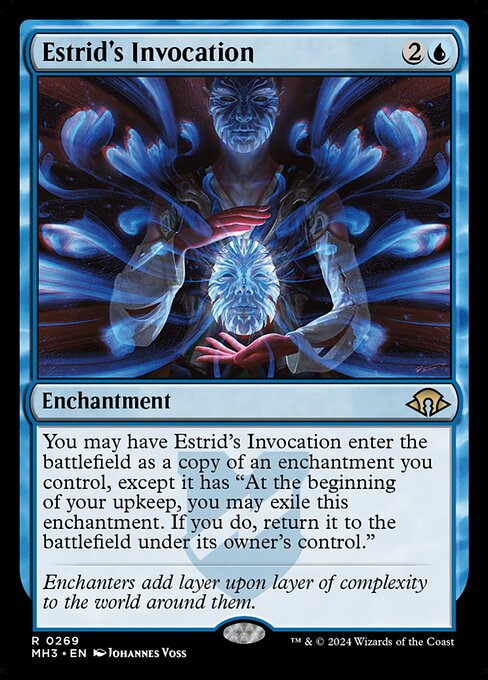
So every time Estrid’s Invocation enters, we get to copy Meditation and bring an instant or sorcery back from the yard. And we get to do this every turnfor free.
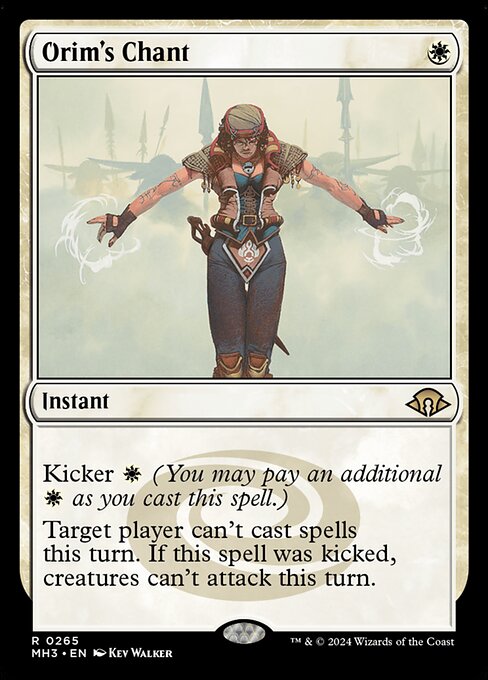
Now there’s a lot of choices whne it comes to cards you want to abuse, but in our case I decided to go with Orim’s Chant. Meaning we get to cast it during the beginning of our opponent’s turn for the rest of the game, essentially locking them out of casting spells and attacking you.
And then we kill them with Otters!
The Deck
Anyways, the idea is rather straight forward. I took the Esper shell that can grind well enough with Invocation loops, and we slotted in Meditation + Chant in order to have a way to “steal” the late game against Eldrazi and such.
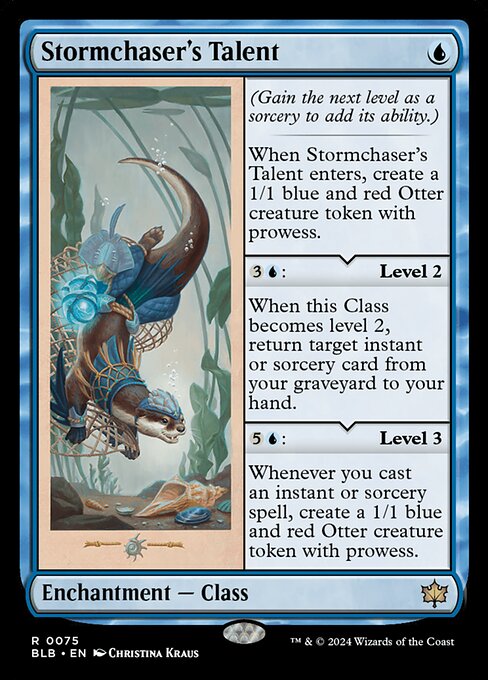
Stormchaser’s Talent gives your random Otters a career in combat.
Against creature decks, this plan alone can win games.
Plan B: Lock
Invocation copies Meditation → Meditation picks up Orim’s Chant → Chant prevents your opponent from casting spells on their turn.
Hopefully you don’t need to assemble this lock, but with Eldrazi being the dominant deck, it’s fairly common for you to try and rush this lock as your Plan A instead in many matchups.
Plan C: Beatdown?
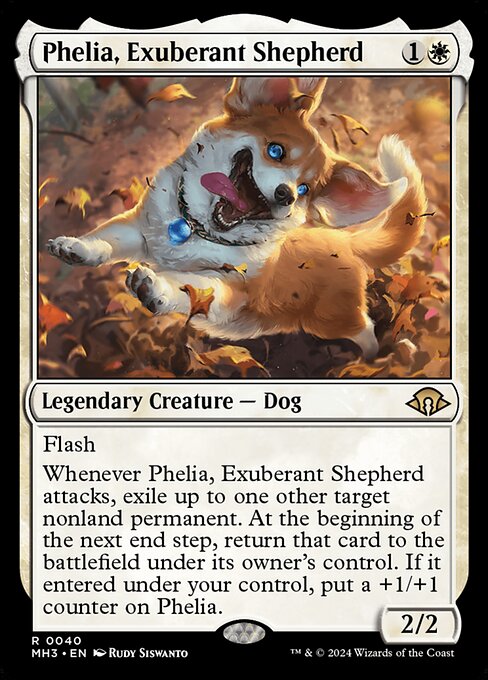
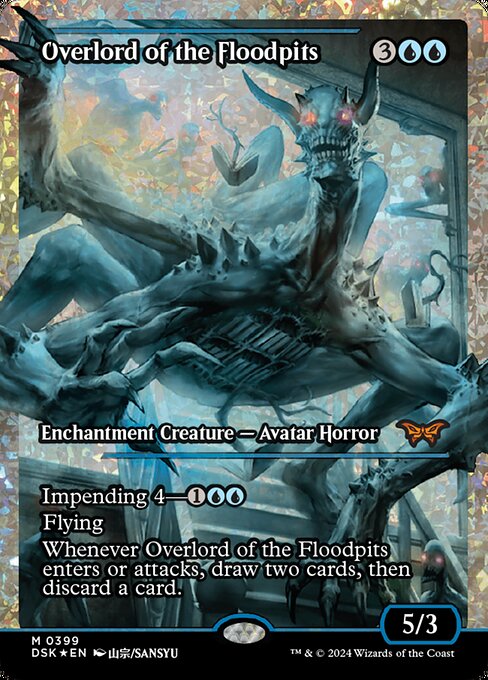
We’re only playing 5 creatures (plus otters), but you’d be surprised at how quickly Phelia can grow while we bounce our enchantments to keep the board clear. Follow that up with Overlord of the Floodpits and you have a fairly fast clock.
Deck Breakdown
At its core, this is an Esper midrange shell that leans heavily on enchantments for value. What sets this version apart is the addition of a repeatable recursion loop that turns Orim’s Chant into a long-term win condition. Everything in the deck is built to support that plan or function as a solid fallback strategy when the combo isn’t online.
Chakra Meditation
This card is the centerpiece of the strategy. Every time it enters the battlefield, you return an instant or sorcery from your graveyard to your hand. In most shells, this is used for incremental card advantage. Here, it enables a true lock once you have a way to blink or copy it.
It’s also worth noting that Meditation provides consistent looting whenever you cast spells, helping you find the missing pieces and keeping your hand smooth throughout the game.
Estrid’s Invocation
Once Invocation is on the battlefield, things change quickly. At the beginning of each upkeep, it becomes a copy of Meditation, meaning you get the ETB trigger for free every turn.
That means every upkeep, you automatically pick up Orim’s Chant again. From there, casting Chant on the opponent’s upkeep effectively prevents them from taking meaningful game actions for the rest of the game.
Outside of the lock, this is also the main value engine of the deck. Being able to copy Hopeless Nightmare or Momentum Breaker every turn gives us an incredible attrition game plan while we try to find the lock.
If you don’t find Invocation, Phelia provides a second way to restart Meditation. Whenever she attacks, she blinks an enchantment you control, which brings Meditation back with another ETB trigger.
It’s not as clean as our other loop,but it absolutely works, and in many games Phelia is what lets you stabilize long enough to reach the full lock. It’s pretty easy to keep the board clear so Phelia can attack freely, but it does make your lock susceptible to creature-based removal.
This redundancy is a large part of why the deck functions in a fast format.
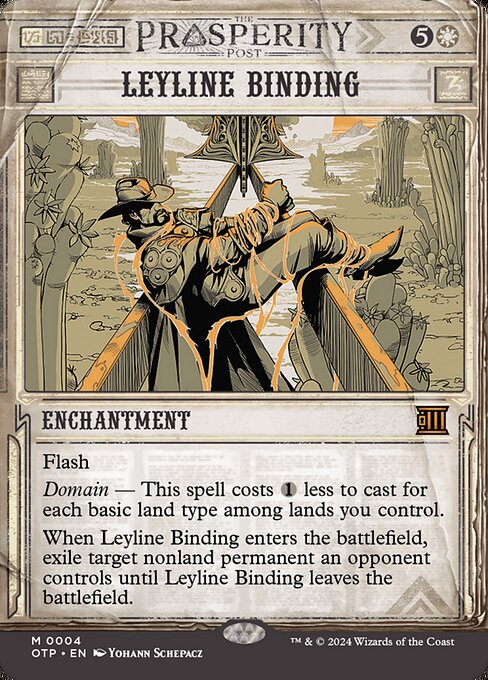
Historic’s creature decks force you to answer early board presence. Leyline Binding is the cleanest way for this deck to do that while still leaving your mana open for Chant, cycling, or digging for combo pieces.
Even at three mana it’s acceptable, but with triomes and duals, it often comes down for two. On top of Breaker and Nowhere to Run, Binding is a large part of why the deck doesn’t simply fold to early aggression while setting up the loop.
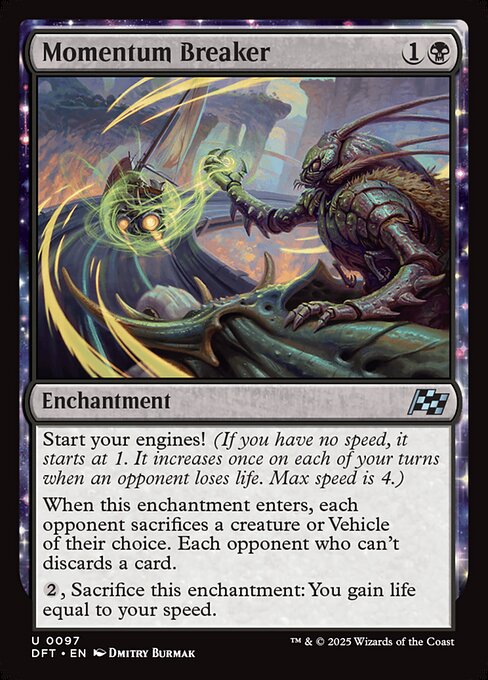
Not every game allows you to sit behind a lock immediately. Momentum Breaker is what keeps the opponent’s resources under pressure while you assemble your pieces.
It drains life, strips hands, and gives you meaningful interaction in games where you don’t have the Chant lock yet. When combined with Invocation, you can very quickly pull the opponent out of the game on card economy alone. The life gain after reaching max speed has also been quite relevant too.
Overlord gives the deck a way to close games without relying on Chant. Once Invocation starts copying it, you generate a steady stream of card advantage while swinging with a 5/3.
We can also scam it into a creature with Phelia or copying with Invocation (just choose not to blink it the next upkeep). Many games end simply by assembling Invocation + Overlord and pressuring from that angle while keeping the opponent’s board clear.
This is just another value piece I opted to try out, but to be honest, it didn’t come up in a lot of games. It’s nice that in the late game every instant or sorcery generates another body, but we never got to a point where that happened.
It’s particularly effective once you’re casting Chant every turn, since each Chant becomes an additional creature, and it’s always nice to buy back a Push, Chant, or Prismatic Ending.
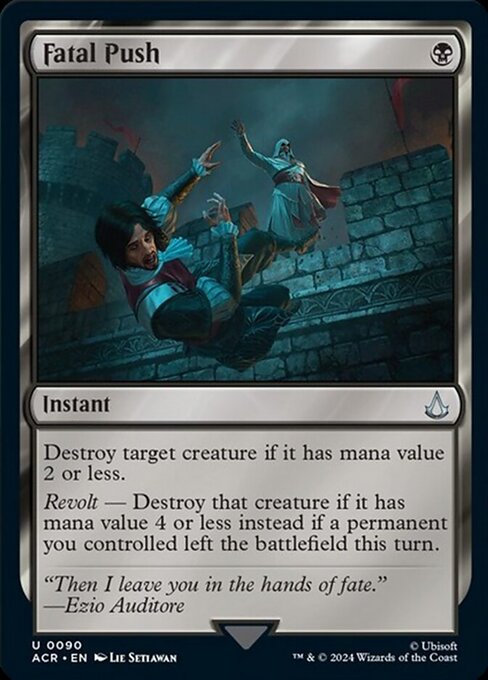
Fatal Push Your cheapest and most reliable answer to small creatures. It keeps Auras, Wizards, and early Eldrazi starts from running you over before Meditation or Invocation do anything meaningful.
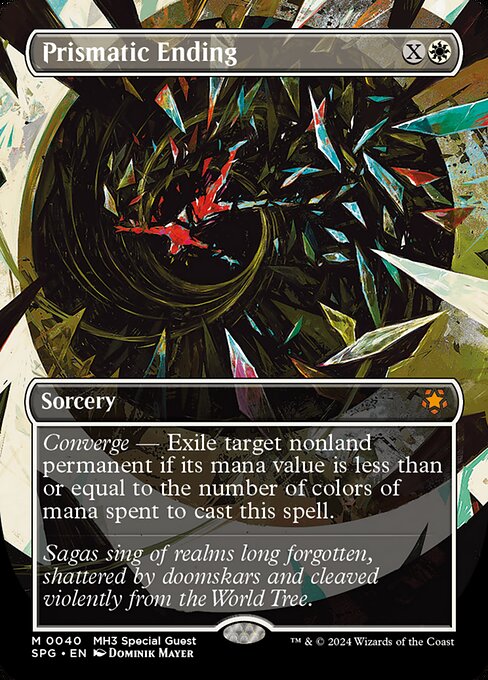
Prismatic Ending Clean, flexible, and hits a wide variety of threats that Push can’t touch. It helps cover early problematic permanents, creatures, cheap artifacts, and enchantments. Can also scale up pretty well if we can find out triomes.
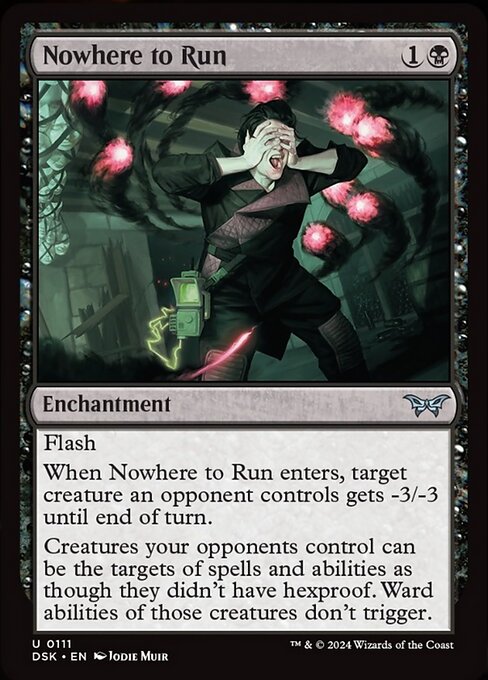
Nowhere to Run A smaller removal piece but still important. Getting around ward and hexproof is always nice.
Together, these three cards form the backbone of your “pre-lock” survival plan.
Gameplay
Even though this deck has a prison-style endgame, most matches don’t play out like a traditional lock deck. You spend the early turns playing normal Magic: removing creatures, disrupting hands, and trying to assemble either Meditation loops or incremental advantages through Nightmare, Breaker, and Floodpits.
Early Game
Most of your opening turns are spent managing the board:
use Fatal Push or Prismatic Ending to avoid falling behind
deploy Hopeless Nightmare early for pressure and information
prioritize lands over engines if the matchup is aggressive
avoid committing Invocation without support
Against creature decks like Wizards or Auras, this is where Binding shines. Against Yawgmoth or midrange shells, early discard from Nightmare helps shape their development and buy time.
In several matches on stream, missing land drops was our biggest problem, and we had to prioritize finding them over setting up an engine.
Midgame
Once you’ve hit 3–4 mana, you can start assembling the pieces that actually win games.
Phelia Loops
You don’t need Estrid’s Invocation in every game. A single Phelia, Exuberant Shepherd plus Meditation can create a loop of re-buying spells and keeping the opponent off balance.
This showed up repeatedly in the Yawgmoth and Eldrazi matches, where Phelia allowed us to:
reuse removal
reset Nightmare or Momentum Breaker
pick up Chant at key points
It’s not the full lock, but it buys enough time to get there.
Momentum Breaker + Invocation
If you’re not under pressure or focusing on the lock, copying Breaker is often better than copying Meditation. Breaker can empty an opponent’s hand quickly in fair matchups, and several games were won simply by attrition before the Chant loop was even assembled.
Overlord of the Floodpits
Games often pivot when you resolve Overlord. Especially against slower decks, a copied Overlord produces steady card advantage and a real threat. This closed out multiple games on stream without needing Chant at all.
Late Game
When Invocation and Meditation are both on the battlefield, everything slows down.
In practice, very few decks can meaningfully interact through this. Even Eldrazi struggled when the pieces came together, because even though their creatures are busted, they still need to attack you to win.
From there, you win however makes sense:
Overlord beats
Otters from Stormchaser’s Talent
Repeated Nightmare drains
Shame concession from the opponent 🙂
Overall we did pretty well, going 4-1 during our 5 matches on stream.
Closing Thoughts
Historic is in a spot where you have to be doing something unfair to compete in my opinion. he decks that succeed right now either end the game quickly, scale explosively into the late-game, or bypass interaction entirely. A midrange deck without a fundamentally unfair angle simply can’t keep pace with Auras, Wizards, Eldrazi, or Lotus Field.
This core enchantment shell is strong on its own, but adding the Meditation loop transforms the deck from a value engine into a real endgame plan. You can play a normal midrange game when needed, pressure opponents with Breaker and Nightmare, or shift into the Chant lock when the board stabilizes. And you have enough redundancy between Invocation and Phelia that assembling the loop is realistic in long games.
The list isn’t perfect. The mana can still be awkward, and aggressive starts from Auras or Wizards demand tight play and early interaction. Eldrazi remains difficult if they’re able to apply pressure before your engines come online. But the deck performed better than expected, and the ability to completely shut off an opponent’s turn gives you a level of inevitability most midrange decks lack.
If you’re looking to play something interactive in Historic without falling behind the extremes of the format, this is one of the few midrange shells that actually has the tools to fight back. We’ve been playing a lot of midrange shells on stream and this is the only one that performed well in a format that really doesn’t want midrange to exist right now.
Thanks for reading!
As always, feel free to comment and leave any questions you have below. And make sure to come back next week for even more Fun & Jank!
If you want to see these decks in action, come hang out with me on stream where we test, refine, and have a ton of fun together.
Happy Brewin’!
Premium
Enjoy our content? Wish to support our work? Join our Premium community, get access to exclusive content, remove all advertisements, and more!
No ads: Browse the entire website ad-free, both display and video.
Exclusive Content: Instant access to all exclusive articles only for Premium members, at your fingertips.
Support: All your contributions get directly reinvested into the website to increase your viewing experience!
Discord: Join our Discord server, claim your Premium role and gain access to exclusive channels where you can learn in real time!
Special offer: For a limited time, use coupon code L95WR9JOWV to get 50% off the Annual plan!
Plum is the creator of the Jank Tank.
He started playing at the ripe old age of 12 and immediately fell in love with the infinite possibilities that deck building could lead to.
He truly understands that jank is a mindset, and spends most of his free time brewing and concocting new and exciting deck lists to help inspire and promote creativity within the MTG community.