Welcome back to another episode of Fun & Jank! With Reality Fracture Alchemy bringing a bunch of new cards to MTG Arena, I’ve been having a great time digging through the set and trying to figure out what we can do with some of its more interesting additions.
There was one card in particular that I was excited to getting brewing with: Nylea’s Oracle
I originally started looking at this card because its ability seemed like it could get completely out of hand with the right setup. My first idea involved reanimating multiple copies at once, which eventually led me toward a green devotion strategy, and finally into a much faster creature-combo deck built around Neoform.
Along the way, there were a few cards that really impressed me, a few ideas that didn’t quite come together, and eventually a version that I managed to take all the way to Mythic.
So, instead of just showing off the final decklist, I thought it would be fun to go through the whole process, talk about what I was trying to accomplish with each version, and explain how we ended up where we did.
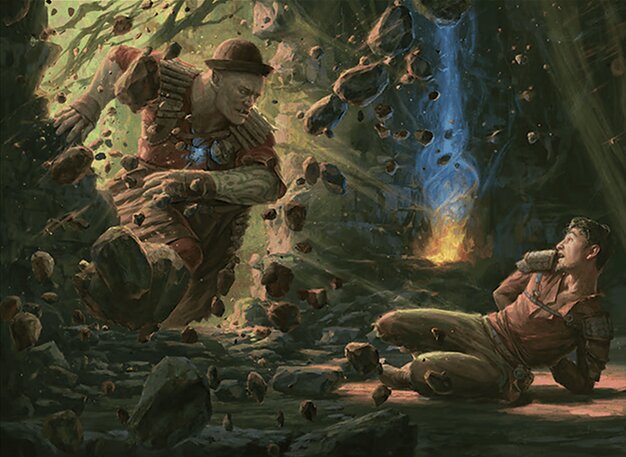
The card we’re looking at today is Nylea’s Oracle, a two-mana 3/1 Centaur Druid with a pretty unusual ability that has the potential to get completely out of hand.
Whenever Oracle enters the battlefield, it conjures a number of copies of itself into our library equal to our devotion to green. Since Oracle costs GG, it already contributes two devotion all by itself. But here’s where things get interesting. After shuffling those extra copies into our library, Oracle checks whether we have more cards in our library than we started the game with. Assuming we’re playing a normal 60-card deck, that means we need at least 61 cards in our library. If we meet that condition, all our creatures get +X/+X and gain haste until end of turn, with X once again being our devotion to green.
Essentially, we’re trying to stuff our library with so many extra copies of Oracle that we can turn a two-mana creature into a massive team-wide pump spell (like a mini Craterhoof). And because the ability triggers whenever Oracle enters the battlefield, we can potentially repeat the effect by reanimating it, blinking it, or making copies of it.
There are a couple of catches, though. Oracle doesn’t give our creatures trample, so a battlefield full of blockers can still be a problem. We also have to account for the cards we’ve already drawn or otherwise removed from our library, since conjuring a few extra Oracles won’t necessarily put us over that 60-card threshold right away.
My initial thought was pretty simple: How can we get a bunch of copies on the field at once?
That’s where Buried Alive and Dewdrop Cure come in.
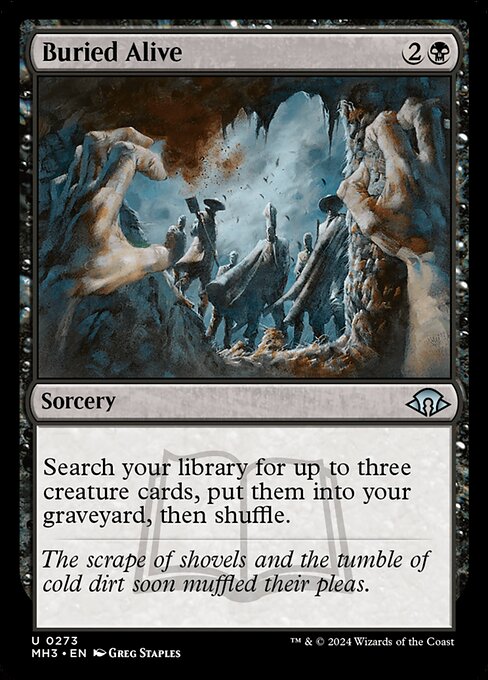
Buried Alive is a popular card that lets us search our library for three creature cards and put them directly into our graveyard. Since Oracle only costs two mana, it’s a perfect target for Dewdrop Cure, which can return multiple cheap creatures from the graveyard to the battlefield. By promising the gift on Dewdrop Cure, we can return up to three creatures instead of two. That means we can use Buried Alive to put three copies of Nylea’s Oracle into our graveyard and then bring all three back with a single spell.
Once they’re on the battlefield, each Oracle contributes two devotion to green, giving us six devotion before counting anything else. Each of their enters-the-battlefield abilities sees that devotion, potentially conjuring six more Oracles into our library apiece.
That’s eighteen extra copies of Nylea’s Oracle!
And because all three abilities are triggering, we have multiple opportunities to satisfy the library-size condition and give our creatures a massive power boost.
The exact timing matters here. The abilities resolve individually, and the pump only happens when our library actually contains more cards than our starting deck. Depending on how many cards we’ve already drawn or milled, the first trigger might not be enough to get us there. But the additional copies created by subsequent triggers can push us over that threshold.
The Rest of the Deck
The problem was figuring out what the rest of the deck should look like.
Since we’re already playing Buried Alive and Dewdrop Cure, we’re committed to black and white, with green needed if we want to cast Oracle naturally. Rather than building a traditional green devotion deck, I decided to lean into the reanimation plan and play cards that could help us survive long enough to assemble the combo.
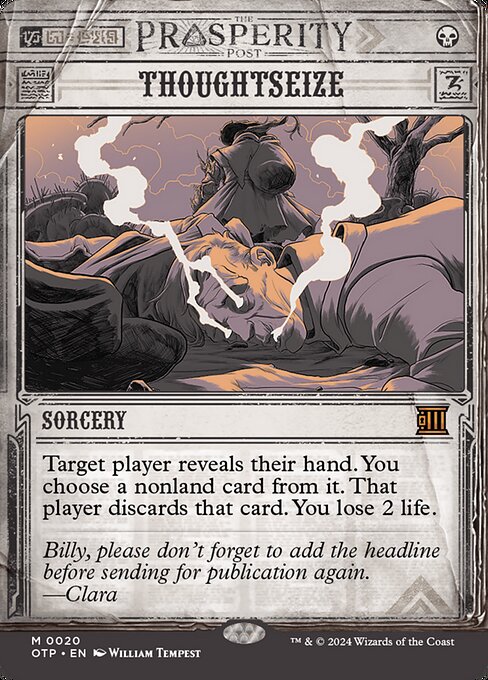
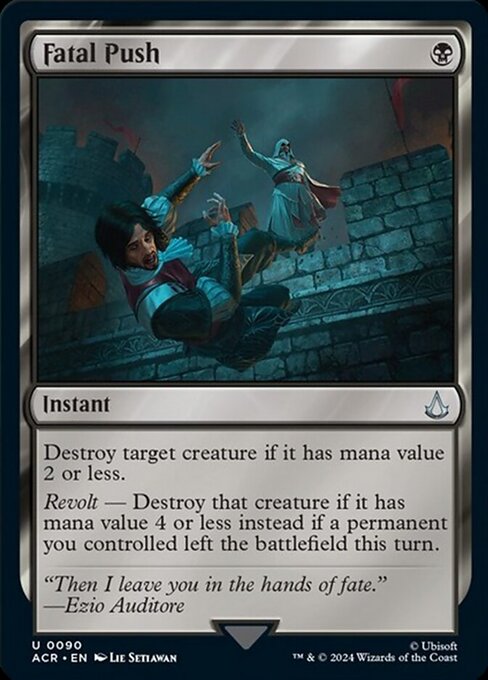
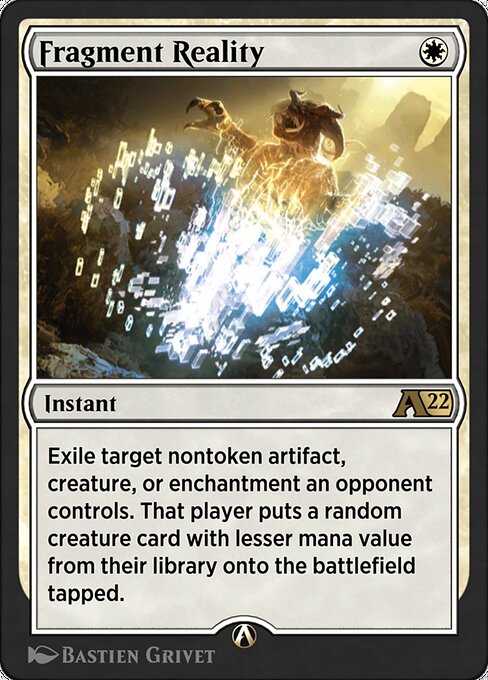
Thoughtseize, Fatal Push, and Fragment Reality give us ways to interact with our opponent, while Orcish Bowmasters is a generally useful threat that can also help put additional creatures onto the battlefield.
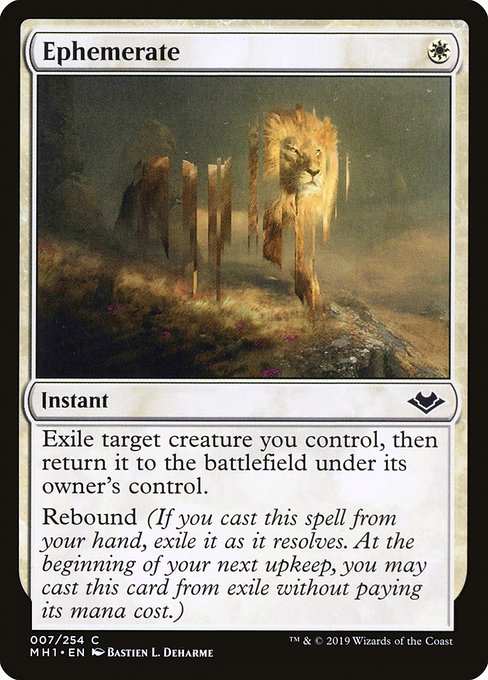
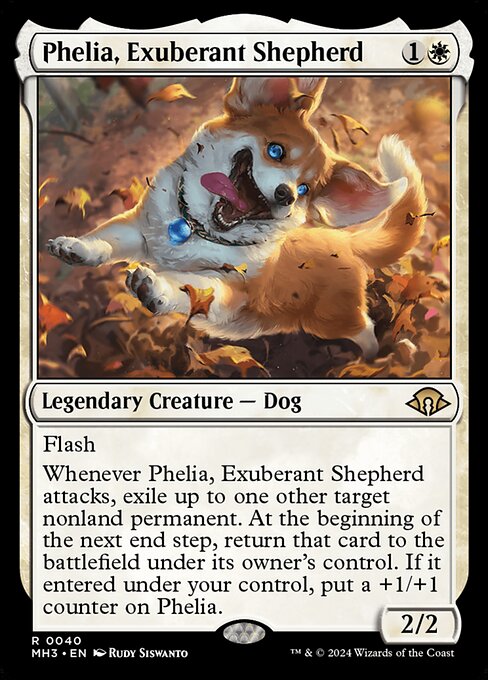
I also included Ephemerate and Phelia, Exuberant Shepherd as ways to reuse Oracle’s enters-the-battlefield ability. Even if we aren’t assembling the full Buried Alive combo, blinking an Oracle can give us another opportunity to conjure cards and potentially pump our team.
Emperor of Bones gives us another way to work with creatures in the graveyard, while Juggernaut Peddler round out the rest of the deck. The idea was to create something that could play a relatively normal interactive game while threatening a much bigger combo finish.
While I liked the idea behind this version, I started wondering whether we were making things more complicated than they needed to be.
Buried Alive and Dewdrop Cure can produce a pretty impressive sequence, but they also require us to find two specific spells, spend mana setting everything up, and have enough creatures available to actually take advantage of the pump. And that’s an important distinction with Oracle. Making three creatures enormous is nice, but it’s not necessarily the same thing as winning the game, especially when those creatures don’t have trample.
We were also playing a fairly reactive shell around a card that really wants us to have a large battlefield and plenty of green devotion. The more I thought about it, the more I wanted to try building around those aspects directly instead of finding ways to put Oracle into play from the graveyard.
This was more of an experiment to see how Oracle itself performed, and it always felt awesome to land it and win, but the rest of the shell was too diluted. Honestly, if I were to rebuild it I’d drop lurrus in favor of a more traditional blink shell with Overlord of the Balemurk and such.
I’m not going to talk about it here, but I did have another version with a Blink plan that looked more promising. Ocelot Pride, Renegade Rallier, Voice of Resurgence were all interesting inclusions that I was enjoying.
For the second version, I decided to embrace the devotion aspect of Nylea’s Oracle and see just how much value we could generate by filling the battlefield with green permanents. There’s been quite a few lists like this popping up in Alchemy too.
Instead of trying to reanimate several Oracles at once, the plan was to develop a bunch of mana-producing creatures, build up our devotion, and start chaining together spells and creatures until Oracle could deliver a huge attack. This version plays a lot more like a green combo deck than a traditional aggressive creature strategy.
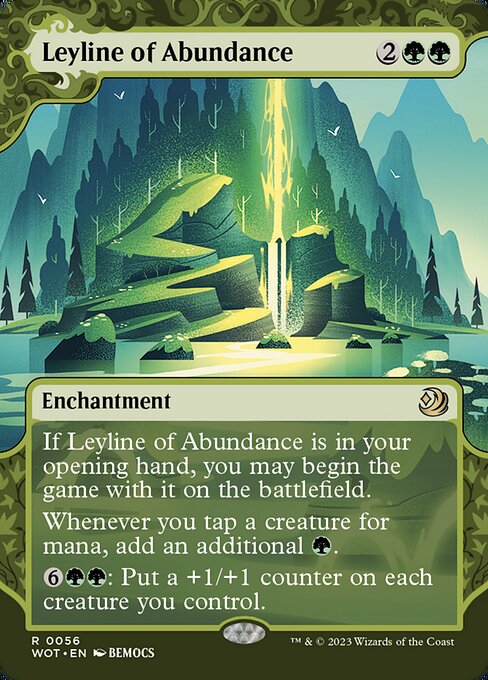
Leyline of Abundance and Leyline of the Guildpact were obvious cards to experiment with because they can help establish our devotion without requiring us to spend the early turns casting expensive permanents. If we can start the game with a significant amount of green devotion already available, Oracle becomes much more threatening.
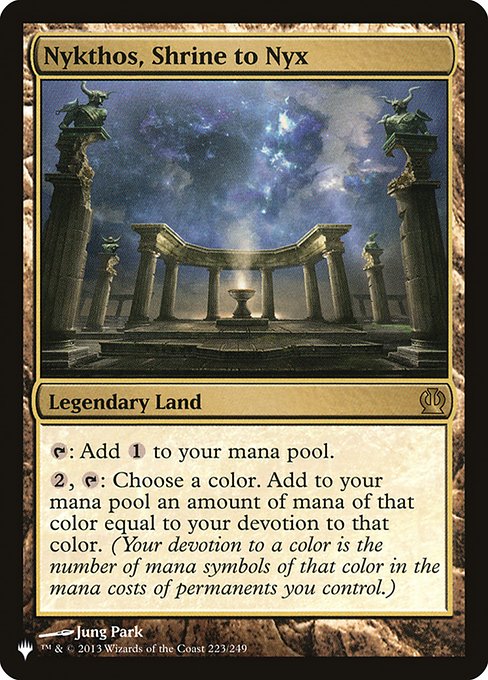
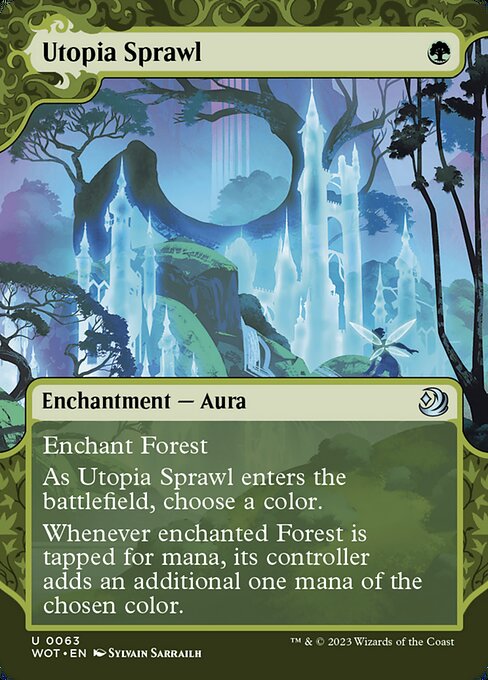
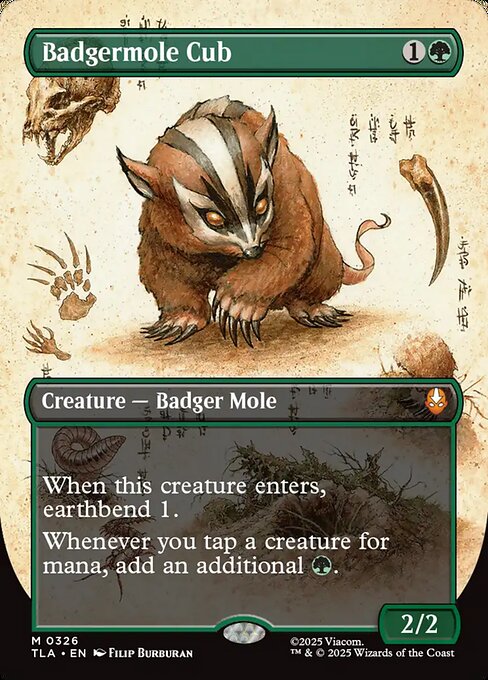
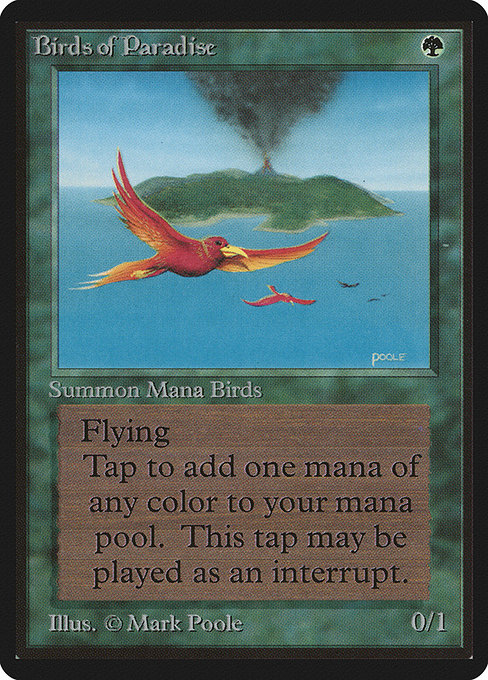
We also have Nykthos, Shrine to Nyx, which can convert all that devotion into a huge amount of mana. Between Nykthos, Birds of Paradise, Utopia Sprawl, and Badgermole Cub, the idea was to generate enough mana to start doing some nutty things.
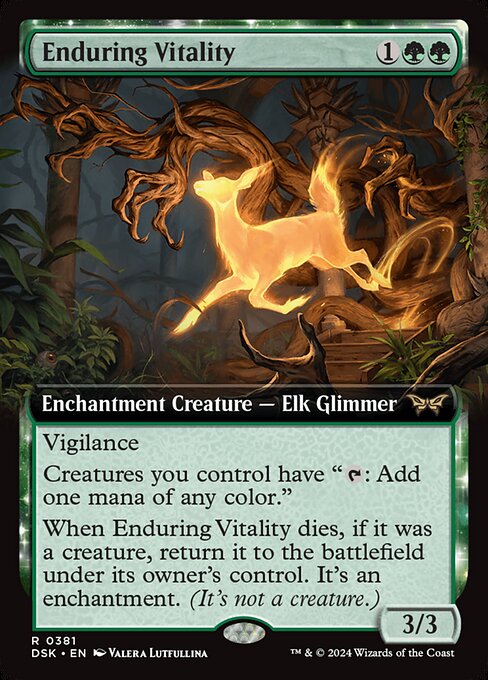
But the cards I was most interested in testing were Enduring Vitality, Shang-Chi, Master of Kung Fu, and Chittering Illuminator.
Enduring Vitality gives our creatures the ability to produce mana, which opens up some interesting possibilities when we’re already trying to fill the battlefield with creatures.With the right setup, we can start using our creatures as mana sources rather than just attackers, and Shang-Chi gives us another piece to experiment with in that engine, allowing us to tap creatures immediately for additional mana.
Now my goal wasn’t simply to cast one enormous spell. I wanted to create turns where we could keep developing our battlefield, generate more mana, and use that mana to find additional creatures.
This is where I realized Chittering Illuminator is absolutely bonkers! Illuminator gives the deck another way to keep moving through its resources, and it ended up being one of the cards that impressed me the most. When we could get our engine going, it felt like Illuminator was doing a lot of the heavy lifting in terms of helping us continue our turn.
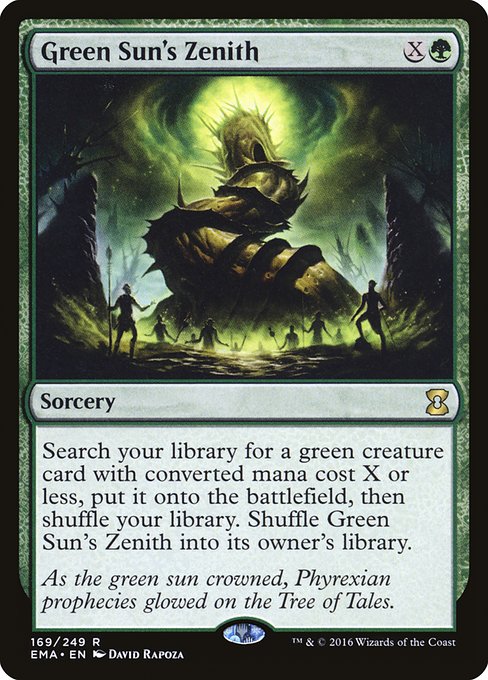
The other card that really stood out was Green Sun’s Zenith. Obviously!
Being able to search for a green creature and put it directly onto the battlefield is an incredibly useful effect in a deck built around specific creature interactions. It gives us more access to Oracle when we need it, while also letting us find other pieces depending on what the game calls for. And unlike a card that’s only useful when we’re already comboing, Green Sun’s Zenith can help us develop our board earlier in the game.
There were definitely some things I liked about this version.
As I mentioned, Chittering Illuminator felt extremely strong, and Green Sun’s Zenith was another card that consistently impressed me. Those were the two cards that really made me want to keep exploring the concept.
The rest of the deck, however, didn’t feel quite as convincing.
We were dedicating a lot of space to generating mana and building devotion, but that didn’t always translate into a fast or reliable win. Having access to a ridiculous amount of mana is great, but it doesn’t mean much if we don’t have the right cards to spend it on. Leyline sort of solves that as an additional mana sink, but it’s still pretty slow.
The more I played around with the idea, the more I started thinking that we didn’t necessarily need to generate an enormous amount of mana to make Oracle powerful. I wanted to go back to something a bit more lean, that tried to jam Oracles as quickly and consistently as possible.
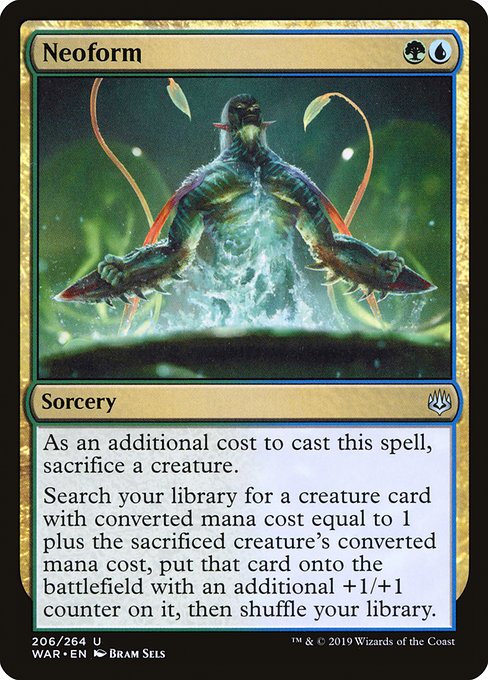
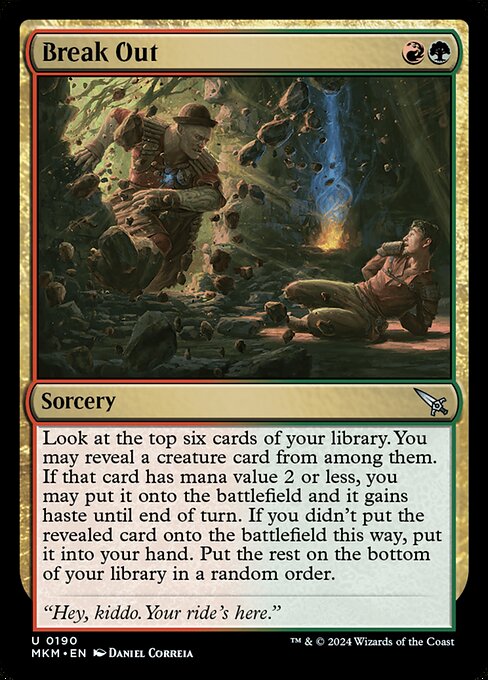
For the third version, I dropped the heavy devotion package and rebuilt the deck around cheap mana creatures, Neoform, Break Out, and Phantasmal Image. Instead of trying to assemble a huge mana engine, the goal was to develop our battlefield as quickly as possible, find Nylea’s Oracle, and start copying it until our creatures were large enough to win.
And as it turns out, that plan can be incredibly fast.
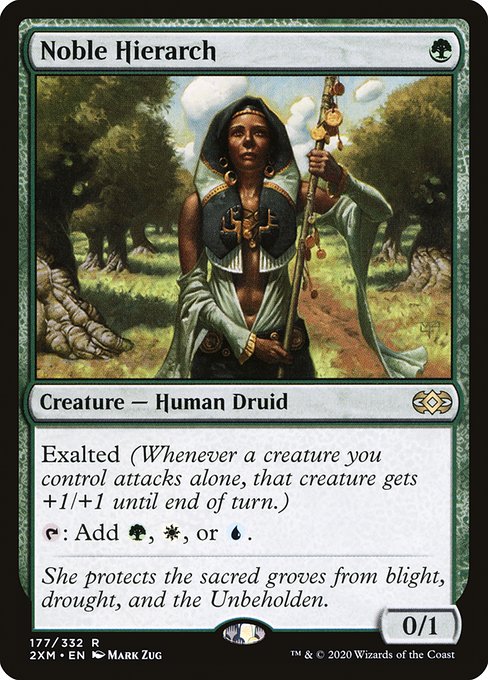
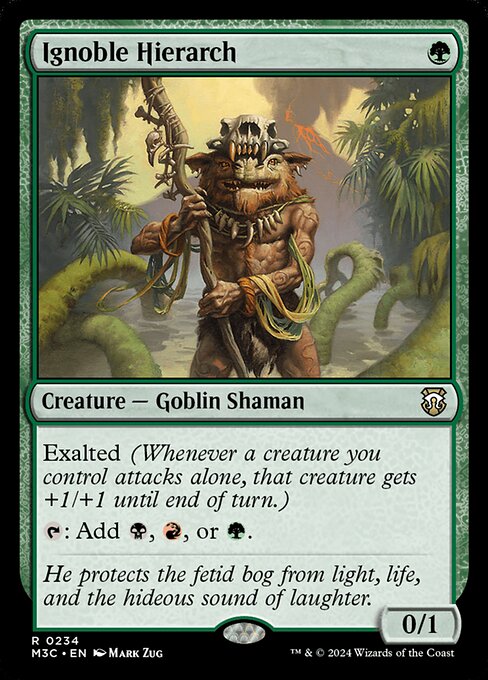
One of the biggest changes was adding a full set of cheap mana creatures. Between Birds of Paradise, Noble Hierarch, and Ignoble Hierarch, we have twelve one-mana creatures that can help accelerate our early turns.
On top of that Neoform is one of the most exciting additions to this version. By sacrificing a one-mana creature, we can search our library for a two-mana creature and put it directly onto the battlefield with an additional +1/+1 counter.
That means any of our twelve one-mana creatures can become Nylea’s Oracle!
It also gives us access to other two-mana creatures when we need them, making the deck a little more flexible than a strategy that relies entirely on drawing one specific card.
The other addition that really impressed me was Phantasmal Image.
For just two mana, Image can enter as a copy of Nylea’s Oracle, giving us another Oracle trigger without needing to find another actual copy of the card. It also provides the flexibility of copying the best creature on the battlefield. There was a quite a few games where I got to copy an opposing Juggernaut Peddler multiple times to pick apart my opponent’s hand.
Break Out is the card I was testing to be complimentary to Neoform (I’ve also seen Three-tree Battalion, and Collected Company). Digging 6 cards deep and putting a two-drop directly on the field helped make finding an Oracle more consistent while also giving us a teeny bit of early pressure.
The final version ended up performing much better than I expected. I took the deck onto stream and managed to go 7–1 on the way to Mythic, which was a pretty satisfying result considering where the idea started.
What surprised me most was just how quickly the deck could win. We started getting a bunch of turn-three wins, which is not something I was consistently accomplishing with either of the earlier builds.
Our mana creatures gave us fast starts while also providing bodies for Oracle to pump. Neoform made finding Oracle much easier. Phantasmal Image gave us a cheap way to multiply our triggers, and Break Out helped keep the pressure on. We were still doing something pretty ridiculous, but the deck no longer felt like it needed a dozen different things to go right before it could accomplish anything.
Of course, going 7–1 doesn’t automatically mean we’ve discovered the next dominant Historic deck. Eight matches is still a pretty small sample, and there are certainly ways for opponents to disrupt what we’re doing. Creature removal, sweepers, and other forms of interaction can make things difficult, particularly when we’re committing a lot of resources to the battlefield.
I’d also like to point out that the deck pivots into a pretty decent weenie gameplan when Oracle is out of the picture. Deck was strong, and super fun to be honest. Lots of people had no idea what we were doing most of the time.
Closing Thoughts
I think Nylea’s Oracle is a great example of why I enjoy experimenting with new Alchemy cards in Historic.
When I first saw it, my immediate thought was to find the most ridiculous way possible to trigger its ability. That led to Buried Alive and Dewdrop Cure, which sounded hilarious on paper but required quite a bit of setup. From there, I moved toward a devotion-based strategy that could generate enormous amounts of mana, and while that version didn’t quite come together the way I’d hoped, it helped me discover just how strong Chittering Illuminator could be.
Eventually, I realized that the best approach might also be the simplest one. We could just play a bunch of cheap creatures, find Oracle with Neoform, copy it with Phantasmal Image, and attack.
The fact that this final version managed to take me to Mythic with a 7–1 record was a pretty nice bonus.
I don’t know whether this is the definitive way to build around Nylea’s Oracle, and I’m sure there are still plenty of other directions worth exploring. But that’s part of what makes a card like this so much fun. It rewards you for experimenting, and the best version isn’t always the one you expect when you first start brewing.
Anyway, that’s going to do it for this episode of Fun & Jank! If you’ve been experimenting with Nylea’s Oracle yourself, I’d love to hear what you’ve come up with, and if you decide to give one of these lists a try, let me know how it goes.
Thanks for reading!
As always, feel free to comment and leave any questions you have below. And make sure to come back next week for even more Fun & Jank!
If you’re interested in more fun content, come join me on stream and help brew our next deck! Until next time, have fun, play jank.
Happy Brewin’!
Premium
Enjoy our content? Wish to support our work? Join our Premium community, get access to exclusive content, remove all advertisements, and more!
No ads: Browse the entire website ad-free, both display and video.
Exclusive Content: Instant access to all exclusive articles only for Premium members, at your fingertips.
Support: All your contributions get directly reinvested into the website to increase your viewing experience!
Discord: Join our Discord server, claim your Premium role and gain access to exclusive channels where you can learn in real time!
Special offer: For a limited time, use coupon code L95WR9JOWV to get 50% off the Annual plan!
Plum is the creator of the Jank Tank.
He started playing at the ripe old age of 12 and immediately fell in love with the infinite possibilities that deck building could lead to.
He truly understands that jank is a mindset, and spends most of his free time brewing and concocting new and exciting deck lists to help inspire and promote creativity within the MTG community.