Anthropological Brewing in Historic! – Fun & Jank Episode 100
Plum has been storming off with Anthropological Mission in Historic! Check out three new brews he's been playing thanks to this recent Star Trek staple!
Welcome back to another episode of Fun & Jank! We’ve officially reached our biggest milestone yet with Episode #100! Whether you’ve been following the series since the beginning or have only recently joined us, I really appreciate everyone who’s taken the time to read these articles and hang out on stream.
Now, despite not being particularly excited about the Star Trek set going into its release, I’ve actually been having quite a bit of fun with one of the cards that’s been making waves across multiple formats: Anthropological Mission.
This unassuming three-mana enchantment has been finding its way into decks across Standard, Pioneer, Modern, and even Legacy, and it’s not particularly difficult to understand why. Whenever we cast a noncreature spell, we put a quest counter on Mission and draw a card before discarding one. However, starting with our third trigger, we no longer have to discard, effectively turning every subsequent noncreature spell into an additional card draw.
What’s particularly appealing about Mission is how little it asks of us beyond what most spellslinger decks already want to be doing. We’re not restricted to casting instants and sorceries, meaning everything from cheap artifacts and enchantments to zero-mana spells can help get our engine online. Once we’ve accumulated those three quest counters, even something as simple as casting a Mox becomes an opportunity to dig deeper into our deck.
I’ve been exploring a handful of different ways to take advantage of this in Historic, and today I wanted to showcase three decks that I’ve been messing around with on stream.
Long time no see! We talked about the original list waaayyyy back in Episode 31.
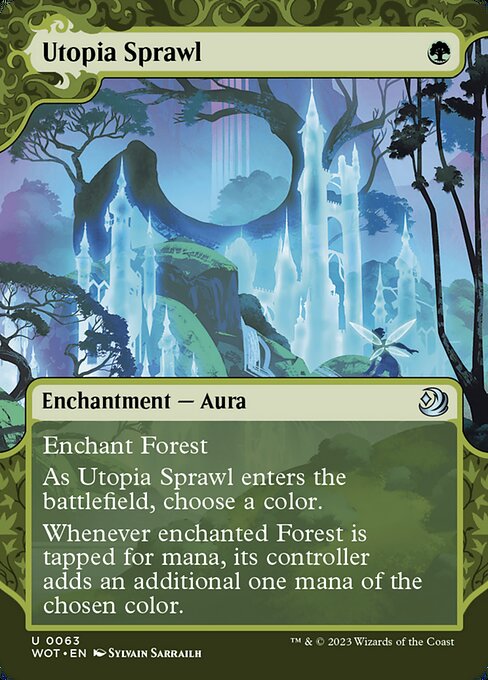
For those unfamiliar with the deck, Utopia Storm is essentially an enchantment-based version of Twiddle Storm. Rather than relying on something like Lotus Field to generate a bunch of mana, we’re looking to enchant our lands with a combination of Utopia Sprawl, Wolfwillow Haven, and Runaway Growth before repeatedly untapping them to generate mana.
Our primary way of accomplishing this is through Hidden Strings and Vizier of Tumbling Sands. Once we’ve got a couple of enchantments stacked onto our lands, these cards can generate significantly more mana than we’re spending to cast or cycle them. Hidden Strings is particularly powerful because it allows us to untap two different permanents, which doesn’t necessarily have to be two lands.
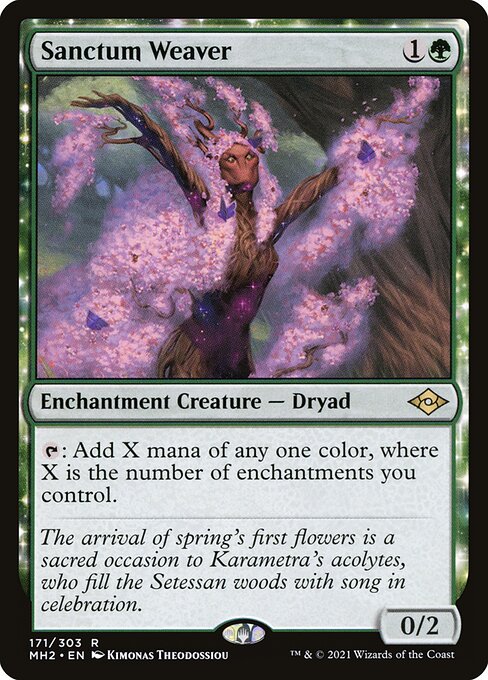
But we also have Sanctum Weaver. Since almost everything we’re playing is an enchantment, Weaver can fairly quickly start tapping for ridiculous amounts of mana. Being able to untap both a heavily enchanted land and a Sanctum Weaver with a single Hidden Strings can give us an enormous amount of mana to work with.
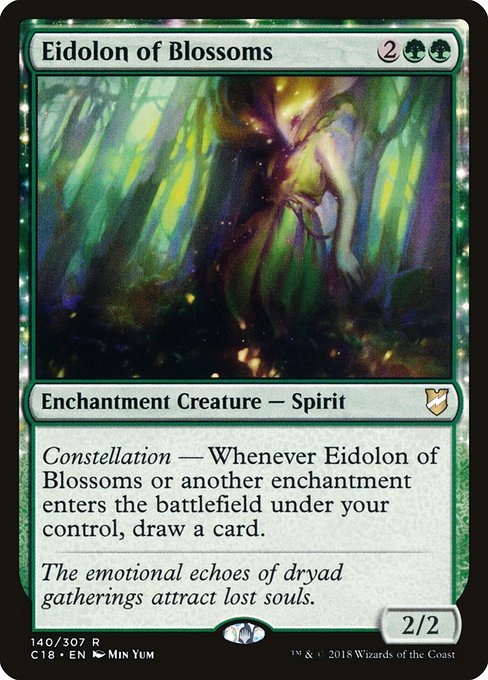
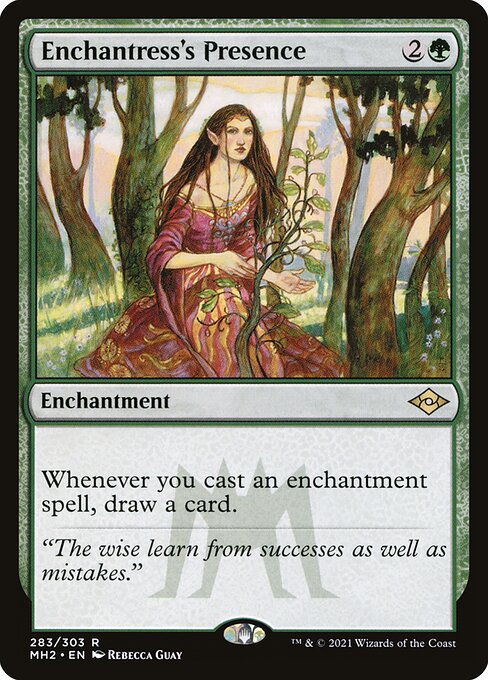
Of course, generating all that mana doesn’t mean much if we run out of cards to cast, which is why we’re also running a full playset of both Enchantress’s Presence and Eidolon of Blossoms. These are the cards that allow us to continually replace our enchantments as we develop our mana engine.
Anthological Mission has just been a perfect fit for the list in general. It’s basically copies 5-8 of Presence, but it’s been incredibly useful getting additional triggers off of things like Hidden Strings or Fae of Wishes. Being an enchantment itself also means it contributes to Sanctum Weaver while synergizing with our other draw engines.
Once we’ve got Mission online alongside an Enchantress effect, even something as innocent as Utopia Sprawl can draw us multiple cards, increase our mana production, and contribute to our storm count. Roiling Dragonstorm is another particularly nice way to dig through our deck while triggering both engines.
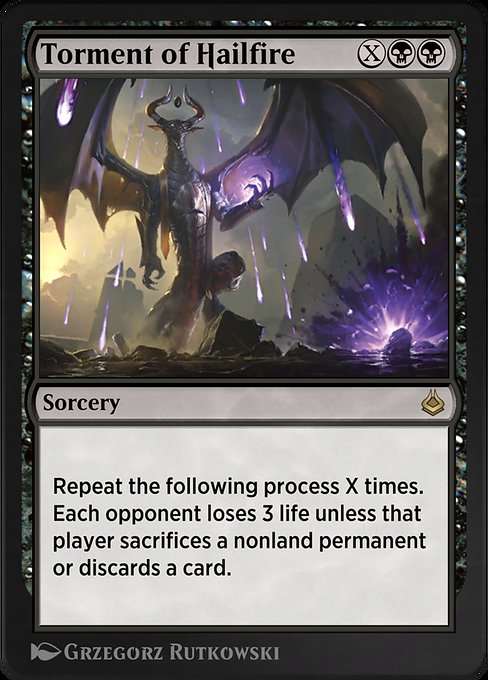
As for actually winning the game, we’re utilizing Fae of Wishes to access a handful of different win conditions out of our sideboard. Tendrils of Agony allows us to capitalize on a large storm count, Torment of Hailfire gives us an outlet for all that excess mana, and Jace, Wielder of Mysteries provides an alternative win condition if we end up drawing through our entire library.
Overall, Mission feels like a pretty natural addition to an archetype I’ve already enjoyed playing. Storm is a little tough to play in a Bowmaster meta, but It was so much fun to play again that it didn’t even matter!
After having quite a bit of fun with Anthropological Mission in Utopia Storm, I wanted to see what would happen if we leaned a little harder into the traditional Storm game plan. More akin to traditional Twiddle Storm. Along with some Inspiration from Ruby Storm (popular in both Modern and Historic), I decided to put together a color-shifted version of the deck that I’ve appropriately dubbed Sapphire Storm.
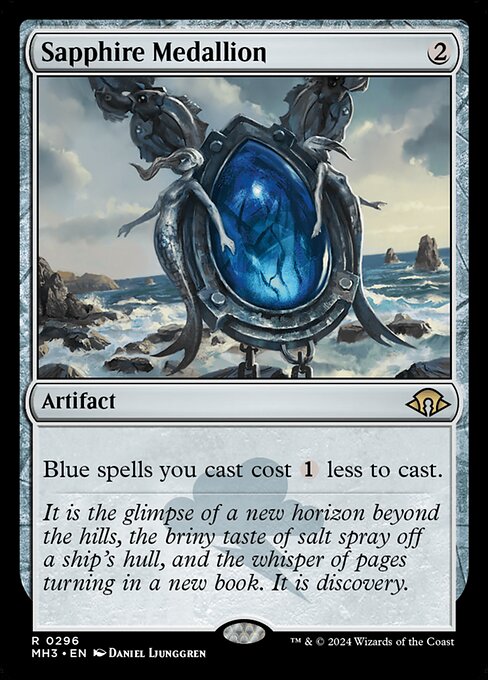
Rather than using Ruby Medallion alongside red rituals to generate mana, we’re utilizing Sapphire Medallion alongside a collection of blue spells that untap our lands. The idea is to reduce the cost of our spells to the point where we’re generating mana while simultaneously drawing through our deck.
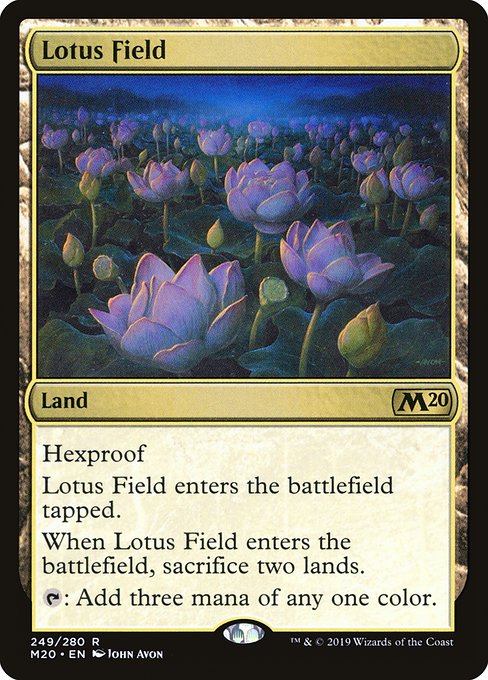
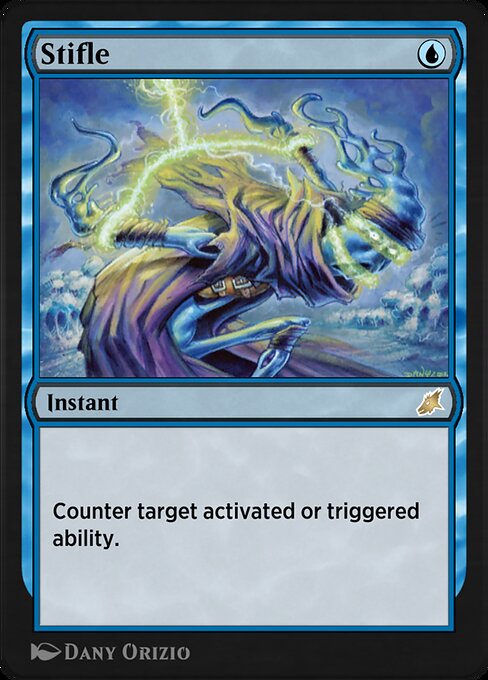
This build is a little different from the enchantment based one we talked about in the list above though. The foundation of our mana engine is Lotus Field. We’re running a full playset of Stifle, which allows us to counter Lotus Field’s sacrifice trigger and effectively ramp ourselves without having to sacrifice two lands in the process. We’re also running four copies of Deserted Temple, which gives us another way to repeatedly access the mana generated by Lotus Field.
Once we’ve established our mana engine, things start getting particularly interesting with Pore Over the Pages. With a Sapphire Medallion on the battlefield, we’re spending four mana to draw three cards, discard one, and untap two lands. With multiple Lotus Fields in play, we’re actually generating mana while digging deeper into our deck, and each additional Medallion makes that exchange even better.
I’m also experimenting with another new card from Star Trek in Make It So. While it’s not quite as powerful as Pore Over the Pages, it essentially gives us additional copies of that effect, bringing us up to seven alongside our four copies of Hidden Strings.
Anthropological Mission is particularly appealing here because almost every spell in our deck triggers it. Between Ponder, Seek New Knowledge, and our various untap spells, getting those first three quest counters shouldn’t be particularly difficult. Once we’ve accomplished that, our cheap cantrips become even more efficient, and our mana-generating spells can continually replenish our hand as we work through the deck.
We’re also running Geist of Saint Thalia as our only creature in the main deck, alongside a collection of modal double-faced cards in Silundi Vision and Sink into Stupor. The latter two allow us to keep our actual land count relatively low while maintaining a high density of spells for our combo turns.
As for actually winning the game, we’re keeping things pretty straightforward with a single copy of Tendrils of Agony. Our three copies of Solve the Equation give us additional access to our win condition while also allowing us to find whatever untap or draw spell we might need to keep the combo going. Despite being a predominantly mono-blue deck, Lotus Field conveniently provides the black mana necessary to cast Tendrils.
I’m currently running this deck through its paces on stream, so I don’t have a video out quite yet. But what I particularly enjoy about Sapphire Storm is how much overlap there is between our mana generation and card advantage. ather than needing to balance a collection of rituals with a separate collection of draw spells, many of our cards are effectively doing both. Anthropological Mission pushes that idea even further, allowing us to turn what would otherwise be relatively modest spells into an engine capable of drawing through a substantial portion of our deck in a single turn.
For our final deck today, we’re moving away from the traditional Storm strategies and taking Anthropological Mission in a slightly more aggressive direction. Dragon Mission is essentially a prowess-style deck that looks to chain together a bunch of cheap spells and artifacts before swinging in with some ridiculously large Dragons. There’s already been documented success of the card played alongside Cori-steel Cutter and such in Modern. But we’re trying a package that we used in a Song of Creation combo not too long ago on stream here instead.
The two creatures at the center of this strategy are Traxos, Academy Guardian and Sprite Dragon. Both reward us for playing a high density of inexpensive spells, but perhaps more importantly, they also help enable our various Moxen.
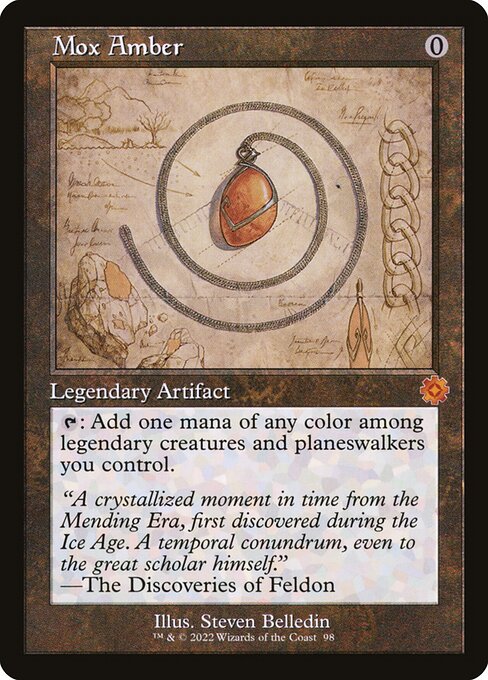
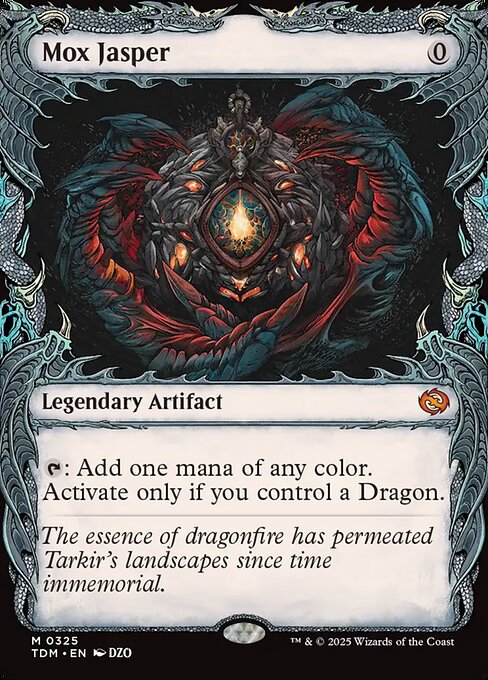
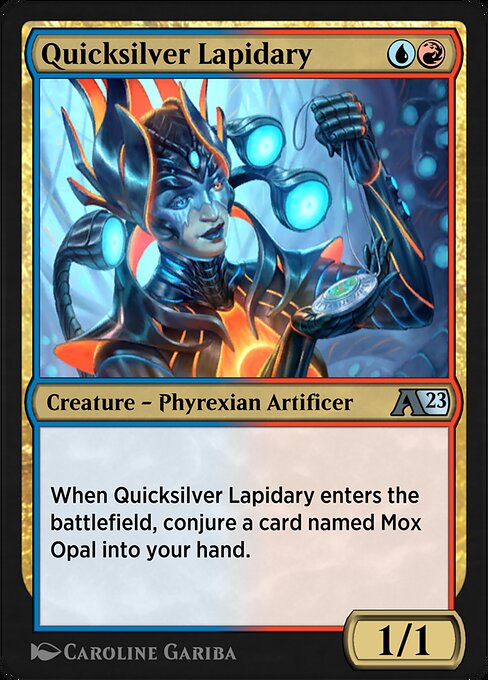
One of the things I really like about Traxos is how conveniently it enables both Mox Amber and Mox Jasper by being a legendary Dragon. We’re also running Quicksilver Lapidary, giving us access to Mox Opal and another source of free mana once we’ve established enough artifacts. Between these and our copies of Urza’s Bauble, we’ve got a pretty substantial number of zero-mana spells to work with.
Naturally, this is where Anthropological Mission really starts to shine. Once we’ve gotten those first three quest counters, every Mox and Bauble we cast essentially replaces itself. Not only are we growing our Dragons in the process, but we’re also potentially generating the mana necessary to continue casting spells. It’s a pretty similar concept to what we were doing with our previous two Storm decks, except this time we’re converting all those spells into combat damage rather than a lethal Tendrils of Agony.
Another particularly fun interaction in this deck is Roiling Dragonstorm. We’ve already been utilizing this card as a cheap way to dig through our library, but unlike our previous decks, we’re actually taking advantage of its Dragon synergy here. Whenever either Traxos or Sprite Dragon enters the battlefield, Roiling Dragonstorm returns to our hand, allowing us to cast it again for additional card selection while triggering Mission and growing our creatures. What would otherwise be a fairly unremarkable draw spell becomes a reusable piece of our engine.
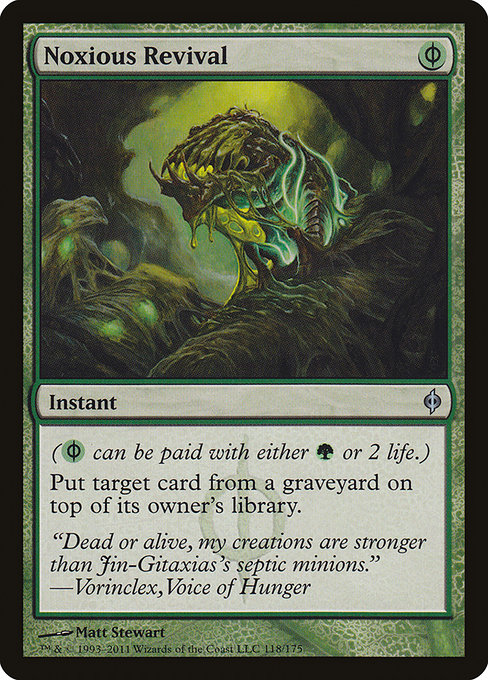
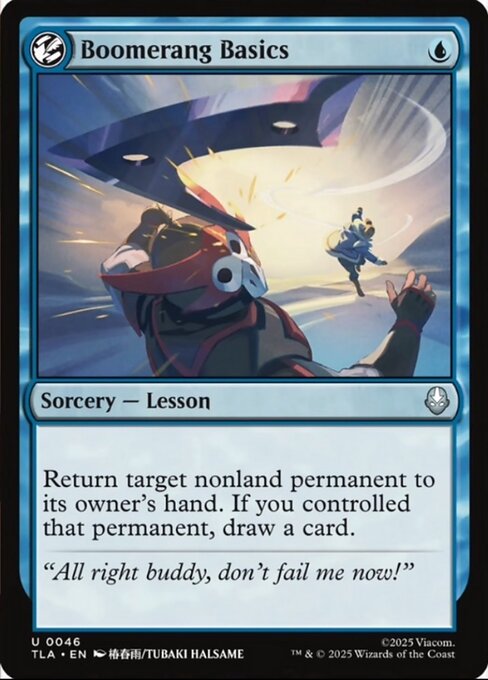
We’re also running Noxious Revival, which gives us another potentially free spell while allowing us to put an important card back on top of our library. With Mission online, we can easily draw that card back into our hand. Boomerang Basics also gives us some flexibility, allowing us to either interact with our opponent’s battlefield or pick up one of our own zero-mana artifacts to cast again.
This deck has felt a bit clunkier than the other two. It not nearly as deterministic once you start chaining spells together. Especially with our win-cons being susceptible to regular creature removal. But Sprite Dragon and Traxos can apply a considerable amount of pressure on their own, and Mission gives us the potential to take an otherwise modest battlefield and turn it into lethal damage out of nowhere.
Closing Thoughts
I think it’s pretty safe to say that Anthropological Mission is a good Magic card. It’s obviously particularly well-suited for Storm strategies, which is more or less the underlying idea behind all three of our decks today, even if Dragon Mission isn’t technically a Storm deck.
Mission is how flexible it is as a card advantage engine. Whether we’re chaining together enchantments, untapping Lotus Fields, or casting a bunch of zero-mana artifacts, Mission rewards us for doing what our decks already want to be doing. It doesn’t require us to completely restructure an archetype to accommodate it, and I think that’s a big reason why it’s finding success across so many different formats.
Of the three decks we looked at today, Utopia Storm has probably been my favorite to revisit, although I’m excited to continue tinkering with Sapphire Storm. Playing these kinds of decks in a format where Orcish Bowmasters and High Noon exist certainly comes with its challenges, but I’ve been having enough fun with Mission that I don’t particularly mind.
And with that, we’ve officially wrapped up our 100th episode of Fun & Jank! Once again, a huge thank you to everyone who’s supported the series over the years, whether that’s through reading the articles, watching the gameplay videos, or hanging out and brewing with me on stream.
Here’s to another 100 episodes of questionable deckbuilding decisions!
Thanks for reading!
As always, feel free to comment and leave any questions you have below. And make sure to come back next week for even more Fun & Jank!
If you’re interested in more fun content, come join me on stream and help brew our next deck! Until next time, have fun, play jank.
Happy Brewin’!
Premium
Enjoy our content? Wish to support our work? Join our Premium community, get access to exclusive content, remove all advertisements, and more!
No ads: Browse the entire website ad-free, both display and video.
Exclusive Content: Instant access to all exclusive articles only for Premium members, at your fingertips.
Support: All your contributions get directly reinvested into the website to increase your viewing experience!
Discord: Join our Discord server, claim your Premium role and gain access to exclusive channels where you can learn in real time!
Special offer: For a limited time, use coupon code L95WR9JOWV to get 50% off the Annual plan!
Plum is the creator of the Jank Tank.
He started playing at the ripe old age of 12 and immediately fell in love with the infinite possibilities that deck building could lead to.
He truly understands that jank is a mindset, and spends most of his free time brewing and concocting new and exciting deck lists to help inspire and promote creativity within the MTG community.