With Reality Fracture Alchemy finally arriving on MTG Arena, I’ve been spending a lot of time looking through the new cards, trying to figure out what ridiculous things we can do with them in Historic. As usual, whenever a new Alchemy release comes around, there are a handful of cards that immediately catch my attention, and before I know it, I’ve got more deck ideas than I know what to do with.
That’s pretty much where I’m at right now. I’ve got a bunch of new things I want to experiment with, but I’ve also got a growing collection of decks that I’ve already put together and haven’t really gotten around to talking about in this series.
Instead of spending the entire article on one brew, we’re going to take a look at four different Historic decks that I’ve been meaning to share. They’re all doing something pretty different, and while some are more straightforward than others, each has an interaction or game plan that I think is worth exploring.
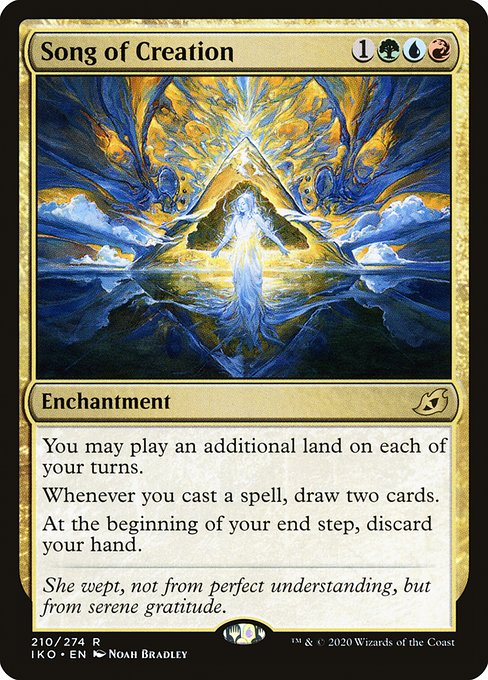
Song of Creation is one of those cards that has always seemed like it should be completely ridiculous if you can find the right shell for it. Drawing two cards every time you cast a spell is an incredibly powerful effect, especially when your deck is full of cards that cost little or no mana. There’s been a few variations of this combo played in other eternal formats, but it hasn’t really had a chance to shine in Historic.
Of course, Song also comes with a pretty significant downside. At the beginning of your end step, you have to discard your hand, which means you can’t really afford to play a slow game once it hits the battlefield. You want to cast Song, start chaining spells together, and hopefully keep going until you’ve found a way to win.
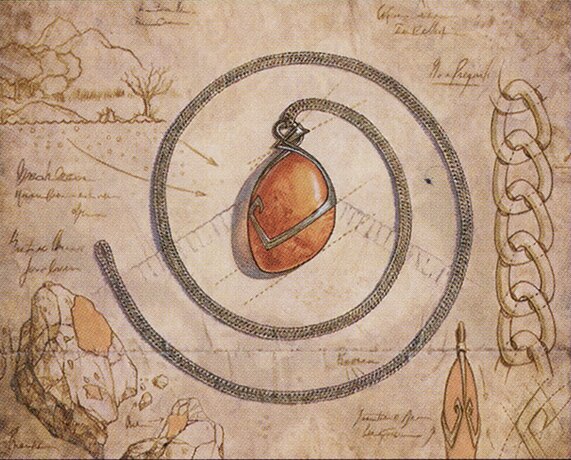
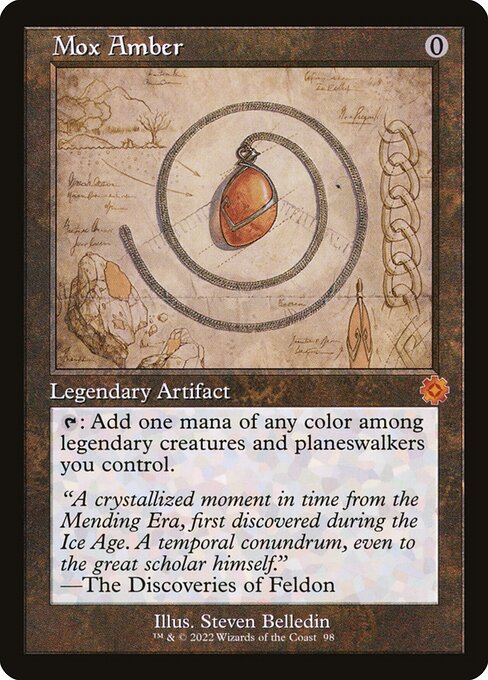
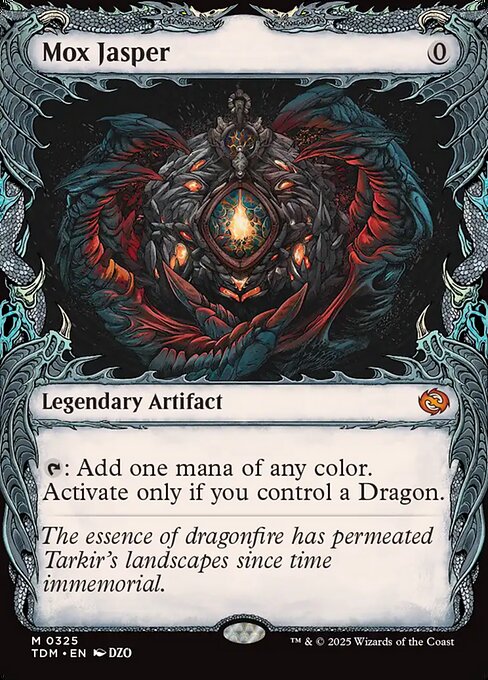
The list is built around Traxos, Academy Guardian, Mox Amber, Mox Jasper, and a collection of cheap spells and artifacts that help us keep the engine moving. With Song on the battlefield, every spell we cast replaces itself with two new cards, and the goal is to use that card advantage to continue casting spells without running out of resources.
The zero-mana artifacts are particularly important here. Cards like Urza’s Bauble can trigger Song without requiring any additional mana, while our Moxen help provide the mana we need to cast the spells we’re drawing. Having access to multiple cheap artifacts also gives us plenty of ways to keep the chain going once we’ve assembled our engine.
Emry, Lurker of the Loch adds another interesting dimension to the deck. Since we’re playing so many artifacts, Emry can help us reuse resources from the graveyard rather than relying entirely on whatever happens to be in our hand. Tamiyo, Inquisitive Student is another cheap legendary permanent that fits naturally into a deck trying to cast lots of spells and draw lots of cards. Both enable Mox Amber as well.
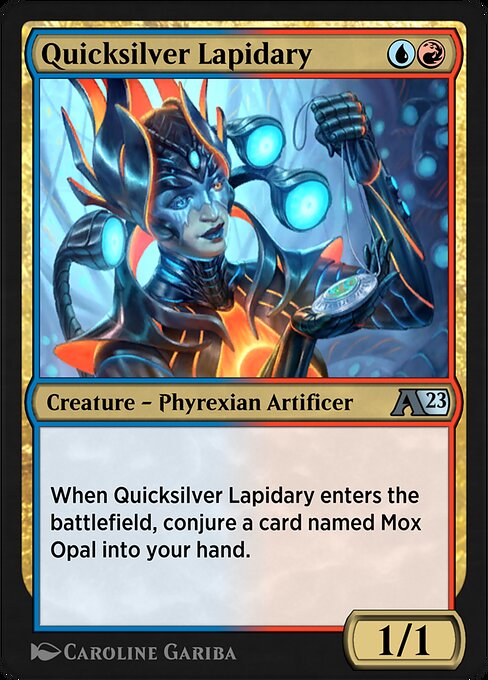
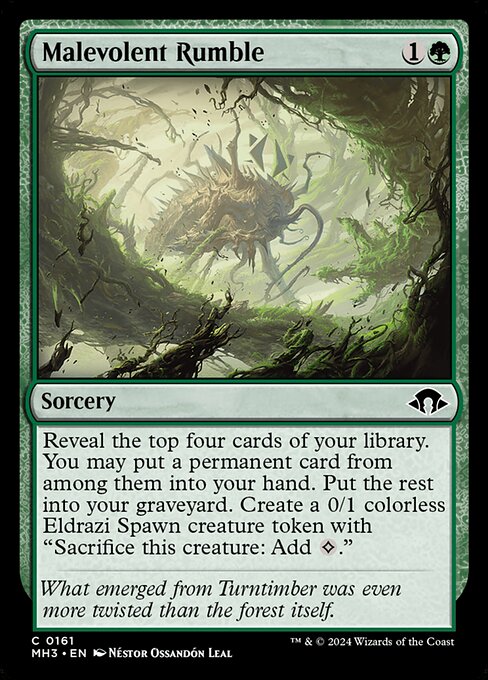
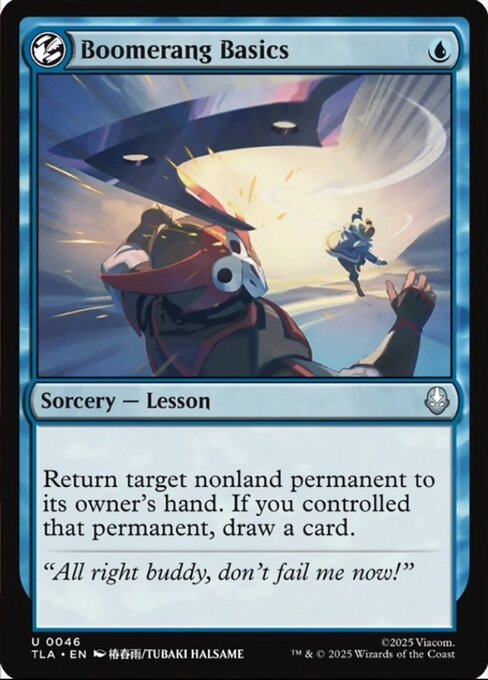
Then we have Quicksilver Lapidary, Malevolent Rumble, Boomerang Basics, and Six, which give the deck additional ways to find, reuse, or work through its resources. Rather than simply playing Song and hoping to draw the right cards, we’re trying to build a deck where as many pieces as possible help us continue the combo.
One of the things I like about this approach is that we aren’t completely dependent on having every specific card in our opening hand. There are a number of different ways to start developing the board, and the deck can spend its early turns setting up before trying to have one really explosive turn.
So how does the deck actually win?
The main idea is to keep casting spells and drawing through our deck until we can reach Jace, Wielder of Mysteries.
The important thing is making sure we can actually cast Jace before decking ourselves or running out of steam to complete the win once we’ve reached that point. Drawing a bunch of cards doesn’t accomplish much if we run out of mana halfway through the turn, which is why the cheap artifacts and mana-producing pieces are such a big part of the deck.
The sideboard also gives us another potential finishing option in Grapeshot. If we’ve cast enough spells in a single turn, storm becomes a natural way to convert all that activity into damage.
The rest of the sideboard gives us ways to fight through interaction and deal with opposing strategies that might otherwise prevent us from getting our engine going. Cards like Pact of Negation can protect an important combo turn, while Nature’s Claim and Ashiok, Dream Render provide answers to specific kinds of opposition.
Next up, we’re going from casting a million spells in one turn to something considerably less conventional: attacking people with walls.
Defender decks have always been one of those strategies that look a little silly until you actually start examining the cards available to them. After all, creatures with defender are usually designed to sit around blocking attacks, and that’s not exactly the most exciting way to win a game of Magic.
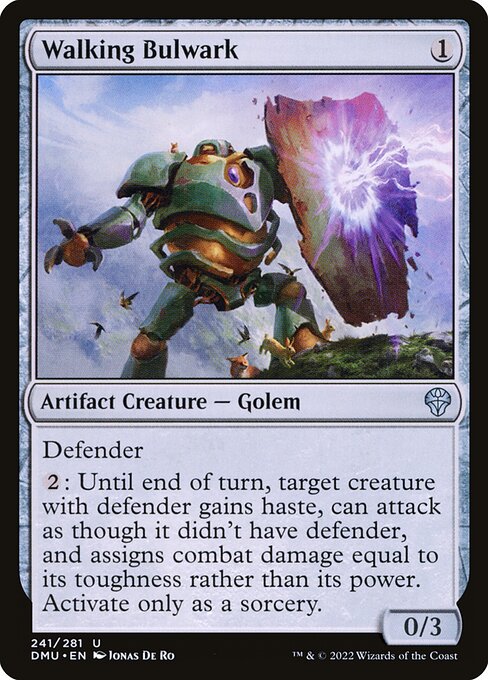
The first important card is Walking Bulwark, which gives us a way to make our defenders attack and use their toughness to determine how much damage they deal. Suddenly, a creature that was originally intended to sit back and block can become a surprisingly threatening attacker.
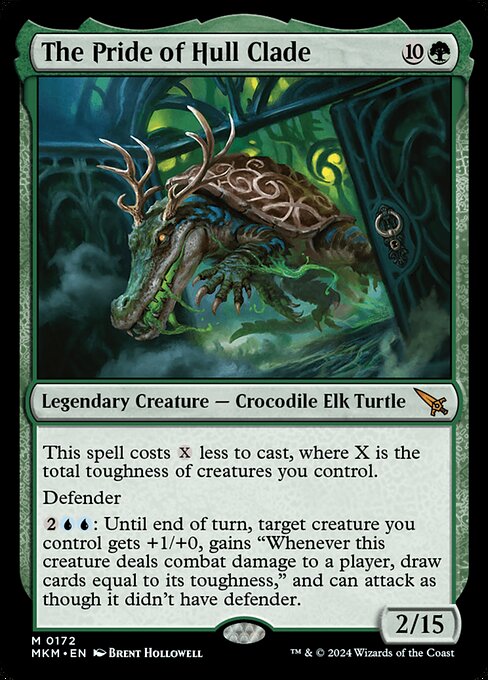
We also have The Pride of Hull Clade, which is a particularly fun payoff for a deck built around high-toughness creatures. Its cost reduction rewards us for having creatures with a lot of toughness, giving us access to a huge creature that would normally be far too expensive to cast in a typical aggressive deck.
And then there’s Ghalta the Immovable, another enormous threat that fits the general theme of turning toughness into something our opponent actually has to worry about. This card is pairs quite nicely with Pride, and can allow for some rather quick wins with the right hands.
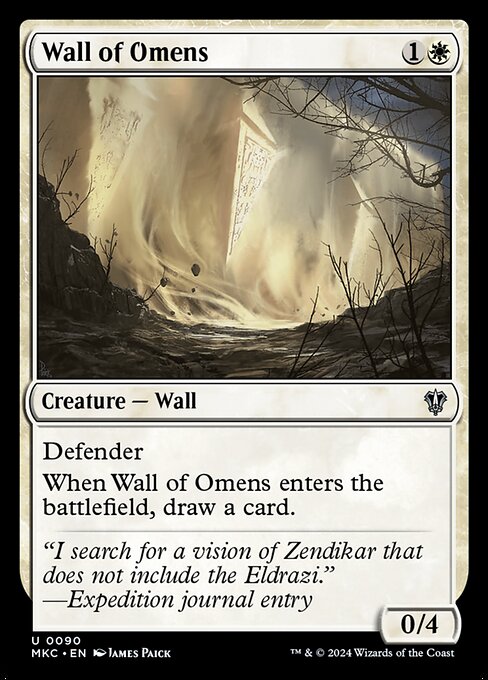
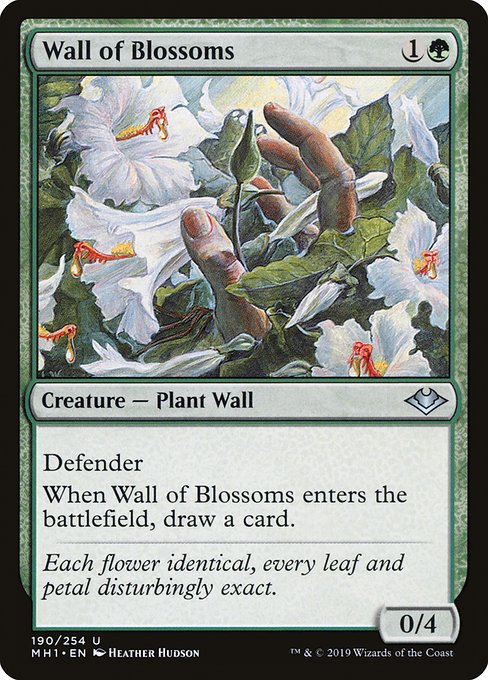
Wall of Omens and Wall of Blossoms are such useful inclusions. Both replace themselves when they enter the battlefield, which means we can develop our board without immediately running out of cards.
They’re also cheap enough that we can play them early, and their toughness becomes relevant once we start assembling our offensive pieces.
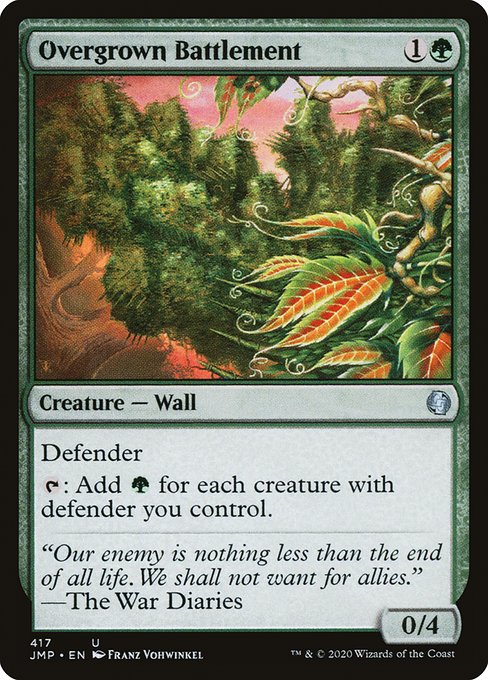
Overgrown Battlement is another important part of the deck. Rather than simply providing a body, it can generate mana based on how many creatures with defender we control. With a few walls on the battlefield, Battlement can produce a surprisingly large amount of mana, helping us deploy our bigger threats ahead of schedule.
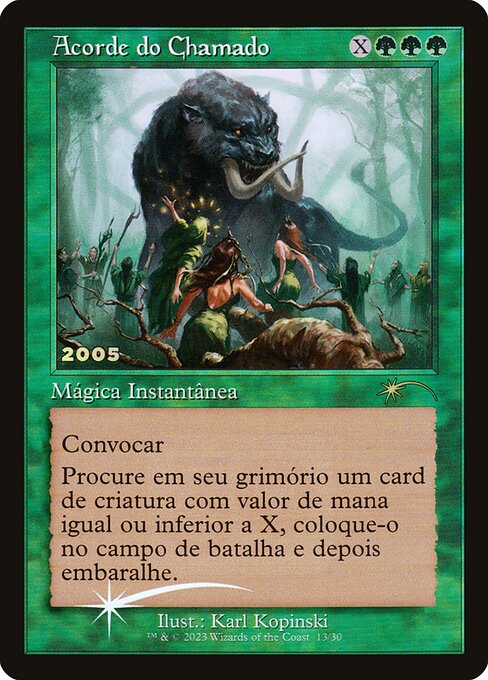
Because our deck is already interested in having multiple creatures on the battlefield, Chord gives us a way to turn those creatures into access to whatever creature we need. Sometimes that means finding a payoff, and other times it means finding a particular utility creature from our sideboard in games 2 and 3 that helps us get through a difficult board state.
The list also includes Arcades, the Strategist, which is one of the classic reasons to play a defender deck in the first place. Arcades gives our defenders another way to attack using their toughness and rewards us for continuing to deploy them.
Green and white give us access to many of the cheap defenders and mana-producing creatures we want, while blue opens up additional options for the strategy.
We also get to play Teferi, Time Raveler, which is a useful card for protecting the turns where we’re trying to develop our board or resolve something important. A deck built around creatures and specific payoff cards can be vulnerable to opponents holding up interaction, so having a way to make that interaction more awkward is valuable.
The list also includes Caelorna, Coral Tyrant and Plagon, Lord of the Beach, giving us more creature-based options within the overall toughness-focused game plan. Caelorna also allows us to deploy a Ghalta on on turn three if we curve out nicely.
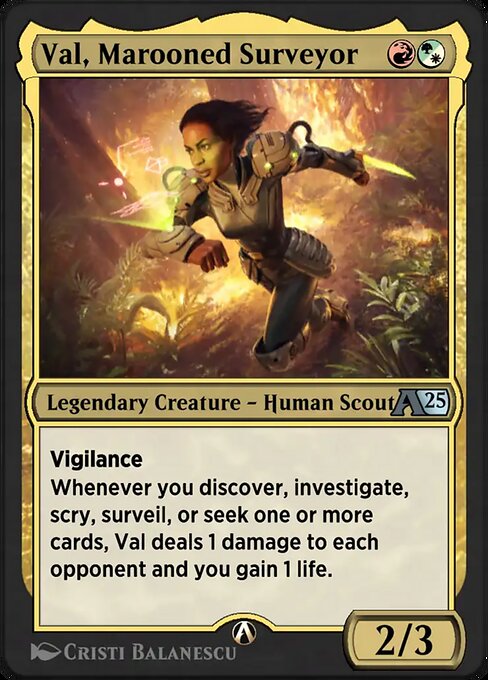
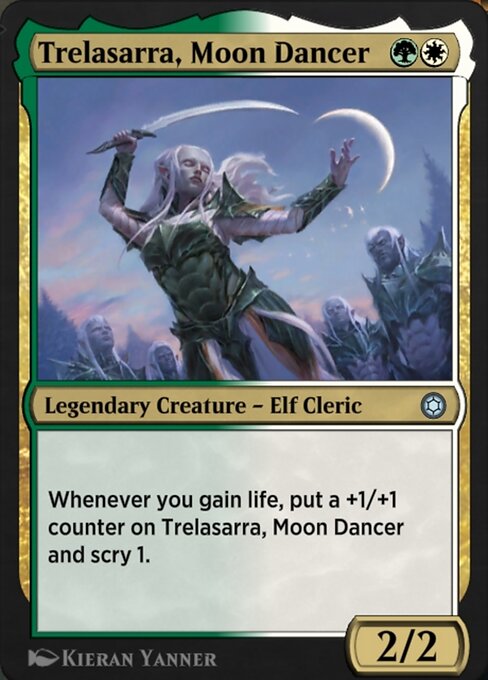
Here we have Winota, Joiner of Forces, a card that has been responsible for some pretty ridiculous creature-based strategies, which also happened to have just gotten un-nerfed. And then we have Val, Marooned Surveyor and Trelasarra, Moon Dancer, which used to be a menace in Historic until Val was nerfed from two to four mana.
What’s cool here is that both halves of the combo paly well with Winota. Normally, we’d have to find and cast both creatures ourselves. But Val is a Human, which means Winota can put her directly onto the battlefield when one of our non-Human creatures attacks.
If you’re unfamiliar with how the Val interaction works, it’s fairly straightforward once all the pieces are on the battlefield.
Whenever we gain life, Trelasarra triggers, putting a +1/+1 counter on herself and letting us scry. Val then triggers from the scry, dealing damage to our opponent and gaining us more life. That life gain triggers Trelasarra again, which causes another scry, which triggers Val again.
A traditional Winota deck generally wants to fill the battlefield with cheap non-Human creatures, attack with them, and use Winota’s ability to put powerful Humans onto the battlefield for free.
We’re still doing that here, but instead of focusing entirely on conventional combat payoffs, we’re also using those triggers to find pieces of an infinite combo.
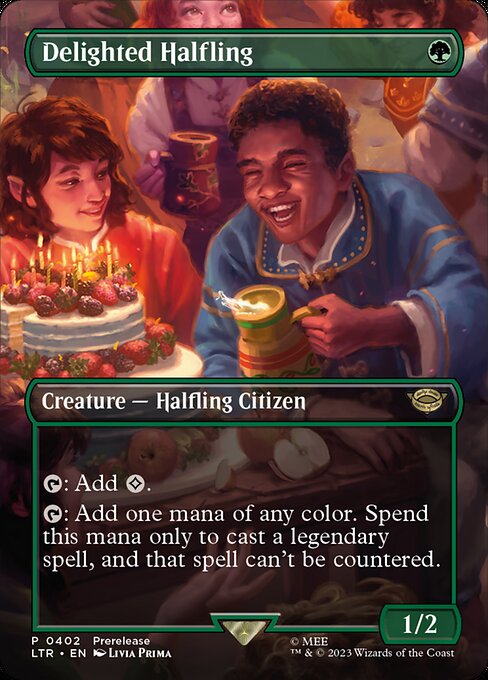
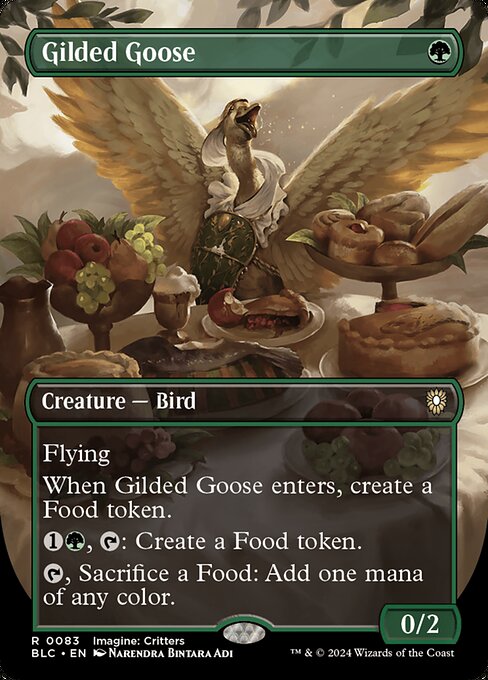
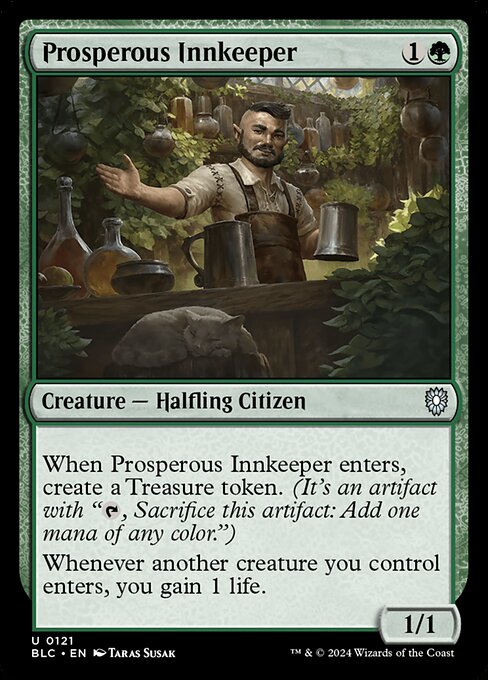
Delighted Halfling, Gilded Goose, and Prosperous Innkeeper all help us get started. They give us early creatures and mana acceleration, making it easier to deploy Winota ahead of schedule. Innkeeper is especially interesting because it also provides a source of life gain whenever another creature enters under our control. That’s exactly the kind of effect we want when we’re trying to start the Val and Trelasarra loop.
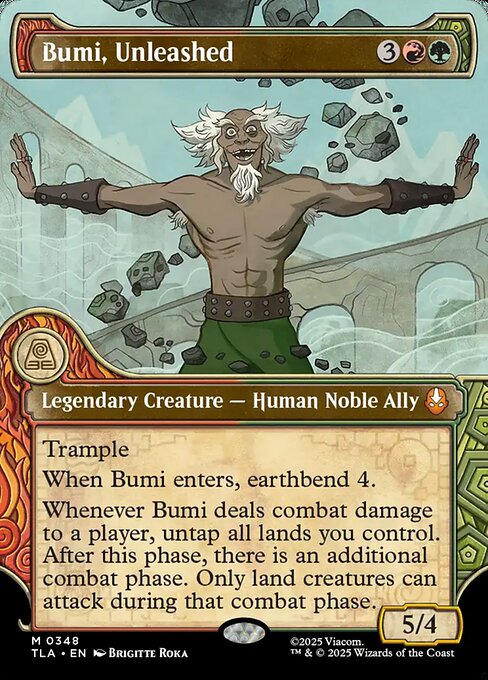
We also have Bumi, Unleashed, Badgermole Cub, and several other creatures that help fill out the deck’s early development. The goal is to maintain enough non-Human creatures that Winota can reliably trigger while still including the cards necessary for the combo.
Bumi and Absorbing Man our the current best payoffs for non-combo versions of teh deck, and I still managed to squeeze them in here, too. It’s nice to still have a consistent plan-b of smashing face.
I’m excited to test this one on stream soon. I think that’s a fun way to revisit a familiar card, especially in a format like Historic where the card pool keeps expanding and creating interactions that weren’t possible when Winota was originally printed.
Closing Thoughts
And there we have it! Three very different decks, all trying to do something a little unusual in Historic.
I think that’s one of my favorite things about Historic. The card pool has gotten so large that there’s almost always some strange interaction waiting to be explored, and sometimes all it takes is looking at an older card in a slightly different way. Not every experiment is going to turn into a competitive powerhouse, but that doesn’t mean there isn’t plenty of fun to be had along the way.
With Reality Fracture Alchemy now in the mix, I’ve already got a growing list of new cards and interactions I want to mess around with. Rather than letting these three decks get buried underneath all those new ideas, I figured they deserved a little time in the spotlight. And hopefully they helped you get some inspiration for new things to try!
Thanks for reading!
As always, feel free to comment and leave any questions you have below. And make sure to come back next week for even more Fun & Jank!
If you’re interested in more fun content, come join me on stream and help brew our next deck! Until next time, have fun, play jank.
Happy Brewin’!
Premium
Enjoy our content? Wish to support our work? Join our Premium community, get access to exclusive content, remove all advertisements, and more!
No ads: Browse the entire website ad-free, both display and video.
Exclusive Content: Instant access to all exclusive articles only for Premium members, at your fingertips.
Support: All your contributions get directly reinvested into the website to increase your viewing experience!
Discord: Join our Discord server, claim your Premium role and gain access to exclusive channels where you can learn in real time!
Special offer: For a limited time, use coupon code L95WR9JOWV to get 50% off the Annual plan!
Plum is the creator of the Jank Tank.
He started playing at the ripe old age of 12 and immediately fell in love with the infinite possibilities that deck building could lead to.
He truly understands that jank is a mindset, and spends most of his free time brewing and concocting new and exciting deck lists to help inspire and promote creativity within the MTG community.