Welcome back to another episode of Fun & Jank! I’m Plum!
I’ve been having a ton of fun experimenting with all the new Alchemy cards lately, and while I’m still working on refining the Nylea’s Oracle deck we covered last week, I wanted to take a break from that and explore some of the other interesting cards we’ve gotten.
One of the cards that caught my attention was Change the Narrative, a new enchantment that gives us a steady stream of random planeswalkers. It’s a pretty unusual way to generate card advantage, and naturally, I wanted to see whether we could make it work in Historic.
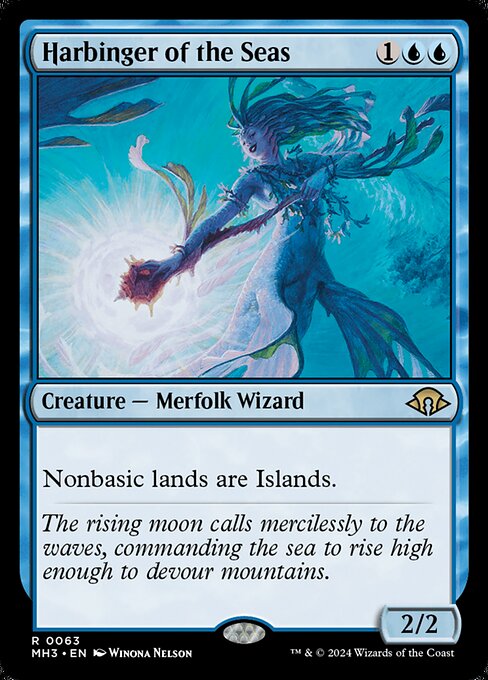
I’ve already tried a couple initial builds with this card, namely a fun 5c Fire of Invention list I was itching to play something a little different. I wanted to try it alongside Harbinger of the Seas, a card that can completely shut down certain mana bases and give us plenty of time to take advantage of all those extra planeswalkers.
The result is something akin to Blue Moon, inspired by the old Modern archetype. e’re combining mana disruption, countermagic, sweepers, and a rather unpredictable planeswalker engine to try to take control of the game.
Before we get into the deck, I want to briefly talk about the inspiration behind it.
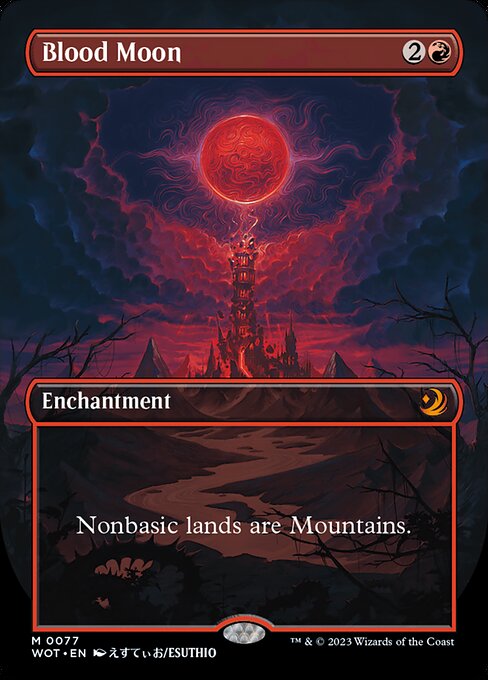
For anyone who hasn’t played much Modern, Blue Moon is an old Izzet control archetype built around Blood Moon. The idea is to play a mostly blue control deck, using counterspells, card selection, and efficient removal to keep the opponent under control, while Blood Moon disrupts their mana base. Blood Moon turns nonbasic lands into Mountains, which can be absolutely devastating against decks that rely heavily on fetch lands, shock lands, and other nonbasic mana sources.
The important part is that Blue Moon isn’t usually trying to win the game immediately after resolving Blood Moon (although it does shut down some decks completely). Instead, it uses that disruption to create an advantage. If the opponent suddenly can’t cast half the spells in their hand, we have much more time to draw cards, answer whatever they can still play, and eventually find a way to win.
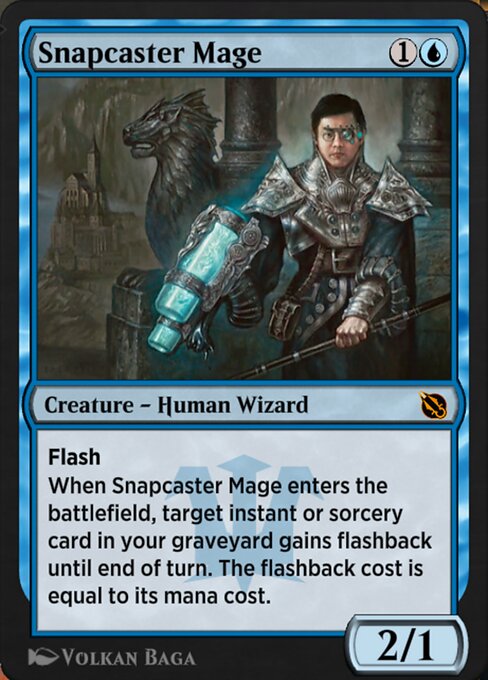
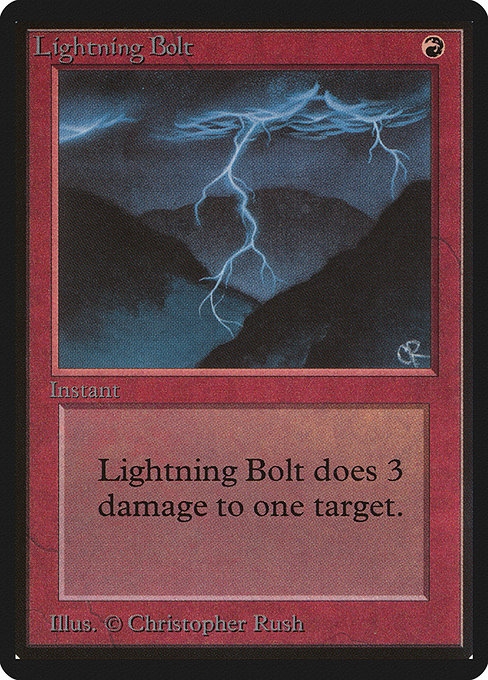
Historically, these decks have used cards like Snapcaster Mage, Lightning Bolt, Remand, Cryptic Command, and Thing in the Ice, alongside Blood Moon itself. Different versions have approached the strategy in different ways, but the underlying idea has remained pretty consistent.
My version is obviously going to look a little different, as I’m not playing Red at all. And you might be saying, “Mr. Plum! What made you play Azorius over Izzet?”
I don’t know! ¯\_(ツ)_/¯
It just sounded fun and I think Change the Narrative is sweet.
At its core, this is still a fairly traditional control deck. We’re playing plenty of countermagic, a lot of cheap removal, some card draw, and several ways to clear the battlefield.
However, since we don’t have access to Blood Moon effects that aren’t creatures (Magus of the Moon and Harbinger of Seas), I opted to give Harbinger a spin. Harbinger helps us attack the opponent’s mana (wizards plz unban Spreading Seas <3), while Change the Narrative gives us a way to generate additional resources as the game goes longer. If we can keep the battlefield under control, those two cards can put our opponent in a pretty uncomfortable position.
First, it makes our planeswalker spells cost one generic mana less to cast. Then, at the beginning of each of our upkeeps, it conjures a random planeswalker card into our hand, which perpetually gains prismatic.
A planeswalker every turn is a great place to start. However. Prismatic is actually quite important text here, as it means we can cast any Walker even with a Harbinger on the field turning everything to Islands. The cost reduction also makes those planeswalkers a little easier to deploy, which is particularly useful when we’re trying to leave mana available for counterspells and removal.
The randomness of the Walker we get is both appealing to my little janky goblin brain, but can also be a hinderance if you get something like the planeswaker deck Oko. We don’t know exactly which planeswalker we’re going to get, and they’re certainly not all going to be equally useful in every matchup. Sometimes we’ll find something that fits our situation perfectly, and other times we’ll end up with a card that isn’t particularly exciting. But we’re playing a control deck, and if the game goes long enough, generating an extra card every turn can be a pretty significant advantage.
I also like that Change the Narrative gives us something proactive to do without requiring us to commit a bunch of creatures to the battlefield. We can spend the early turns answering threats, resolve the enchantment when we have an opportunity, and then let it generate value while we continue interacting with our opponent.
Harbinger of the Seas is essentially our replacement for Blood Moon. It’s a three-mana 2/2 Merfolk Wizard that turns all nonbasic lands into Islands. Historic has no shortage of decks relying on complicated mana bases, and Harbinger can make life very difficult for opponents who aren’t prepared for it.
That doesn’t mean the effect is completely one-sided. We still have plenty of white spells, so we need to be careful about how we sequence our lands and when we decide to deploy Harbinger. But we make good use of fetch lands like the new Potential Horizon from Alchemy: FRA.
Harbinger is also a lot more fragile, being a creature rather than an enchantment. It’s easy for opponents to float mana and remove it as soon as it comes down, and there’s still plenty of people playing Dismember.
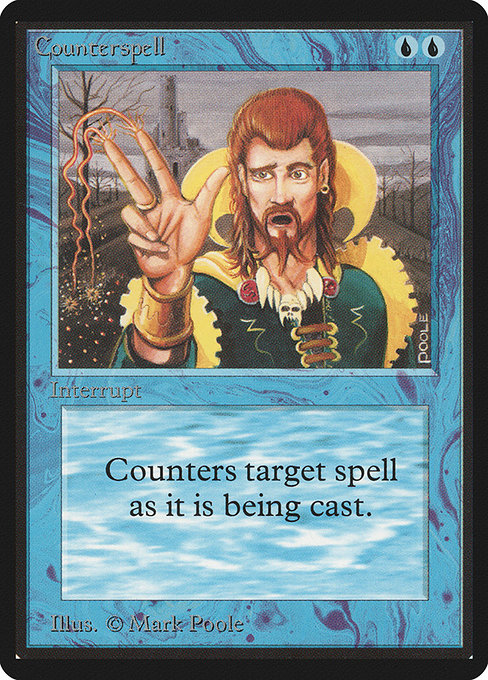
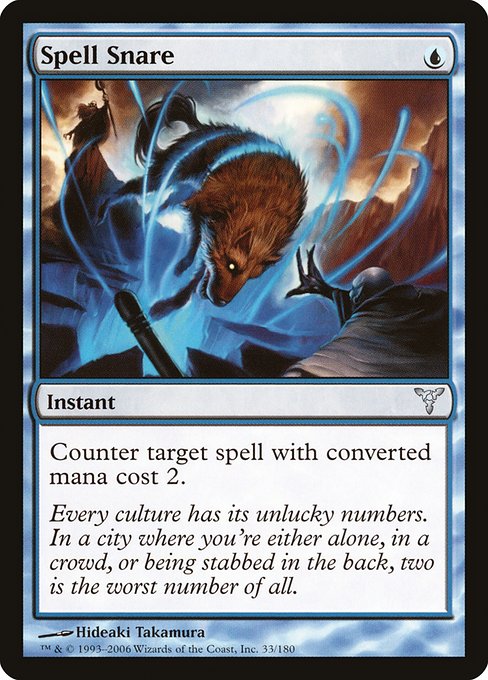
Counterspell is obviously one of the best tools available to us. For just two blue mana, we can answer virtually any spell our opponent tries to resolve. We’re also playing No More Lies, Spell Snare, and Force of Negation to give us additional ways to interact. Spell Snare in particular is rather strong in the current meta.
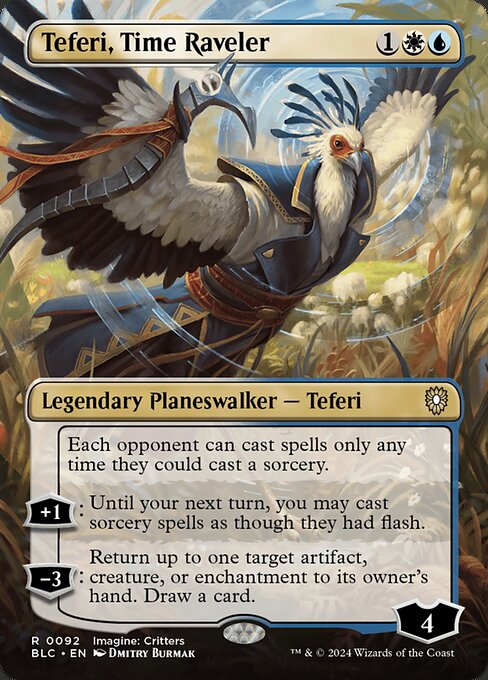
We’re also playing Teferi, Time Raveler, which remains one of the most frustrating cards an opponent can face when they’re trying to interact on the stack. In the video down below, you’ll see a match against Jeskai Control where Teferi basically carried the entire game by himself for us.
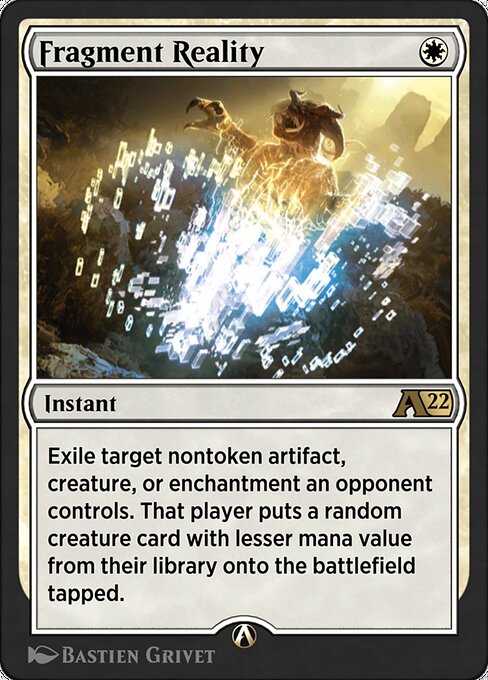
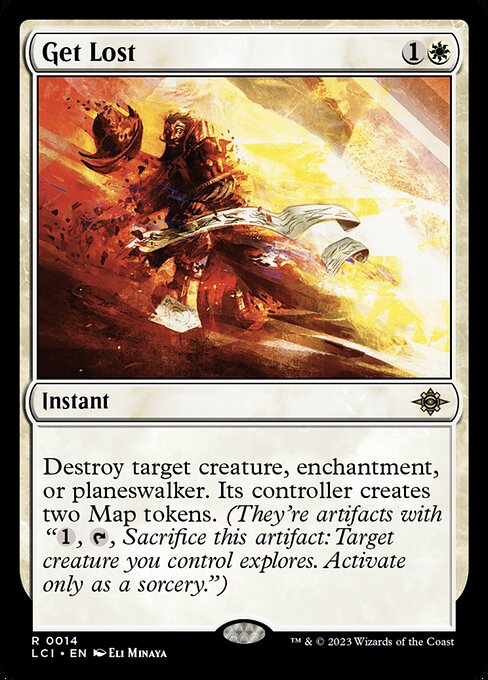
On the removal side, Fragment Reality does a lot of work for just one mana. It’s an extremely efficient answer to a variety of permanents, although we do need to be mindful of what it can give our opponent in return. We also have a copy of Get Lost for additional flexibility, along with a substantial sweeper package to help us reset the battlefield when things start getting out of hand.
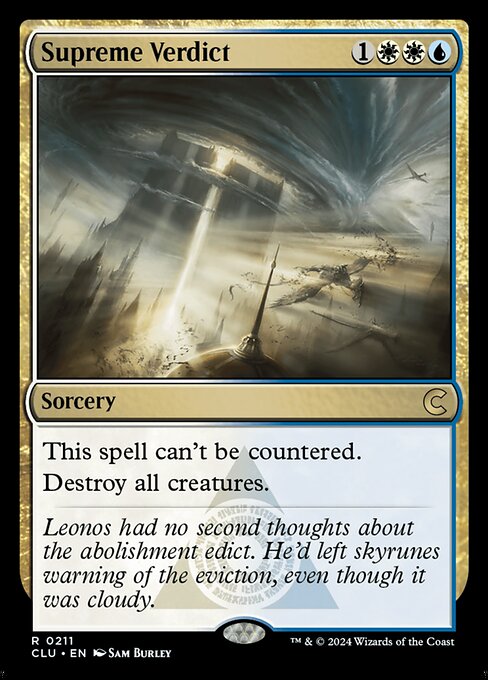
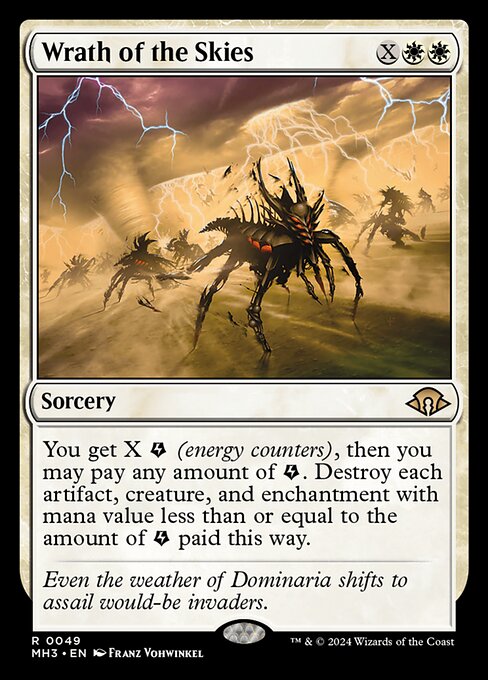
Speaking of sweepers, I’m playing a teeny tiny energy package to help support Wrath of the Skies. By accumulating energy beforehand with Tune, we can make Wrath much more powerful without needing to spend a huge amount of mana on the spell itself. It kind sucks sometimes since we don’t want to be exploding our own Harbinger or Narratives, but that’s showbiz baby! Sometimes you have to nuke everything to stay alive. Just be deliberate when you cast it. Either way, I like having access to a sweeper that can scale with the game while still being relatively inexpensive to cast. We’re also playing a single Supreme Verdict, which gives us a more traditional way to clear the battlefield and has the added benefit of being uncounterable.
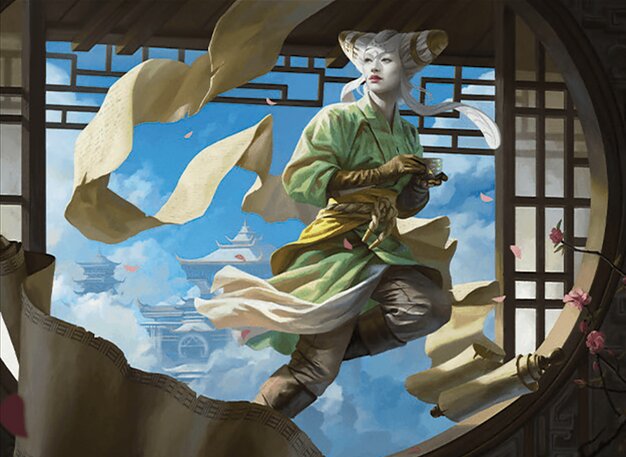
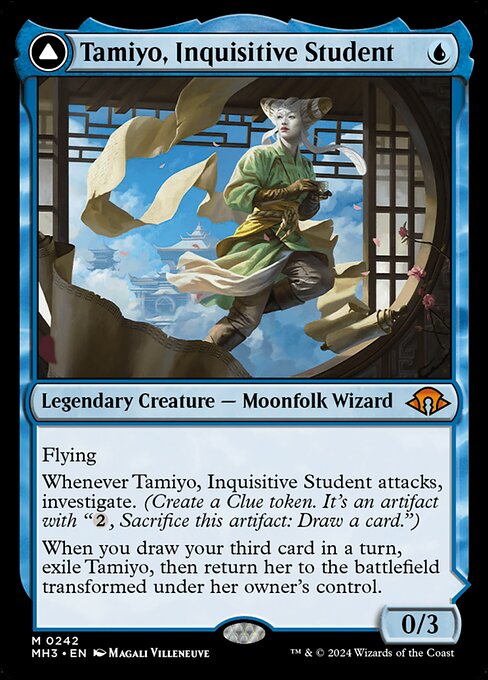
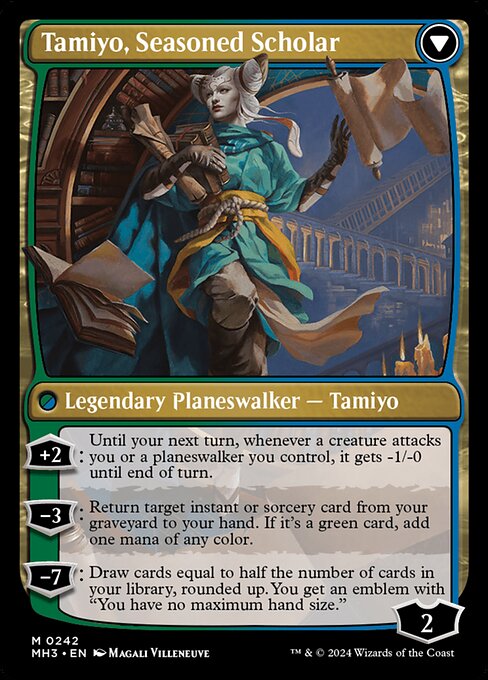
Tamiyo is Tamiyo. She’s a good card. You should play her.
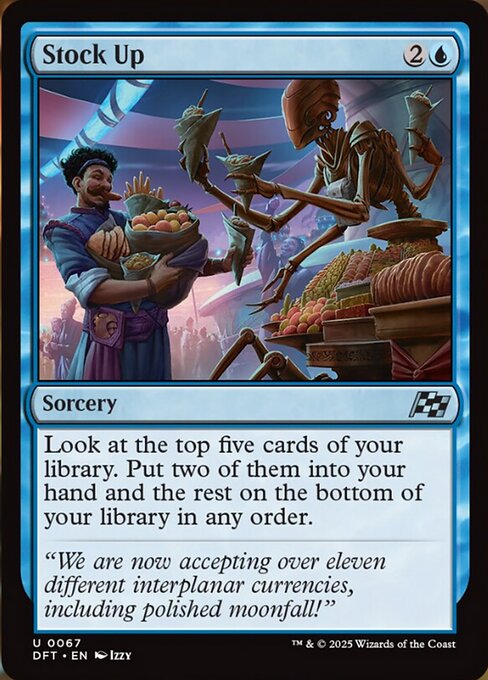
Her presence also gives our opponent something to worry about in the early game. Generating clues is great, and you’ll notice we also play Brainsurge to help flip her at instant speed! Stock up is just good in general for both card advantage and selection, which is very important is a control deck needing constant answers to a variety of Historic threats.
You’ll also notice I’m playing some extra utlity lands to take advantage of our ability to fetch them with Potential Horizon. These can be a bit of a non-bo if we have Harbinger out early, but they’re such low opportunity cost that they’re still worth it.
Gameplay
During the early turns, we’re trying to develop our mana, use Tamiyo or our card-draw spells to keep cards flowing, and answer whatever our opponent is doing.
Against aggressive decks, that usually means prioritizing removal and making sure we can survive long enough to cast Wrath of the Skies or Supreme Verdict.
Against slower decks, we can afford to be more patient, holding up counterspells and looking for a good opportunity to resolve one of our important permanents.
After putting the deck together, I took it onto stream to see how everything actually performed, and we ended up finishing with a 3–2 record. Not an amazing result, but certainly not terrible for a first attempt at something a little unconventional.
The biggest surprise was that Harbinger of the Seas really wasn’t all that impressive. The whole idea behind the deck was to take advantage of Historic’s greedy mana bases, but it turns out that a lot of players have been running more basic lands lately. We also ran into quite a bit of Jund, and those decks were generally prepared to operate through our mana disruption. Harbinger occasionally made things awkward for an opponent, but it rarely felt like the game-winning lock piece I was hoping for.
Ya hate to see it 🙁
Change the Narrative, on the other hand, was fantastic when we managed to keep it on the battlefield. Getting a random planeswalker every turn might sound a little gimmicky, but it turns out that generating a steady stream of threats is pretty powerful in a control deck. There were games where we started accumulating planeswalkers, generating tokens, drawing cards, and generally overwhelming our opponent with resources they couldn’t keep up with.
That said, there were definitely some problems with the list. The biggest one was our mana. We were playing a relatively low land count, and there were quite a few games where I found myself desperately digging for another land. Even though most of our spells are fairly inexpensive, control decks still need to consistently make their land drops, especially when we’re trying to cast our own spells while holding up interaction. I think going up to 21 or 22 lands would probably help quite a bit.
Closing Thoughts
I think its worth mentioning is that the current Historic metagame didn’t feel particularly friendly to what we were trying to accomplish. We faced a lot of Jund-style midrange decks, and trading one-for-one with opponents who have so many ways to generate additional value can be exhausting. When they’re constantly attacking our hand with Thoughtseize and following up with powerful threats, it becomes difficult to establish the sort of control we’re looking for.
Still, I don’t think the deck is all that far away from being something pretty solid. I’d probably start by increasing the land count, making a few adjustments to our card-draw package, and reconsidering how heavily we want to lean on Harbinger of the Seas. The traditional Azorius control shell felt perfectly reasonable, and Change the Narrative gave us a genuinely interesting way to take over longer games.
If anything, this list made me more interested in exploring Change the Narrative than I was before. Harbinger might not be particularly well positioned right now, but generating a free planeswalker every turn is an effect I’d definitely like to keep experimenting with. Its so much fun.
Thanks for reading!
As always, feel free to comment and leave any questions you have below. And make sure to come back next week for even more Fun & Jank!
If you’re interested in more fun content, come join me on stream and help brew our next deck! Until next time, have fun, play jank.
Happy Brewin’!
Premium
Enjoy our content? Wish to support our work? Join our Premium community, get access to exclusive content, remove all advertisements, and more!
No ads: Browse the entire website ad-free, both display and video.
Exclusive Content: Instant access to all exclusive articles only for Premium members, at your fingertips.
Support: All your contributions get directly reinvested into the website to increase your viewing experience!
Discord: Join our Discord server, claim your Premium role and gain access to exclusive channels where you can learn in real time!
Special offer: For a limited time, use coupon code L95WR9JOWV to get 50% off the Annual plan!
Plum is the creator of the Jank Tank.
He started playing at the ripe old age of 12 and immediately fell in love with the infinite possibilities that deck building could lead to.
He truly understands that jank is a mindset, and spends most of his free time brewing and concocting new and exciting deck lists to help inspire and promote creativity within the MTG community.