Hey all. Edge of Eternities has been out for a whole week now, and I have been jamming games as much as my work schedule will allow. I’ve found myself playing a lot of Alchemy, some Bo1 to test out deck ideas, and Bo3 to put them to the test.
As I’ve played matches upon matches, I’ve refined a couple of decks, brewed some new ones, and developed an early opinion of the format in a post-rotation world.
Today, I’m going to discuss my thoughts of the format, while breaking down some the decks I’ve had the most fun and most success with so far.
Let’s dive in.
Alchemy has a Standard Rotation problem
When it was announced that Standard was changing to a 3-year rotation, it was also said that Alchemy would remain at a 2-year rotation pace, so that the format could stay more fresh and live up to the digital format expectation.
The only problem with this is that the majority of the Alchemy card pool comes from sets designed for Standard – 3-year Standard. This has led to a couple of issues in the format that I’ve felt in the first week of game play.
In Standard, Black, and sometimes White, always has some sort of two mana, instant speed, removal spell. This goes back to the days of TerrorDoom Blade, and more recently Infernal Grasps, and Go for the Throat.
While the cards displayed above would have rotated out of Standard on a 2-year cycle, they are still in Standard, so Wizards did not need to print new removal into the format.
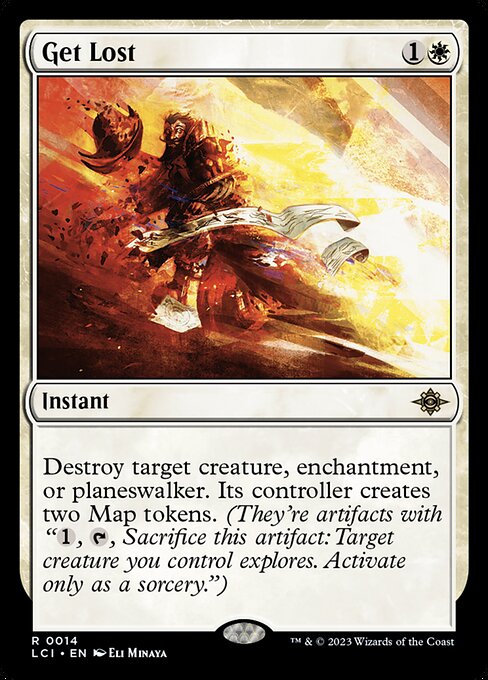
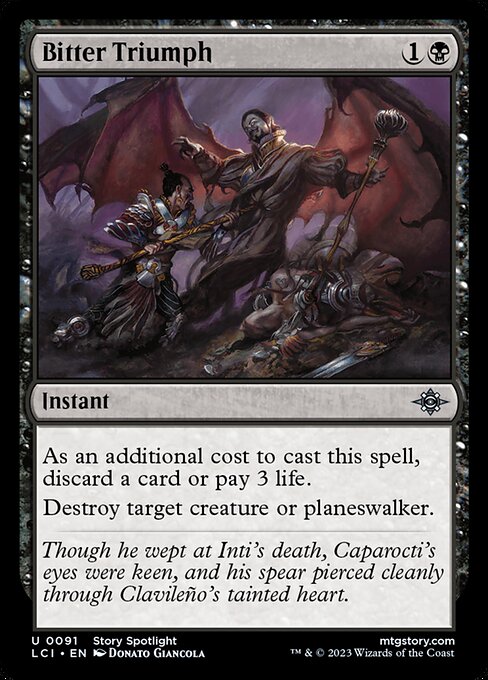
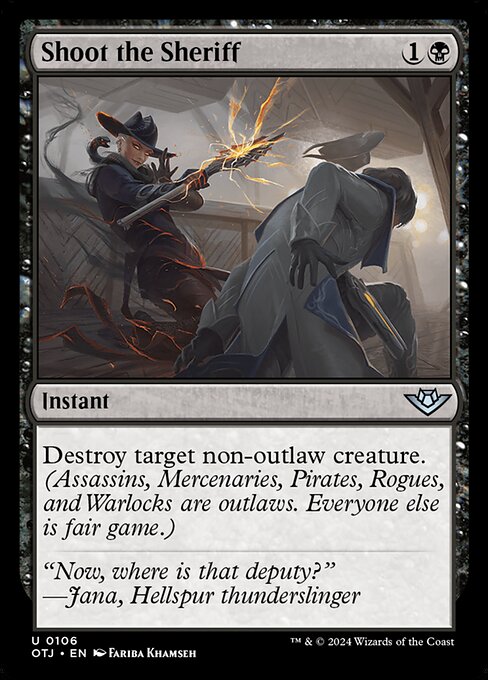
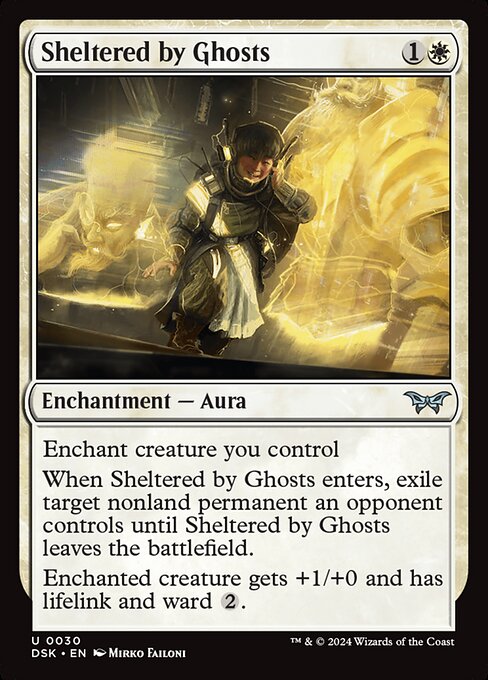
That has left Alchemy in a bit of an awkward spot when it comes to good removal.
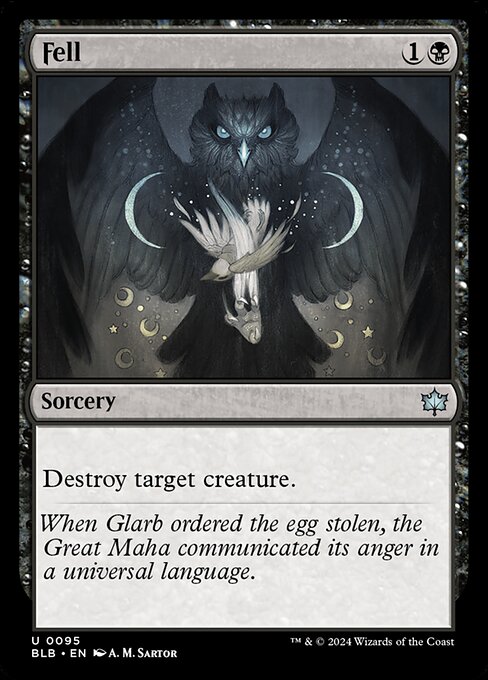
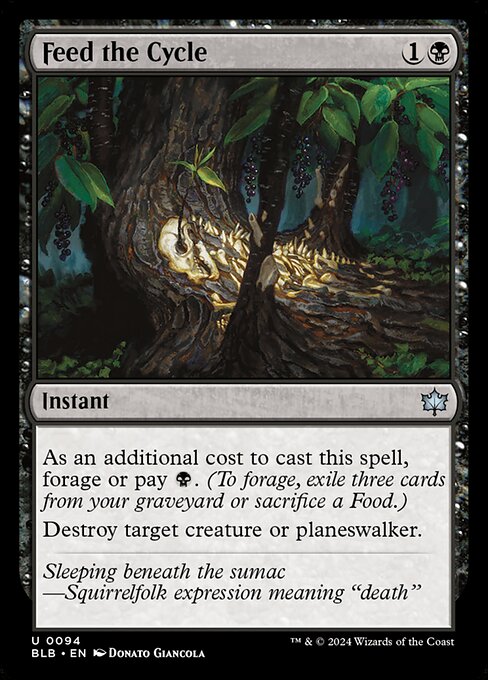
What we have instead are options that all require something else going on, such as having a creature, playing at sorcery speed, or paying an extra mana or exiling three cards, respectively.
All of these cards are fine in the right decks, and will mostly get the job done, but I’ll tell you that brewing these decks has been a lot harder when you just don’t have good ways to kill things.
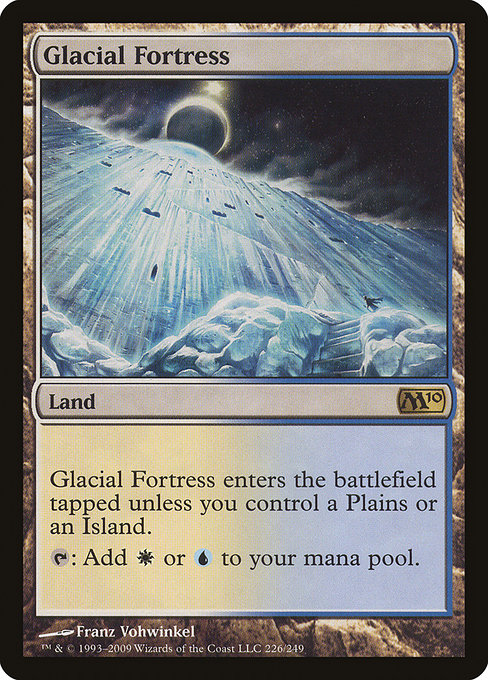
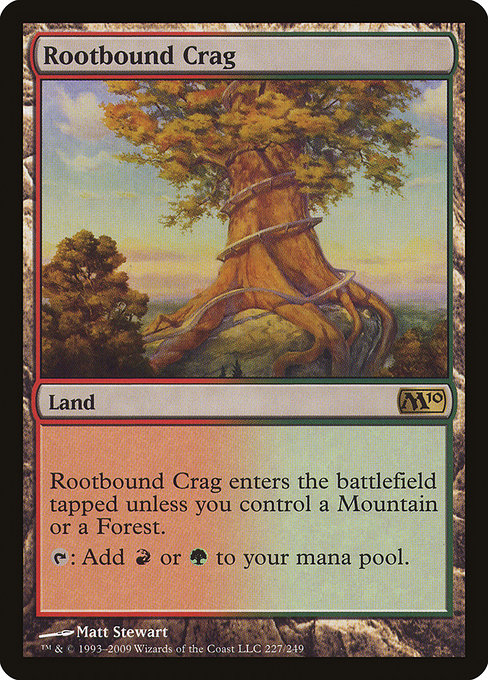
Wizards felt that Alchemy was going to be short on dual-lands, so they annouced that the 10 check or buddy lands would be printed in Alchemy: Edge of Eternities, and that they would be legal right away, to help players build functional two-color mana bases.
But how did we get here? Even with more sets being release each year, Wizards only printed one set of constructed playable dual lands last Standard year, half in Duskmourn and the rest in Aetherdrift.
There were three sets, Bloomburrow, Tarkir, and Final Fantasy, that had no rare cycle of dual lands for constructed formats. Foundations had the Scry lands, which occasionally see a bit of play in slower decks.
It makes sense why they did this. If they printed good dual lands in every set, like they mostly used to, 3-year Standard would be flush with great mana, making two, three, and possibly even four and five color decks easy, risk free, etc.
So they pulled back, and Standard has decent mana right now, although it is a bit unbalanced while waiting for the other five shock lands.
Alchemy suffered because of this, and because it is still on a two year cycle it really didn’t have much to work with. At least someone at Wizards noticed this and they decided to add the Check lands to the format, but at what cost? Are those lands taking up 10 of the 30 card slots from Alchemy: Edge of Eternities? If so I would be quite disappointed.
Best-of-1 is rough
You Bo1 only gamers are built different if this is how the format has always been. Every game feels over by turn three. You are either dead to a fast deck or the slow deck had the perfect interaction that you know you aren’t going to be able to end the game quickly enough.
I think this kind of ties back to removal. Slow decks have to rely on Authority of the Consuls and sweepers like Split Up to even stay alive to deploy their strategy. If you make it past those first few turns you can likely start deploying your strategy, but that is a big if.
This is also a format neglect issue that Alchemy has kind of always had. There are a lot of cards that they could slightly nerf, like Waystone's Guidance, that would still leave them playable but not in the “remove me right away or die” territory.
Best-of-3 is doing fine
On the other hand, I’ve had a ton of fun playing Bo3. There is a ton of interaction, sideboarding gives options against the most aggressive decks, and players seem to be trying a wide variety of new cards and strategies.
Here are some the decks that I’ve been taking to the ladder and having a blast with.
If you read my article last week, you may have seen my Naya Ragost list. After playing a few matches, I made a few changes that have really made the deck feel better to pilot.
First, I cut Baylen, the Haymaker because I usually just didn’t have enough tokens in play. My thought with Baylen was that curving Wish Good Luck into Baylen would be a ton of value, helping you ramp and draw cards. In reality, that happened zero times, and Baylen was usually always stuck in my hand.
With these changes, the deck has felt a lot more functional, and the curve is a lot smoother. I don’t think the deck is perfect yet, but I feel much better recommending this version of the deck than the first one.
Also a re-brew, I took my Esper Mill Control deck, that was trying to play Hope Estheim and Space-Time Anomaly, and cut those horrible cards and narrowed it down to just Dimir for better mana.
My matches with those bad cards in my deck weren’t completely useless though. The combination of Singularity Rupture and Riverchurn Monument is very real. Basically, you cast Singularity Rupture to wipe the board and mill half of your opponent’s library, and then on the next turn cast Riverchurn Monument and exhaust it to get the other half.
I think that there will absolutely be a combo-control deck in the format built around these two cards, and what you see above is my first crack at it.
I decided to spring for the dragon package for a couple of reasons. First, Marang River Regent and Cunning Azurescale can help find our combo pieces while also affecting the board, and two, this give us access to Caustic Exhale and Dispelling Exhale as a great removal spell and counter spell.
I’m not normally a control player, but I love that this two card combo can get you out of so many jams. Even in games where your opponent has a crazy engine going, you can just mill them out.
This deck is sort of a re-brew. Last week I posted a Selesnya Survivors aggro deck, and it honestly played pretty well, but man does the mana suck in Selesnya right now. So I tried to simply things down to just a mono-white build, and I’ve had a lot of success so far.
There a couple of awesome things going on in this deck. Sunstar Chaplain has proved to be an awesome payoff, helping to tap down both attackers and blockers that would have been in the way, and Lumen-Class Frigate is a powerhouse.
Even just that first level buffing up your team can be game winning, but after that it stays as a way to tap your creatures when they can’t safely attack, and turns into a big flying threat itself.
The rest of the deck is built to be cheap card draw, cheap interaction, or just good creatures. Lightstall Inquisitor helps slow the opponent down and is a great target for those counters from Cosmogrand Zenith.
Mockingbird is a quiet mvp. It can copy a Lightstall Inquisitor early to further slow the opponent down, or copy one of our token makers later on for even more oomph.
The mana can be awkward at times, but if you are looking for a tempo based aggro deck, give this one a try!
This is the deck that I have had the most fun with so far in the format. It has a good beat down plan, but can also go late to grind. It has good removal, good threats, card advantage, and good mana. We have a lot of packages in this deck, so let’s break them down one at a time.
Our second package is the artifact package. Biotech Specialist is a humble two-drop, but it honestly can do a ton of damage to our opponent’s in this deck. Terrapact Intimidatorcan make lander tokens, Chandra, Spark Hunter makes vehicles, Cindercone Smite can make a treasure token, and Resourceful Collector lets us play things from our graveyard as artifact foods in addition to their other types.
Our third package is dragons, headlined by Bloomvine Regent, which is ramp early and flying threat that gains us life later on, we also have Twinmaw Stormbrood for removal early and flying life gain later on, and Nova Hellkite for early beats, and some value with warp.
I touched on Resourceful Collector earlier, but the card is very good. A 3/3 haste for three helps us put the pressure on, and it generates value every turn. It is especially nice if you have a Fabled Passage in your graveyard, giving you a land drop from the graveyard the next turn.
All-in-all I’m quite pleased with how the deck is playing, and I think it is making use of a lot of unfortunately neglected cards.
Putting it all together
I know this was a bit of a weird article, starting with some ranting, in to some decklists, and now more ranting? The point I’m trying to make is that Alchemy is in a weird place after rotation. We are in a world where 2-year Alchemy isn’t considered by the designers making 3-year Standard, and things are likely to get even worse next rotation.
However, the format is still a ton of fun (in Bo3 at least. Bo1 gives me nightmares) and I love that it is a smaller 2-year format, because that gives us a chance to try new cards, find new synergies, and play some fun games of Magic.
While I wish that Wizards would pay more resources to the format, with more frequent buffs and the occasional nerf or two, the printing of the Check lands to help the mana in the format gives me hope that at least someone at Wizards is keeping an eye on the format, and thinking about and playing the format enough to make that kind of decision.
Standard lost the magic of Magic for me after the change to 3-year rotation. When I switched to Alchemy for a change I didn’t expect to find my new favorite format, but I start every play sesssion eager to brew, and eager to play some great matches of Magic.
Wrapping Up
If you were sour on Alchemy before, because of how it was introduced, because of the lack of wildcard refund when cards are nerfed, or just because of random Reddit discourse, I urge you to give it a try. It is so different from Standard now, and that is just going to keep increasing as we move further and further into a 3-year Standard world.
If Standard has gotten stale, or frustrating, or you just want to try something new, I think you will have fun in Alchemy (at least in Bo3, Bo1 gamers are built different to endure that day in and day out).
I’ll be back next week, likely checking in on post-rotation Standard, but who knows, maybe I’ll randomly dump five Alchemy decks in the middle of that article as well! Until then, best of luck in all of your matches.
Premium
Enjoy our content? Wish to support our work? Join our Premium community, get access to exclusive content, remove all advertisements, and more!
No ads: Browse the entire website ad-free, both display and video.
Exclusive Content: Instant access to all exclusive articles only for Premium members, at your fingertips.
Support: All your contributions get directly reinvested into the website to increase your viewing experience!
Discord: Join our Discord server, claim your Premium role and gain access to exclusive channels where you can learn in real time!
Special offer: For a limited time, use coupon code L95WR9JOWV to get 50% off the Annual plan!