Explorer is a very interactive format where each deck has its removal suite. It ranges from decks like Rakdos having Fatal Push, through Mono Red Aggro with their Play with Fire and ending with Gruul playing Stomp from Bonecrusher Giant. Taking a ramp deck which does not care about removal ought to pay off greatly.
Deck Tech
As in most big mana decks, there is going to be a distinction between the ramp and the payoffs. What’s most difficult deck-building-wise is to strike that perfect balance between them so you get the wrong half as infrequently as possible. I think I’ve achieved this result with that decklist.
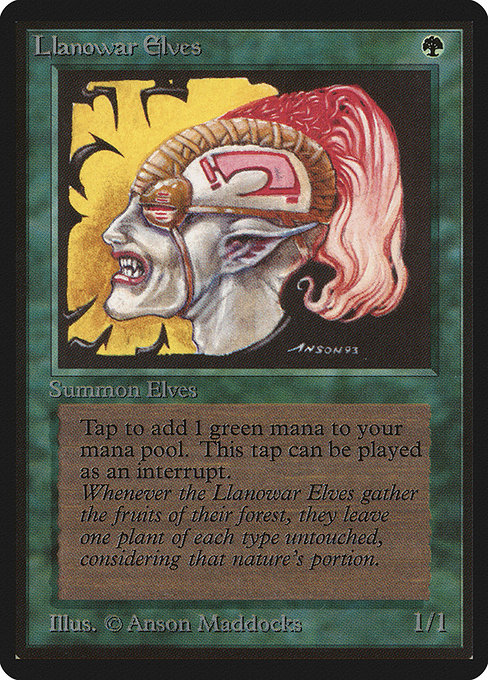
This deck plays 16 pieces of the early game ramp. Llanowar Elves jumps you from turn one to turn three and provides mana every turn. It’s, however, very susceptible to removal. The entire deck is rather unfazed by opposing destroy effects but unfortunately, the Elf is the only piece that gets affected hard.
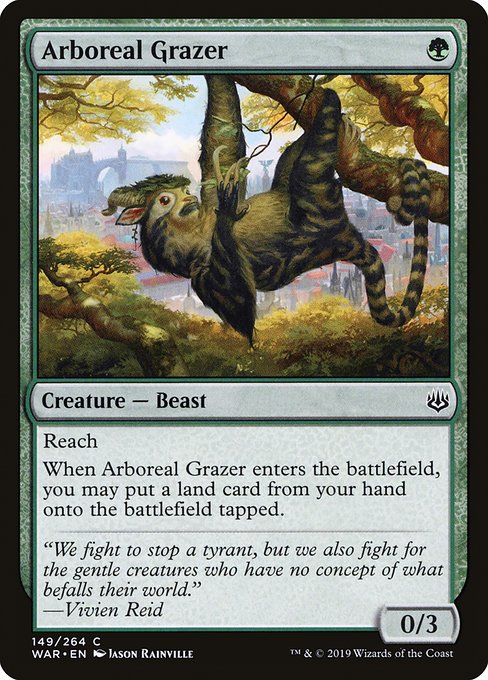
Unlike Elves, Arboreal Grazer is a conditional ramp that also jumps us from turn one to turn three. In order to make it work we need a land already in hand, which by and large should not be an issue as we wouldn’t ever keep a one-lander anyway.
Its greatest strength is blocking. Ramp deck’s weaknesses are usually go-under aggro decks which can kill before we get our big threats online. In this case, Grazer holds the ground very strongly and we don’t care about it staying alive as it’s already done its ramping job.
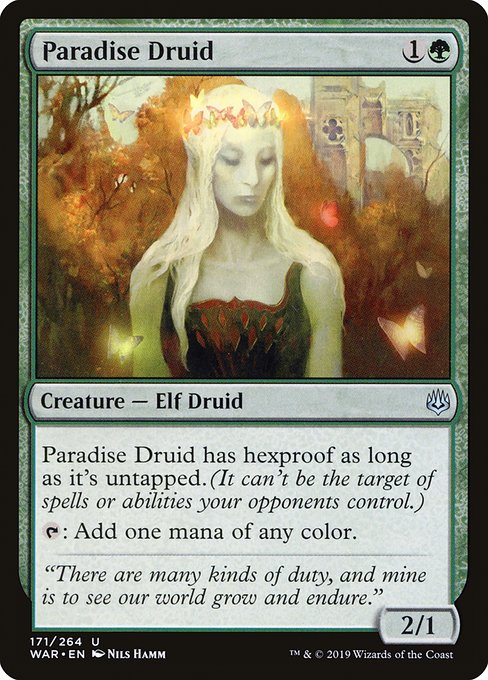
Paradise Druid is our Sylvan Caryatid impersonation. It being unkillable is key as otherwise, the opponent would get too much of a tempo swing. It jumps us from turn two to turn four which is when we can slam Karn, the Great Creator.
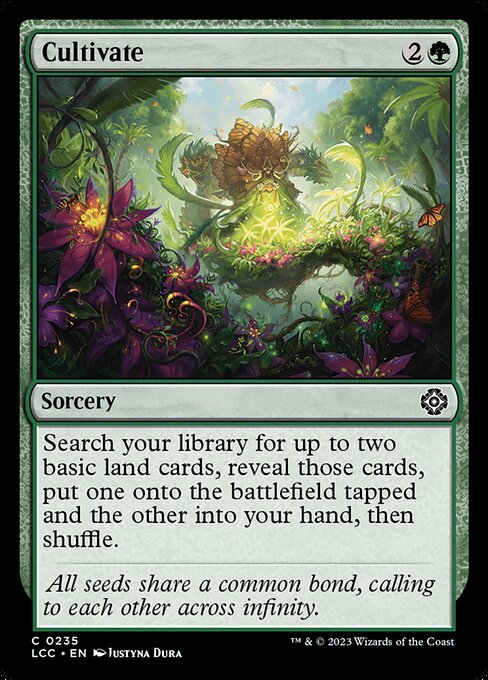
Cultivate is our only non-creature ramp. It puts a land immediately into play and one in hand – which ensures a land drop the following turn. It jumps us from turn three to turn five, which allows us to play any of our eight 5-mana threats. In addition, if we’d begun the game with a Llanowar Elves or Arboreal Grazer, we’re now able to play Cultivate on turn two.
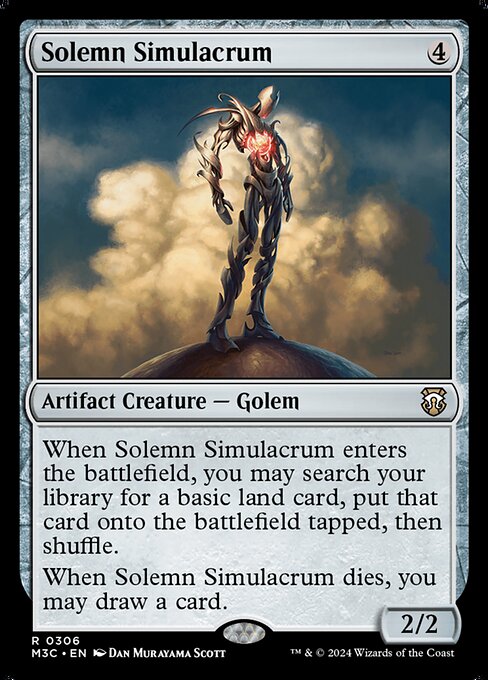
Solemn Simulacrum is a spell that I consider soft-ramp. It technically does put a land into play, but it itself is expensive enough that I wouldn’t rely on it too much. I see it more as utility – get a land, chump one attacker, draw a card of it.
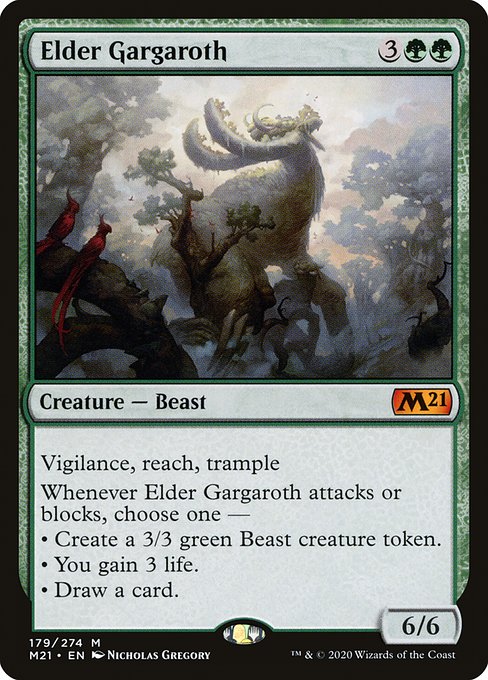
Elder Gargaroth is the king in fair creature matchups. It’s very difficult to kill and provides unbelievable utility and stabilising power. Low on life? Gain 3. Needs more gas? Draw. Opponent’s board is intimidating? Get a 3/3 blocker. Need to close out the game really quickly? Get a 3/3 attacker. In addition to all of that, it has reach and vigilance. It means it can put pressure on the opponent by attacking and be ready to defend as well.
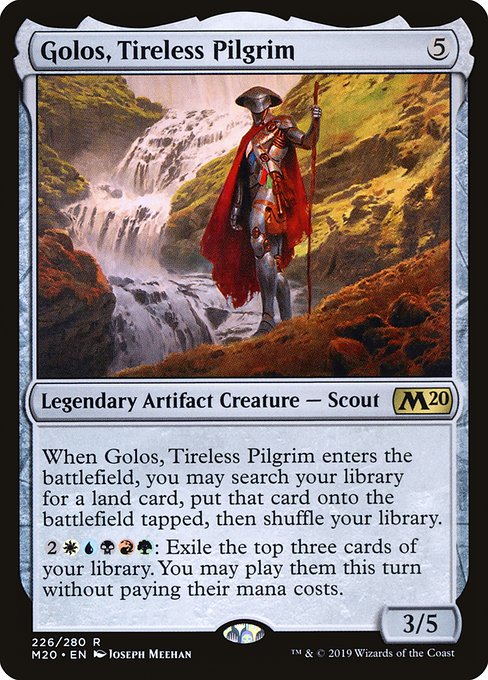
Golos, Tireless Pilgrim’s main purpose is to search out The World Tree, allowing us to make mana of any colour, and therefore, use it’s ability. Once we get this going, no opponent will be able to realistically keep up. If you’ve already got The World Tree on the battlefield, you can search up a different utility land. In my list, there is a single Hashep Oasis to push through damage and quadruple Radiant Fountain to stay alive. You can choose your own land to put in the deck – there are a lot of options.
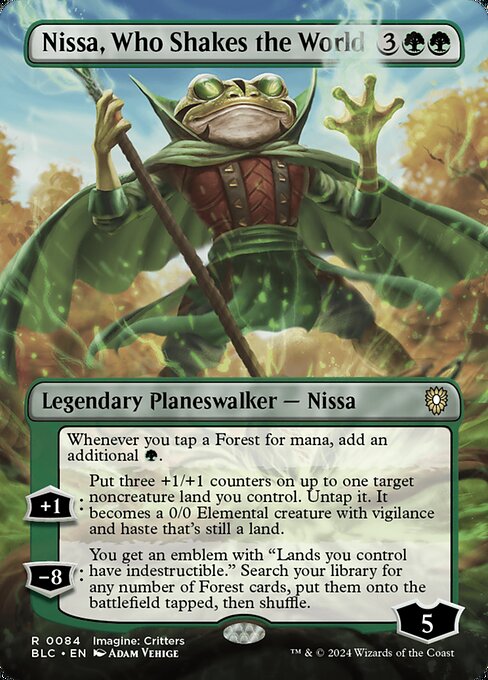
Nissa, Who Shakes the World was a force in Standard back when she was legal and it’s no different here. Making our lands 3/3 vigilance creatures turns the corner very fast. In addition, it ramps us exponentially so when we untap with her the following turn we can basically play anything. Last but not least, her ultimate can thin out the deck of lands as we play 15 Forests. Multiple opponents have scooped upon her entering play.
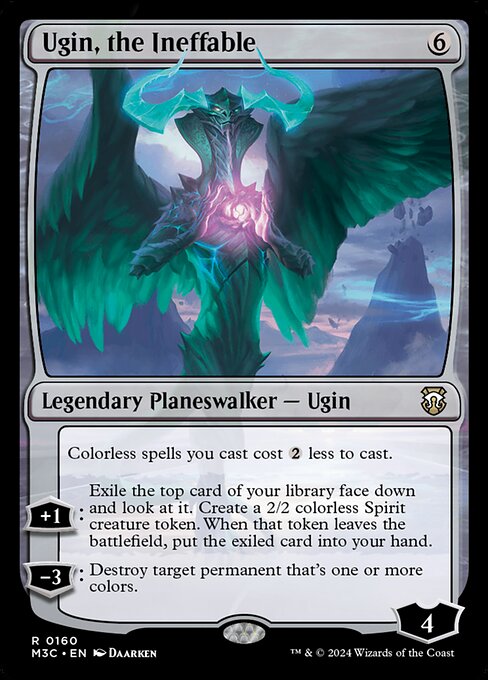
Ugin, the Ineffable is a utility piece with its destroy ability, but can also clog up the ground with all the 2/2 manifest creatures. Thanks to its mechanic, it re-fuels our hand nicely when those creatures die, mainly during blocks.
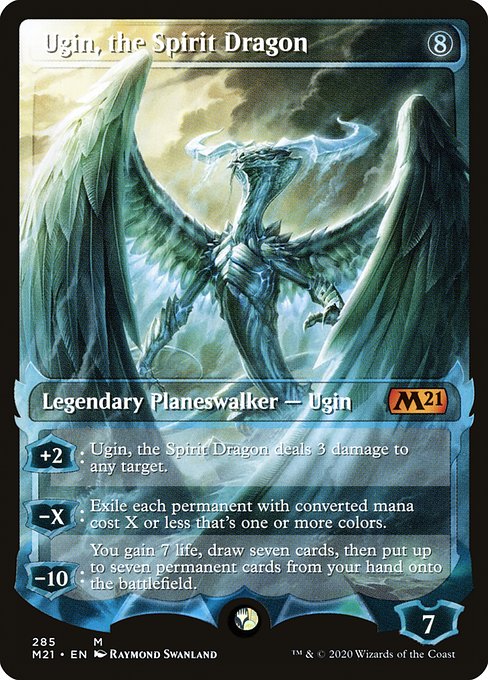
Ugin, the Spirit Dragon is a card that will frequently end the game by itself. Knowing you’ve got it in hand means that you can try to prolong the game as hard as you can, just until Ugin comes down and sweeps the board.
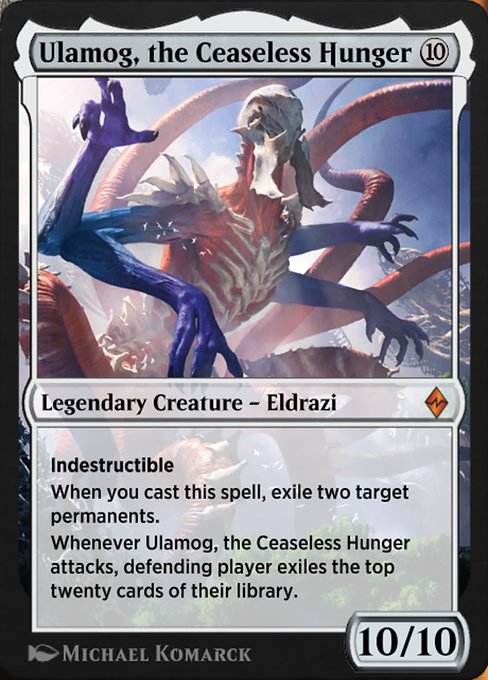
Ulamog, the Ceaseless Hunger is a ramp deck special. I play a miser copy as it’s still quite tough to get to ten mana, but it’s strong enough to warrant a single slot in my opinion. You can easily play a fourth Ugin or just another copy of any aforementioned threat.
What can be seen is that the deck has very strong continuity of ramp. In addition to all the early game ramp, Solemn Simulacrum, Nissa, Who Shakes the World, and Golos, Tireless Pilgrim all provide additional mana. It means that we can easily curve out to more and more expensive threats as the game progresses.
Karn, the Great Creator has to have its own section. Karn has a lot going on in this deck. As the deck has such a linear and focused game plan, I’ve decided to keep the sideboard mainly for Karn Wish targets as we don’t want to sideboard much anyways. In Best-of-one, you can only play 7, yet in Best-of-three I play 12. The cards I play are my own preferred choices for the moment, but I highly recommend experimenting and trying to find your perfect suite.
I divided them into two categories – Utility and Payoffs:
Utility
Tormod's Crypt – sometimes you’ll be in a situation when you straight up tap out for Karn, the Great Creator. In such a case, you’ll grab this 0 mana graveyard hate to be immediately able to cast it. Very relevant against Greasefang or Arclight Phoenix decks.
Grafdigger's Cage – More powerful effect as it permanently affects the graveyard, compared to the one-shot nature of the Crypt. However, bear in mind that it does not work against Greasefang. It’s much better against Collected Company though against which the Crypt would do nothing. All in all, some utility overlaps but they are different.
Unlicensed Hearse – the third piece of graveyard hate. It’s not that I believe you need that much, but rather I think you very often need one and all three fit a different spot on the curve. Sometimes you’ll play Karn with no mana leftover, sometimes with one or two – all these cards are there for all those scenarios. Clearly, if you have a lot of mana left, you just pick whichever is best for the scenario. Hearse has the additional utility of being a threat on top of the hate, but the hate is its primary role.
Sorcerous Spyglass – can help shut off planeswalkers or Parhelion II; remember that Crew is an activated ability.
Meteor Golem – a catch-all removal spell. There is no one reason why I included it here as it will have a target in every match-up. It’s good to have access to it but you will use it in very specific scenarios depending on the game.
God-Pharaoh's Statue – I love grabbing it when I’ve ramped successfully and I play against a relatively low-count deck. It making all the opponent’s spells more expensive can basically mean that they have to play one spell a turn which is gives us plenty of time to further develop. It’s even more potent against decks like Phoenix which want to cast multiple spells a turn. It’s end step trigger is just a cherry on top.
Treasure Vault – arguably the individually weakest card. However, I’ve found myself wanting a land drop often enough that I decided to include it. The artifact synergy is not that important or the Treasure making. It’s exclusively here to ensure you hit the land drop.
Payoffs
Skysovereign, Consul Flagship – threat with a removal spell attached. Can finish off a walker or kill small creatures. It’s also just a 6 power flyer which is hard to block.
Stonecoil Serpent – mana sink. I’ve found myself casting it for 10 or once even for 22 with Nissa in play. It can one-shot people or block whatever you could be afraid of. Especially good when you’ve got mana aplenty.
Esika's Chariot – I like it when you don’t have infinite mana to spend. Maybe if you have got 4 mana for Karn itself and no more lands for the following turn – then it makes perfect sense to tutor up a threat that costs just as much as Karn. It creating multiple bodies is good for stabilising.
The Great Henge – if you foresee the game going long, it’s good to keep the gas flowing, even if you keep top decking your ramp creatures which otherwise do nothing late in the game. The life gain is also a way to ensure that you do stay alive to cast those creatures later.
On top of all of that, Karn has got its plus ability which can also come in handy. It can destroy Clue, Treasure, Blood, and Food tokens which can be very useful. On top of that, its passive blocks the activations of the aforementioned Vehicles in Greasefang, Okiba Boss or Witch's Oven.
Their countermagic is annoying, but there is a chance to brute force something through by casting a payoff after payoff. In addition, Llanowar Elves and Solemn Simulacrum beats might make them have to wipe the board, after which you’ll have a window to resolve something.
They are pretty fast. Karn, the Great Creator crucially stops crewing and activating Blood tokens so make sure it stays protected. I wouldn’t side in the Hydra as it’s sorcery speed and then it’s too late.
They are usually slow out of the gate which should give us enough time to set up. Most of the deck blanks their removal. If you see any prowess creatures or in general a more aggressive approach, add hydras and cut expensive top-end.
Carefully reanimate lands with Nissa, Who Shakes the World. If you’re smelling a removal spell, use the ability on non-forests.
When facing Solemnity, don’t use Nissa, Who Shakes the World plus on your lands. It will immediately kill them as you can’t put counters – so they are 0/0 creatures.
Also known as Skura or IslandsInFront on Twitter and YouTube, Filip started his career upon the release of Gatecrash and has been passing the turn in all formats ever since. He coaches and creates written and video content, mainly centered around the control archetype. He is passionate about Magic game theory and countering spells. Outside of Magic, he is a fan of snooker/pool, chess and Project Management.