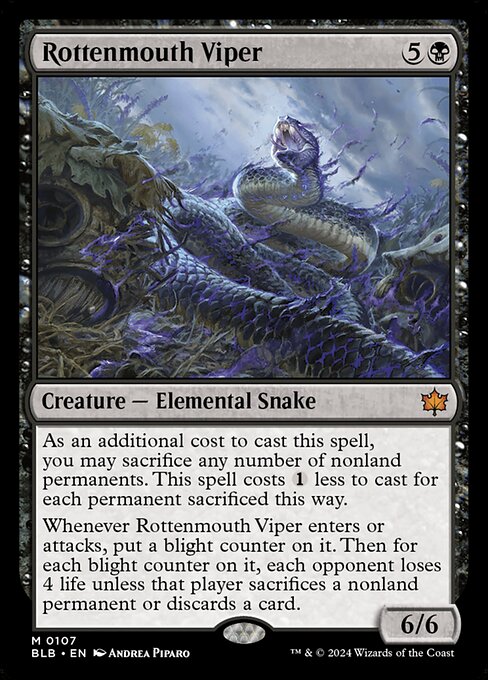
Welcome back to Fun & Jank with me, Plum! Sometimes I get stuck on an idea or brew that amps me up, and I end up making about a bajillion variations and shells to see what works and what doesn’t. Basically, I have brewer’s tunnel vision. This past week has been no different and I happened to get obsessed with Rottenmouth Viper.
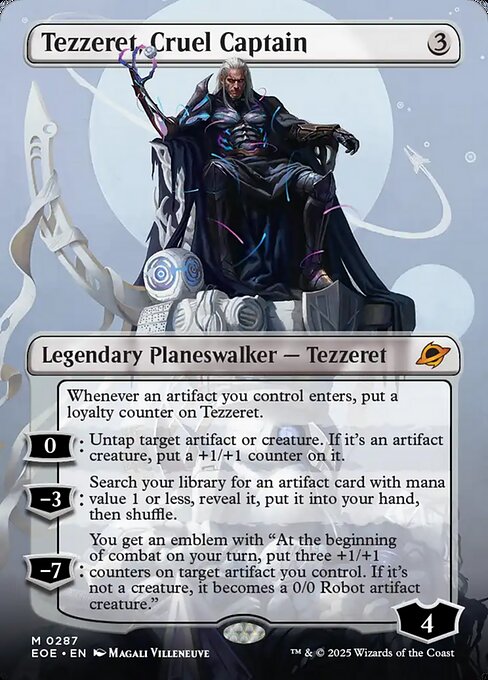
I wanted to play around with shells that didn’t go “all in” on an early Viper, but rather use it as a value piece that could slowly take over the game. What came out were two very different builds that share the same backbone of Tezzeret, Cruel Captain and some sweet artifact value.
Zomument revisits an old favorite from Episode 25, rebuilt with inspiration from a recent AspiringSpike list and retooled for Historic. Ozo-Lich takes the same ingredients but cooks something stranger: a deck that tries to anchor Phylactery Lich to The Ozolith and build up Blight Counters from Rottenmouth Viper.
Both are sweet ideas, but let’s take a look at them together!
I’ve been wanting to brew something off the beaten path with this little snake for quite some time now. People have already done Affinity style sacrifice builds where this guy gets powered out turn 2 or 3, but I was looking for something different.
On paper, it’s everything a jank brewer loves: a scalable cost reduction mechanic, a trigger that hits both the board and the hand, and you can turn your disposable junk into a six-mana haymaker. However, most of the time it just did nothing and died :(. The card asks for sacrifices up front, gives you nothing immediately, and only starts paying you back if it lives to attack. That’s a tall order in Historic, where most removal is efficient and exile effects are everywhere.
I wanted to try something where you didn’t always need the Viper to survive. It just needs to exist long enough to die productively. I wanted to be able to play it fairly, where its a six-mana 6/6 that maybe drains a couple points, but also unfairly, jamming it a few turns early or reanimating it back on turn 2 to try and take over the game early.
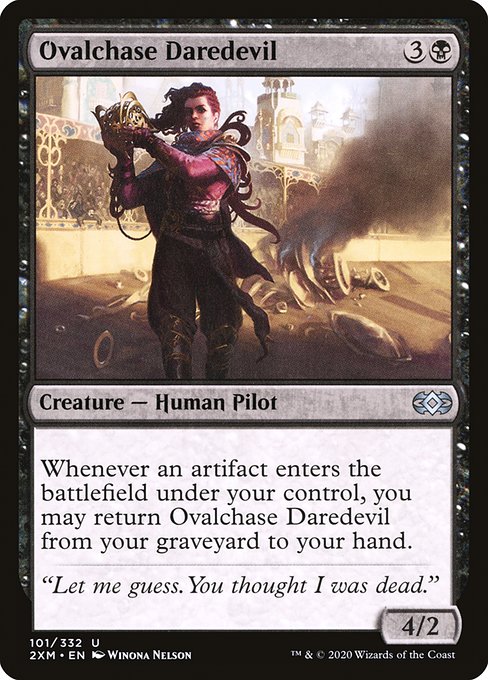
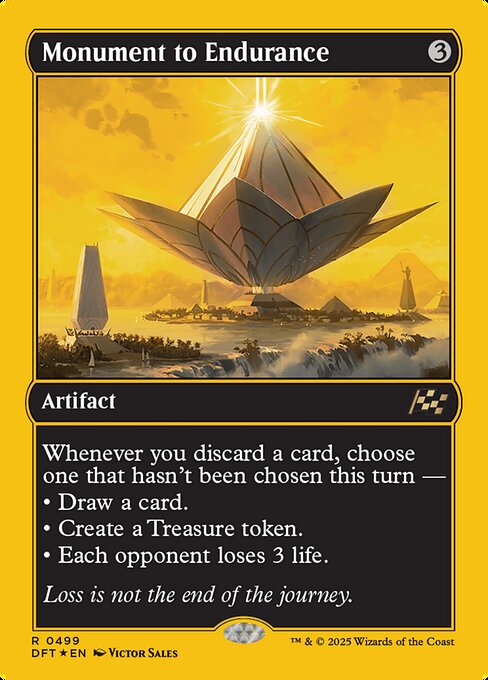
Ovalchase Daredevil is easily recurable in our deck via the small toolbox of artifacts we’re playing for Tezzeret, as well as the Treasure token we get from Monument to Endurance. This means we can constantly loop one or multiple to generate board presence, card advantage, or drain the opponent’s life.
But this time, Rottenmouth Viper joins the party. After taking some inspiration from a recent AspiringSpike deck, I figured if we’re going to be discarding things anyway, why not throw in a reanimation package?
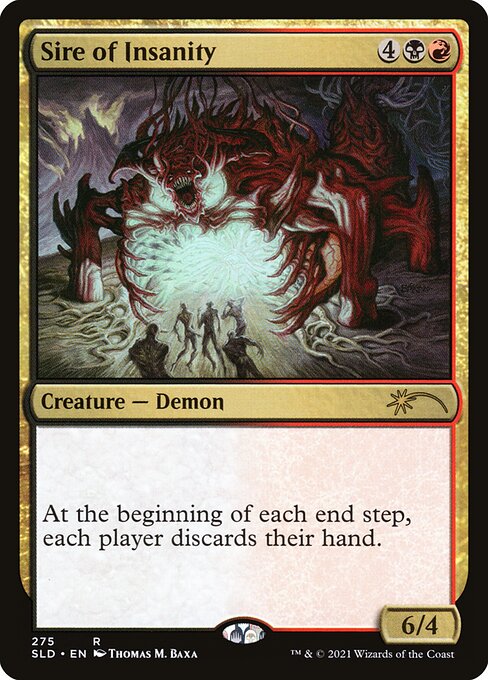
Sire of Insanity for the classic “reset the game and win” moment.
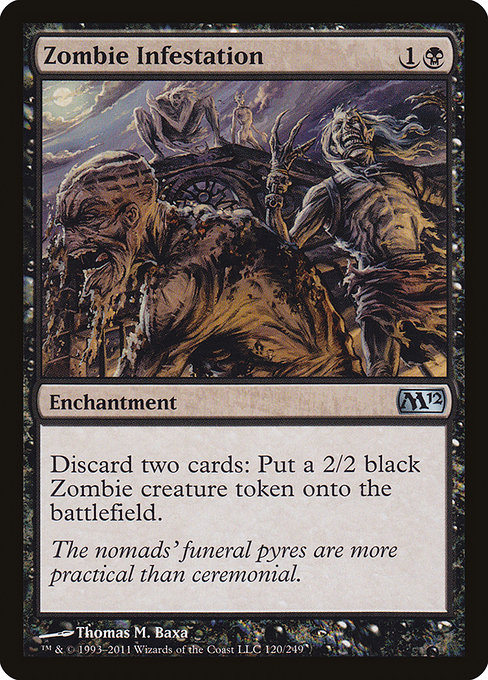
Both are easy to pitch to Blood Fountain, Currency Converter, or Zombie Infestation, and coming back as early as turn three is often enough to swing a game wide open. Add Rottenmouth Viper to the mix as another decent target and we gain some real power outside of the discard engine mentioned above.
The rest of the deck still plays that patient grindy game. Monument gives you value every time you discard, turning Daredevil loops and Infestation activations into an engine that doesn’t care about removal or counterspells. Plus, between the zombies and the ability to trigger Monument’s lifeloss twice every turn cycle. you can actually close games out pretty dang quick. Two monuments with the Infestation loop is 12 life drained every cycle.
You’ll see our darksteel daddy make an appearance in both lists today, but he’s mostly there as infrastructure. His job is to make sure the deck keeps functioning and provide additional value. His passive loyalty gain means he naturally climbs toward his ultimate just by doing what this deck already wants to do: play artifacts. Between blood tokens, treasures, and artifact lands, Tezzeret’s basically self-charging every turn. The emblem isn’t the plan, but it’s always looming.
Tezzeret gives you a tight little toolbox to help stabilize as the game goes on. Tormod’s Crypt stops graveyard shenanigans or Lavaspur Boots can give our reanimation targets haste to put the pressure on right away. These slots aren’t really set in stone, but I found most of our little trinkets useful at one point or another as we played through our matches on the ladder. He’s a good addition to the list. Even if we don’t end up using whatever we tutor for, it builds his loyalty or gets sacrificed to the snake.
Gameplay
The deck was a bit disappointing overall, but never boring. The best games were the ones where Zombie Infestation and Monument to Endurance hit the board together. That pairing is absurd and one of the grindiest things I feel you can do in Historic.
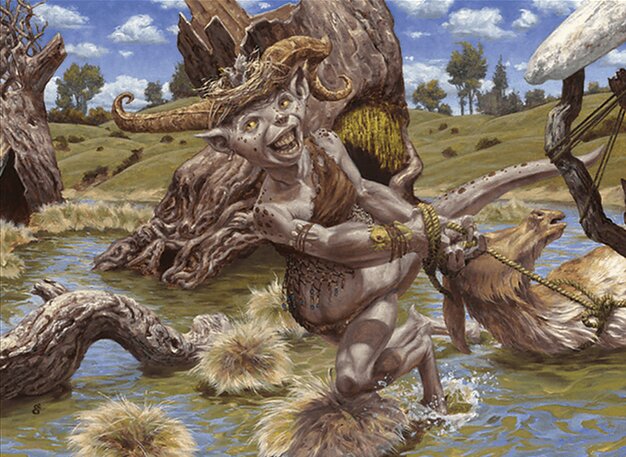
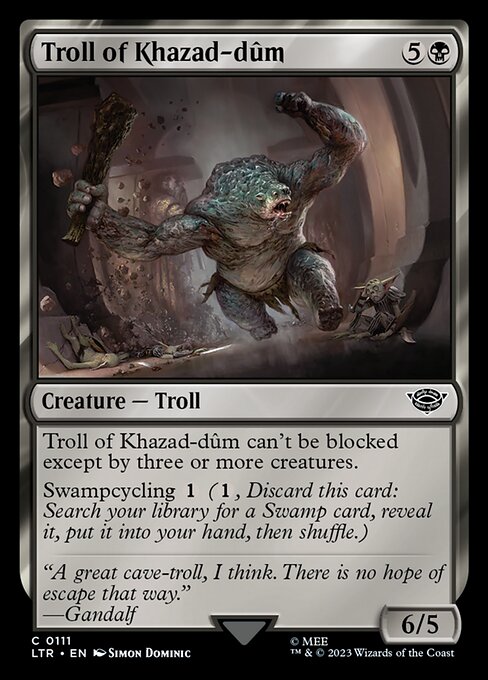
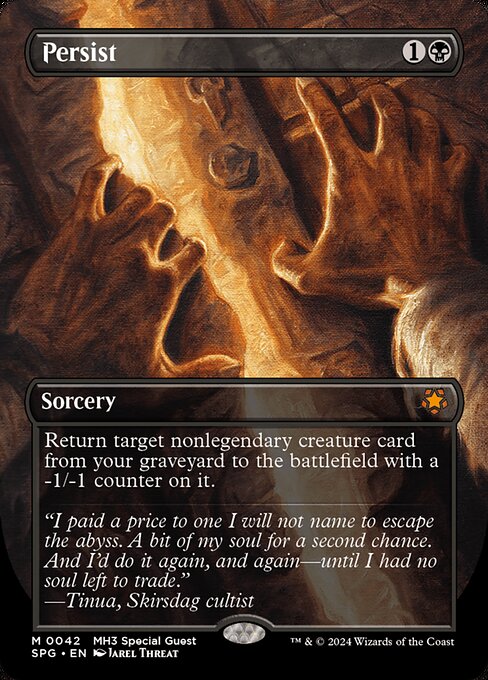
The reanimation plan worked better than expected. Troll of Khazad-dûm felt like a nice way to grab mana while also triggering Monument or Converter, and when you could stick a Persist on turn two or three, Sire of Insanity or Rottenmouth Viper often just took over the game on the spot. Sire was the high roll play, while Viper offered a more consistent grindy engine that snowballed if left unchecked.
The losses were the predictable ones: fast combo decks, graveyard hate, or getting tempo-checked before the engine assembled. There’s a lot of setup, and hands without a discard outlet or Monument feel like you’re running two different decks that never meet.
This deck was literally just a thought experiment to see if I could build something based on a cute little interaction involving the M19 all-star (/s) Phylactery Lich.
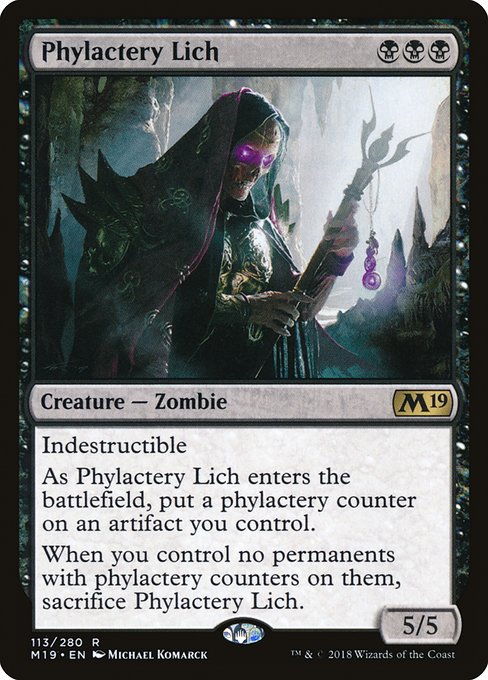
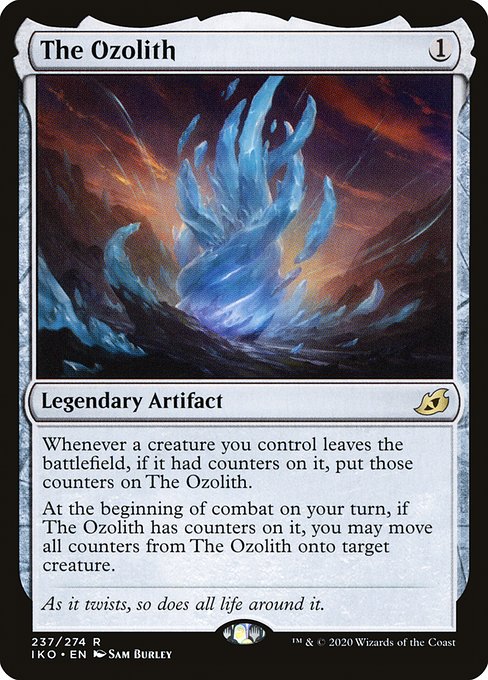
When Phylactery Lich enters, it puts a phylactery counter on an artifact you control. Normally, if that artifact dies, the Lich goes with it. But if the artifact holding the counter is The Ozolith, you can actually just move the counter to the Lich itself, because it only cares about whether or not a permanent has a counter on it.
This means you can bank counters in a way. Put an early one on an artifact, and then move another to the Lich later on. That way, if one permanent with a counter gets removed, you have another to keep Lich on the board, giving you a hard-to-kill 5/5 beater.
It just so happens that Rottenmouth Viper also cares about counters. If one Viper dies while the Ozolith is out, its blight counters get stored too, so the next Viper comes in preloaded!
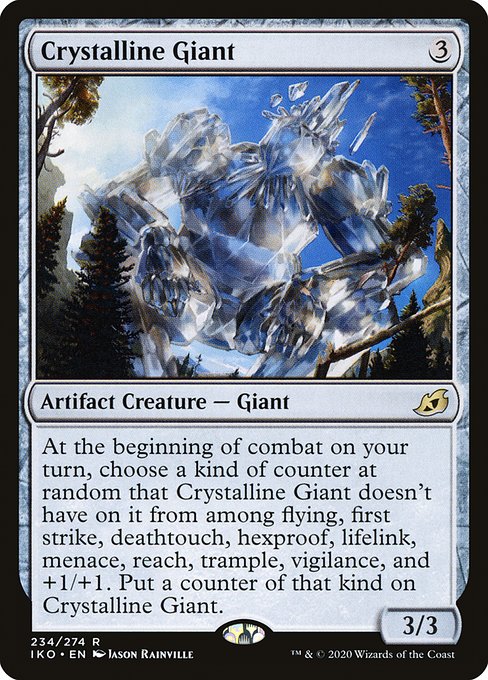
Mr. Giant here also adds more counters to the mix, and when it dies, all those counters get thrown onto The Ozolith as well. That means in the late game, you can cast another Lich or Viper, move them all over, and end up with a flying, lifelinking, deathtouch, indestructible zombie or snake.
How neat is that?
You’ll also notice I’m leaning a bit more into the idea of flooding the board with artifact fodder to help cast an early snake here. It seemed like the perfect place to include the Retrofitter Foundry package as Ornithopter could give us an early beater or act as free fuel for Viper.
Yet again, Tezz ties this list together. He finds us The Ozolith, a few toolbox artifacts, as well as Retrofitter Foundry (which benefits from his untap ability). Its also worth noting that he can grab a Darksteel Citadel which is great permanent to throw a phylactery counter on!
Gameplay
This deck kind of just felt like I was assembling IKEA furniture without the instructions while somebody was actively trying to light me on fire.
The best lines were the early Rottenmouth Viper starts. When you could power one out with Retrofitter Foundry tokens or a Blood Fountain lying around, the Viper did serious work. Even if it only attacked once, it left behind a pile of blight counters on The Ozolith.
The weak points were speed and consistency. The deck struggled against aggro and exile-heavy lists — anything that didn’t care about your grind plan. Without early pressure or an Ozolith, the hands with multiple Vipers and no fodder felt brutal. We often just twiddled our thumbs and died. It felt clunky and greedy.
Closing Thoughts
Between these two lists, Viper ended up being a great lesson in restraint. You can’t just jam it into any deck and expect it to work. It demands a plan, and it demands synergy. A lot of the shortfalls here came down to that simple fact — Rottenmouth wasn’t the main plan. It just happened to kind of work with what the decks were already doing, so we shoehorned it in there.
Zomument is a deck that’s already built to grind, and Rottenmouth didn’t add a whole lot to that equation. Ozo-Lich was full of neat interactions, but none of them really added up to something viable in the current Historic environment.
I’m definitely not done looking for a more interesting home for Rottenmouth Viper, but I can assure you that neither of these are it, chief.
Thanks for reading!
As always, feel free to comment and leave any questions you have below. And make sure to come back next week for even more Fun & Jank!
If you want to see these decks in action, come hang out with me on stream, now streaming on YouTube too!, where we test, refine, and have a ton of fun together.
Happy Brewin’!
Premium
Enjoy our content? Wish to support our work? Join our Premium community, get access to exclusive content, remove all advertisements, and more!
No ads: Browse the entire website ad-free, both display and video.
Exclusive Content: Instant access to all exclusive articles only for Premium members, at your fingertips.
Support: All your contributions get directly reinvested into the website to increase your viewing experience!
Discord: Join our Discord server, claim your Premium role and gain access to exclusive channels where you can learn in real time!
Special offer: For a limited time, use coupon code L95WR9JOWV to get 50% off the Annual plan!
Plum is the creator of the Jank Tank.
He started playing at the ripe old age of 12 and immediately fell in love with the infinite possibilities that deck building could lead to.
He truly understands that jank is a mindset, and spends most of his free time brewing and concocting new and exciting deck lists to help inspire and promote creativity within the MTG community.