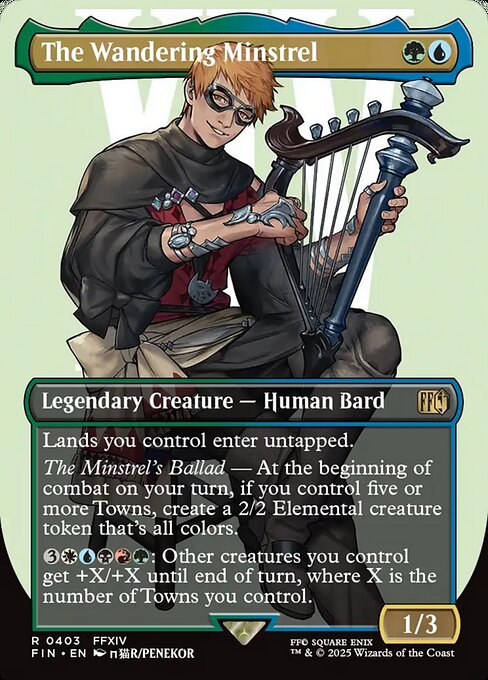
This week I brewed up two spicy decks featuring The Wandering Minstrel + Risen Reef, one in Pioneer and one in Historic. Both decks flood the board with lands and elementals, then turn that value into explosive wins!
The Wandering Minstrel has already proven itself as a powerful enabler across formats — showing up in Modern Amulet Titan and even fueling Lumra Scapeshift builds in Pioneer.
Welcome back to Fun & Jank Episode 40! This week we’re taking a look at one of my recent pet cards (I promise it’s not Plagon), and pairing it with one of my all-time favorite value engines: Risen Reef.
Both decks this week, one in Pioneer and one in Historic, are built to capitalize on how Minstrel lets your lands enter untapped, making every Risen Reef trigger even more explosive. That synergy lets you “go off” earlier and quicker, because you no longer have to have the perfect board state to do so. You can develop it as you go along, which plays a key part in both of the lists I have for you guys today.
But let’s take a look at our favorite bard first.
The Wandering Minstrel
This bad boy came to use from Final Fantasy. It’s already proven to be impressive with cards like Scapeshift, but it has opportunities to do so much for other decks too, but not by itself. One of the coolest things about The Wandering Minstrel in these Risen Reef shells I’ll talk about today is that it acts as both an engine and a win condition, thanks in part to Starting Town.
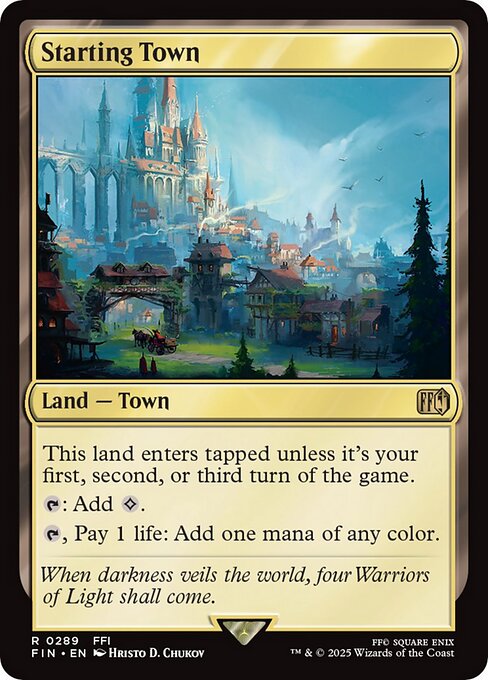
Because the two lists I have for you today flood the board with lands (thanks to Risen Reef and Minstrel letting lands come in untapped), it’s not uncommon to finish a game with every single land in our deck on the battlefield. And when you happen to have all four Starting Towns, Minstrel’s activated ability suddenly becomes deadly — giving your entire board +4/+4 for a massive, often-lethal swing.
What’s really elegant about this package is that it costs you basically nothing to include. You’re already playing lands anyway, and Starting Town is a perfectly serviceable fixer on its own. But together with Minstrel, it gives your deck a surprise win condition that opponents rarely see coming.
This package, combined with Risen Reef, is the basis for both our decks. So let’s start with an updated take on an old Pioneer list: Simic Devotion.
Funnily enough, our first deck is already trying to take advantage of Risen Reef via Master of waves. Minstrel just gives it a bit of a speed upgrade, meaning we no longer have to “set up” our board state as much in order to combo off.
If you’re unfamiliar with this deck (which has fallen our of favor over the past couple years), its a rather simple one. Games usually go like this: 1.) Get a Risen Reef on Board 2.) Cast Master of Waves with a decent devotion to Blue 3.) The elementals from Master of Waves trigger Reef, giving you more lands and creatures to cast. 4.) Amass mana using Nykthos, Shrine to Nyx and cast things to increase your devotion to win via Thassa's Oracleooorrrrr make a giant board of elemental tokens and swing.
Now usually, you have to have a large enough devotion to Blue that you can win within the turn or two that you aim to do so. Some versions have even started running Mystic Reflection alongside Master of Waves in order to create an obscene amount of tokens, and therefore get 30+ Risen Reef triggers in a single turn. However, In my opinion, this is one of the problems with the list. These older versions of Master of Waves and Thassa’s Oracle decks had to wait until they had amassed that critical mass of Blue devotion before they could close the game.
The Wandering Minstrel changes that dynamic entirely. Instead of relying solely on assembling devotion, you’re now able to generate explosive turns much earlier. Because of Minstrel, every land you hit from Risen Reef is immediately usable. This allows you to keep casting creatures (Master of Waves), trigger Risen Reef again, hit more lands, cast a clone and so on. The deck plays more like a combo deck than a traditional devotion pile, chaining spells and flooding the board in a single turn. Instead of needing 4–5 permanents to stick around and “power up” Master of Waves later, you’re much more likely to chain your way into a huge board with Minstrel and Reef. This gives you more explosive finishes, less dependency on devotion specifically, and more resilience to spot removal — because your threats and your lands are working overtime the same turn they hit the field.
Support
Honestly I feel like you can really play whatever the heck ya’d like to when it comes to the rest of the shell. Minstrel, Reef, Master, and Oracle is your core, and I’d highly recommend you play Collected Company as well. The rest can be any combination of Blue-pipped creatures that you feel will be suitable for the meta. I’ll go over my choices with some quick explanations so you get the gist.
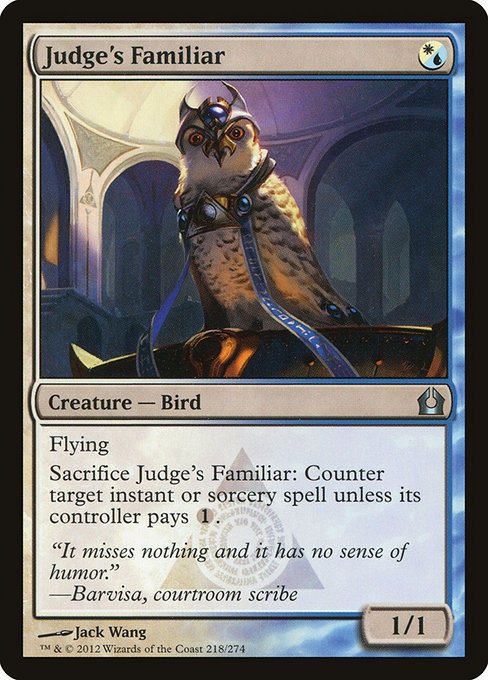
First up is Judge’s Familiar, a one-drop that applies early pressure while doubling as a piece of disruption. It’s perfect in a deck like this because we want to be spending our mana on creatures anyway, and Familiar lets us hedge against a key removal spell or board wipe while contributing devotion and bodies to the board.
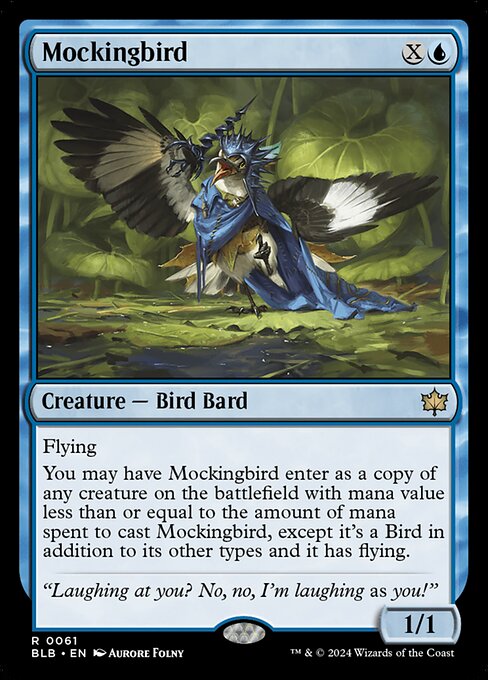
Mockingbird is an all-star in grindy games. Not only does it give us additional copies of Reef and Master of Waves while we’re going off, but it also does a great job of mirroring our opponents’ key creatures and clogging up the board.
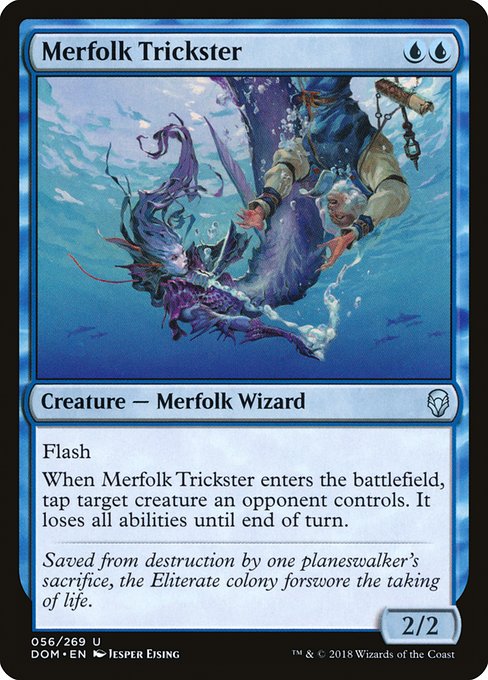
Merfolk Trickster is just an incredibly versatile creature here. It disrupts blockers, taps down key attackers, and can mess up combat math. In some games it buys you the exact tempo you need to chain into your combo turn.
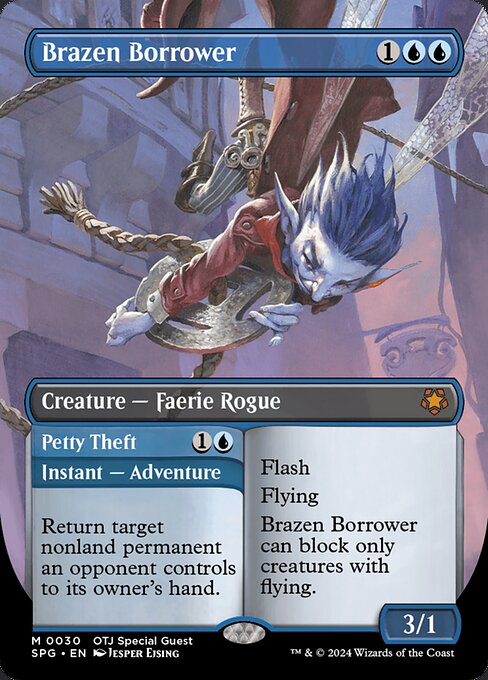
Brazen Borrower is a card I really adore here. The bounce effect can keep you alive against an early threat or clear the way for lethal, and then the 3/1 flier comes down to keep pressure on. Love that it also has two Blue pips to help with devotion.
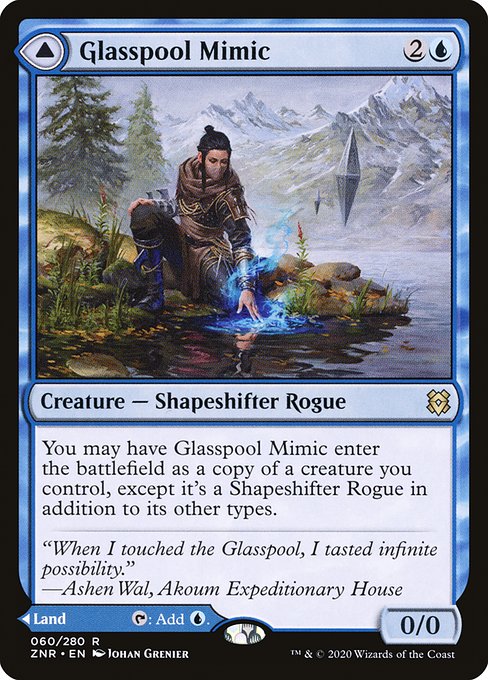
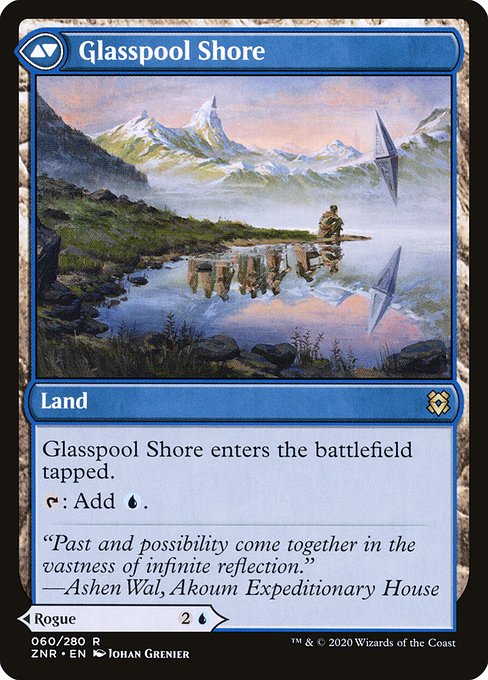
Finally, Glasspool Mimic serves double duty — it can copy your Master of Waves, Risen Reef, or even a devotion enabler for some truly absurd turns. The fact that it also functions as a land in a pinch is just gravy. Also adds to our creature count for Collected Company.
Together, these creatures give the deck interaction, resilience, and plenty of devotion while still playing to the deck’s strengths
Gameplay
The deck felt great as we played through our “league” (5 Matches of Ranked Bo3) and I was actually quite surprised with how well we did. According to MTGTop8.com, a Simic Devotion list hasn’t put up results since March of 2023. The format has evolved quite a lot since then, and it was nice to see an old dog learn some new tricks in a sense. We ended up 4-1 overall, and got to play against some of the new tech in Pioneer. We actually started 4-0 against Naya Yuna, Golgari Midrange, RW Aggro, Mice, before losing our final match to GW Hammer.
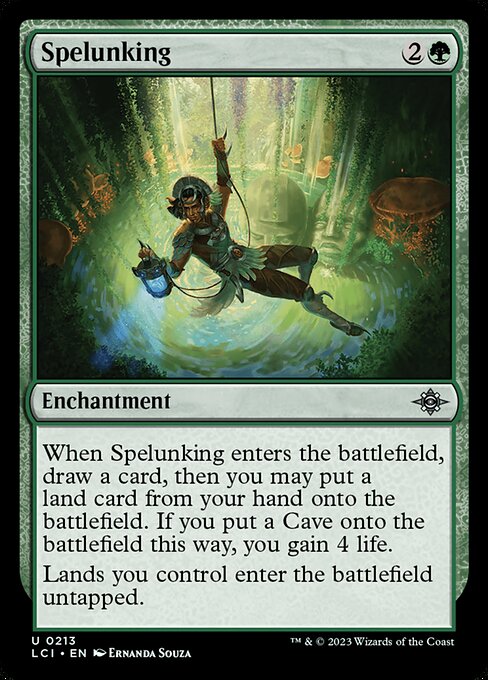
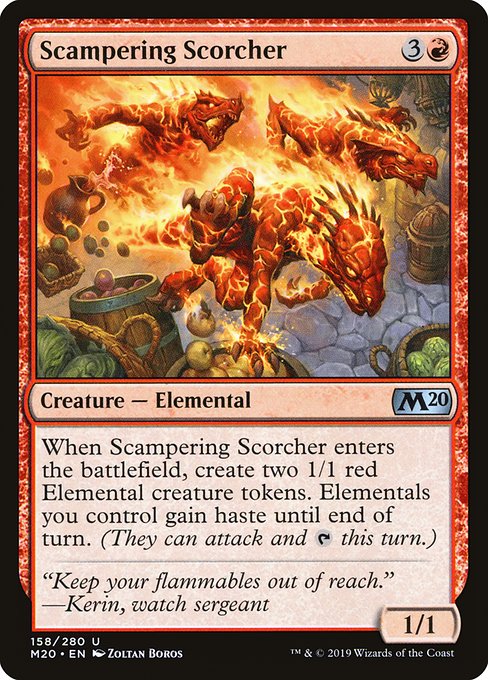
Honestly this one should have gotten a highlight just for the name, but I digress. I actually brewed this list way back before I started streaming when Spelunking came out. The idea was to use Spelunking in the same vain as Minstrel to power out lands with Risen Reef. Similar to the deck we just talked about above, we try to use Elemental tokens, in this case Scampering Scorcher to trigger Reef multiple times and keep the chain going.
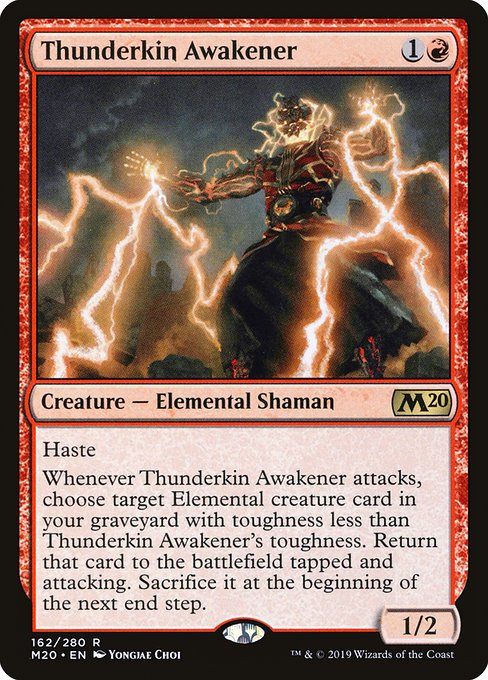
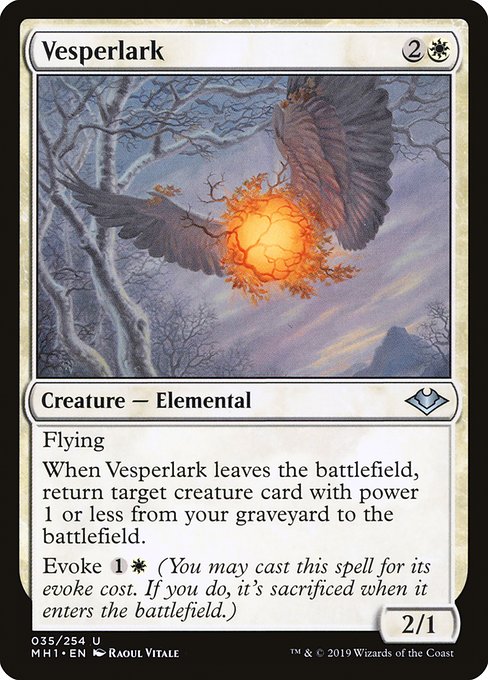
The major draw to this list is the tribal synergy, allowing you to play cards like Cavern of Souls, I’m arguing the main draw is Vesperlark and Thunderkin Awakener
These two together give this deck so much redundancy it’s not even funny. Both buy-back Reef and Scorcher, but it just so happens that Minstrel has 1 power, meaning we can rebuy it with Vesperlark as well. These two also play very well with each other and you’ll notice some very powerful lines if you decide to give this deck a spin. Consider the following late-game sequence:
1.) Risen Reef and Thunderkin got removed earlier and are in the graveyard. 2.) Evoke Vesperlark to bring back Thunderkin awakener. 3.) Swing with Thunderkin to bring back your original Vesperlark 4.) End of turn, Vesperlark get’s sacrificed giving you another trigger to return Risen Reef back to the field.
It’s easy to loop multiple creatures in a turn off of just these two cards alone. And while we are talking specifically about the first draft of this list today, in recent versions I’ve been playing Phantasmal Image as well, which is another great reanimation target for Vesperlark alongside Glasspool Mimic.
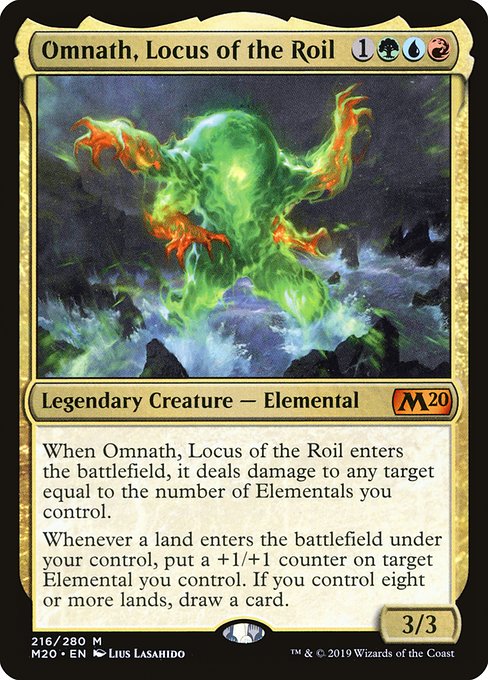
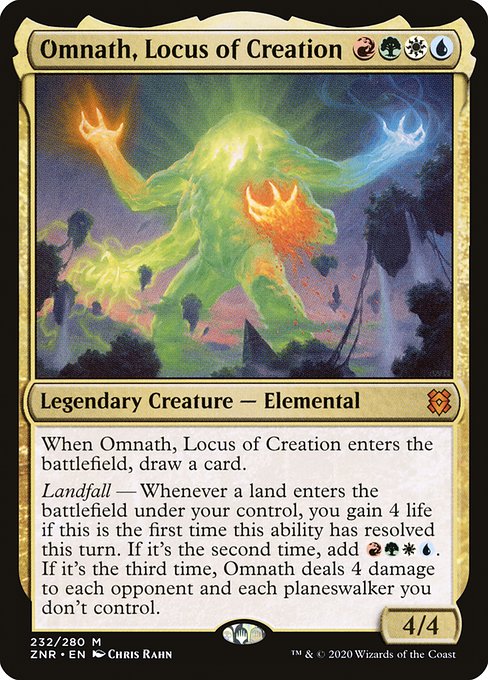
Lands?? Elementals??? Might as well play Omnath….or two. Locus of the Roil is another win condition outside of the beatdown plan with Minstrel. Three copies plus the Glasspool Mimics make it easy to fire it off two or three times in a single turn and blow up our opponent.
I wasn’t completely sold on the 4-color version, but it was helpful whenever we got him on the board. Extra life, extra mana, and extra damage made it much easier to chain things together, but wasn’t always necessary in my opinion.
Gameplay
Boy did we have such a great start with this deck. It was our first draft so we jammed it straight into Historic Bo1 and immediately went 8-0 on stream. While the deck was strong and quite explosive, the one weakness I noticed is we absolutely need to have a Risen Reef in our hand within the first couple turns of the game. Without it, our deck is generally too slow and our creatures are too small to compete with other decks. This is something I’ve tried to solve with things like Artillery Enthusiast and more recently Sylvan Tutor, but more testing is still to come. Either way, this deck reaalllly tickled my fancy and was so much fun to play.
Closing Thoughts
Both of these decks really showcase just how versatile and powerful The Wandering Minstrel can be when paired with Risen Reef. In the Pioneer build, it breathes new life into an old Simic Devotion shell by letting you go off earlier and cleaner without relying solely on devotion. And in Historic, it turns an already synergistic Elementals deck into an absolute value and tempo machine, letting you chain threats and lands seamlessly while doubling as another win condition thanks to Starting Town.
What I loved most about testing these was how smooth they felt once the core engine was online. Both lists had that perfect balance of jank and power — the kind of gameplay where you feel clever for assembling it, but also like you’re doing something legitimately competitive. Minstrel proved itself to be more than just a novelty; it’s been a serious engine that opens up brewing possibilities across multiple formats.
Thanks for reading.
As always feel free to comment and leave any questions you have below! Make sure to come back next week for even more Fun & Jank!
If you want to see these decks in action, come hang out with me on stream where we test, refine, and have a ton of fun together!
Happy Brewing!
Premium
Enjoy our content? Wish to support our work? Join our Premium community, get access to exclusive content, remove all advertisements, and more!
No ads: Browse the entire website ad-free, both display and video.
Exclusive Content: Instant access to all exclusive articles only for Premium members, at your fingertips.
Support: All your contributions get directly reinvested into the website to increase your viewing experience!
Discord: Join our Discord server, claim your Premium role and gain access to exclusive channels where you can learn in real time!
Special offer: For a limited time, use coupon code L95WR9JOWV to get 50% off the Annual plan!
Plum is the creator of the Jank Tank.
He started playing at the ripe old age of 12 and immediately fell in love with the infinite possibilities that deck building could lead to.
He truly understands that jank is a mindset, and spends most of his free time brewing and concocting new and exciting deck lists to help inspire and promote creativity within the MTG community.