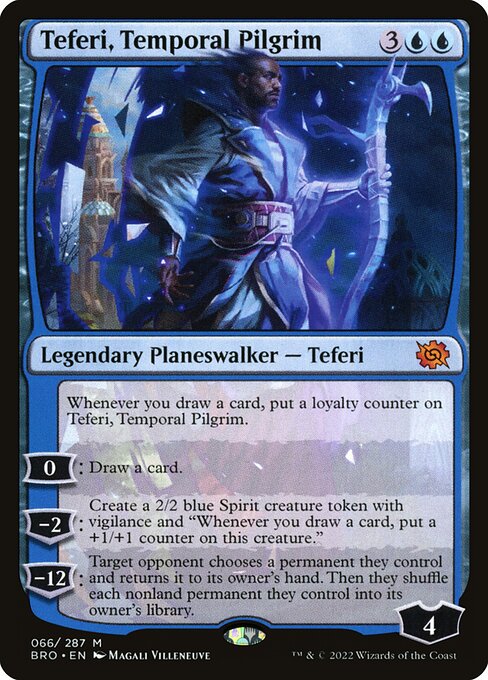
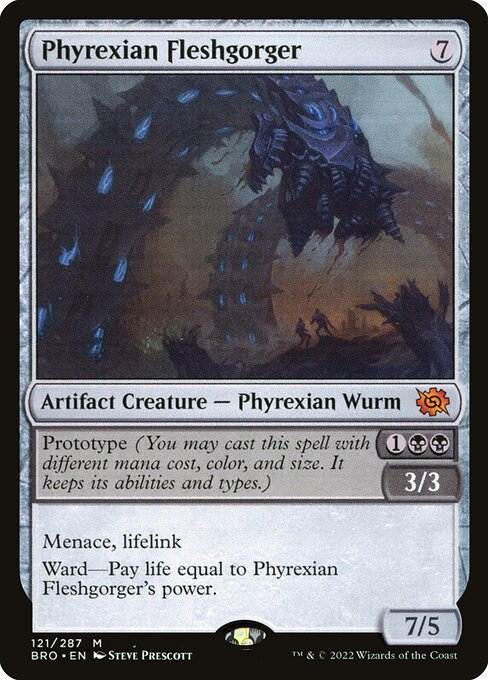
Preview season for The Brothers’ War is well underway ahead of the new set’s November 15 release on MTG Arena and the November 18 worldwide release. We’ve already seen a ton of flashy, powerful, and expensive cards like Teferi, Temporal Pilgrimand Phyrexian Fleshgorger that have the potential to make an big impact on Constructed formats like Standard and Explorer.
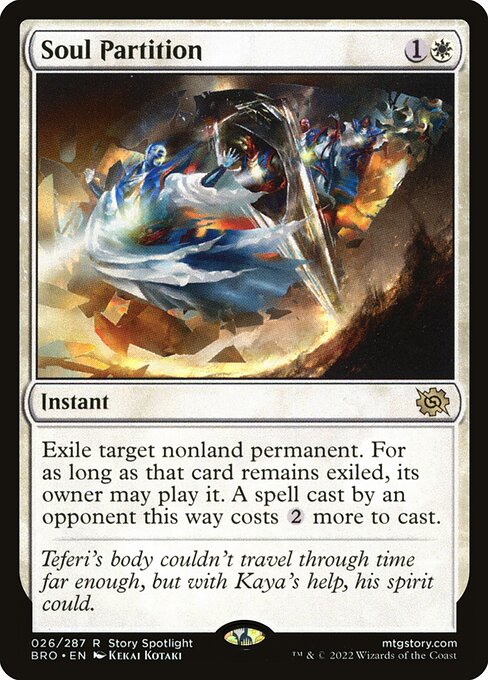
However, in this preview spotlight, I wanted to focus on an unassuming but in my opinion deceptively powerful card in the new White catch-all removal spell, Soul Partition.
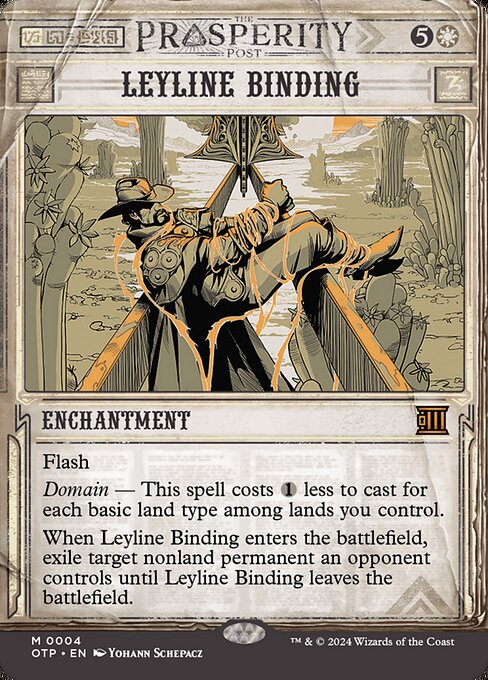
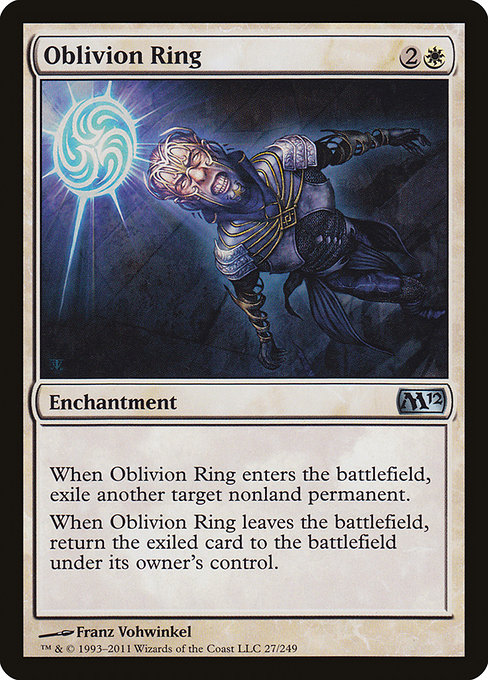
This is the type of removal spell that has been in the color White’s wheelhouse for a long time, and the kind of card that has definitely seen competitive play in the past. While this version is an instant that costs two, it’s similar to classic White removal spells like Oblivion Ring, Leyline Binding, and more for a couple of reasons. First, it’s extremely versatile. Like the enchantments I mentioned, Soul Partition can hit any nonland permanent. Second, it has a big drawback in that its vulnerable to interaction from the opponent. Just as blowing up a Leyline Binding allows you to get your exiled permanent back as well as earn another enter-the-battlefield trigger, this new spell is only a temporary solution.
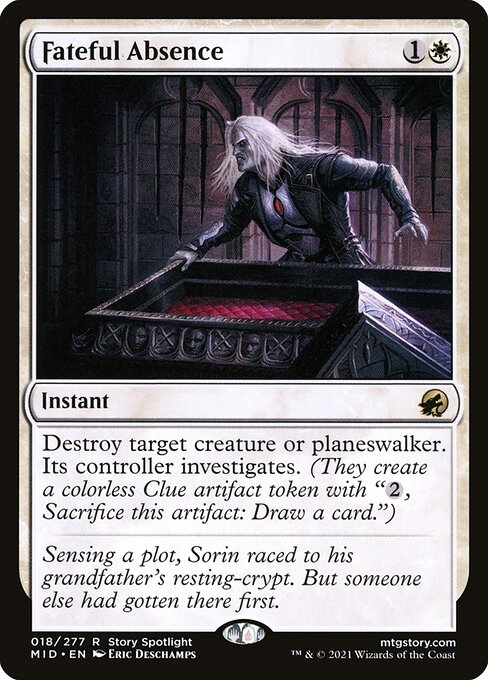
Another and likely better comparison for Soul Partition is another recent spell, Fateful Absence from Innistrad: Midnight Hunt. Both spells are two-mana instants that deal with permanents in exchange for giving your opponent another resource. Fateful Absence certainly lags behind in the sense that it only hits creatures and Planeswalkers. It’s less clear which drawback is worse: giving your opponent an extra draw for two mana or letting them recast their exiled permanent for two more mana.
I think Soul Partition is extremely powerful, especially in Explorer, but it needs the right White deck to take advantage of its flexibility and to mitigate its potent drawback.
I’m an avid control player, and Soul Partition is the latest in a long line of removal spells that Explorer and Pioneer mages like me will deploy in the hopes of finding something that measures up the supremely powerful and versatile interaction that the Modern version of Azorius Control has access to.
This deck packs Portable Hole in the main deck and 2 copies of Fateful Absence and 1 extra Portable Hole in the sideboard. What if we slotted in some number of Soul Partition instead? Well, we have to look at the deck’s game plan and how each removal spell’s drawback lines up with that. First, I wouldn’t touch Portable Hole as a one-mana spell, even with the restriction of only hitting nonland permanents with mana value two or less, is the best way to keep from getting run over in the early turns.
Now, between Fateful Absence and Soul Partition, which card goes better with the control plan and which drawback is less of a headache to deal with? Absence gives your opponent another draw, but the key thing here is that the card they get is a random one from their deck in most situations. Meanwhile, Soul Partition won’t let your opponent fill their hand up, but it does let them recast their exiled permanent.
It’s important to consider what the two-mana removal slot in the deck is for. Whether they start in the main deck or come in out of the board, you want cheap interaction for aggro decks. If you cast Soul Partition on a cheap creature, it will buy you time, but it won’t solve the problem unless you have another answer ready, such as a sweeper, a counterspell, or a large Shark Typhoon token. On the other hand, Fateful Absence makes your opponent spend two mana to get a random card, which could be a meaningless land or a worse creature.
Control decks generally care more about resources than tempo, and while both of these removal spells put you behind in those ways, I would say the Clue is a slightly smaller drawback than the two mana tax.
By this logic, I think Soul Partition is actually a better option for decks that just need a little bit more time to set up a combo or to build a critical mass of attackers. Check out this Abzan Greasefang list, for example:
Soul Partition is similar to a card like Assassin's Trophy in that it deals with hate cards like Unlicensed Hearse. While Trophy gives opponents a land but deals with the problem permanently, Partition won’t put you behind on mana at the cost of making the hate card available – that is, if your opponent is still alive to take advantage.
I’ve written a lot of words to try and say that Soul Partition might see play as a two-of in White decks’ sideboards. But competitive Magic is all about finding small but incisive edges in different matchups. Soul Partition may not be the splashiest card from The Brothers’ War, but I predict it will be an important option to have access to if you’re playing White.
Premium
Enjoy our content? Wish to support our work? Join our Premium community, get access to exclusive content, remove all advertisements, and more!
No ads: Browse the entire website ad-free, both display and video.
Exclusive Content: Instant access to all exclusive articles only for Premium members, at your fingertips.
Support: All your contributions get directly reinvested into the website to increase your viewing experience!
Discord: Join our Discord server, claim your Premium role and gain access to exclusive channels where you can learn in real time!
Special offer: For a limited time, use coupon code L95WR9JOWV to get 50% off the Annual plan!
Nicholas "INickStrad" Price is a writer and competitive Magic player from Manila, Philippines. He has played in high level events on paper, MTGO, and Arena, and spends his time drafting the latest set and improving at Constructed formats.