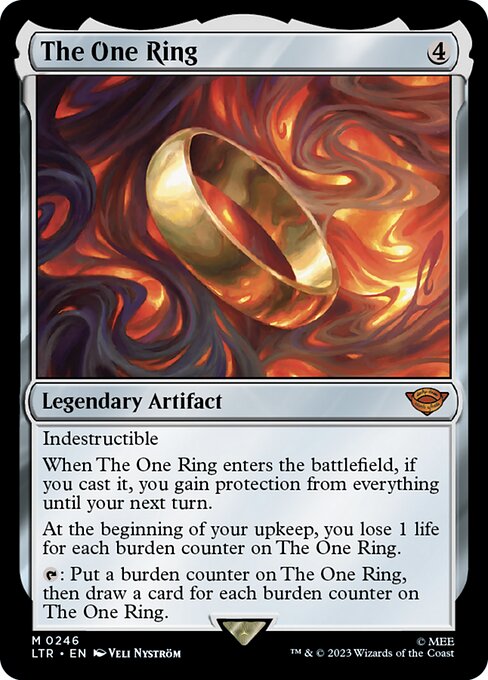
This article explores UW Taking Turns, a control-combo deck powered by The One Ring and extra turn spells, showcasing how evolving formats shape new strategies while staying true to core gameplay.
Welcome back to Fun & Jank! Today we’re diving into the magic of not letting your opponent play Magic. We all know that Magic is a zero-sum game in terms of fun. Meaning we should have all of it and our opponent should have none. So if you’ve ever wanted to experience the joy of chaining together turn after turn while your opponent just sits there, hoping for a chance to untap that will never come, then boy do I have a deck for you. We’re going to examine a strategy that’s been around for quite a while, Taking Turns, and how its had to evolve to adapt to a whole new format.
The Archetype
I want to start first with what a modern, Modern Taking Turns list looks like so you have a bit of an idea of how the deck executes its game plan.
At its core, Taking Turns is a blue control-oriented “combo” deck that wins by chaining together a number of extra turn effects to build a critical advantage in land-drops and card draw until a significant win-condition can be found. The version above is what you can expect an average turns list in the Modern format to look like these days. Although we’ve gotten some big upgrades in card quality over the years, the deck list can still be broken up into a few distinct parts.
1. Card Advantage
Card advantage is the backbone of any control deck, and here it ensures you have the resources to consistently find and chain together your extra turns while maintaining control of the board.
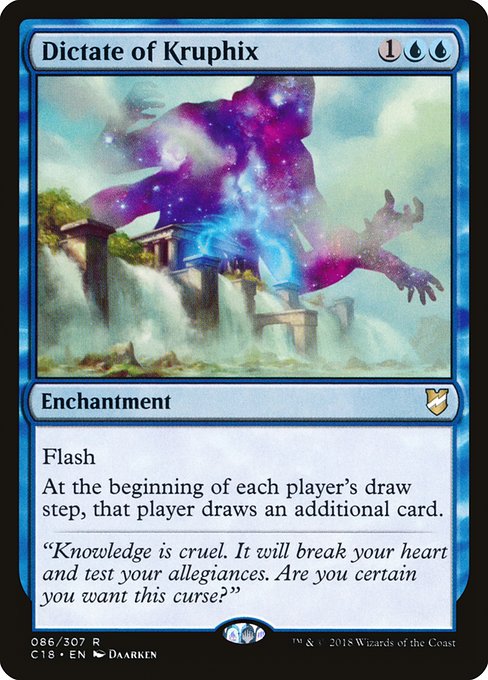
Dictate of Kruphix: A symmetrical draw engine, but in a deck built to abuse extra turns, it’s far from fair. Dictate lets you draw multiple cards across your turns while your opponent only gets their “symmetrical” draw. The flash ability means you can drop it at the end of your opponent’s turn to start reaping benefits immediately.
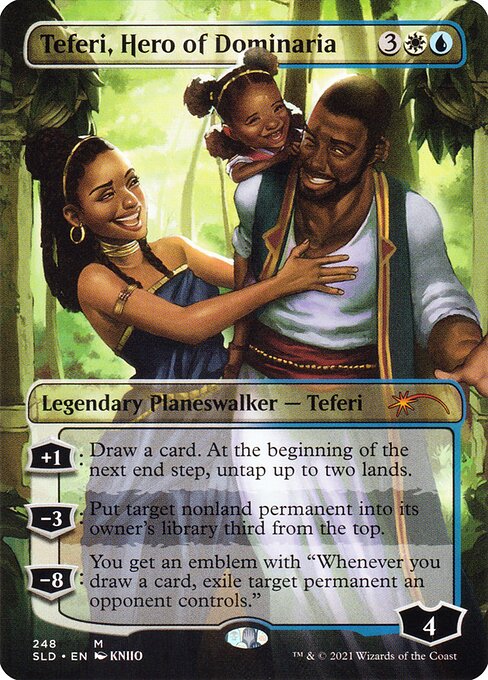
Teferi, Hero of Dominaria: The king of control value. Not only does Teferi provide a steady stream of card draw, but his +1 also untaps lands, helping you cast more spells during your opponent’s turn. His ultimate ensures a win in drawn-out games by exiling your opponent’s key pieces every turn.
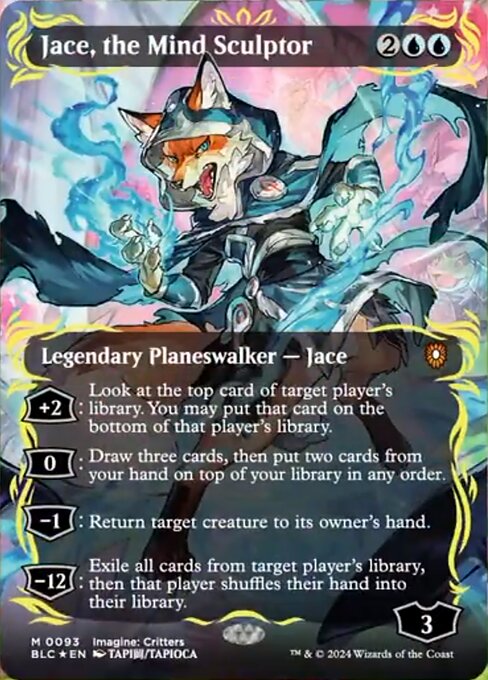
Jace, the Mind Sculptor: A Swiss Army knife for control decks. Jace provides card selection through Brainstorm, can bounce problematic creatures, and eventually serves as a win condition with his ultimate. His Brainstorm ability to manipulate the top of your deck pairs beautifully with Temporal Masteryfor surprise Miracle extra turns.
Mikokoro, Center of the Sea: A subtle source of card advantage. While it gives both players a card, it ensures you stay ahead in resource management when paired with your extra turns.
Serum Visions: A cheap and efficient cantrip for digging through your deck and setting up your next few draws. Serum Visions is key for finding lands, extra turns, or answers early in the game.
Snapcaster Mage also contributes indirectly to card advantage by allowing you to double-dip on critical spells like Cryptic Command, Path to Exile, or even your extra turn spells.
2. Extra Turns
This is the deck’s core strategy: chaining together extra turns to pull ahead on resources, develop your board, and eventually find a win condition (sometimes a very slow one) to close out the game. Notice that most Taking Turns deck will only play 8-10 actual extra turns spells, which allows a larger portion of the deck to be dedicated to interaction and stalling.
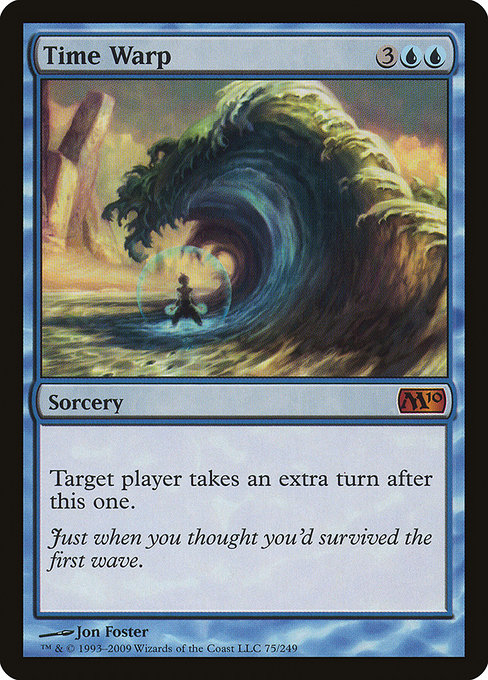
Time Warp: The bread and butter of the deck. A straightforward extra turn spell that gives you an additional turn to draw, play lands, attack, and build your board.
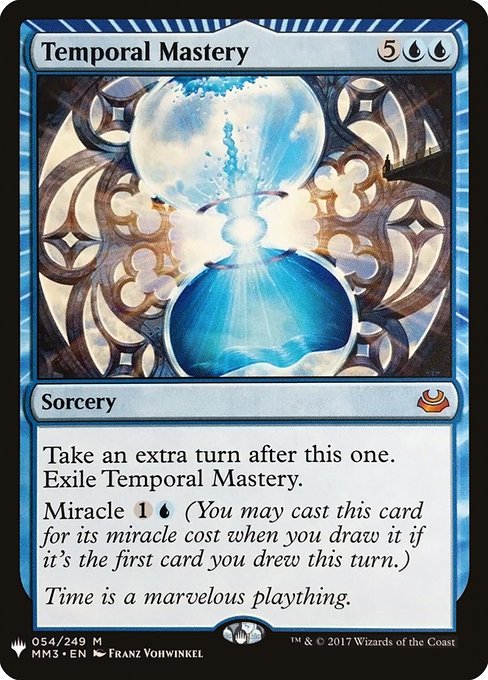
Temporal Mastery: The strongest turn spell we can play. When cast for its Miracle cost of two mana it can enable a big swing in tempo early on in the game that can usually be enough to carry you through to a chain of extra turns safely.
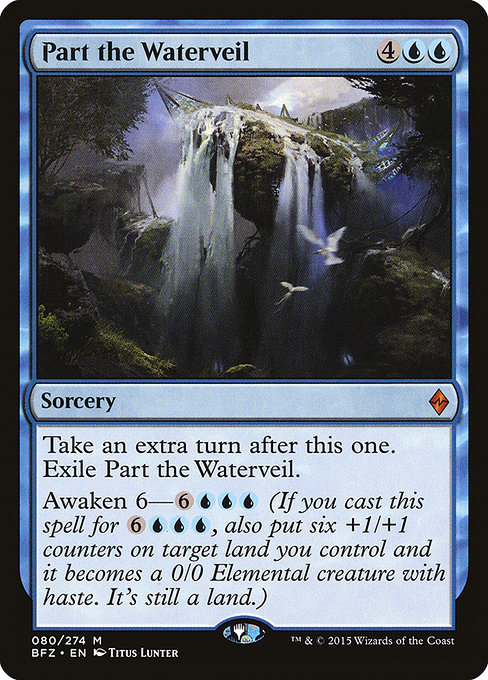
Part the Waterveil: Your main finisher. This extra turn spell with Awaken transforms one of your lands into a massive threat that can usually end games in one or two swings. Even when not Awakened, it provides another critical turn in your chain.
3. Interaction
To make it to the late game where this deck shines, interaction is critical.
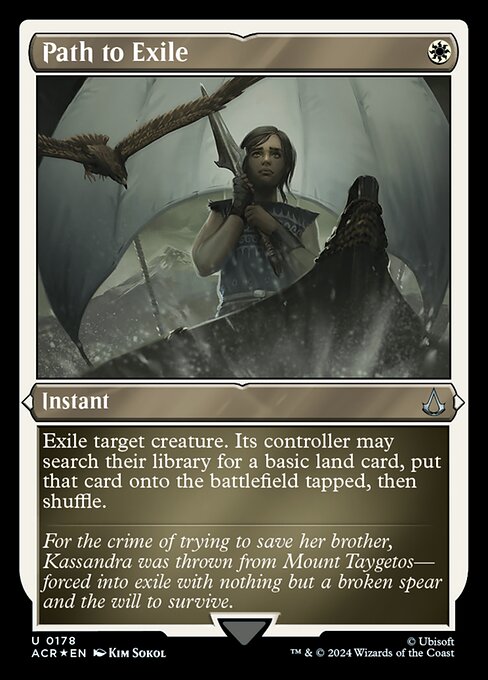
Path to Exile: Efficient creature removal that handles threats of all sizes. The downside of ramping your opponent is mitigated by your deck’s ability to overwhelm them in the late game.
Prismatic Ending: A versatile answer for problematic permanents, including creatures, planeswalkers, and enchantments. Its flexibility is particularly important in formats with diverse threats.
Countermagic:
Counterspell: Classic, clean, and efficient counter magic to protect your board state and disrupt opponents’ key plays.
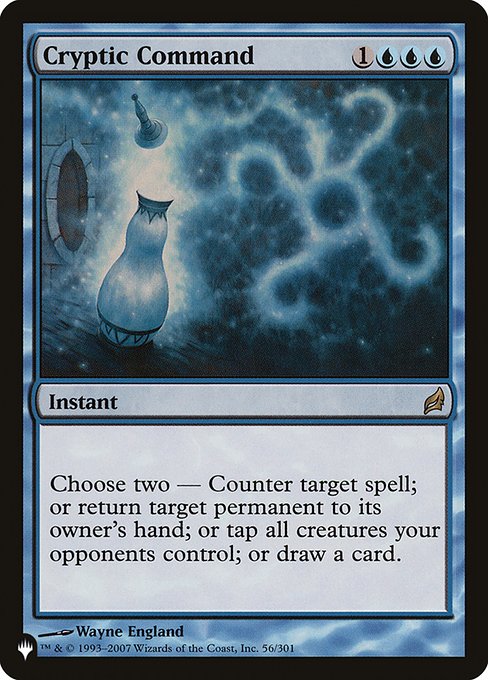
Cryptic Command: The ultimate utility card. Whether it’s countering a spell, bouncing a permanent, tapping an opponent’s board, or drawing a card, Cryptic is always relevant. It’s especially potent when used defensively to buy time for your extra turn spells.
Tempo Tools:
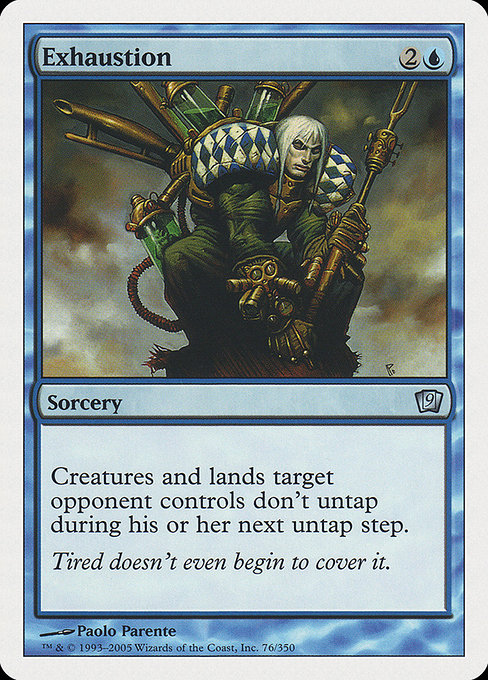
Exhaustion: A hidden gem for stalling aggressive opponents. Tapping their creatures and lands down for an entire turn cycle gives you the breathing room to set up your extra turn plan. Exhaustion is particularly powerful when chained with extra turns, as your opponent remains effectively locked out.
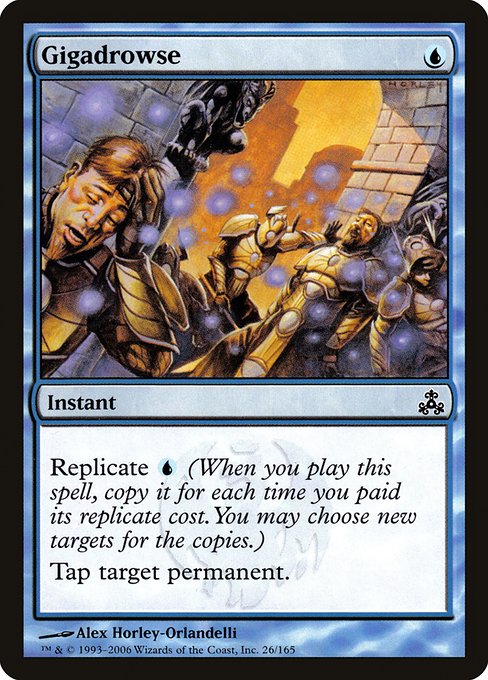
Gigadrowse: A flexible tool for tapping down lands or problematic permanents, often during your opponent’s upkeep. Gigadrowse shines in matchups where you need to disrupt your opponent’s tempo to survive.
Both of the card listed above can often time act as pseudo turn spells. Keeping your opponents from casting spells or attacking during their turn for a much cheaper cost than something like Time Warp
Each card contributes to one singular overarching strategy. Taking more turns than your opponent. Gaining incremental card advantage, buying time with efficient interaction, and eventually chaining extra turns to overwhelm your opposition is what this deck wants to do. The interplay between resource management and tempo disruption is what makes UW Taking Turns such a potent and satisfying archetype to play.
Adapting the Shell
Although we’re taking it into the the Timeless format, at its heart, the game plan of this deck hasn’t changed. You’re still aiming to control the game, buy time, and then chain extra turns to overwhelm your opponent with inevitability. However, although there are similar strategies in the Timeless and Modern formats, they are two different animals. But that doesn’t mean we can’t port concepts from one to the other. Decks often have to evolve to remain relevant.
As I’m writing this article, The One Ring and RW Energy are the dominating forces of the Modern format and many players are calling for a ban. But guess what? The Ring is still legal in Timeless, so we might as well play it while we can right? In order to port this deck to the Timeless format I looked into some tournament results from Hareruya. It’s crazy to see how warped the deck has become but still remained functional. Let’s dissect the following list a bit.
Magic metagames tend to favor faster, more efficient strategies as players refine their decks and identify optimal lines. This iteration of the deck acknowledges this trend by streamlining its card choices, but skewing itself in the process. Basically we’re just hopping on The One Ringbandwagon.
Tamiyo, Inquisitive Student: Tamiyo provides an early blocker and a source of incremental value. Her ability to investigate provides a steady stream of Clue tokens for card advantage while keeping your hand full of answers and extra turn spells. She’s both a roadblock against aggressive decks and a long-term value engine. She also is fantastic during a chain of extra turn spells, being able to rebuy them from the graveyard multiple times.
Stern Scolding: This efficient one-mana counter spell reflects the increasing prominence of cheap, impactful creatures in modern formats. It’s a perfect tool for buying time against aggressive decks or preventing early combo setups. AKA, it’s good against Energy!
But I think the most important addition of the deck is obviously The One Ring
Notice that this list has access to all the walkers the modern version had, but isn’t playing any of them. The One Ringis just better, plain and simple. Not only does it act like an extra turn spell by giving us protection, but its also an incredibly strong draw engine, especially when we can land it a turn early off of a Mana Drain. The Timeless format is incredibly quick and without access to cards like Gigadrowse or Exhaustion the deck no longer wants to focus on frivolous interaction. We’re playing just enough to make sure we don’t die. We need to get a card advantage engine going as soon as possible, and then win. If we dilly-dally the other decks in the format will easily take over the game.
I’d like to show off the deck with a quick game against Jund:
plz come watch the stream, I’m so lonely guys 🙁
Closing Thoughts
The One Ring has rapidly become a dominant force in Magic: The Gathering across multiple formats, and it’s easy to see why. This legendary artifact provides unparalleled card advantage, protection, and scalability, making it a powerhouse in virtually any deck that can afford to play it. And hey, if you can’t beat ’em, might as well join ’em. With the Ring and Energy being prevalent in both modern and Timeless, this was an easy archetype to port over. I’m not sure it’ll ever be more than an Nth tier list, but it goes to show that the ability to adapt is what keeps archetypes like Taking Turns alive and competitive across different eras and formats. By recognizing the evolving needs of the format, this list exemplifies how staying ahead of the curve can turn a tried-and-true strategy into a deck that feels fresh, powerful, and completely unexpected. I’m excited to revisit this kind of strategy in the future!
Thanks for reading.
As always feel free to comment and leave any questions you have below! Make sure to come back next week for even more Fun & Jank!
If you want to see these decks in action, come hang out with me on stream where we test, refine, and have a ton of fun together!
Happy Brewing!
Premium
Enjoy our content? Wish to support our work? Join our Premium community, get access to exclusive content, remove all advertisements, and more!
No ads: Browse the entire website ad-free, both display and video.
Exclusive Content: Instant access to all exclusive articles only for Premium members, at your fingertips.
Support: All your contributions get directly reinvested into the website to increase your viewing experience!
Discord: Join our Discord server, claim your Premium role and gain access to exclusive channels where you can learn in real time!
Special offer: For a limited time, use coupon code L95WR9JOWV to get 50% off the Annual plan!
Plum is the creator of the Jank Tank.
He started playing at the ripe old age of 12 and immediately fell in love with the infinite possibilities that deck building could lead to.
He truly understands that jank is a mindset, and spends most of his free time brewing and concocting new and exciting deck lists to help inspire and promote creativity within the MTG community.