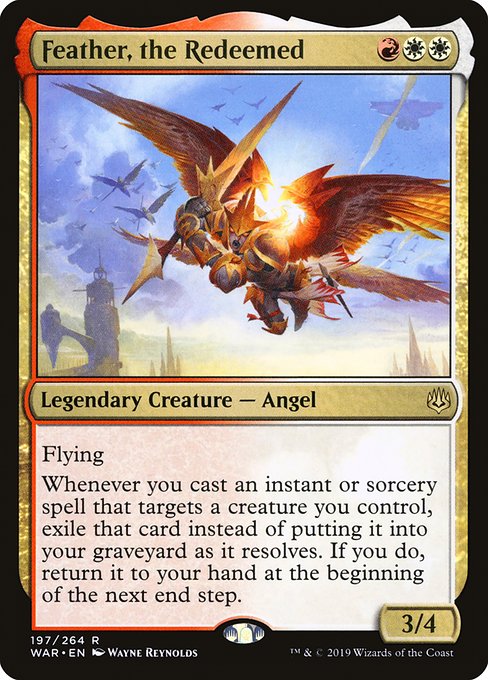
It showed up in Standard, carried over to the early days of Historic, and had a short run as a fast, spell-heavy tempo list built around cheap protection and repeatable combat tricks. It eventually fell off because the format moved faster, interaction got cleaner, and other archetypes filled that role more efficiently. Today, decks like RW Auras or UR Wizards fill that role in the meta.
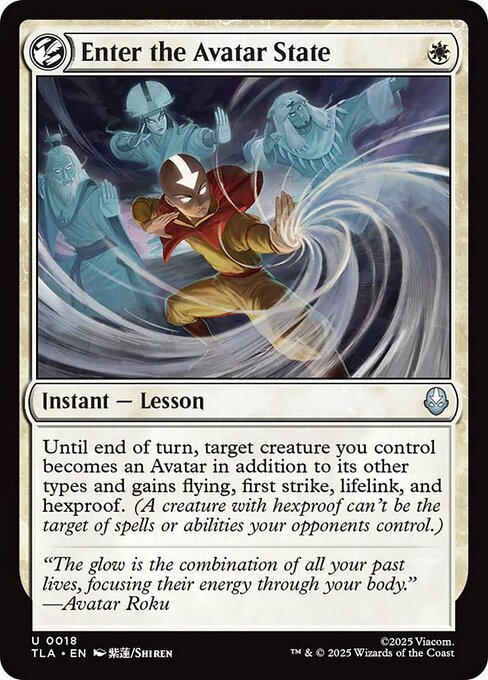
When I saw Enter the Avatar State, it felt like a natural fit for this style of deck. It does most of the things Feather actually cares about, allowing us to be both proactive and reactive at the same time.
So I decided to take another crack at the list, and see what new toys it could play.
History
Before this update, Feather was built around looping cheap spells to generate incremental value. The old list looked something like this, very similar to a Heroic-esque deck.
Feather, the Redeemed act as a resource engine in a sense, getting you multiple uses out of your combat tricks and protection spells. If Feather survived, the deck felt snowbally and difficult to interact with.
The problem was speed and efficiency. The threats were fragile, the combat spells were narrow, and the deck struggled to close games fast enough once the rest of Historic caught up. Other strategies started doing similar things with fewer moving pieces. I think the deck kind of just fell of the map as the rest of the format evolved without it.
That is, until your good old pal Plum here, decided to take another looksy.
Upgrades
To bring Feather back into a format that has become faster and more efficient, the first question wasn’t “what new cards exist,” but what lets us keep pace with decks that now do similar things with fewer steps. RW Auras sticks power directly onto the board. UR Wizards converts every cheap spell into damage. If Feather wants to compete, it needs to convert spells into pressure just as efficiently, without losing the recursive engine that makes the archetype unique.
So I went back through cards printed since Feather fell off, especially ones that already appear in adjacent shells. I was looking for three things:
Cheap interaction or pump spells that scale with repeated casts
Creatures that reward multi-spell turns instead of just growing slowly
Cards that compress multiple roles into a single slot
And now, with the release of Avatar, four cards immediately stood out.
This is the closest thing we have to a modern upgrade for the original protection suite. Instead of running separate cards for evasion, protection, and combat tricks, Avatar State does all of them at once. It protects your threat, swings combat math, gives lifelink to stabilize, and gives our creature of choice flying. The fact that it returns to hand with Feather keeps your engine intact without diluting the deck with narrow spells.
This card doesn’t push damage in the same way as something like God’s Willing, but it lets us win games from lower life totals and through blockers, which matters a lot more in today’s format.
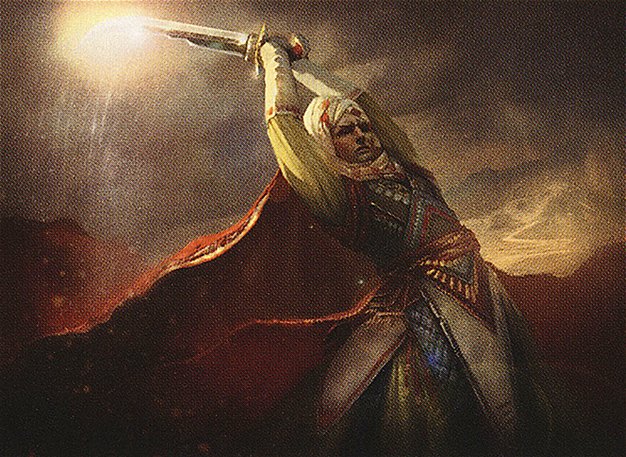
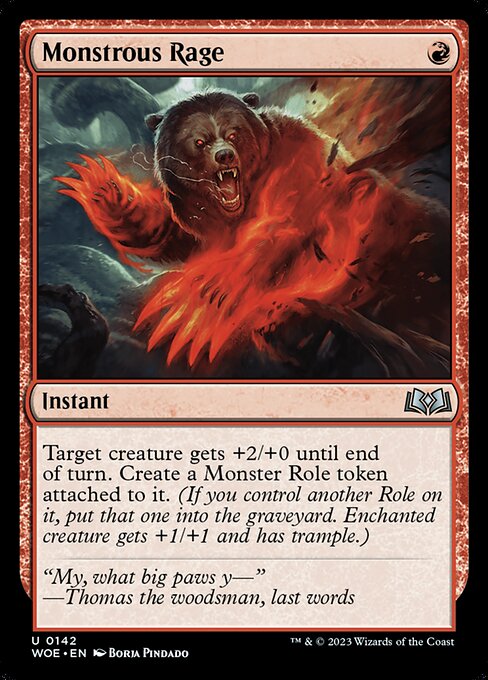
Feather always needs a spell that could convert temporary stat buffs into actual lethal damage. Rage gives trample and a meaningful power boost for a single mana, which turns Show-Off or Hoplite into a real threat instead of a creature that gets chump-blocked forever. It also interacts well with Arcanist by increasing power for re-buys (although its a bit of a nonbo with Feather out)
This is how we keep pace with decks that close games quickly, instead of relying on slow incremental pump triggers.
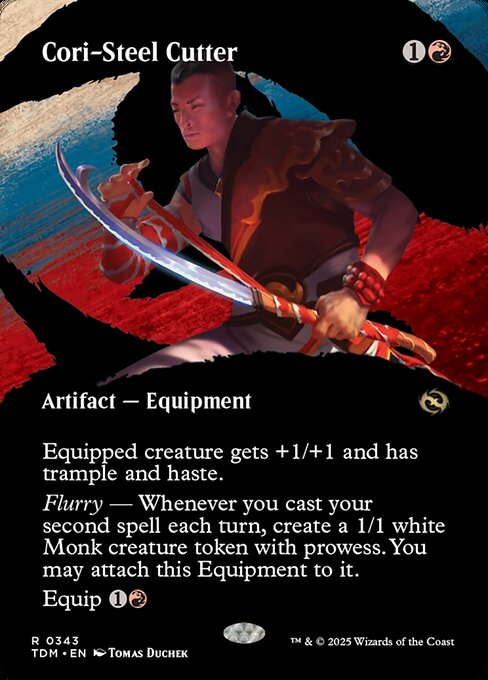
Old Feather lists had a binary problem: either your threat lived and you ran away with the game, or it died and you did nothing. Steel-Cutter gives the deck a fallback plan. If removal keeps trading with your main threat, you can pivot into a go-wide strategy instead. It also plays well in games where you draw the “wrong half” of the deck, because it converts spells into value without needing Feather on board.
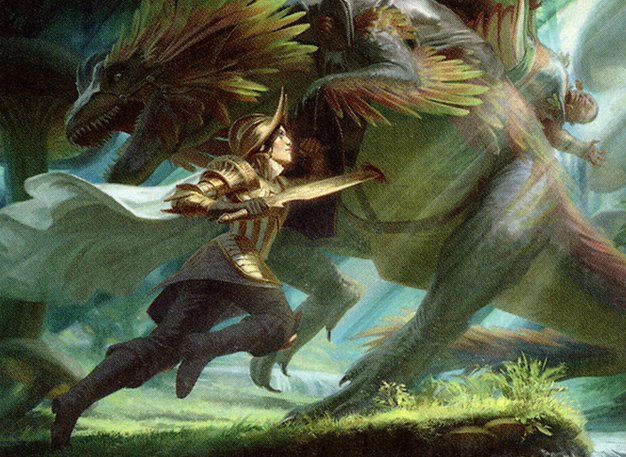
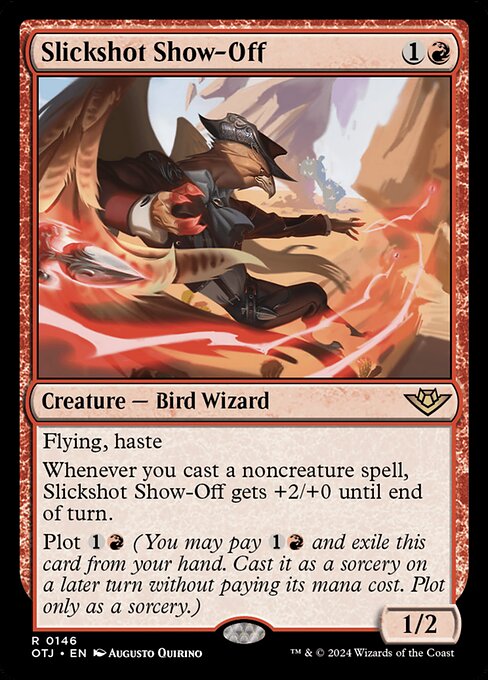
This is the most significant change to the creature base. Tenth District Legionnaire was iconic but outdated. Show-Off enters with haste, scales better with multiple spells in a turn, and creates immediate pressure instead of requiring a multi-turn setup. It gives the deck real play against planeswalkers and slower hands, and it pairs well with both Rage and Avatar State. Plotting it also allows you to cast Cori-Steel first and get a Monk token the same turn.
This is how we match UR Wizards in terms of raw pace, instead of trying to win through pure value loops.
With these 4 in mind, let me show you the upgraded version I played on stream!
This version keeps the original identity of the deck: cheap creatures, cheap spells, and a recurring engine built around targeting our own board. The difference now is how we convert those spells into closing power. Instead of slowly stacking incremental value, the deck presents threats that demand an answer right now and has multiple backup plans if the first one dies.
A few things stand out immediately:
The curve is tighter. Almost everything happens on turns one through three. If we need to play from behind, Avatar State and Rage help us race or stabilize.
The creature suite is less dependent on a single payoff. Hoplite is great, but Show-Off and Steel Cutter both threaten wins on different axes.
Arcanist still plays a role, but now it’s a tempo tool rather than the whole identity of the deck. It rebuy spells when things are going well and falls back gracefully when Feather is looping spells on her own.
We finally have real reach. Monstrous Rage and the improved spell suite let us push damage through blockers instead of getting stalled out
I tried to speed up the list as best I could. Instead of waiting three turns for the engine to “get going,” this list starts applying meaningful pressure immediately, then uses Feather to convert that pressure into inevitability rather than the other way around.
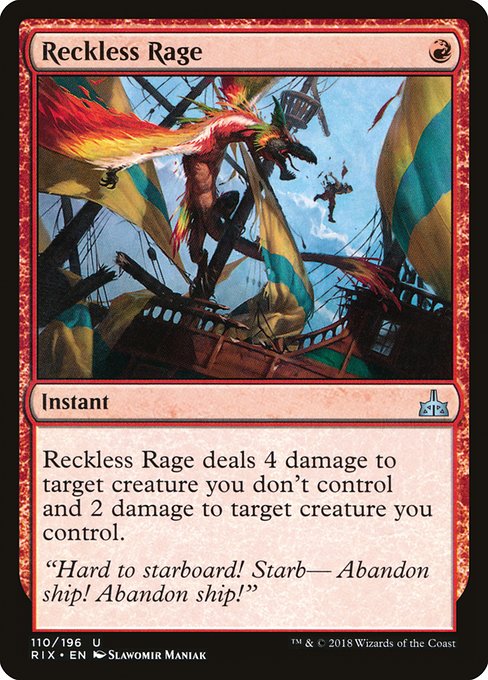
This remains one of the best removal spells available to this archetype. The format requires cheap interaction, and this one plays especially well with Hoplite and Arcanist by providing additional power or removal respectively. If we can stick a Feather, looping Rage every turn is usually enough to seal the deal against creature decks.
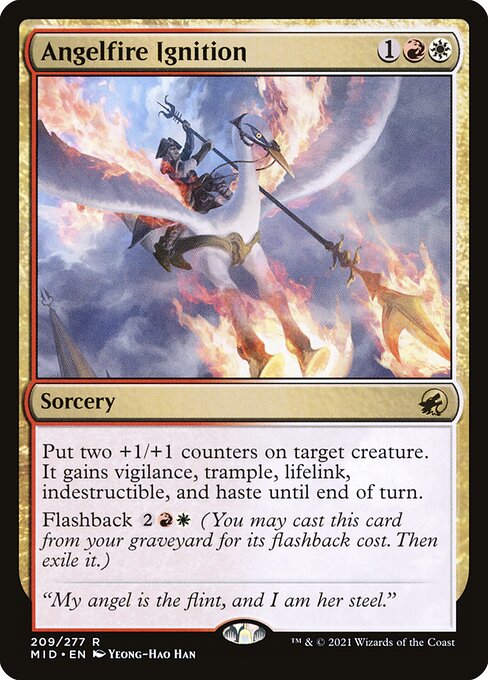
I threw this in as a 2-of because its a fantastic stabilizer that can close stalled games quickly with Feather out. When the board clutters up or life totals get low, Ignition gives you a way to get extra momentum. It’s expensive compared to the rest of the curve, but it secures games that Avatar State or Monstrous Rage almost get across the line but not quite. I don’t think you want too many copies, but having it as a way to force the final swing felt great.
This is bread and butter of the deck, not because it’s powerful on its own, but because it keeps the engine moving. With Feather, we can draw and additional 2 cards every turn cycle, while also pumping our creatures. It’s not very flashy, but its a necessity.
Sideboard
In my limited testing, the sideboard needed to cover two specific problems:
1.) Decks that go bigger than us (Eldrazi, Mono-G) 2.) Decks that invalidate combat math (Auras, Lifegain, Combo)
This version isn’t locked in, but a couple cards stood out.
Fragment Reality – Efficient, versatile, and a relatively clean answer to most things we care about. Did a good amount of work against RW Auras which where it really mattered.
Sheltered by Ghosts – Removal, protection, and lifegain is so freakin’ good. We upped this to 4 copies because we wanted to see it as often as possible in games two and three. Especially strong against Wizards.
We actually didn’t end up using the rest of the board that much in our matches, but with a larger sample size I’m sure the other cards will get their time to shine. RW has a lot of good hate pieces so this is relatively customizable to whatever you think you’ll see the most on the ladder (Boros, Eldrazi, Wizards, etc.)
Gameplay
The deck performed quite well (in our small sample size against various decks), sporting an 83% WR on the Historic BO3 ladder.
Obviously, a single small sample doesn’t prove tier placement, but it gives us a baseline for how the deck performs into real opponents and a mixed field. But overall it felt great, and we learned quite a bit during our matches.
What Went Well
1. The deck closes faster than it used to. Games ended on turn four or five surprisingly often. Show-Off plus cheap spells gives real burst damage, and Monstrous Rage is disgusting.
2. We aren’t all-in on one threat anymore. Old Feather lists died when the first creature got removed. Steel Cutter and Show-Off give us some strong redundancy, and Arcanist does a decent Feather impression if we can’t find her early enough.
3. Avatar State changes combat math. God this card was so good every time we casted it. The Hexproof + Lifelink on its own would probably make this playable here, but the fact that we get First Strike and Flying to boot is nutter butters. I was impressed.
What Needs Work
1. Mulligans matter. Hands with only protection and interaction go nowhere. We need a creature to justify our spells. We shipped back our opening hands pretty often.
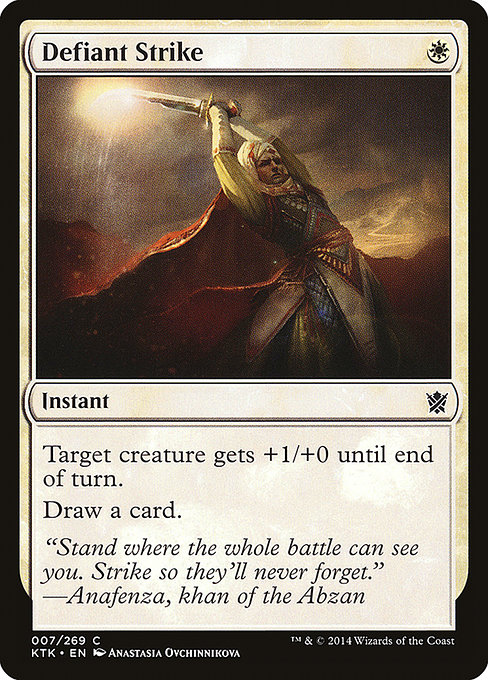
2. We still draw the wrong half sometimes. This is where consideration for splashing for Season of Growth or something like Ancestral Anger comes back into the conversation. Defiant Strike is great, but can only get you so far without a way to recur it.
3. Some removal-heavy decks demand sideboard respect. We beat Jund Lurrus in one game, but the loss showed how quickly we collapse without early pressure. We may want more tools that generate value instead of pure tempo.
Closing Thoughts
This list started as a nostalgic brewing, but it ended up feeling like a real deck again. The core Feather engine still delivers that familiar loop of cheap spells and recursive value, but the new additions finally give the archetype enough pressure and resilience to stand up to what Historic looks like today.
There is still tuning to do. The sideboard probably needs more tuning once we see what Avatar does (if anything) to the meta, and there are real questions about whether we want extra card flow like Season of Growth. But after actually running matches, the foundation feels solid.
Thanks for reading!
As always, feel free to comment and leave any questions you have below. And make sure to come back next week for even more Fun & Jank!
If you want to see these decks in action, come hang out with me on stream where we test, refine, and have a ton of fun together.
Happy Brewin’!
Premium
Enjoy our content? Wish to support our work? Join our Premium community, get access to exclusive content, remove all advertisements, and more!
No ads: Browse the entire website ad-free, both display and video.
Exclusive Content: Instant access to all exclusive articles only for Premium members, at your fingertips.
Support: All your contributions get directly reinvested into the website to increase your viewing experience!
Discord: Join our Discord server, claim your Premium role and gain access to exclusive channels where you can learn in real time!
Special offer: For a limited time, use coupon code L95WR9JOWV to get 50% off the Annual plan!
Plum is the creator of the Jank Tank.
He started playing at the ripe old age of 12 and immediately fell in love with the infinite possibilities that deck building could lead to.
He truly understands that jank is a mindset, and spends most of his free time brewing and concocting new and exciting deck lists to help inspire and promote creativity within the MTG community.